PH and Canada Must Secure Critical Minerals Amid Rising Global Tensions
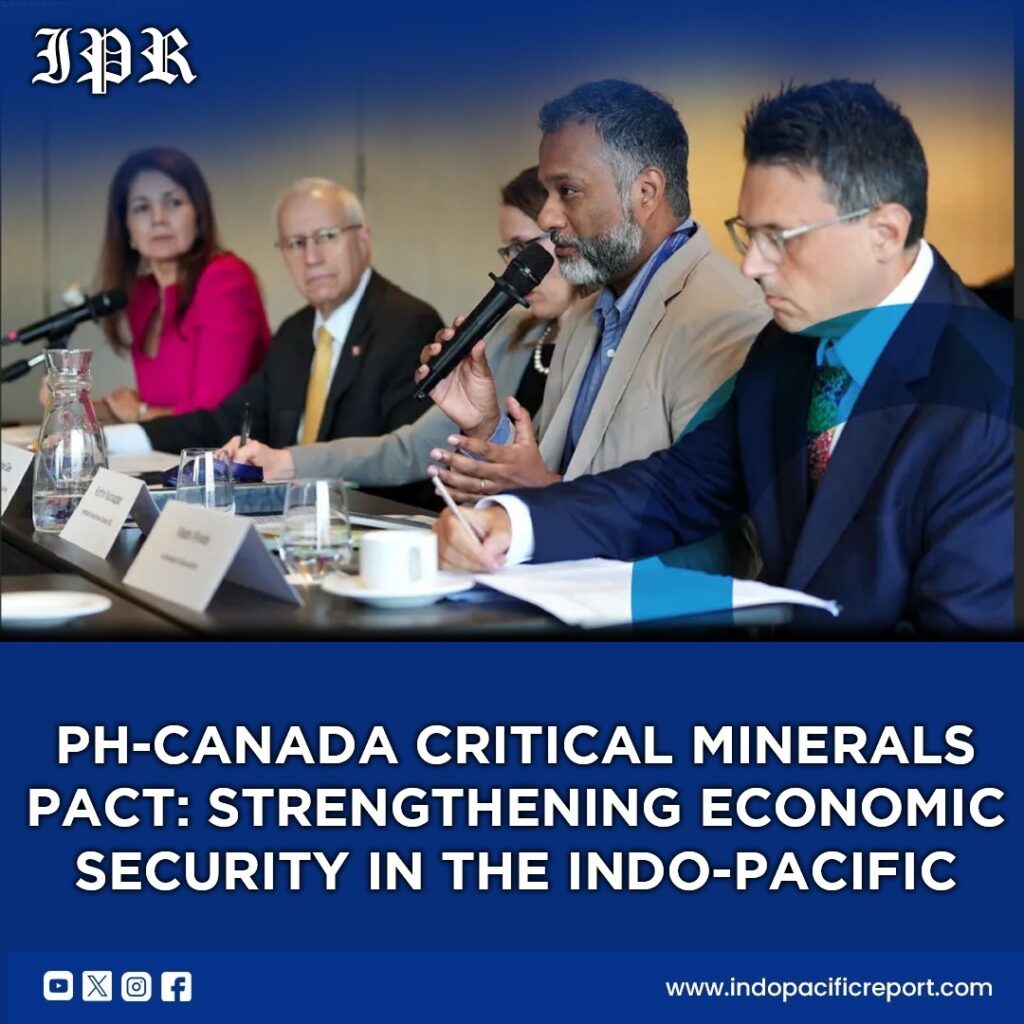
The Philippines and Canada are exploring a strategic partnership to secure critical minerals—key resources like lithium, cobalt, and rare earths that power high-tech industries, clean energy, and advanced defense systems. Experts at a recent Stratbase–Asia Pacific Foundation of Canada forum emphasized that these minerals are not just economic assets; they are geostrategic tools. Developing “democratic” supply chains that do not rely on China is increasingly seen as essential for both countries to navigate an Indo-Pacific region that is becoming more volatile.
From the perspective of great-power competition, this partnership positions Manila and Ottawa as middle powers hedging against China’s dominance in global mineral supply chains. China controls a large portion of processing and export capacity, giving it potential leverage over advanced economies. By aligning with Canada—a reliable supplier with advanced mining technology—the Philippines strengthens its autonomy and contributes to a growing network of nations working to secure resilient and diversified supply chains.
The move also has economic and national security dimensions. Critical minerals underpin the production of digital infrastructure, renewable energy systems, and military equipment. Trade Undersecretary Ceferino Rodolfo noted that Manila is aiming for a deal with Canada similar to its U.S. critical minerals framework. Such agreements link economic strategy directly to defense readiness, reflecting the principle that economic security is a cornerstone of national security.
Alliance dynamics are central to this development. Beyond bilateral benefits, a PH-Canada minerals pact signals Manila’s commitment to working with “like-minded” partners to reduce dependency on coercive powers. Strengthening such ties complements the Philippines’ existing alliance with the United States while allowing Manila to build strategic autonomy. This type of cooperation demonstrates that middle powers can play a stabilizing role in the Indo-Pacific without directly confronting major powers.
From a maritime and trade perspective, diversified critical mineral supply chains reduce vulnerability along key sea lanes and global shipping routes. Minerals mined in the Philippines or supplied by Canada are essential for technologies that drive the global energy transition and defense industrial base. Secure supply chains mean Manila can participate more confidently in regional economic initiatives and reduce risks of disruption caused by geopolitical tensions or trade coercion.
Strategically, this partnership may subtly influence the Indo-Pacific balance of power. By linking resource security with advanced technology and defense, the Philippines can enhance its resilience and bargaining power in regional and multilateral forums. While it does not alter the military balance directly, securing critical minerals strengthens Manila’s long-term position as a reliable partner in regional security and economic networks, contributing to a more resilient Indo-Pacific ecosystem.
Looking ahead, the success of this initiative will depend on timely implementation, investment in mining and processing infrastructure, and effective coordination between private and public sectors. If executed well, the PH-Canada partnership could serve as a model for other middle powers seeking economic sovereignty while supporting regional stability.
Audience Question: Can the Philippines balance economic independence and strategic alliances without provoking major powers in the Indo-Pacific?