Introduction: The Defense of Sovereignty and Law
The Philippines has drawn a clear line in the turbulent waters of the West Philippine Sea (WPS), asserting what it calls its “incontrovertible” sovereign rights against rising waves of misinformation and historical revisionism. In a rare and forceful move, the Department of Foreign Affairs (DFA) publicly rebuked “some countries” (a thinly veiled reference to China) for promoting an “erroneous opinion” that distorts treaties and undermines the nation’s maritime boundaries. This sharp exchange is not merely about disputed reefs; it is a fundamental struggle between international law and power politics, between the integrity of the global rules-based order and attempts to rewrite it through gray-zone coercion.
Anchored on UNCLOS and the 2016 Arbitral Award, the Philippines’ position is clear: its rights within the Exclusive Economic Zone (EEZ) are backed by law, history, and precedent. This legal clarity, reinforced by the Philippine Maritime Zones Act and firm pronouncements representing the official Marcos Jr. WPS strategy (“The West Philippine Sea is ours”), solidifies Manila’s moral and strategic position.
The Legal Battleground: PH Foundation vs. China’s Rejection
The Philippines’ claim over the WPS rests on a foundation of treaties and international rulings. The DFA has repeatedly emphasized that boundaries are rooted in an unbroken legal continuity:
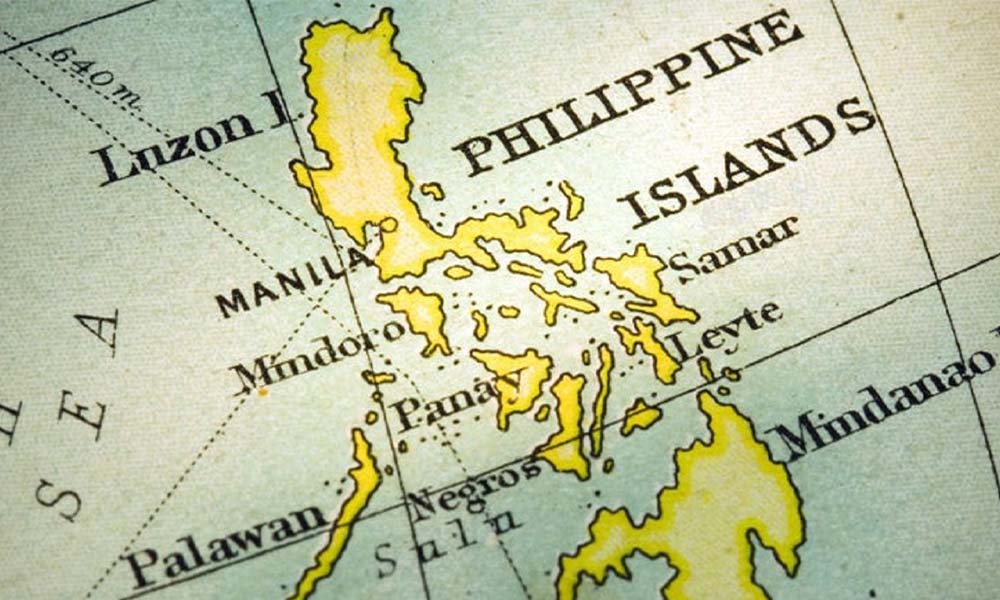
- Historical Treaties: The Treaty of Paris (1898) and Treaty of Washington (1900) secured Philippine territorial integrity, legally defining the archipelago.
- The UNCLOS Foundation: Modern law is anchored in UNCLOS, under which the Philippines possesses sovereign rights over its EEZ and has also filed its Extended Continental Shelf (ECS) claim based on principles like UNCLOS Article 76.
- The Final Verdict: The 2016 Arbitral Award PCA The Hague, issued under UNCLOS, unanimously ruled that China’s Nine-Dash Line had “no legal basis.” The ruling affirmed Manila’s sovereign rights and condemned land reclamation.
In contrast, China promotes historical revisionism, rejecting the 2016 Arbitral Award binding nature. The “erroneous opinion” condemned by the DFA refers to Beijing’s attempt to weaponize treaties to shrink Philippine sovereignty, conveniently excluding areas like the Kalayaan Island Group (KIG) and Scarborough Shoal (Bajo de Masinloc). Furthermore, actions like the unilateral China fishing ban WPS are viewed by Manila as unjustified economic encroachment, demonstrating that the DFA rejects China narrative of historical entitlement.
WPS Flashpoints: Aggression, Data, and Domestic Resolve
At the heart of the dispute sits the rusting BRP Sierra Madre, grounded on Second Thomas Shoal (Ayungin Shoal) in 1999—now the frontline of volatility.
Chinese vessels have dramatically escalated their gray-zone coercion: the China Coast Guard (CCG), often flanked by the Chinese Maritime Militia (CMM), employs high-pressure water cannon attacks and blockades to impede resupply missions. These attacks have injured personnel and damaged vessels, constituting clear Philippine EEZ violations.
Despite the danger, the government, guided by the Marcos Jr. WPS strategy, has stood firm. The public, too, stands united; surveys show overwhelming Filipino support WPS defense, turning the issue into a matter of national dignity. This unity underpins the need for continuous Philippine Navy modernization and bolstered capabilities for the Philippine Coast Guard (PCG) and other agencies.
Legislative action reinforces this resolve: the Philippine Maritime Zones Act provides the domestic legal teeth to implement and defend the country’s sovereign rights, ensuring that the West Philippine Sea is ours—a fact now enshrined in both international and domestic law.
China-Malaysia Vs. Japan-Philippines Drills Expose Deepening Rivalries in South China Sea
International Backing: The Rules-Based Coalition
The Philippines is no longer isolated; its defense of WPS sovereignty has catalyzed a powerful and expanding rules-based coalition against maritime coercion.
- US-Led Alliances: The US Philippines MDT is the bedrock of security. The Japan Philippines RAA is a landmark pact enabling joint training. Combined exercises like Balikatan 2024 and joint Maritime Cooperation Activities (MCAs) near the WPS showcase deterrence and diplomacy.
- Regional Solidarity: Beyond traditional allies, the Philippines is deepening ties with neighbors. Increased Vietnam South China Sea cooperation and a persistent focus on ASEAN unity WPS efforts demonstrate that resistance to coercion is a multilateral imperative.
- Global Support: The Quad Summit, the EU, UK, and Canada have lent consistent diplomatic weight, reaffirming the 2016 Arbitral Award as binding and enforceable and explicitly rejecting the erroneous opinion.
This growing network of partners strengthens not only Philippine defense but also the integrity of the global rules-based order, sending a unified message that the West Philippine Sea is a shared maritime commons governed by law.
Philippines Defense Chief Condemns Latest Chinese Escalation at Ayungin Shoal
Conclusion: Upholding the Global Order
The Philippines’ firm rebuttal of the “erroneous opinion” is a strategic move to protect its national territory and the global system of international law. By anchoring its stance in UNCLOS and the 2016 Arbitral Ruling, Manila re-centers the global conversation on legitimacy, not force.
The nation’s stand is a defense of the global rules-based order itself, refusing to let historical revisionism overwrite the clear realities established by law. In asserting its “incontrovertible rights,” the Philippines has emerged not merely as a claimant, but as a steadfast defender of maritime law—a nation proving that courage, when rooted in legality and principle, can prevail against intimidation, ensuring the West Philippine Sea is ours through right and resolve.