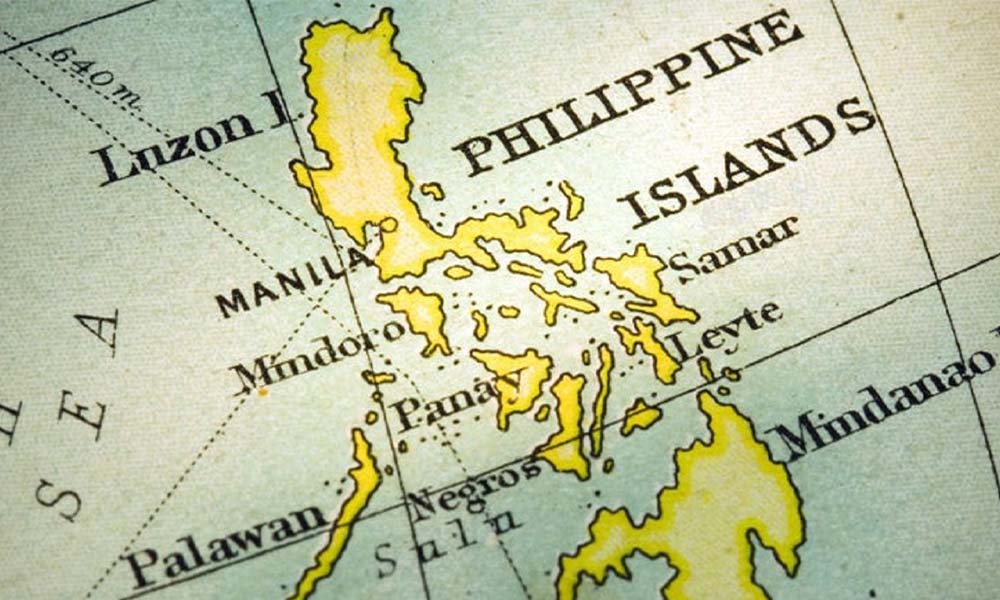
Maintaining a Deterrence Strategy for the Philippines in the Scarborough Shoal
“China firmly opposes any action that undermines peace in the South China Sea,” Beijing said this January, after fresh patrols swept across disputed waters. But here’s the question no one in Manila can afford to ignore: What happens if one morning, Filipino fishermen wake up and Scarborough Shoal is no longer just “disputed” but effectively lost? Because that’s not some abstract geopolitical theory. It’s a very real possibility.
In the first weeks of 2026, Chinese naval and coast guard patrols intensified across the South China Sea. The warnings grew sharper. The air shadowing is more frequent. The messaging is more deliberate. Beijing accused the Philippines of provoking instability after Manila conducted joint drills with Washington and Tokyo. At the same time, Chinese vessels continued operating around Scarborough Shoal, Bajo de Masinloc, Panatag Shoal, as if presence alone could rewrite geography.
And honestly? That’s how modern territorial control works now. Not with dramatic invasions. But with slow, grinding normalization. Scarborough Shoal sits just about 120 nautical miles from Luzon. That’s closer to the Philippines than many Filipinos realize. It falls well within Manila’s Exclusive Economic Zone under UNCLOS. In 2016, the arbitral tribunal ruled clearly: China’s “nine-dash line” has no legal basis. That ruling should have settled things. It didn’t.
https://www.youtube.com/watch?v=WA9zZ9TnXMs
Instead, the years that followed felt like a quiet test of will. Patrol boats circling. Aircraft tailing. Fishermen blocked. Then in 2025, something unusual, even Chinese vessels colliding during aggressive maneuvers in the area. A strange reminder that even coercion has limits. But also a warning: crowded waters increase the risk of miscalculation.
If you talk to coastal communities in Zambales, this isn’t about legal doctrines. It’s about livelihoods. It’s about fathers who used to fish in Panatag without fear. It’s about boats turning back because the cost of confrontation feels too high. Maritime disputes sound distant in policy papers. They’re not distant when your income depends on the tide. And here’s the uncomfortable truth. Scarborough Shoal isn’t just about fish.
It’s about deterrence credibility. It’s about whether the Philippines can prevent coercive encroachment without triggering war. Whether it can defend sovereign rights without becoming the spark of something bigger. Whether alliances, especially with the United States and Japan, translate into real leverage, or just diplomatic statements.https://indopacificreport.com/can-china-fight-a-6-front-war-in-the-indo-pacific-china/
Because Beijing’s patrol numbers more than doubled around the shoal in 2025 compared to the year before. That’s not random. That’s signaling. And signals, if unanswered, become patterns. Patterns become facts on the water. The Philippines does not have the luxury of overreaction. But it also cannot afford passivity. This is the dilemma.
A credible deterrence strategy for Scarborough Shoal must be multi-dimensional. Military presence, yes, but calibrated. Diplomatic pressure, sustained and coordinated. Economic resilience to withstand coercion. Legal reinforcement of the 2016 ruling. And perhaps most critically, narrative clarity, the ability to frame this not as escalation, but as defense of lawful maritime rights.
Philippines vs. Malaysia: A Tale of Two Militaries – From Sabah to the South China Sea
Deterrence is not about firing the first shot. It’s about convincing the other side that taking the shoal, slowly, incrementally, or outright, would cost more than it’s worth. The South China Sea is crowded with ships. But it’s even more crowded with signals. The question now is simple, and heavy: Can Manila shape those signals, or will it simply react to them? Because in places like Scarborough Shoal, control doesn’t disappear overnight. It erodes.

And history shows that when small states fail to deter early, they pay later, in sovereignty, in resources, and sometimes in something far more difficult to recover: strategic confidence.https://www.youtube.com/watch?v=WA9zZ9TnXMs
Strategic Context
If you zoom out for a second, like really zoom out, Scarborough Shoal isn’t just a reef with fishing boats circling it. It’s a pressure point in a much bigger power contest unfolding across the South China Sea. China’s behavior in these waters isn’t random. It’s structured. Gradual. Persistent. Over the past few years, its coast guard and naval deployments have expanded in both frequency and intensity. Around Scarborough Shoal, what used to be periodic patrols now feel almost routine. Daily presence is becoming the norm. And in maritime disputes, routine presence slowly becomes psychological ownership.
That’s the part people often underestimate. Beijing frames these operations as defensive, protecting sovereignty. But from Manila’s perspective, it feels like strategic encirclement. The more ships that remain, the more warnings that are issued, the more aircraft that shadow Philippine missions, the more the balance of control subtly shifts. Not through invasion. Through normalization.
Meanwhile, the United States and its allies aren’t standing idle. Freedom-of-navigation operations continue. Joint exercises are expanding in scope and visibility. The recent presence of the U.S. Navy’s carrier, USS Abraham Lincoln, in regional drills wasn’t just military choreography. It was signaling. A floating message that Washington still considers the South China Sea a vital interest. And then there’s Japan. And Australia. And a slowly widening circle of partners that see maritime rules as worth defending. The strategic atmosphere feels crowded, not just with ships, but with intentions.
Now layer on something even more delicate. In 2026, the Philippines chairs the Association of Southeast Asian Nations. That sounds diplomatic. Ceremonial, even. But it’s actually a tightrope. As ASEAN chair, Manila is expected to promote regional stability and dialogue. Yet it is simultaneously facing direct maritime pressure from China. Balancing relations between Beijing and Washington while managing friction in its own waters? That’s not a comfortable diplomatic posture. Every statement matters. Every exercise is scrutinized. Every protest note becomes political theater.https://www.youtube.com/watch?v=cy3WsliZdJI
From a national security standpoint, Scarborough Shoal has shifted from being a contested feature to being a strategic vulnerability. The Philippine Navy and Coast Guard operate with far more limited assets compared to China’s rapidly modernized maritime forces. Surveillance coverage is improving, yes, but gaps remain. When aircraft conduct close encounters or patrol vessels issue warnings near Philippine missions, the asymmetry becomes painfully visible.
You can feel it in strategic psychology. Deterrence, in this context, is not about matching ship for ship. That’s unrealistic. It’s about signaling resolve in ways that complicate coercion. It’s about making clear that incremental encroachment will not go uncontested, diplomatically, legally, economically, and, if necessary, operationally. Because here’s the thing.
When confrontations become frequent, when shadowing, radio warnings, and close passes become routine, the danger isn’t just escalation. It’s desensitization. If pressure feels normal, resistance weakens. And once that happens, deterrence erodes quietly. For Manila, Scarborough Shoal is no longer just about maritime rights under international law. It’s about strategic credibility. About proving that sovereignty claims are backed by sustained policy, not just tribunal victories. The Philippines doesn’t seek confrontation. That much is clear. But it cannot afford ambiguity either. And in a region where presence equals power, deterrence becomes less about dramatic shows of force and more about steady, disciplined, unmistakable resolve.
Deterrence Theory and Its Application
Let’s pause for a second.
When people hear the word deterrence, they usually imagine missiles. Warships. Red lines drawn in thick ink. But deterrence, at its core, is much quieter than that. It’s psychological. It’s about shaping someone else’s decision before they act.
In simple terms, deterrence means convincing an adversary that whatever they’re thinking of doing just isn’t worth it. Not because you beg them not to. But because the cost, political, military, economic, reputational, would outweigh the gain. It’s not about starting a fight. It’s about making sure the fight never starts. For deterrence to actually work, though, three things have to line up.https://www.youtube.com/watch?v=cy3WsliZdJI
First, credibility. If you threaten consequences but everyone knows you won’t follow through, it collapses instantly. In the South China Sea, credibility isn’t built through speeches. It’s built through consistency. Through presence. Through repetition.
Second, capability. You need the actual tools to respond. Not symbolic tools. Real ones. Ships that can sail. Aircraft that can patrol. Alliances that can activate.
And third, communication. This one is underrated. If your signals are vague or contradictory, deterrence fails. The other side needs to clearly understand what action will trigger what response. Ambiguity can prevent escalation in some cases but too much ambiguity invites testing.
EDCA Is Not a U.S. Base: Manila’s Strategic Recalibration Amid Middle East Tensions
Now apply this to Scarborough Shoal. Military deterrence is the most visible layer. When the Philippine Navy and Coast Guard increase patrols around the shoal, it sends a message: we are present, and we are watching. When exercises are conducted with partners like the United States, Japan, or Australia, that message widens. It’s no longer just Manila standing alone. It’s networked deterrence.
You saw that dynamic recently when the carrier USS Abraham Lincoln operated in regional drills. That wasn’t about theatrics. It was about reinforcing that escalation would not remain localized. Even the possibility of allied involvement alters Beijing’s cost-benefit calculation.
But military signaling alone isn’t enough. Diplomatic deterrence matters just as much, especially for a middle power like the Philippines. As chair of the Association of Southeast Asian Nations in 2026, Manila sits at the center of regional dialogue. That platform can be used to shape narratives, coordinate statements, and quietly build collective pressure against coercive behavior.https://www.youtube.com/watch?v=cy3WsliZdJI
When incidents are internationalized, raised in ASEAN forums, discussed at the United Nations, echoed by like-minded states, the reputational cost increases. And reputational cost, for a rising power sensitive to global perception, is not trivial. Then there’s economic deterrence. This is more subtle, and often uncomfortable. The Philippines cannot match China economically. That’s reality. But economic deterrence doesn’t always mean unilateral sanctions. It can mean diversifying trade partnerships. Strengthening ties with countries that have leverage over Beijing. Coordinating responses with major economies that influence China’s export and investment environment.
The goal isn’t to “punish.” It’s too complicated. Finally, legal deterrence remains one of Manila’s strongest assets. The 2016 arbitral ruling under UNCLOS, though rejected by Beijing, still stands in international law. It delegitimizes expansive historical claims and affirms Philippine rights within its Exclusive Economic Zone. Continually invoking that ruling does more than score legal points. It reinforces normative pressure. It frames actions around Scarborough Shoal as violations of established rules, not mere disagreements.
Ukraine’s Combat UAV Steals the Show at Philippines Defense Exhibition
Law doesn’t stop ships. But it shapes coalitions. And coalitions shape power. The deeper truth here is that deterrence at Scarborough Shoal cannot rely on a single instrument. It has to be layered. Military presence backed by diplomacy. Diplomacy reinforced by law. Law supported by economic resilience.
Because the contest around Scarborough Shoal isn’t just about territory. It’s about endurance. The side that convinces the other that persistence will be costly, politically, strategically, reputationally, gains the advantage. And in slow-burn disputes like this, deterrence isn’t a dramatic moment. It’s a steady, disciplined posture maintained day after day, patrol after patrol, statement after statement until the message becomes undeniable.
Current Challenges to Philippine Deterrence
Here’s the hard part. Deterrence sounds clean in theory. Three pillars, layered strategy, calibrated signaling. But once you zoom back into Scarborough Shoal, the friction becomes obvious. And it’s real. Start with the military imbalance.
The Philippine Navy and Coast Guard are improving, yes. Modernization is underway. But compared to China’s maritime forces, which include one of the world’s largest coast guards and a rapidly expanding navy, the gap is stark. China can sustain near-daily patrols around Scarborough Shoal without straining its fleet. For Manila, every deployment carries opportunity costs. It’s not just about the number of ships. It’s about endurance.
Surveillance is another pressure point. The South China Sea is vast. Monitoring wide maritime zones in real time requires layered radar coverage, maritime domain awareness systems, satellite integration, and persistent aerial patrols. Gaps in coverage create reaction delays. And in gray-zone contests, timing matters. If you can’t see early, you can’t respond early. And if you respond late, presence becomes normalized.https://www.youtube.com/watch?v=cy3WsliZdJI
Then there’s the political layer, arguably even more delicate than the military one. The Philippines has to balance. It cannot afford open hostility with China, given trade and geographic proximity. At the same time, it relies heavily on its alliance with the United States, formalized under the Mutual Defense Treaty. That alliance underpins external deterrence credibility.
But balancing isn’t easy. Lean too far toward Washington, and Beijing escalates pressure. Lean too far toward accommodation, and deterrence erodes. It’s a constant calibration and every joint exercise, every diplomatic statement, every protest note is interpreted through that lens. Regional diplomacy doesn’t always make it easier.
Within the Association of Southeast Asian Nations, consensus on security matters is notoriously difficult. Some member states prioritize economic ties with China. Others face their own maritime disputes. Collective deterrence sounds powerful in theory, but ASEAN cohesion often fractures when concrete action is required. And without unity, signaling weakens. Legal leverage is another paradox.https://www.youtube.com/watch?v=cy3WsliZdJI
The 2016 arbitral ruling under UNCLOS was a landmark victory for Manila. It clarified maritime entitlements and rejected expansive historical claims. But law without enforcement mechanisms has limits. There is no maritime police force that compels compliance. There are no automatic penalties for defiance.
Which brings us to gray-zone tactics, the most persistent challenge of all. China rarely operates in ways that trigger outright military confrontation. Instead, it deploys coast guard vessels, maritime militia fleets, and frequent patrols that hover just below the threshold of armed conflict. These actions complicate response options. They are coercive, but calibrated. Assertive, but legally ambiguous enough to avoid immediate escalation.
Deterring gray-zone behavior is far more difficult than deterring overt aggression. You can’t invoke a treaty every time a patrol shadows a fishing boat. You can’t escalate militarily every time a maritime militia swarm appears. And legal protests, while important, do not physically remove vessels from contested waters. So the challenge facing Manila isn’t simply capability disparity. It’s strategic endurance under asymmetry.
“Cease Its Farces”: China’s Warning to the Philippines Ignites South China Sea Crisis
Deterrence requires credibility. But credibility is tested when the other side probes repeatedly, incrementally, patiently. Over time, the risk isn’t dramatic defeat. It’s gradual fatigue. Political fatigue. Operational fatigue. Public fatigue.
And that’s why Scarborough Shoal remains such a defining test. Because the Philippines isn’t just trying to prevent a sudden seizure. It’s trying to resist slow-motion erosion, under conditions where the tools available are constrained, alliances are sensitive, and enforcement mechanisms are imperfect. That’s not a weakness. It’s the structural reality of small-state deterrence in a great-power competition.
Elements of an Effective Deterrence Strategy
So what actually works? Not slogans. Not dramatic speeches. Not the occasional show of force that trends for 24 hours and fades. What works is layered strength. Quiet, steady, visible strength. First, military capability. Modernization isn’t optional anymore, it’s foundational. The Philippines has already begun acquiring new patrol vessels, surveillance drones, radar systems, fighter aircraft, and frigates, including defense cooperation with South Korea. That matters. Not because Manila can outbuild Beijing, it can’t, but because credible presence changes behavior. A patrol ship that can remain on station longer. A drone that spots activity earlier. A radar system that reduces blind spots. These are not flashy tools. But deterrence is built on these incremental upgrades.
Frequent joint exercises reinforce that message. When Philippine forces operate seamlessly with allies, interoperability stops being theoretical. It becomes operational muscle memory. And that signals resolve without firing a single shot.https://www.youtube.com/watch?v=Ev3P5aWe8Co
Strategic alliances amplify that posture. The alliance with the United States, anchored in the Mutual Defense Treaty, raises the potential cost of escalation beyond a bilateral dispute. It inserts uncertainty into any adversary’s calculus. Other defense arrangements and partnerships, with Japan, Australia, and regional actors, widen the deterrence web.
At the diplomatic level, the Association of Southeast Asian Nations remains imperfect, but still important. Elevating the dispute in multilateral forums internationalizes the issue. It frames coercive behavior not as a bilateral quarrel, but as a regional stability concern.
Legal tools remain powerful, even if enforcement is imperfect. Continually invoking the 2016 arbitral ruling under UNCLOS reinforces legitimacy. It chips away at expansive claims. Law alone does not push ships away. But it shapes the narrative, and narratives influence coalitions.
Then there’s the gray-zone challenge. Deterrence at Scarborough Shoal cannot focus solely on warfighting. It must address maritime militias, cyber pressure, disinformation campaigns, and economic coercion. Intelligence sharing with allies. Cyber resilience. Coordinated economic responses. These are part of modern maritime deterrence whether we like it or not. And here’s something often overlooked, domestic resilience.
Coastal communities are not passive observers in this dispute. Strengthening local enforcement of fishing rights, improving communication channels between fishermen and maritime authorities, and involving communities in early-warning reporting creates grassroots deterrence. When citizens feel protected and involved, sovereignty becomes lived reality, not just policy rhetoric. Deterrence, in the end, is societal. Not just military.
https://youtu.be/kp4DRprBgwQ?si=5RWyCCFlWGrYO3k8
Policy Recommendations
If this were reduced to action steps, real, concrete movement, it would look something like this. In the immediate term, maritime presence must increase. Coast guard patrol frequency around Scarborough Shoal should be sustained and predictable. Rapid-response capabilities need refinement so incidents are met quickly, not hours later. Surveillance expansion, satellites, drones, integrated maritime domain awareness systems, is urgent. You cannot deter what you cannot see.
Over the medium term, modernization must accelerate. Fleet upgrades, sensor integration, logistics capacity, all of it. Diplomatically, Manila should deepen engagement within international institutions and use its ASEAN leadership platform to maintain focus on rules-based maritime order.
Long term, the Philippines needs something bigger than reactive policies. It needs an institutionalized national maritime security strategy, coherent, cross-administration, insulated from political cycles. Investment in domestic shipbuilding, maritime industries, and coastal infrastructure strengthens economic security alongside defense posture. Community-based early-warning systems along Luzon’s western seaboard can create a distributed awareness network that complements formal military systems. Deterrence is not a one-year plan. It’s generational.
Philippines Strengthens Grip in South China Sea with Pag-asa Runway Upgrade
Comparative Insights
Other states offer useful lessons. Vietnam, for example, has pursued steady naval modernization over the past decade. It hasn’t tried to match larger powers symmetrically. Instead, it has focused on incremental capability upgrades, coastal defense systems, and layered maritime denial. It’s not dramatic but it has raised the cost of coercion. Norway provides a different model. In the Arctic, it has developed strategies to protect maritime zones despite proximity to a much larger neighbor. Persistent presence, legal clarity, alliance integration, these principles travel well beyond the Arctic context.
Taiwan’s approach to island defense is perhaps the most instructive. Layered deterrence, resilience under gray-zone pressure, civil-military integration, all designed to complicate any attempt at incremental takeover. It’s a reminder that geography can be defended effectively when strategy is integrated. No model is perfectly transferable. But the patterns are clear: smaller states that combine military modernization, alliance networks, legal clarity, and societal resilience tend to deter more effectively than those that rely on a single lever.https://www.youtube.com/watch?v=o-uRUDPyRdU
Conclusion
Scarborough Shoal remains a frontline, economically, legally, strategically. It is not just about fish or reefs. It is about sovereign rights, resource security, and national credibility. Deterrence must therefore be multi-dimensional. Military presence alone is insufficient. Legal arguments alone are insufficient. Diplomatic protests alone are insufficient. But layered together, sustained over time, they create friction. And friction alters calculations. Sustainable deterrence demands capability building. It demands partnerships. It demands narrative clarity. Most of all, it demands consistency.
The call to action is straightforward. Enhance maritime defense and situational awareness immediately. Sustain diplomatic advocacy for rules-based order relentlessly. And commit to long-term institutional planning that strengthens national maritime strategy beyond electoral cycles. Scarborough Shoal will not be decided in a single confrontation. It will be shaped by steady policy, disciplined signaling, and whether the Philippines convinces any challenger that erosion will not go unanswered.