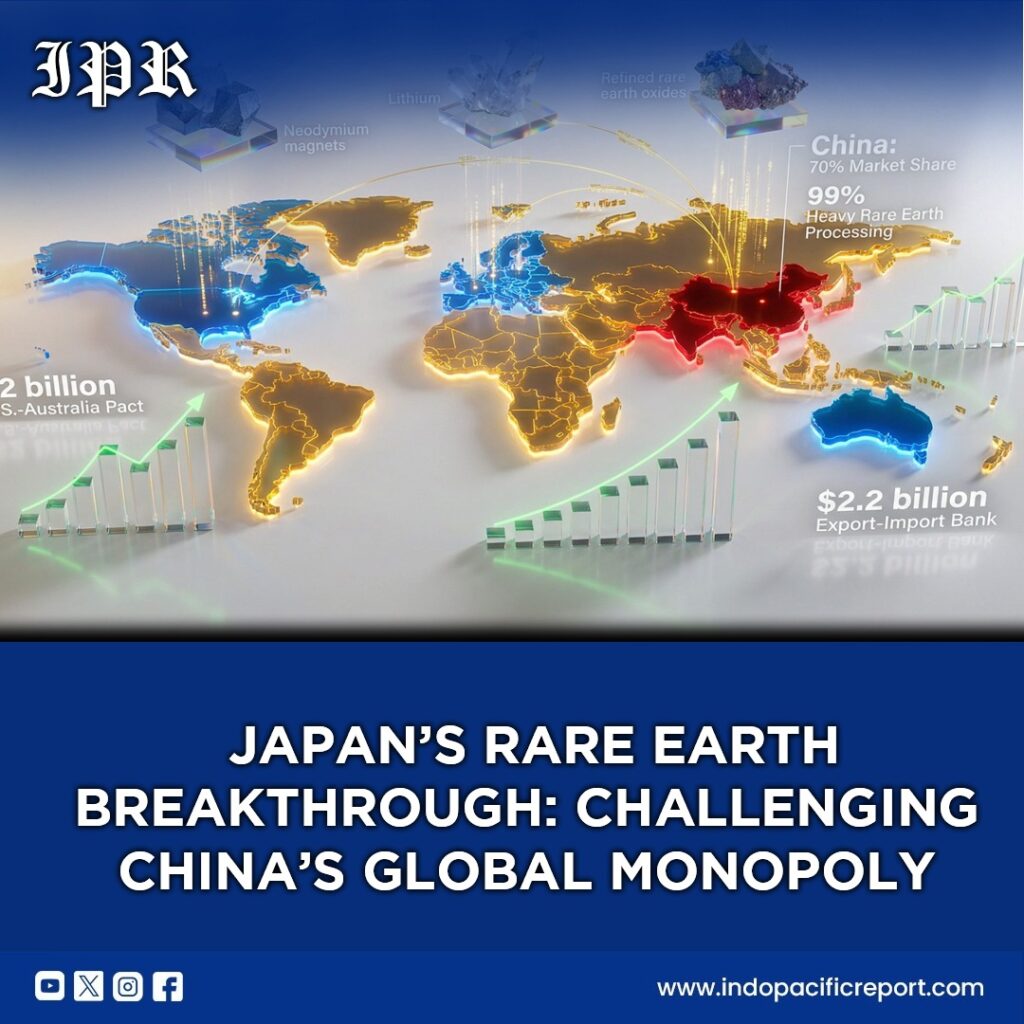
Japan’s Prime Minister Sanae Takaichi is preparing to discuss joint development of deep-sea rare earth deposits with former U.S. President Donald Trump. These deposits, located near Minamitorishima Island, were retrieved from depths of 6,000 meters and could contain over 200 million metric tons of valuable metals. For Japan, this is not just an economic project—it is a strategic move to reduce dependence on China, which currently dominates global rare earth supply.
From a great-power competition perspective, this development shifts the balance in Tokyo’s favor. China has used its rare earth dominance as leverage in trade and security disputes. By partnering with the U.S. to develop these deep-sea resources, Japan is diversifying its supply chain and reducing Beijing’s ability to use rare metals as a geopolitical tool. This strengthens Japan’s autonomy and sends a clear signal about its strategic independence.
The move also affects regional security architecture. Rare earths are critical for high-tech weapons, renewable energy, and electronics. Securing a domestic and allied-controlled supply supports Japan’s defense capabilities and deterrence posture. Minamitorishima’s location in remote but strategically important waters ties Japan’s resource strategy directly to maritime security, enhancing its footprint in the East China Sea and the broader Indo-Pacific.
Alliance dynamics are central to this effort. Joint U.S.-Japan development links economic resilience to security cooperation. For Washington, reducing China’s control over critical minerals is a priority, and Japan’s participation strengthens the U.S.-led coalition. This partnership also sets a model for other middle powers seeking alternatives to Chinese supplies, signaling a broader strategic shift in the Indo-Pacific.
From a maritime and economic strategy angle, deep-sea mining is a game-changer. Japan has traditionally relied on imports, leaving it vulnerable to export restrictions. Access to these deposits provides a long-term hedge and integrates Japan’s industrial, defense, and maritime strategies. By connecting resource security to economic and military planning, Tokyo strengthens its strategic autonomy and resilience.
The strategic implications for the Indo-Pacific are significant. Japan’s rare earth initiative reduces Chinese leverage, reinforces alliance cohesion, and signals proactive engagement in regional security. Beijing may view this as a challenge, potentially increasing competition over resources and influence. How Japan navigates this balance—between developing critical minerals, avoiding escalation, and maintaining regional stability—will shape the Indo-Pacific’s future security and economic landscape.
Audience question: Can Japan secure critical resources and protect its national interests without escalating tensions with China?