Japan’s First Military Deployment to Balikatan Terrifies China
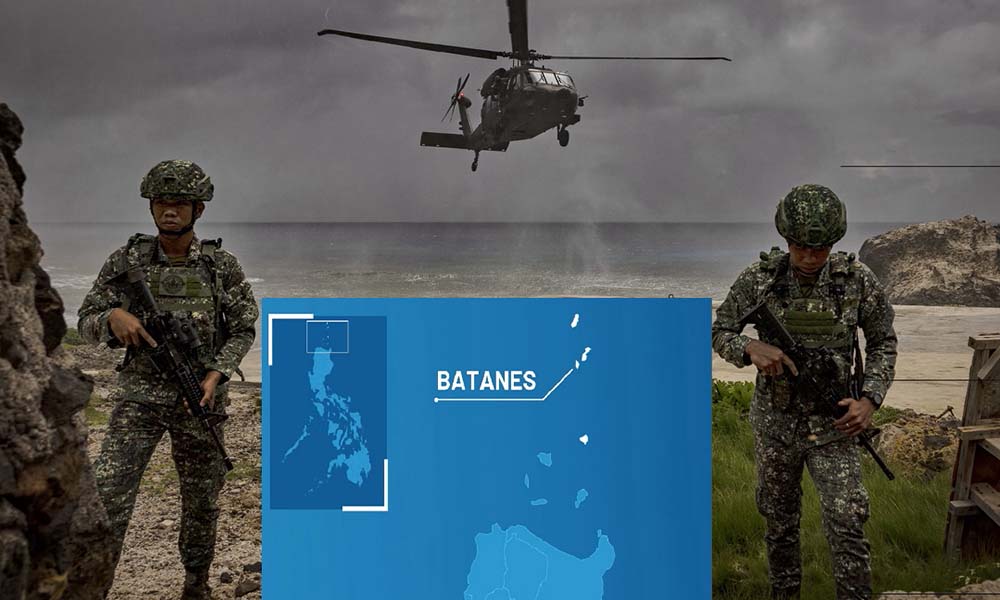
Japanese troops are set to deploy to the Philippines for the largest Balikatan military exercises ever conducted, marking the first time since World War II that Japanese forces will set foot on Philippine soil in a combat-training role. The deployment follows the ratification of the Reciprocal Access Agreement, a landmark defense deal that allows forces from both countries to operate on each other’s territory for joint training and disaster response. According to Armed Forces of the Philippines Chief General Romeo Brawner Jr., this moment carries deep historical weight: “Eighty-one years later, this is the first time we will have Japanese combat troops again on Philippine soil… Before, we were on opposite sides. This time, we find ourselves on the same side.” Military planners also confirmed that the 2026 Balikatan exercises, scheduled from late April to early May, are expected to be among the largest ever, even as global conflicts continue elsewhere.
These drills will test both combat readiness and disaster-response capability — because modern security today is not just about war, but also about resilience during crises. So the real question now is simple: what does this growing cooperation mean for the region, and why are so many nations preparing together at this moment? Let’s step into the details and unpack what is really unfolding behind these developments.
Historical Context — From Wartime Occupation to Strategic Alliance
In 1945, the city of Manila lay in ruins. Entire districts were flattened after weeks of brutal fighting, and historians later ranked Manila among the most devastated cities of World War II, alongside Warsaw and Berlin. More than one million Filipino civilians are estimated to have died during the war years between 1942 and 1945, when Japanese forces occupied the Philippines. Those were years marked by destruction, forced labor, shortages of food, and fierce local resistance. The war ended, but the memory stayed. It lived in family stories, school lessons, and national identity. That is why the year 2026 — exactly 81 years after the end of World War II in the Philippines — carries deep symbolism, as Japanese troops prepare to step onto Philippine soil again. This time, not as occupiers, but as partners in joint military exercises.
But this transformation did not happen suddenly. It was built slowly, through decades of defense agreements and security cooperation. In 1951, the U.S.–Philippines Mutual Defense Treaty became the foundation of Manila’s external defense strategy, committing both nations to support each other against armed attacks. Then in 1998, the Visiting Forces Agreement (VFA) allowed U.S. troops to return regularly for joint training, turning military exercises into a routine feature of alliance readiness. The next major shift came in 2014, when the Enhanced Defense Cooperation Agreement (EDCA) expanded U.S. access to key Philippine bases, improving logistics hubs, air defense readiness, and rapid-response capabilities across the archipelago — especially in areas facing contested waters.
The most decisive turning point arrived in 2024, when Japan and the Philippines signed the Reciprocal Access Agreement (RAA). In military terms, this agreement functions much like a modern Visiting Forces framework, allowing Japanese forces to deploy, train, move equipment, and support humanitarian and disaster-response missions inside Philippine territory. That single agreement changed the operational equation. Now, in 2026, Japanese troops joining the Balikatan exercises for the first time marks far more than a routine training event. It represents a historic reversal — from wartime occupation to strategic alignment — and highlights how quickly the Indo-Pacific security architecture is evolving under growing regional pressure.
What Makes Balikatan 2026 Historically Significant
“This will still be the biggest Balikatan exercise, despite conflicts happening in other regions.”
That assurance, delivered by Philippine military leadership after consultations with U.S. Indo-Pacific Command, set the tone for what is coming in 2026. It was not just a routine statement. It was a signal — one that tells observers the Indo-Pacific remains a priority theater, even as global tensions rise elsewhere.

Balikatan today is no longer just another military drill. It has grown into the largest recurring joint military exercise between the United States and the Philippines, and the numbers tell the story clearly. In 2023, the drills involved around 17,600 troops, making it one of the biggest military gatherings ever seen in Southeast Asia. By 2025, participation stood at about 14,000 troops, including roughly 9,000 U.S. personnel and 5,000 troops from the Armed Forces of the Philippines (AFP). That same year also saw Japan increase its participation in an expanded role, setting the stage for something much larger. Now, planners indicate that Balikatan 2026 is expected to surpass previous records, even while conflicts in other regions compete for global attention. Yes, wars are unfolding elsewhere. No, the Indo-Pacific is not losing focus. If anything, the strategic spotlight here is becoming sharper.https://youtu.be/JcQ-Dui9Fyo?si=yAYryggeGeDLsStu
But what truly makes this year different is not just the size — it is the presence of more nations. The United States and the Philippines remain the central pillars of the exercise, but the circle is widening. Japan is stepping in with meaningful troop involvement, marking a historic shift. Australia continues its steady participation, reinforcing long-standing defense ties. France is also expected to send naval assets, including a modern frigate and possibly an amphibious support vessel, reflecting growing European interest in Indo-Pacific security. Additional countries are joining as observers, closely studying coordination methods, communication systems, and operational planning. This is how modern alliances evolve — not only through political statements, but through repeated joint training in real environments.
Step by step, Balikatan is transforming into something larger than a bilateral exercise. It is becoming what many defense analysts now describe as a multinational rehearsal platform — a place where forces from different nations learn to operate as one coordinated unit. That shift matters more than it appears on the surface. When militaries train together repeatedly, they build interoperability — shared communication systems, compatible tactics, and faster decision-making during crises. Over time, they stop acting like separate forces. They begin to function as a unified network. And in modern security planning, that level of coordination often becomes the deciding factor between effective deterrence and dangerous miscalculation.https://indopacificreport.com/japan-plans-to-export-military-command/
Japan’s Entry and the New Face of Warfare — A Strategic Take Inside Balikatan
“We are now working not only with the United States and Australia, but also with Japan… our exercises will be broader, and we will be better able to prepare for any eventuality.”
That statement from General Romeo Brawner Jr., Chief of Staff of the Armed Forces of the Philippines, captures the real turning point behind Japan’s entry into Balikatan. For decades after World War II, Japan followed a strictly defensive posture, keeping most of its military activity close to home. But the security environment around Japan has changed rapidly. China now operates the largest naval force in the world, with more than 370 ships, and tensions continue to rise around Taiwan, the Senkaku Islands, and vital sea lanes that carry nearly 90 percent of Japan’s imported energy. These pressures pushed Tokyo to rethink its role. The real shift came in 2024, when Japan and the Philippines signed the Reciprocal Access Agreement (RAA) — a framework that allows Japanese forces to deploy, train, and move equipment inside Philippine territory, improving interoperability and crisis response in what Japanese defense planners describe as an “increasingly severe security environment.”
Japan’s participation also brings real operational capability. Maritime patrol aircraft like the P-3 Orion, amphibious response units trained for island defense, and logistics teams capable of sustaining extended missions are expected to support surveillance and maritime security operations. These capabilities have already been tested in joint patrols near the Bashi Channel, one of the most sensitive waterways between Taiwan and the northern Philippines. At the same time, the technology used inside Balikatan itself has evolved dramatically. Recent exercises have deployed systems like NMESIS, equipped with Naval Strike Missiles capable of ranges beyond 185 kilometers, alongside HIMARS rocket artillery, which can launch precision strikes and rapidly reposition. These platforms support what military planners call anti-access and area denial (A2/AD) — strategies designed to block hostile naval forces from entering contested waters and protect key islands and sea lanes.
Japan Plans to Export Military Command & Control System to the Philippines
But modern warfare is no longer limited to physical weapons. Increasingly, it begins inside digital networks. Cyber warfare has become a central part of Balikatan operations, with exercises now including simulated cyberattacks, command-network defense, and rapid system recovery drills involving intelligence and communications units. Real-world conflicts have shown how cyber operations can disable infrastructure and disrupt decision-making before the first missile is fired. This shift highlights a clear reality: future conflicts will be fought across land, sea, air, and cyberspace at the same time. And Japan’s entry into Balikatan is not just about adding more troops — it signals the emergence of a more integrated, technology-driven defense network forming across the Indo-Pacific.https://www.youtube.com/watch?v=fp5_GQxMKP4
Strategic Geography — Why the Philippines Matters
“Geography has been the starting point for every major strategic calculation in history.”
That idea, emphasized by geopolitical thinker Robert D. Kaplan in The Revenge of Geography, explains why certain nations matter more than others — not because of ideology, but because of location. Look at the map of Southeast Asia and the answer becomes obvious. The Philippines sits close to the Taiwan Strait, inside the contested waters of the South China Sea, and directly along some of the busiest shipping lanes on Earth. Nearly one-third of global maritime trade — worth over $3 to $5 trillion annually — passes through the South China Sea, carrying oil from the Middle East, manufactured goods from East Asia, and raw materials across continents. Yes, ships move through these waters every day. No, the global economy cannot function if those routes are disrupted. That is why chokepoints such as the Bashi Channel and the Luzon Strait, located between northern Philippines and Taiwan, are watched so closely by military planners. In Kaplan’s view, narrow waterways like these shape power balances because whoever monitors them gains early warning, surveillance advantage, and control over movement. In simple terms, the Philippines acts like a gatekeeper — standing at the entrance to some of the most valuable maritime routes in the modern world.
Japan’s Coastal Radar Transfer to the Philippines: Strategic Implications for Indo-Pacific Security
That geography also connects directly to one of the most sensitive security scenarios in modern geopolitics — a potential crisis over Taiwan. Kaplan repeatedly argued that islands and coastal geography often determine how wars are fought, especially in maritime regions. Northern Philippines, particularly the island of Luzon, sits only about 400 kilometers from Taiwan, placing it within operational range for aircraft surveillance, missile deployment, and logistical support. Many defense planners believe that if tensions around Taiwan escalate into open conflict, bases in northern Philippines would become critical staging points for reconnaissance flights, maritime patrols, and supply operations. Yes, these locations provide speed and reach. No, they are not chosen by chance. They are chosen because geography dictates options during crisis. That is why recent defense agreements have expanded access to key Philippine bases, especially those closest to the Taiwan Strait.https://www.youtube.com/watch?v=fp5_GQxMKP4
China Challenged the Wrong Philippine Warship — Tensions Rise Near Sabina Shoal
And this is exactly where Balikatan fits into the bigger strategic picture. Kaplan often noted that geography does not change, but strategies built around geography evolve over time. Modern exercises like Balikatan simulate scenarios shaped by these geographic realities — island defense, maritime interdiction, and response to potential blockades. Ships practice coordinated maneuvers through narrow waterways. Aircraft rehearse rapid deployments from forward bases. Missile systems are tested to protect strategic corridors. Yes, it looks like routine training on the surface. No, it is not random activity. It is preparation guided by geography — by distance, by terrain, and by chokepoints — reinforcing Kaplan’s central argument that geography continues to shape the destiny of nations, especially in regions where sea lanes and strategic islands determine the balance of power.https://www.youtube.com/watch?v=fp5_GQxMKP4
China Factor — The Silent Catalyst
More than a decade ago, Singapore’s founding leader Lee Kuan Yew offered a warning that still echoes across Asia today. He once observed that China would not remain passive, and that as it grew stronger, it would seek greater influence across its surrounding seas. His message was simple but direct: China’s rise would reshape the regional balance, and neighboring states would eventually be forced to adjust. That prediction now feels less like theory and more like reality.https://www.youtube.com/watch?v=lsiZCcD5Hlo
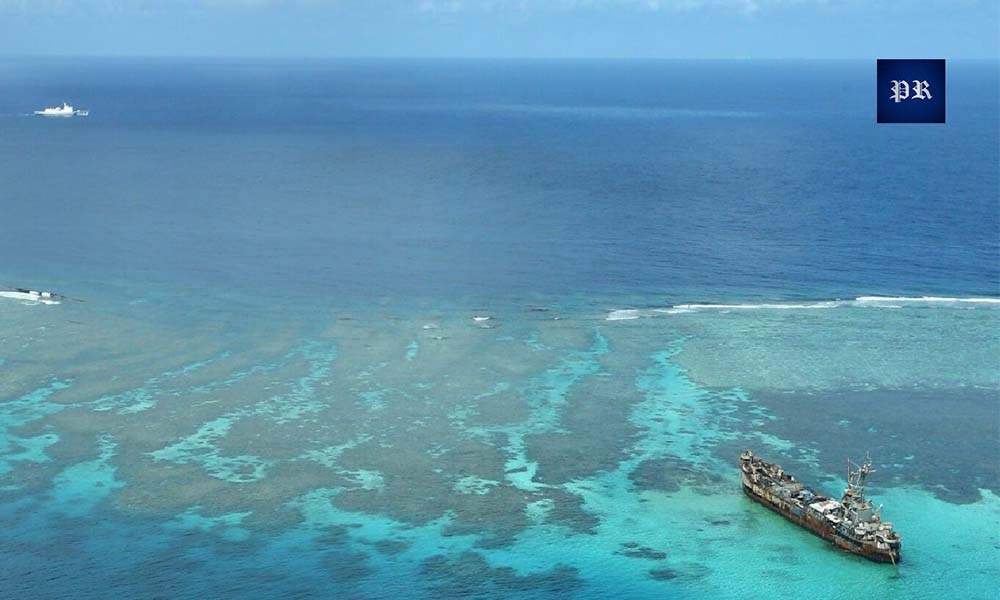
Behind every large military exercise, there is usually a reason that is not openly stated. In the case of Balikatan, that silent driver is China. Over the past decade, tensions across the South China Sea have steadily intensified, turning once-quiet waters into zones of constant friction. Flashpoints such as Scarborough Shoal and Second Thomas Shoal have witnessed repeated confrontations between Chinese and Philippine vessels. In recent years, Chinese coast guard ships — some weighing over 10,000 tons, making them among the largest law-enforcement vessels in the world — have used water cannons, blocking tactics, and aggressive maneuvers against Philippine resupply missions. At the same time, China has constructed artificial islands across disputed reefs, installing radar arrays, missile systems, and long airstrips capable of supporting combat aircraft. Yes, these structures appear permanent. No, they were not created by nature. They were engineered to extend military reach across waters that China claims almost entirely — covering nearly 90 percent of the South China Sea, despite the 2016 international arbitration ruling that rejected many of Beijing’s legal claims.
Japan’s Coastal Radar Transfer to the Philippines: Strategic Implications for Indo-Pacific Security
And the pressure does not end in Southeast Asia. China also faces persistent disputes with Japan in the East China Sea, particularly around the Senkaku Islands, where naval and coast guard vessels from both sides regularly shadow each other. These overlapping tensions form a pattern — one that regional planners now view as a long-term strategic challenge. This is exactly the scenario Lee Kuan Yew anticipated when he warned that smaller states in Asia would need strong partnerships to maintain strategic balance. Yes, exercises like Balikatan are officially defensive in nature. No, they are not happening in isolation. They are responses to a shifting power environment shaped by repeated encounters at sea and rising military capability across the region.https://www.youtube.com/watch?v=lsiZCcD5Hlo
From Beijing’s perspective, however, these growing exercises tell a very different story. Chinese officials often describe them as examples of “bloc confrontation” and criticize what they call a “Cold War mentality.” They argue that expanding joint drills represent a form of containment designed to limit China’s influence. That reaction matters because perception often drives escalation. When one side sees deterrence, the other side may see encirclement. Lee Kuan Yew once noted that major powers do not easily accept limits to their ambitions — especially when they believe history favors their rise. Yes, diplomatic language continues to shape official statements. No, it does not remove suspicion. And in today’s Indo-Pacific environment, this cycle of action and reaction continues to intensify, pushing nations to strengthen cooperation, expand military readiness, and prepare more seriously for uncertain futures.
China Warns Philippine Aircraft Over Scarborough Shoal – Tensions Rise!
Future Outlook — What Happens Next
Looking ahead, the next phase of Balikatan will likely grow faster than many expect. The pattern is already visible. Each year, more countries join, more systems are tested, and more complex missions are rehearsed. In the short term, experts expect larger multinational participation, with more nations sending ships, aircraft, and specialized units. Missile deployments will likely increase, especially mobile systems designed to defend coastlines and islands. Cyber warfare will also expand — not quietly, but as a core battlefield. Yes, ships and aircraft still dominate headlines. No, future conflicts may begin long before the first missile is fired, inside networks and digital systems. Maritime patrols across sensitive waterways are also expected to intensify, particularly in areas close to Taiwan and contested parts of the South China Sea.
Japan’s troop deployments show normalization of regional cooperation. Multinational participation shows the shift from bilateral drills to coalition-based deterrence. China’s growing assertiveness continues to accelerate alliance-building across the region. And cyber warfare is moving from the background to the center of military planning. Yes, this system is still developing. No, it is not slowing down.https://youtu.be/vDdcxRf-VN8?si=kaNg0EkQ_xU7Nodu