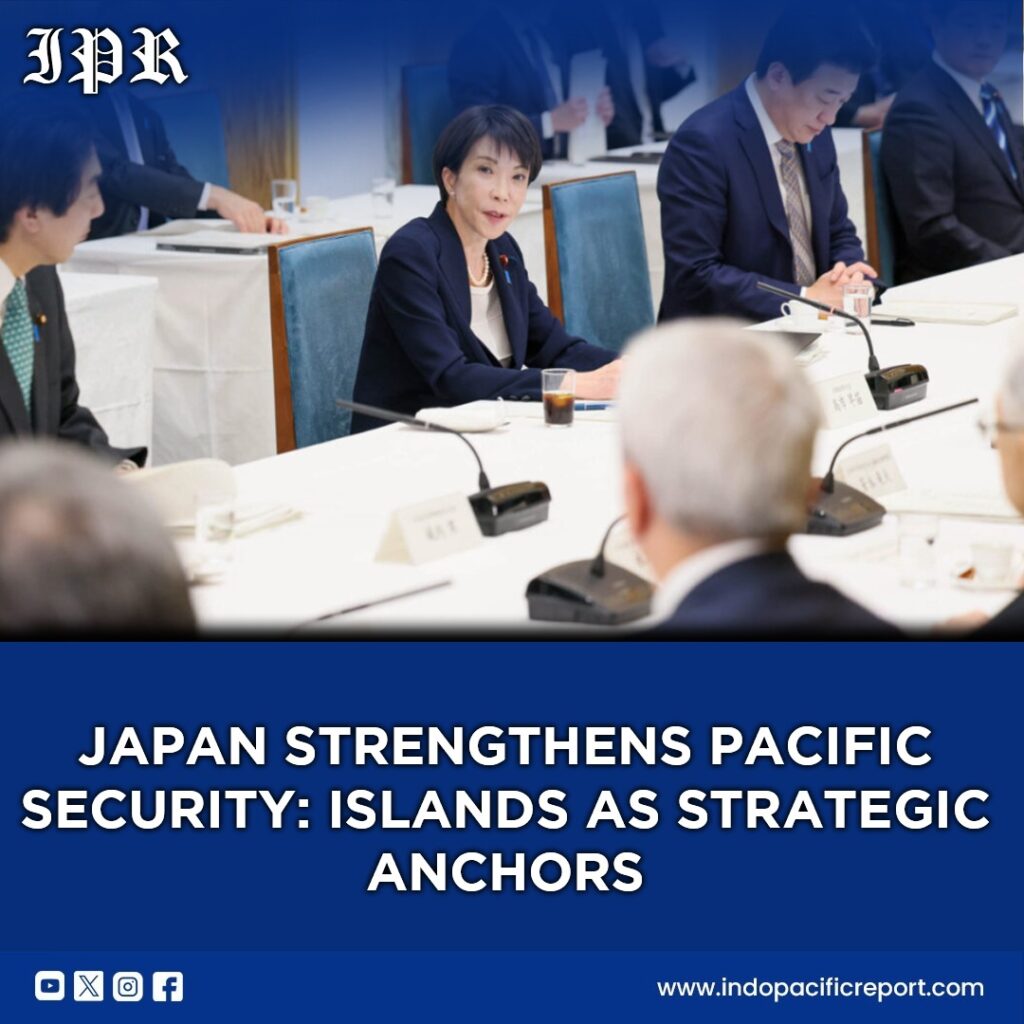
Japan’s February 2026 Pacific Islands Defense Dialogue shows how small island nations are becoming central to Indo-Pacific security. Leaders from 14 Pacific Island Countries (PICs) met with Japan and partners including the U.S., Australia, New Zealand, France, and Canada. The focus: maritime security, disaster response, and building stronger defense partnerships. With only Fiji, Papua New Guinea, and Tonga maintaining armed forces, the islands rely heavily on external support to protect their waters and respond to crises.
In terms of great-power competition, this forum signals Japan’s effort to counter rising Chinese influence in the Pacific. Beijing’s growing maritime presence and coercive tactics have made the islands more vulnerable. Programs like the JMSDF Shiprider, which embeds PIC personnel on Japan’s helicopter destroyer JS Ise, do more than train local officers—they create a network capable of monitoring sea lanes, deterring threats, and asserting freedom of navigation. These are practical steps to strengthen deterrence in a region where small states alone cannot project power.
The dialogue also strengthens regional security architecture. By including ASEAN observers and multiple partners, Japan is building a layered and networked system of collaboration. This ensures that responses to crises—whether illegal fishing, transnational crime, or natural disasters—can be coordinated across nations. The approach moves away from ad hoc partnerships and toward formal, interoperable security cooperation that increases the islands’ resilience.
Alliance dynamics are also at play. Japan’s leadership complements U.S. and Australian strategies in the Pacific, reinforcing broader Indo-Pacific security frameworks. The Philippines’ participation, its first in this forum, highlights how middle powers can leverage multilateral networks to expand their influence and operational capacity. Bilateral meetings with Japan, Malaysia, and Singapore further show that partnerships can strengthen both national and collective deterrence without provoking conflict.
Maritime and economic strategy are central. The Pacific is vital for trade, fisheries, and strategic sea lanes, yet many PICs lack the resources to monitor or protect these zones. Programs like joint boarding exercises, shiprider training, and leadership development not only improve security but also support economic stability and humanitarian assistance. Japan’s Next Generation Leadership Security Program ensures that island nations build long-term capacity, creating a sustainable foundation for regional resilience.
Strategically, this strengthens the Indo-Pacific balance of power. Small island states are no longer passive; they are nodes in a broader security network. Japan’s approach demonstrates that influence can be extended through training, partnerships, and interoperability, not just by military presence. Over time, this network raises the cost of coercion for any major power, making unilateral action in the Pacific riskier and enhancing regional stability.
Looking ahead, the key question is whether these partnerships can maintain momentum amid intensifying strategic competition. Continued investment in training, infrastructure, and operational coordination will determine whether the Pacific Islands can effectively resist pressure or remain vulnerable to coercion.
Audience Question:
Can Pacific Island nations, with external support, actually deter major-power coercion, or will their small size always limit influence?