INDOPACIFIC REPORT | Geo-Politics | Analysis
Published: March 30, 2026 | By IndoPacific Report Editorial
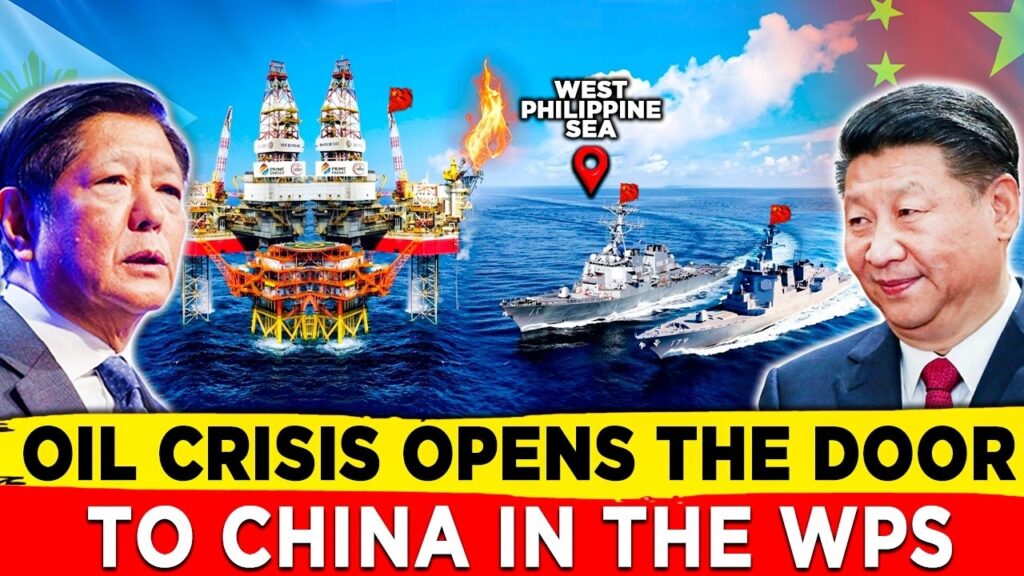
Is Marcos Selling the West Philippine Sea to China for Oil?
The Fujian talks, the energy emergency, and the sovereignty question no one in Manila wants to answer.
• • •
On March 28, 2026, Philippine and Chinese officials sat down in a room in Quanzhou, Fujian Province, China. On the table was something that belonged to every Filipino citizen, living and future: oil. Oil sitting beneath waters the Philippines legally won at The Hague in 2016.
Two meetings took place over two days. The 24th Foreign Ministry Consultations and the 11th Bilateral Consultation Mechanism on the South China Sea. The Department of Foreign Affairs called the discussions ‘initial exchanges on potential oil and gas cooperation.’ That phrase, in diplomatic language, means something precise. It means the subject is now formally on the table.
Four days before the Fujian meeting, President Ferdinand Marcos Jr. said something remarkable in a Bloomberg interview. He described the energy crisis as a potential ‘impetus’ for the Philippines and China to reach an agreement on the South China Sea. Not ‘possibility.’ Not ‘hope.’ Impetus — a force strong enough to move something that has been stuck for a decade.
China responded two days later. The Chinese Embassy in Manila released a statement that did an enormous amount of strategic work in very few words: “Setting aside differences and pursuing joint development is the right path to uphold peace and stability in the South China Sea.”
Setting aside differences. The difference they want set aside is the Philippines’ 2016 legal victory.
The Energy Emergency Behind the Diplomacy
To understand why Marcos flew to Fujian, you need to understand what is happening to every Filipino family right now. The Philippines imports ninety-eight percent of its oil, almost entirely from the Middle East. When the United States and Israel struck Iran in late February and Tehran closed the Strait of Hormuz, the impact on Manila was immediate and devastating.
On March 24, Marcos declared a national energy emergency — the first in Philippine history. As of late March, the country had roughly forty-five days of oil reserves remaining, down from fifty-seven when the crisis began. Diesel crossed ₱144 per liter. Kerosene hit ₱165.79. Four hundred and twenty-five gas stations across the country shut their pumps — not by choice, but because they ran out of supply.https://indopacificreport.com/marcos-a-future-ready-ph-us-alliance-evolving-beyond-defense/
Transport drivers went on strike. Malls cut operating hours to save electricity. The government warned inflation could hit double digits. Sorsogon Province declared a local state of calamity. This is not abstract economics. This is daily life getting harder, every hour. For a deeper analysis of how this energy crisis intersects with Chinese pressure in the West Philippine Sea, see our full report on the two-front crisis facing Manila.https://www.youtube.com/watch?v=IFH4j-2VbMs
What Sits Beneath Philippine Waters
The scale of what is being discussed in these negotiations is extraordinary. According to the Philippine Department of Energy, an estimated 6,203 million barrels of oil and 12,158 billion cubic feet of natural gas lie within the Philippine Exclusive Economic Zone. Recto Bank — Reed Bank — alone could hold 5.4 billion barrels of oil and 55 trillion cubic feet of natural gas, according to the US Energy Information Administration. That is potentially more gas than the Malampaya field has ever produced. Malampaya has powered Luzon for decades.
The answer to the Philippines’ energy crisis may already be sitting under its own waters. So why has it not been drilled?
One reason. China.
Marcos: A “Future-Ready” PH–US Alliance Evolving Beyond Defense
Raymond Powell of Stanford University’s Gordian Knot Center for National Security Innovation has noted that China has effectively prevented the Philippines from exploiting its own oil and gas reserves through sustained threats and coercion — making it seem too risky or costly to engage in legitimate exploration activities. China did not invade. It did not fire a missile. It simply made drilling feel too dangerous for years. And now, at the exact moment the Philippines is most desperate, Beijing is offering to help — at a price.
A History of Failed Deals
This is not the first time Manila and Beijing have been here. During the Duterte administration, the two countries came close to a joint exploration agreement. Frameworks were drafted. In 2018, President Duterte and President Xi reached a deal personally. Then in 2022, as Duterte was leaving office, the talks collapsed over constitutional concerns and sovereignty questions. The deal was terminated.https://indopacificreport.com/why-marcos-south-china-sea-policy-is-better-than-duterte/
Beijing noticed. And Beijing remembered. Herman Tiu Laurel of the Asian Century Philippines Strategic Studies Institute wrote in the Manila Times on March 30, 2026 that China was concerned about Philippine ‘flip-flopping’ — a series of policy reversals dating back to initial engagements in 2013. That concern explains Beijing’s current demand: show sincerity first.
‘Sincerity,’ in Chinese diplomatic terms, means something specific. It means stop the transparency policy. Stop the livestreams. Stop publicly exposing Chinese ships in the West Philippine Sea. The very policy that built the Philippines enormous international support is now the bargaining chip China wants in return for oil cooperation.
Even if Marcos wanted to make a deal, the Philippine Constitution stands in the way. Natural resources inside Philippine territory are classified as national patrimony. They belong to every Filipino. Any agreement that compromises sovereign rights is unconstitutional.
Retired Supreme Court Justice Antonio Carpio has been direct: the vast resources of the West Philippine Sea belong not only to today’s Filipinos but to generations yet to come. Failing to defend them, Carpio argues, would mean surrendering both opportunity and sovereignty.
And there is an uncomfortable historical parallel. More than fifty years ago, during the 1973 oil crisis, the Philippines faced a strikingly similar situation. Fuel prices surged. Imports became uncertain. The country struggled with heavy dependence on foreign oil. That president was Ferdinand Marcos Sr. Today, half a century later — same crisis, same surname, same unresolved vulnerability.

Three Scenarios — None of Them Clean
Scenario 1: The deal goes through. China gets access. The Philippines gets oil. In the short term, the crisis eases. But in the long term, the 2016 arbitral ruling is quietly weakened. Future governments inherit a harder position. The US alliance is tested. And China establishes a precedent — that the right crisis, at the right moment, can unlock what years of military pressure could not.
Scenario 2: Talks collapse again. China’s demand for ‘sincerity’ is fundamentally a demand for silence. The Marcos administration cannot abandon its transparency policy without losing domestic legitimacy and international support. So the talks break down. The energy crisis deepens. Inflation hits double digits. China watches — and waits for the next crisis.
Scenario 3: A symbolic deal with no real progress. Both sides agree to ‘continue exploring cooperation.’ Committees are formed. A foreign ministers’ meeting is scheduled. Statements are issued. But no real drilling begins. The Philippines buys oil from Russia and India instead. Tensions in the West Philippine Sea resume — unresolved, as always. This is the most likely outcome.
All three scenarios share one truth. None of them solve the actual problem. The Philippines’ energy dependence — unchanged since 1973 — remains unresolved.
What This Means
The Philippines is in a desperate situation not of its own making. The energy crisis is real. ₱144 diesel is real. 425 closed gas stations are real. Forty-five days on the clock is real.
But history has a clear lesson about what happens when the Philippines negotiates with China from a position of desperation. Scarborough Shoal in 2012. The Duterte deal in 2018. Both times, Manila bent toward Beijing. Both times, it gained nothing. Both times, it lost ground it has never recovered.
The question is not whether Marcos should talk to China. Diplomacy is always preferable to conflict. The question is what the Philippines is willing to give away to end this crisis — because China already knows the answer. They set the price before the talks even started.https://www.youtube.com/watch?v=IFH4j-2VbMs
• • •
Related Coverage from IndoPacific Report:
• China Is Watching the Philippines Fight Two Wars at Once — and It’s Taking Notes
• China’s Secret New Island: Antelope Reef Exposed
• $2.5 Billion: America’s Biggest Bet on the Philippines Since the Cold War
• Philippines’ Energy Shock and Flight Risks: What It Means for Indo-Pacific Security
🎬 Watch the full video breakdown on YouTube: Is Marcos Selling the West Philippine Sea to China for Oil? — A 15-minute deep dive with data, maps, and three scenario analyses. Subscribe to IndoPacific Report on YouTube for weekly coverage of Philippine defense and South China Sea developments.https://youtu.be/7tsv6Z8N7Iw?si=MTwd-RrBzzS-LElW
Sources
Philippines-China Fujian talks: Department of Foreign Affairs statement, March 28, 2026; Bloomberg interview with President Marcos, March 24, 2026; Chinese Embassy Manila statement, March 26, 2026.
Energy crisis data: Department of Energy; Philstar.com; Al Jazeera; CNN Philippines. Fuel prices and station closures as of March 27, 2026.
Oil and gas reserves: Philippine Department of Energy; US Energy Information Administration (Recto Bank estimates).
Raymond Powell analysis: Stanford University, Gordian Knot Center for National Security Innovation.
Herman Tiu Laurel: Asian Century Philippines Strategic Studies Institute, Manila Times, March 30, 2026.
Retired Justice Antonio Carpio: Public statements on national patrimony and West Philippine Sea sovereignty.
Historical context: 2018 Duterte-Xi joint exploration agreement; 2016 Hague arbitral tribunal ruling; 2012 Scarborough Shoal standoff.
• • •
About IndoPacific Report
IndoPacific Report is an independent news and analysis platform covering defense, diplomacy, and the great-power competition shaping the Indo-Pacific. We deliver strategic insights on the South China Sea, Philippine defense modernization, and the evolving balance of power in Asia.
Follow us: YouTube | Facebook | Website
© 2026 IndoPacific Report. All rights reserved.
Reproduction permitted with attribution and link to indopacificreport.com

https://youtu.be/7tsv6Z8N7Iw?si=wJZchoE6bTceZu28