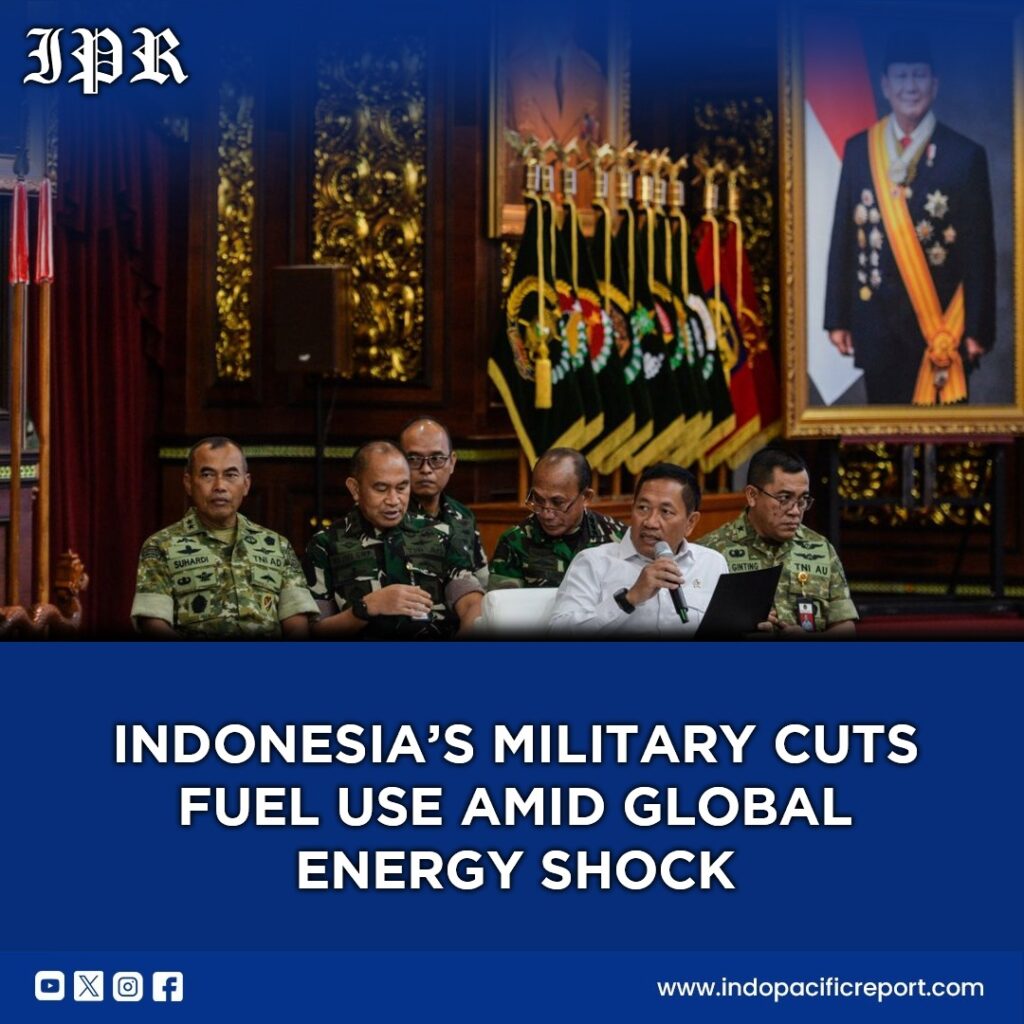
Indonesia’s military decision to allow one day of remote work per week shows how even domestic policy is now tied to global security risks. Rising energy prices, caused by the ongoing Middle East crisis, are forcing Jakarta to rethink how it uses fuel in defense operations. This step is part of a broader effort to conserve resources while maintaining readiness, reflecting an awareness that energy vulnerability can quickly turn into strategic risk.
From a great-power perspective, the Middle East crisis exposes Asia’s dependence on Gulf oil. With Iran now controlling the Strait of Hormuz, the lifeline for much of Asia’s energy, major powers like China, Japan, and India are suddenly more exposed. Indonesia’s domestic measures, like reduced fuel use, are a small but meaningful step toward strategic resilience in this environment of energy fragility.
The regional security architecture is also under stress. Hong Kong has issued the highest-level travel alert for Iran and Israel, and Cathay Pacific has canceled flights to Dubai until May 31. These disruptions, while civilian, ripple into military and economic systems across Asia. Indonesia’s policy reflects a growing recognition that domestic energy management is now a component of national security planning.
Alliance dynamics are affected too. The U.S.-led strike on Iran has ripple effects across Asia, forcing regional players to adjust their own energy and defense policies. Indonesia’s steps, though not directly linked to alliances, show how middle powers are factoring global military crises into domestic planning. This reflects a subtle form of strategic hedging—preparing for instability without directly entering the conflict.
From a maritime and economic lens, the crisis underscores the Indo-Pacific’s dependence on chokepoints like the Strait of Hormuz. Disruptions there push fuel prices up, impact trade, and indirectly affect military readiness. Indonesia’s reduced in-office schedule may seem minor, but it is a tangible attempt to increase operational flexibility while lowering vulnerability to global supply shocks.
For the Indo-Pacific balance of power, this episode highlights a key trend: energy security is inseparable from strategic competition. Even distant conflicts can force regional militaries to adapt. Indonesia’s approach shows that modern strategy is not just about weapons and alliances—it is also about logistics, resource management, and resilience. Small, practical steps like this could help middle powers navigate instability and maintain influence without escalating tensions.
Forward-looking: As the Middle East crisis continues, we can expect more regional militaries to integrate energy efficiency and supply risk into their planning. Indonesia’s policy may be an early example of how states adapt to a world where economic, military, and energy vulnerabilities are increasingly interconnected.
Debate question for readers: In a world where energy and military readiness are linked, should countries prioritize domestic energy efficiency or rely on allies for security?