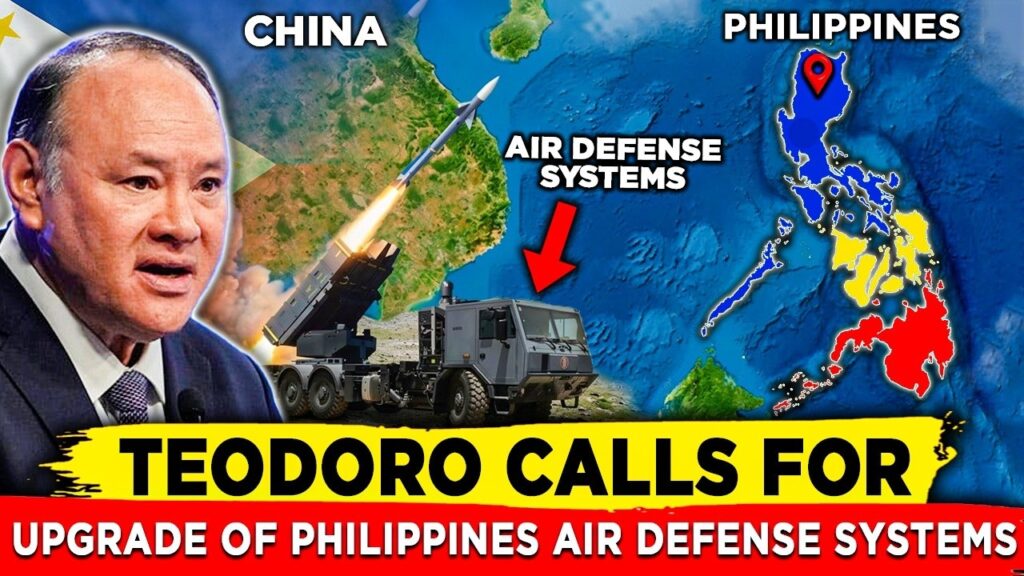
Gibo Teodoro Calls for Urgent Upgrade of Philippines Air Defense Systems
There’s a moment in geopolitics when warnings stop sounding like routine statements, and start feeling like a countdown. That’s kind of where the Philippines is right now. When Gilberto Teodoro Jr. better known as Gibo, talks about urgently upgrading air defense systems, it doesn’t come off as political noise. It feels like someone looking at the map, looking at the trends, and realizing the gap is getting a little too real, a little too fast. And honestly, if you zoom out and look at the region, you start to see why this isn’t just another policy discussion. It’s a warning.
The Philippines sits in one of the most strategically sensitive zones in the world, right between the South China Sea and the broader Western Pacific. That’s not just geography, that’s exposure. Every major power movement, every patrol, every exercise, it all passes nearby. And over the past few years, those movements haven’t slowed down. They’ve intensified.https://www.youtube.com/watch?v=JjngOeIXbH0
You’ve got advanced fighter jets flying longer patrols. Surveillance aircraft mapping everything. Drones, cheap, persistent, everywhere. And then there’s the big one: missiles. Not the old-school kind people imagine, but long-range, precision-guided systems that can hit targets hundreds, even thousands of kilometers away. The kind that changes the entire equation of defense. And that’s exactly the problem.
Japan’s Type-12 Missile Deployment: From Shield to Strategic Sword
Right now, the Philippines doesn’t have a fully integrated air defense system. Not a layered one, not a nationwide shield, just pieces. Some radar coverage here, some missile systems there, but nothing that ties it all together into a single, responsive network. It’s like having security cameras without a control room. You might see something but reacting in time? That’s another story.https://www.youtube.com/watch?v=JjngOeIXbH0
For decades, that gap didn’t feel urgent. The country’s military focus was mostly internal, counterinsurgency, domestic stability, and disaster response. Air defense against advanced external threats wasn’t the priority. But the region changed. Fast. China’s military modernization alone has shifted the balance dramatically. We’re talking about integrated air defense networks, long-range strike systems, and a level of coordination that smaller states just can’t easily match. And it’s not just China. Across Asia, countries are upgrading, quietly, steadily, but very seriously.
So when Teodoro talks about “credible defense,” he’s not just talking about having equipment. He’s talking about deterrence. Because in modern strategy, the goal isn’t always to fight, it’s to make sure no one wants to fight you in the first place. And here’s the uncomfortable truth: without a strong air defense system, deterrence weakens. Think about it. If your airspace can’t be fully monitored, if incoming threats can’t be reliably intercepted, then any adversary knows there’s a vulnerability. And vulnerabilities, in geopolitics, don’t stay theoretical for long.
The Philippine Air Force has made progress, no doubt. The acquisition of FA-50 jets brought back supersonic capability after years of absence. New radar systems are being installed. There’s movement, there’s effort. But compared to the scale of modern threats, it’s still not enough. One of the biggest gaps is early warning.https://youtu.be/f2hPOgAejfQ?si=jb4aAs3UZ2xQ0dlU
Modern air defense starts with knowing what’s coming, early, clearly, and continuously. That means long-range radar coverage, airborne surveillance platforms, and real-time data integration. Without that, even the best missile systems can be caught reacting too late.
Then comes interception capability. Surface-to-air missiles, layered at different ranges, capable of engaging everything from drones to cruise missiles to aircraft. Right now, the Philippines has started building this capability, but it’s still in its early stages. Coverage is limited. Depth is limited. And in a real scenario, saturation, multiple incoming threats at once becomes a serious concern.https://youtu.be/JjngOeIXbH0?si=ko0AvY9AzlNSxAwW
There’s also the issue of integration. Modern defense isn’t just about buying systems; it’s about connecting them. Command and control, communication networks, decision-making speed, that’s what turns separate tools into an actual defense system. And building that takes time, training, and serious investment. Of course, none of this happens in a vacuum.
Philippine Response to Chinese Maritime Pressure: Lessons for Indo-Pacific Strategy
The Philippines has alliances, especially with the United States and those partnerships matter a lot. Joint exercises, intelligence sharing, technology transfers, they all help bridge the gap. Agreements like EDCA have expanded cooperation, giving the Philippines access to advanced systems and training environments. But here’s where it gets tricky.https://youtu.be/JjngOeIXbH0?si=ko0AvY9AzlNSxAwW
Relying too much on allies can solve short-term problems while creating long-term dependence. And Teodoro seems very aware of that. His emphasis on self-reliance isn’t about distancing from allies, it’s about ensuring that, when it really matters, the Philippines can stand on its own. Because alliances are strongest when both sides bring capability to the table.
Philippines Calls on the World to Stop China’s South China Sea Grab
Then there’s the political and economic side of it all. Building a modern air defense system isn’t cheap. We’re talking billions of dollars over many years. Radar networks, missile batteries, aircraft, training, maintenance, it adds up fast. And for a developing country balancing infrastructure, healthcare, and education, those decisions aren’t easy. You can already hear the debate: should that money go to defense, or to social programs?
It’s a fair question. But it’s also a classic one. Security and development have always competed for resources. The difference now is that the threats are evolving faster than before. Waiting too long to invest in defense doesn’t just delay capability, it widens the gap. And gaps, once they get big enough, become very hard to close.https://www.youtube.com/watch?v=F3hxwHzWW3A
There are also external reactions to consider. Any major upgrade in military capability, especially in a tense region, will be noticed. Some neighbors might see it as defensive. Others might see it as escalation. Managing that perception becomes part of the strategy itself. That’s why diplomacy still matters. A lot.https://indopacificreport.com/philippines-calls-on-the-world-to-stop-chinas-south-china-sea-grab/
Air defense, by nature, is defensive. It doesn’t project power outward; it protects inward. And that gives the Philippines a strong argument: this isn’t about aggression, it’s about security. Still, in a region as sensitive as Southeast Asia, even defensive moves can ripple outward. So everything has to be calibrated. Carefully.https://www.youtube.com/watch?v=F3hxwHzWW3A
Looking ahead, the path is pretty clear even if it’s not easy. The Philippines needs a layered air defense system. That means long-range detection, mid-range tracking, and short-range interception all working together. It means investing in people, training operators, engineers, analysts. It means building infrastructure that can support advanced systems long-term, not just during initial deployment.
And maybe most importantly, it means consistency. Defense planning doesn’t work if it resets every few years. It needs continuity across administrations, across political cycles. Because the threats won’t pause just because policies change. At the end of the day, what Teodoro is really saying isn’t complicated.
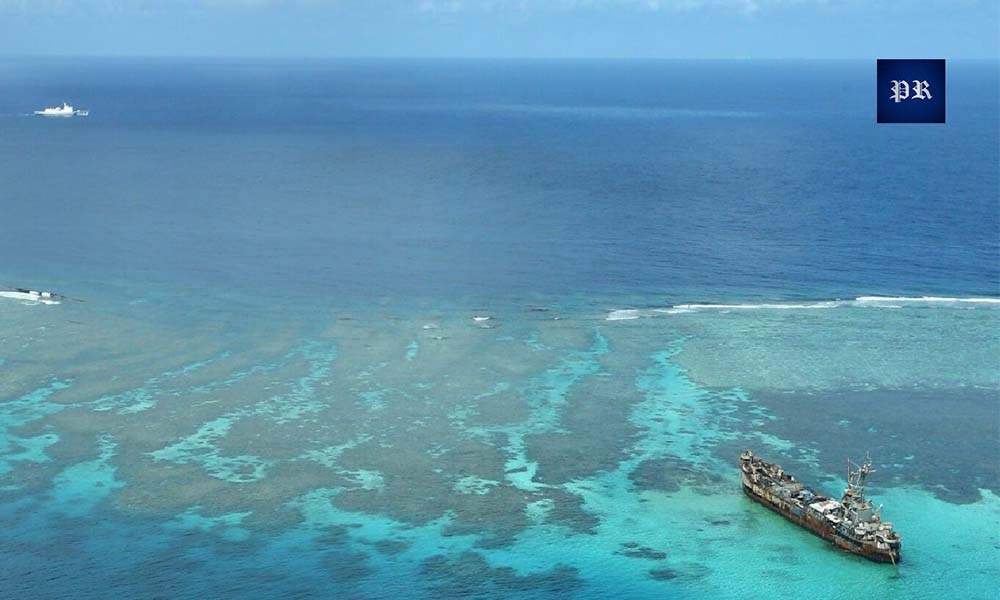
Philippines Completes BRP Sierra Madre Resupply Despite China’s Blockade
The world around the Philippines is changing. Faster than before. More technologically, more strategically, more unpredictably. And the country has a choice: adapt at the same pace or risk falling behind. Air defense might not be the most visible part of military power. There are no dramatic images, no headlines like warships or fighter jets taking off. But it’s the shield behind everything else. The quiet layer that makes all other capabilities possible.
Without it, even strong forces operate with risk. With it, a nation gains something more than protection, it gains confidence. And right now, that confidence is exactly what the Philippines is trying to build.https://youtu.be/f2hPOgAejfQ?si=jb4aAs3UZ2xQ0dlU