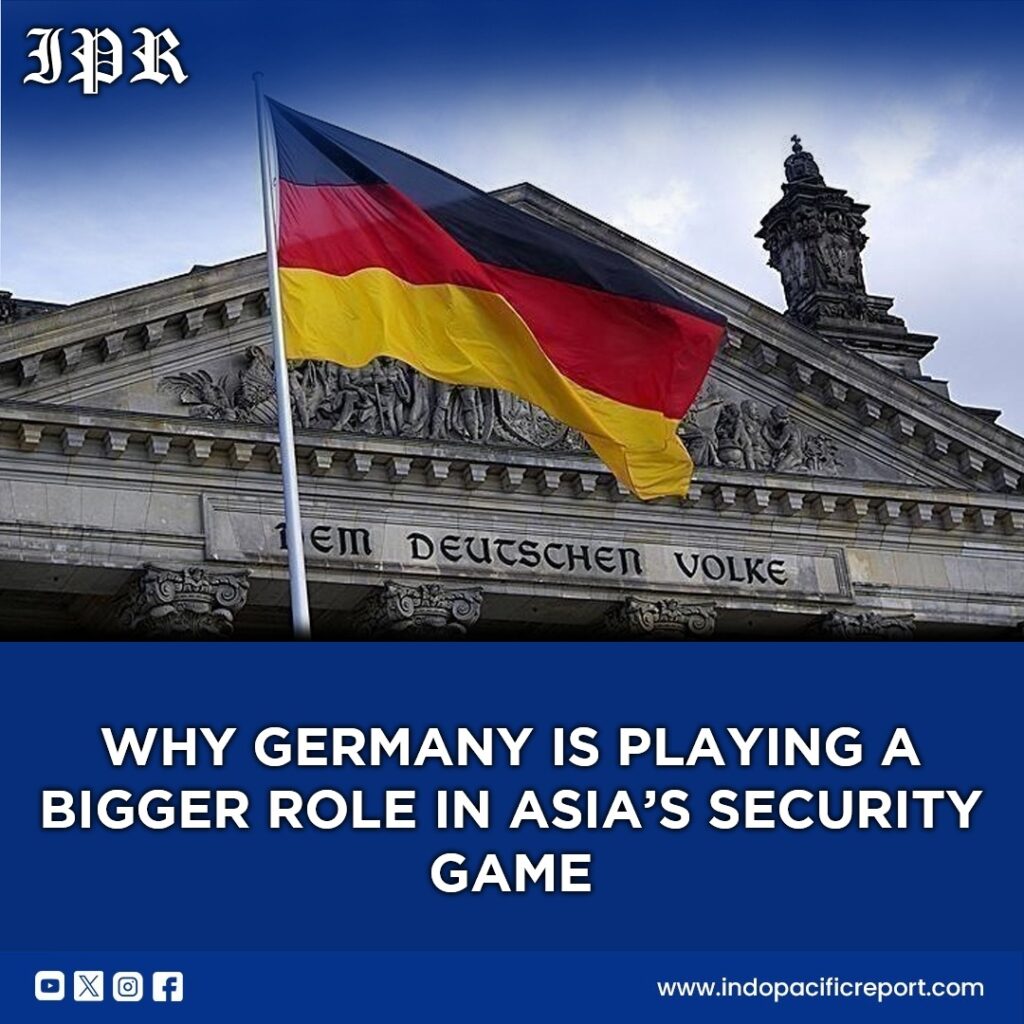
Germany is stepping up its role in the Indo-Pacific. Defence Minister Boris Pistorius will visit Japan, Singapore, and Australia at the end of March, accompanied by leaders from Airbus and Thyssenkrupp Marine Systems. The goal is to expand security cooperation and industrial partnerships. While Germany is traditionally focused on Europe, this visit signals its growing interest in Indo-Pacific stability and rules-based order.
From a great-power competition perspective, this move shows that Europe wants a voice in the region. China has been expanding its naval and economic influence across Asia. By engaging with key partners, Germany signals that the Indo-Pacific is not only a U.S.-China theater. European powers can help maintain balance and prevent regional coercion.
The trip also impacts regional security architecture. Germany has signed defense agreements with Japan and increased naval presence in the region. Joint exercises, interoperability, and industrial collaboration expand a network of capable partners. This strengthens deterrence and resilience in waters critical to global trade and strategic stability.
Alliance dynamics are central. By including defense firms, Germany links industry and policy. Export deals, technology sharing, and joint projects with Japan, Singapore, and Australia enhance trust and capabilities. This approach shows that alliances are not just military—they are industrial, technological, and strategic.
From a maritime and economic strategy perspective, the visit is about influence as much as hardware. Singapore recently procured €1.2 billion in defense systems, and Germany is competing for submarine deals. Advanced naval systems strengthen partner capabilities while also giving Berlin leverage in regional decision-making. Industrial partnerships become tools of soft power.
The visit has broader Indo-Pacific implications. It diversifies sources of advanced technology, strengthens middle-power influence, and reassures smaller states that rules-based order has wider support. It also signals to Beijing that regional stability is backed by more than U.S. military power alone.
Audience question: Can European defense and industrial engagement in the Indo-Pacific truly influence the balance of power, or is it mainly symbolic?