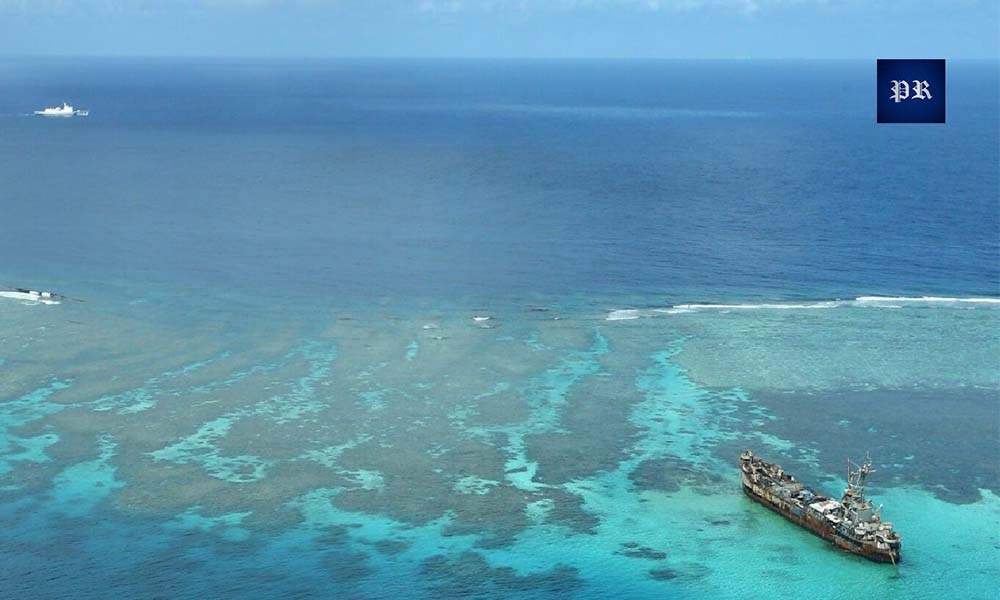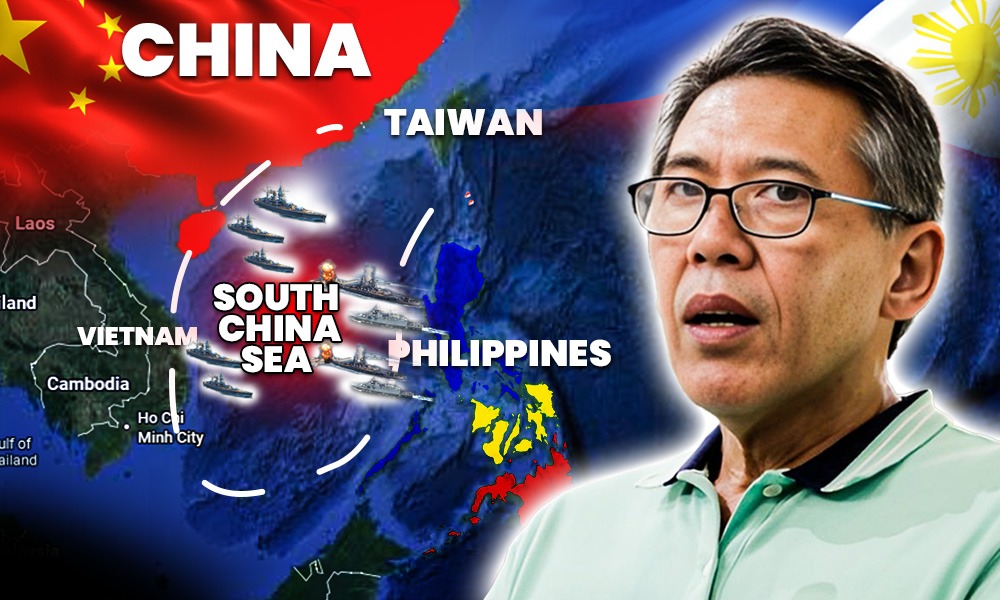
The Philippines stands at a critical crossroads, one that blends questions of justice, sovereignty, and survival. China’s aggression in the West Philippine Sea is intensifying, water cannons, ramming incidents, swarms of coast guard ships and Filipinos are asking: what more can Manila do? Among the loudest answers is a bold one: rejoin the International Criminal Court. Rep. Chel Diokno and lawmakers from the West Philippine Sea bloc argue it’s not just about human rights, it’s about giving the Philippines another weapon in the legal fight against Beijing.
Rejoining the ICC is a strategic move, not a simple one. International law is powerful, but it has limits. The 2016 arbitral tribunal ruling in The Hague was clear: China’s “nine-dash line” claim is invalid, and the Philippines’ EEZ stands. Yet years later, Chinese ships still dominate Scarborough Shoal and Second Thomas Shoal. The law gave Manila victory on paper, but without enforcement, the gray-zone tactics continue at sea. The ICC, advocates argue, could provide another layer of accountability, turning legal principle into sharper diplomatic pressure.
The case for rejoining is built on law and strategy. Under the ICC, the Philippines could file “crimes of aggression” against China as long as it regains membership in the Court. For Manila, that would mean moving beyond protest notes and tribunal rulings, toward binding international cases that put Beijing under the global spotlight. It would also reaffirm the Philippines’ identity as a defender of the rules-based order, signaling solidarity with allies who see the ICC and UNCLOS as cornerstones of global stability.
The urgency is highlighted by facts on the water. In June 2025, 49 Chinese vessels were recorded harassing Philippine fishermen and shadowing coast guard ships, the highest monthly total of the year. In August, a China Coast Guard cutter was left “unseaworthy” after colliding with a Chinese destroyer while trying to block a Philippine vessel, exposing the recklessness of Beijing’s maneuvers. Each incident shows how fragile the situation is and how badly Manila needs tools that can turn aggression into international liability.
The ripple effects of such a move would be immediate and long-term. In the short term, rejoining the ICC would provoke Beijing’s wrath, tighter blockades, louder threats, perhaps even economic retaliation. At home, it would reopen bitter debates over the Court’s jurisdiction, especially with Duterte’s war on drugs still under ICC review. But among allies, Washington, Tokyo, Canberra, it would be seen as a decisive act of principle. And in the long run, it could set a precedent: a small state using international law to challenge a great power, creating pressure not just on China, but for future disputes worldwide.
The decision will define the Philippines’ future foreign policy. Will Manila lean on legal norms, alliances, and deterrence to hold its ground? Or will it try to de-escalate through fragile bilateral deals with Beijing? Rejoining the ICC won’t end the South China Sea conflict overnight but it could reshape the battlefield. Because at stake is not only sovereignty over reefs and shoals, it’s the Philippines’ place in the Indo-Pacific order, and whether a nation of 115 million can turn law, diplomacy, and alliances into lasting strength against a superpower.
The Case for Rejoining the ICC: A Legal and Strategic Imperative
For lawmakers like Chel Diokno, the argument for bringing the Philippines back into the fold of the International Criminal Court isn’t just about symbolism, it’s about hard law and survival in the South China Sea. At the center of their case is one concept: crimes of aggression. As Diokno himself explains, “Under the ICC, we can file crimes of aggression against another country as long as we are members of the Court.” In practice, this means the Philippines could elevate China’s maritime coercion from a series of “incidents at sea” to international crimes. Each ramming, each water cannon strike, each blockade could be reframed not simply as harassment, but as part of a broader campaign of aggression that violates international law. Rejoining the ICC would unlock this legal pathway, turning Manila from a perpetual defendant in Chinese propaganda into an accuser in the world’s highest court.
Beyond the courtroom, there’s a broader principle at stake: credibility in the rules-based order. By returning to the ICC, the Philippines would signal to the world that it is fully committed to international law, whether it’s the 2016 Hague tribunal ruling under UNCLOS or broader accountability mechanisms like the ICC itself. In a region where China flaunts its disregard for international rulings, Manila’s re-entry would put it back on the moral high ground, reinforcing its narrative that the West Philippine Sea dispute is not a bilateral quarrel but a matter of global law and justice. It would give added weight to its calls for international solidarity and strengthen its position in diplomatic forums, from ASEAN to the UN.
And the urgency is only growing. In recent years, China’s actions have gone from coercive to outright reckless. In August 2025, the world watched as a China Coast Guard cutter collided with a Chinese naval destroyer while both tried to box in a much smaller Philippine vessel near Scarborough Shoal. The CCG ship was left “unseaworthy,” and questions still linger about casualties. Just months earlier, PCG vessels faced water cannon blasts so strong they shattered windshields and injured crew members at Second Thomas Shoal. These are not isolated cases—they are part of a pattern. In June 2025 alone, the Philippine Navy counted 49 Chinese vessels across three disputed zones, the highest monthly total that year. Each statistic tells the same story: China’s presence is swelling, its tactics are intensifying, and the risk of loss of life is mounting. For ICC proponents, this escalation is precisely why Manila needs every legal weapon available, including the ICC’s jurisdiction.
But here’s where history complicates the present. Back in 2019, two Philippine statesmen, former Foreign Affairs Secretary Albert del Rosario and former Ombudsman Conchita Carpio-Morales, attempted to break new ground by filing a complaint with the ICC against Chinese President Xi Jinping and top officials. Their charge? Crimes against humanity, rooted in environmental destruction of Philippine waters and the persecution of Filipino fishermen whose livelihoods were being crushed by Chinese blockades. It was bold. It was unprecedented. And ultimately, it was dismissed. The ICC prosecutor argued that the Court lacked jurisdiction because the acts occurred in the Philippines’ Exclusive Economic Zone (EEZ), a maritime area not considered “territory” under the Rome Statute. The case exposed a legal gap: even when China destroyed reefs, endangered ecosystems, and cut off Filipino fishermen from their own waters, the ICC’s hands were tied because the Philippines had already begun its withdrawal from the Court.
That is why advocates like Diokno say rejoining isn’t just desirable, it’s necessary. Membership would restore jurisdiction and remove the technical barriers that sank the 2019 case. It would give the Philippines the chance to pursue accountability in ways that go beyond rhetoric, building a bridge between the 2016 Hague ruling and new international legal strategies. And while no one expects the ICC to dispatch marshals to arrest Chinese officials, the very act of filing charges could reshape the narrative, mobilize diplomatic pressure, and remind the world that Beijing’s “gray-zone” tactics are not clever maneuvers, they are acts of aggression against a sovereign state.
Potential Effects: Immediate and Future Implications
If the Philippines were to rejoin the International Criminal Court tomorrow, the ripple effects would be immediate, visible, and seismic across the South China Sea. The very first shockwave would come from Beijing. China has never recognized the ICC, just as it refused to acknowledge the 2016 Hague ruling that invalidated its sweeping “nine-dash line” claim. For Beijing, rejoining the ICC is not just a legal technicality, it’s a direct threat to its narrative of “indisputable sovereignty.” If Manila took this step, China would almost certainly respond with fury, escalating its “gray-zone” tactics in ways designed to intimidate and punish. Expect to see sharper water cannon blasts against Philippine Coast Guard ships, denser swarms of maritime militia shadowing fishermen, tighter blockades at flashpoints like Scarborough and Second Thomas Shoal, and possibly even cyber or economic coercion aimed at showing the Philippines the cost of “lawfare.” Far from calming the waters, the ICC card would raise the stakes overnight.
But the turbulence would not stop at the water’s edge, it would hit home in Manila. Rejoining the ICC would reopen one of the Philippines’ most divisive political wounds: the country’s withdrawal from the Rome Statute in 2019. That withdrawal, engineered by then-President Rodrigo Duterte, was a defensive move to shield his administration from an ICC investigation into the bloody “war on drugs” that left thousands dead. The Marcos Jr. government has since doubled down, repeatedly insisting that the ICC has “no jurisdiction” over the Philippines. To rejoin now would not only reverse Duterte’s legacy, it would also force Marcos into a political tightrope walk. On one side are reformists and rule-of-law advocates like Chel Diokno who see ICC membership as a shield against foreign aggression and domestic abuses. On the other side are loyalists, nationalists, and Duterte allies who see the ICC as an external intrusion on Philippine sovereignty. The debate would split the country once more, reviving painful arguments about accountability, human rights, and the limits of international law.
At the same time, the external reaction would be the opposite: applause. For allies like the United States, Japan, and Australia, a Philippine return to the ICC would be a masterstroke of diplomacy. Washington has long framed the Indo-Pacific struggle as a contest between the rule of law and coercive power. Tokyo has repeatedly stressed the sanctity of UNCLOS and freedom of navigation. Canberra, too, has tied its security to a rules-based order. By rejoining the ICC, the Philippines would instantly elevate its moral standing, showing that it is not only defending itself with patrols and alliances but also reinforcing the global legal system that underpins stability. Just as the 2016 Hague ruling gave Manila a diplomatic victory it could wield for years, ICC membership would be another brick in the wall of deterrence, this time built not with weapons, but with statutes, courts, and international legitimacy.
Philippines Should Accelerate Island Building in the South China Sea Like Vietnam
The long-term implications, however, stretch far beyond Manila or Scarborough Shoal. If the Philippines managed to file a credible ICC complaint against China, even if it never advanced to a full trial, it would create an unprecedented legal precedent. For the first time, Chinese aggression at sea would not simply be debated in press conferences or condemned in communiqués, it would be entered into the official record of international criminal law as a potential “crime of aggression.” That alone would be a diplomatic earthquake. It would give smaller states like Vietnam, Malaysia, and even countries outside Asia a template for confronting great-power bullying through lawfare rather than sheer force. It would also put Beijing in an uncomfortable global spotlight, painting its gray-zone tactics not as inevitable displays of power, but as deliberate violations of international order.
Yet, this legal and diplomatic path comes with a price tag, an economic one. China is not just the Philippines’ most dangerous maritime rival; it is also one of its largest trading partners. In 2024, China accounted for over 18% of Philippine imports and exports, and millions of Chinese tourists visited Philippine beaches and resorts. A high-profile ICC case could push Beijing to wield its economic influence as a weapon: cutting back on trade deals, restricting agricultural exports like bananas and pineapples, blocking tourism flows, or quietly discouraging Chinese firms from investing. The result would not be abstract, it would mean lost jobs, lower incomes, and pressure on industries already stretched thin. Ordinary Filipinos could end up paying the price for a courtroom battle waged thousands of miles away in The Hague.
Still, the deterrence factor cannot be ignored. The Philippines today is not standing alone, it is part of an increasingly tight network of security partners. The United States has deployed HIMARS rocket systems, strengthened its Mutual Defense Treaty commitments, and increased joint patrols. Japan has provided advanced vessels to the Philippine Coast Guard and pledged deeper defense cooperation. Australia has inked new defense pacts, and even the European Union has weighed in with vocal support for international law. By rejoining the ICC, Manila would be adding a crucial third pillar to its defense strategy: legal and diplomatic deterrence, alongside military modernization and strategic alliances. This kind of comprehensive, multi-dimensional approach is what keeps superpowers cautious. It shows that the Philippines is not relying solely on gunboats or sympathy, it is building resilience across every front: legal, diplomatic, and military.
In short, the immediate effect of rejoining the ICC would be turbulence: louder Chinese threats, sharper blockades at sea, domestic political firestorms, and likely economic pushback. But the long-term payoff could be transformative. It could reshape the legal narrative of the South China Sea, mobilize a stronger coalition of allies, and set a global precedent for how small states fight back against coercion. It would be a gamble, yes—but one with the potential to redefine not just the Philippines’ position in the West Philippine Sea, but the very rules by which the international system operates.
Conclusion: Navigating a Complex Future
Rejoining the ICC is not a silver bullet, it is a strategic move, and like all strategies, it carries risks as well as opportunities. The Philippines has already learned from experience that the clarity of international law is not always enough. The 2016 arbitral tribunal award in The Hague was sweeping, decisive, and unambiguous: China’s “nine-dash line” has no basis in law, and Scarborough and the Spratlys fall within Manila’s Exclusive Economic Zone. Yet nine years later, Chinese ships still block Filipino fishermen, water cannons still batter Philippine vessels, and swarms of militia ships still patrol contested waters. The ruling sits as moral high ground, but without enforcement, it has not stopped the advance. That reality highlights the limits of law in the face of raw power and why Manila must think carefully about whether returning to the ICC will add teeth or simply more paper victories.
At the same time, the Philippines cannot afford to think of the ICC in isolation. Any decision to rejoin must be woven into a broader fabric of strategy that includes diplomacy, economics, and military defense. On one side lies China, a neighbor and major trading partner, whose economic weight still matters to millions of Filipinos. On the other side stand allies like the United States, Japan, and Australia, ready to strengthen security ties under the banner of a rules-based order. Manila’s challenge is to balance these pressures, to sharpen its legal tools without blunting its economic lifelines, and to bolster alliances without allowing tensions to spiral into open conflict. The ICC may be one layer, but it cannot be the only layer.
Ultimately, the choice to rejoin the ICC is not just about international law, it is about the kind of Philippines that will step into the future. Will Manila anchor itself firmly in global alliances and legal norms, standing as a model for how smaller nations resist great-power coercion? Or will it seek compromise and de-escalation through fragile bilateral diplomacy with Beijing, hoping to buy time and space in exchange for restraint? The answer will define not only the Philippines’ foreign policy but also its identity on the world stage. In the end, the question is less about the ICC itself and more about what kind of power the Philippines wants to become: a cautious survivor in China’s shadow, or a principled actor shaping the rules of the Indo-Pacific.