China Warns U.S. Over Planned Ammunition Facility in Philippines
China Warns of ‘Powder Keg’ as U.S. Eyes Ammo Base in Philippines
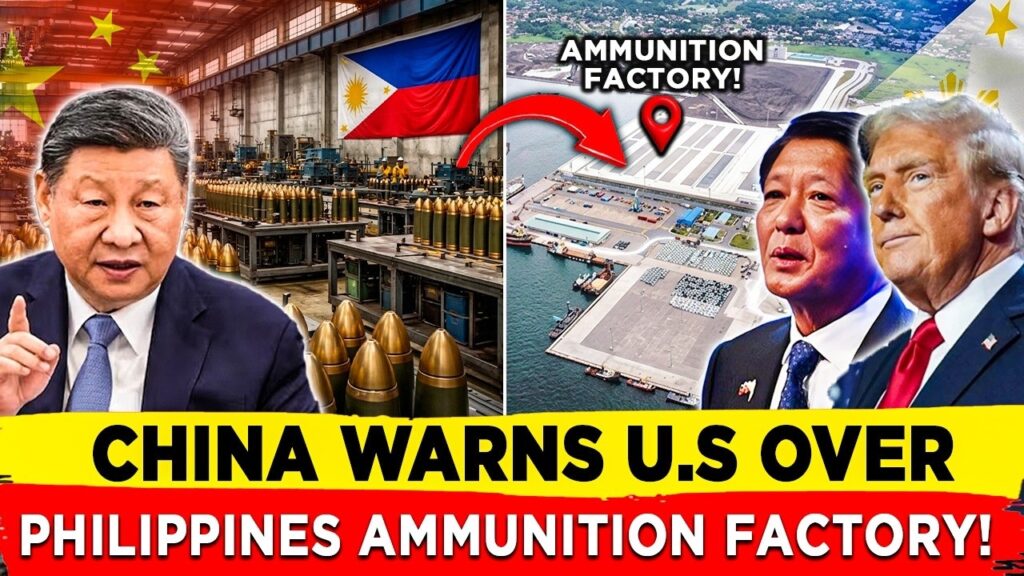
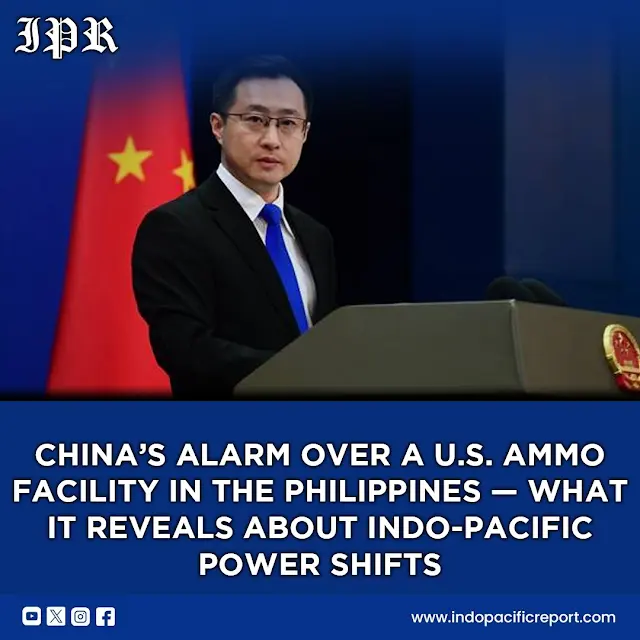
On March 26, 2026, Beijing issued a sharp public warning after reports emerged that a U.S.-led coalition was studying the possibility of building an ammunition assembly facility in the Philippines. Chinese Foreign Ministry spokesman Lin Jian warned that any country turning itself into an “ammunition depot” or “powder keg” would see consequences “backfire on itself.” The words were direct and widely broadcast. They were meant to signal danger. But from Manila’s perspective, the proposal looks very different. What China describes as escalation, many in the Philippines see as preparation — not for war, but for survival in waters where pressure has steadily increased year after year. In today’s Indo-Pacific, factories are no longer just industrial tools. They are part of national defense, part of sovereignty, and part of ensuring that smaller nations are not left vulnerable in moments of crisis.
There is also a lesson unfolding far from Asia that shapes how policymakers now think. In late March 2026, as the conflict between the United States, Israel, and Iran intensified, Iranian adviser Ali Akbar Velayati warned that any country joining military action would face consequences returning “like a boomerang.” The war, which began on February 28, 2026, quickly spread across the region. Missiles struck military positions. Regional bases were targeted. Shipping routes tightened around the Strait of Hormuz, a lifeline for global trade. What became clear in those weeks was not just the danger of conflict, but the value of preparation. Countries that had forward bases, stockpiles, and supply systems were able to respond faster and protect their interests. Those without such preparation found themselves exposed. The lesson was simple: readiness is not aggression — it is insurance against chaos.https://www.youtube.com/watch?v=JNCCnsns2cE
That is the pattern many in Manila now see. Not a threat, but a safeguard. Not a provocation, but a strengthening of national resilience. The Philippines sits on the frontline of contested waters, facing daily pressure from larger forces operating near its coastlines. In such an environment, relying on distant supply chains is a risk few leaders can afford. A factory on paper may look ordinary, but in reality it represents self-reliance — the ability to sustain defense without waiting for help to cross oceans. The Philippines now stands at a turning point. Not as a pawn between great powers, but as a nation making choices about its own security. And the real question facing the Indo-Pacific is not whether preparation creates danger — it is whether failing to prepare creates vulnerability.
China WARNS Philippines as U.S. Japan Enters South China Sea
The Trigger — The U.S.-Led Ammunition Facility Proposal
“Geography, logistics, and supply lines decide wars long before the first shot is fired.” That idea — often echoed in the writings of thinkers like Robert D. Kaplan — captures the quiet reality behind what happened in mid-March 2026. The turning point did not take place at sea or in the skies. It happened quietly, inside rooms filled with planners and engineers. A U.S.-led coalition agreed to study the funding and feasibility of building an ammunition assembly line in the Philippines. On paper, it looked like an industrial step — producing 30 milli meters cannon ammunition used by aircraft, naval guns, and armored vehicles. But beneath the technical words sat a deeper shift. It meant moving the machinery that feeds war closer to the edges where conflict could one day begin. Not firing weapons — but preparing to sustain them.
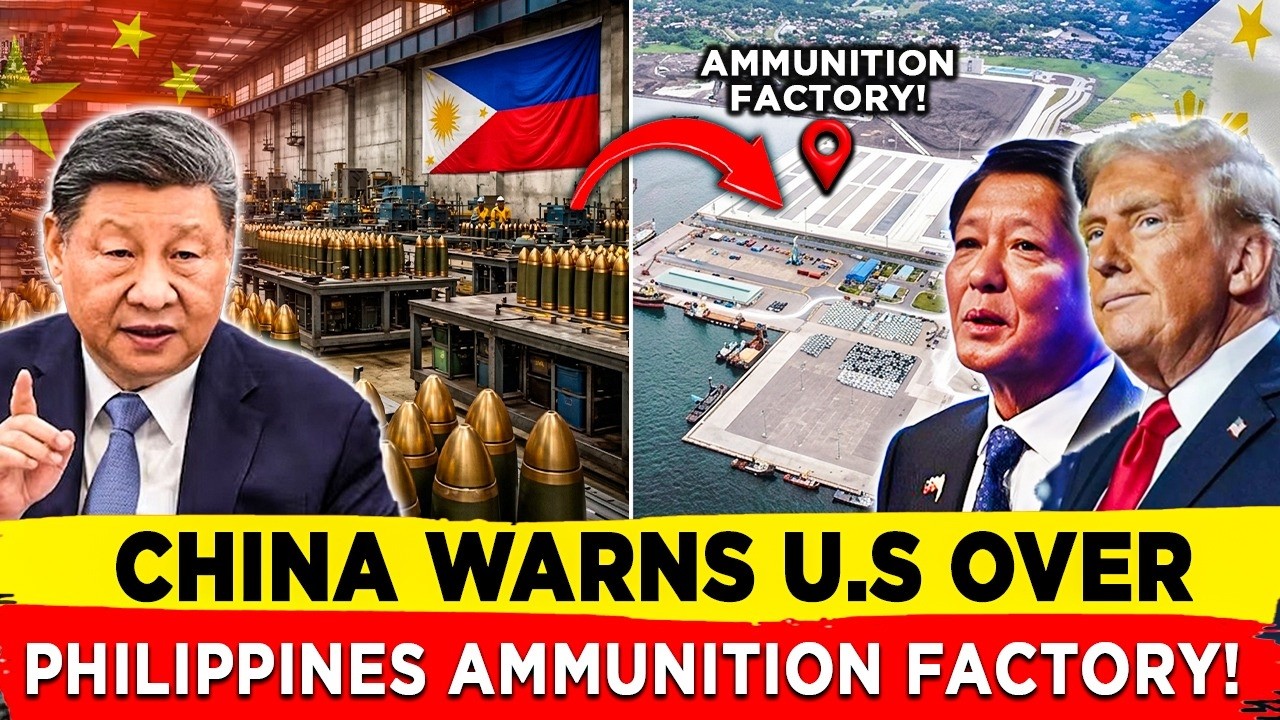
This effort is being organized under the Partnership for Indo-Pacific Industrial Resilience (PIPIR), a coalition of 16 countries, including the United States, United Kingdom, Japan, Australia, South Korea, and the Philippines. The plan reaches beyond simple ammunition production. It includes missile component manufacturing, drone coordination networks, and regional repair hubs for military aircraft. The logic is simple and timeless: never depend on distant factories when time matters most. Spread production. Shorten supply routes. Strengthen resilience. Because in modern war, distance can be as dangerous as the enemy itself.https://www.youtube.com/watch?v=JNCCnsns2cE
USS Ohio Submarine Deployment in Philippines Leaves China Furious
Recent wars have made this lesson painfully clear. In Ukraine, artillery units sometimes fired 6,000 to 7,000 shells in a single day, forcing Western countries to confront a harsh truth — their factories were not ready for a long war. Stockpiles fell faster than expected. Production struggled to keep pace. That shock changed how planners think about future conflicts, especially in Asia where distances are vast and supply routes are exposed. The proposed facility in the Philippines reflects those lessons. It is not just about defending territory today. It is about preparing for a crisis that might come tomorrow. And once that idea takes root, one question rises naturally above the rest: why was the Philippines chosen as the place to begin this shift?https://indopacificreport.com/south-china-sea-china-warriors-report/
Why the Philippines Matters — Geography Is Destiny
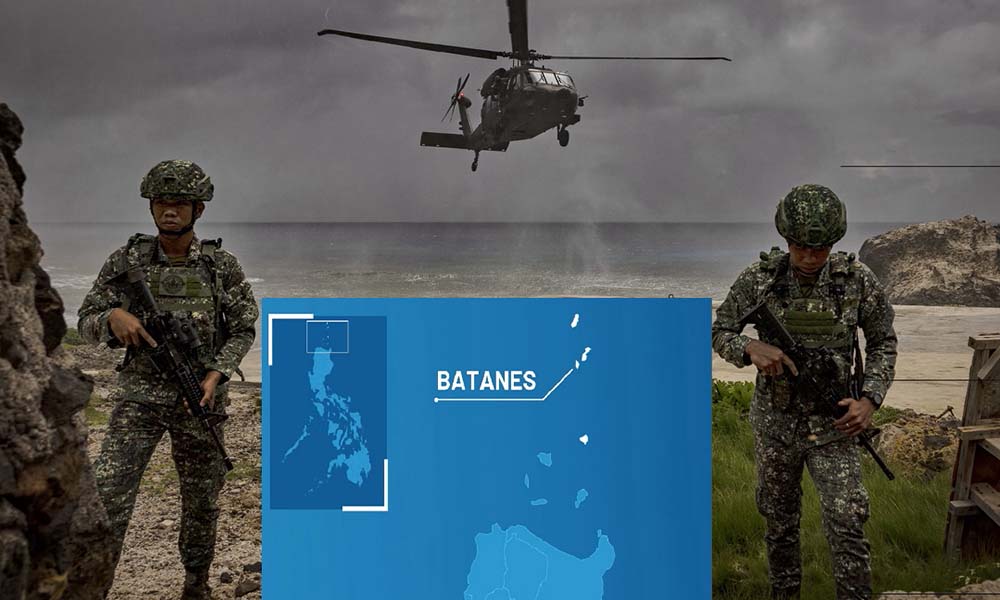
Maps do not speak, but they tell the truth more clearly than speeches ever can. Look at the Philippines on a map, and its importance becomes obvious within seconds. The islands stretch like stepping stones between the South China Sea and the open Pacific. Just to the north lies Taiwan, only a few hundred kilometers away. Between them sits the Bashi Channel, a narrow strip of water that military planners quietly study because they know one simple fact — whoever controls movement through narrow waters often controls the pace of conflict. The Philippines, in this sense, is not just land surrounded by water. It is a hinge. A place where movements can be watched, slowed, or supported. Geography placed it there long before politics caught up.
But geography alone does not create pressure. Trade does. The waters around the Philippines carry the weight of the global economy. Each year, roughly $3.4 to $5 trillion worth of global trade passes through the South China Sea — oil, electronics, machinery, food, and raw materials that keep modern life running. Nearly one-third of the world’s shipping moves through these sea lanes. That turns the Philippines into more than a country of islands. It becomes a bridge. A supply route. In times of peace, it supports commerce. In times of tension, it can support armies. That is the quiet reality of strategic geography — the same waters that carry trade today can carry war tomorrow.
And once leaders begin to see geography this way, their thinking changes. Islands become positions. Ports become lifelines. Airfields become signals of intent. The Philippines, once seen mainly as a partner nation, is now increasingly viewed as a forward position in a larger contest of power. That shift is subtle, but powerful. Because when a country begins to look like a hinge on the map, others begin to act around it. And that leads to the next question — if the Philippines sits at the center of these vital waters, how long before tension around it begins to rise even further?
China’s Reaction — Strategic Alarm Bells
China’s reaction was not casual. It was calculated. On March 26, 2026, Beijing issued one of its clearest warnings yet, cautioning the United States and its partners against bringing “bloc confrontation” and “the chaos of war” into the Asia-Pacific. Chinese officials went further, warning that any country hosting such a facility could become a “powder keg and ammunition depot” that would eventually “backfire.” These were not empty words. They came at a moment when tensions were already rising across the South China Sea, where Chinese coast guard ships have repeatedly shadowed Philippine vessels and where diplomatic exchanges between Manila and Beijing have grown sharper in early 2026, including disputes over territorial claims such as Scarborough Shoal.https://www.youtube.com/watch?v=cDjccA24I-w
To understand China’s alarm, you have to think in terms of geography and pressure, not just policy. The Philippines sits along what strategists often call the first island chain — a line of islands stretching from Japan through Taiwan and down into Southeast Asia. For Beijing, this chain already feels restrictive. In recent years, China has responded to growing military cooperation in the region with more frequent patrols, stronger diplomatic protests, and sharper warnings about foreign involvement, arguing that outside alliances are destabilizing the region. Chinese officials have repeatedly stated that actions by the Philippines, especially when backed by external partners, create “provocations” that force China to respond. This pattern matters. It shows that infrastructure decisions — even industrial ones — are rarely seen as neutral. They are read as signals of long-term positioning.https://indopacificreport.com/china-warns-philippines-stay-out-of-taiwan/
That is why Beijing’s reaction sounded less like protest and more like early warning. In strategic history, major military shifts rarely begin with soldiers — they begin with infrastructure. Ports expand. Warehouses multiply. Civilian facilities slowly gain military value. China sees the proposed ammunition line not as an isolated factory, but as part of a widening network that includes joint patrols, defense agreements, and shared logistics across the Indo-Pacific. And once supply networks begin to form along contested coastlines, the meaning becomes clear: this is not just about ammunition today. It is about preparation for tomorrow. And when preparation begins, tension rarely stays still — it connects directly to the long chain of confrontations already unfolding across the South China Sea.
The Bigger Background — Tense Waters and the Rise of Industrial Warfare
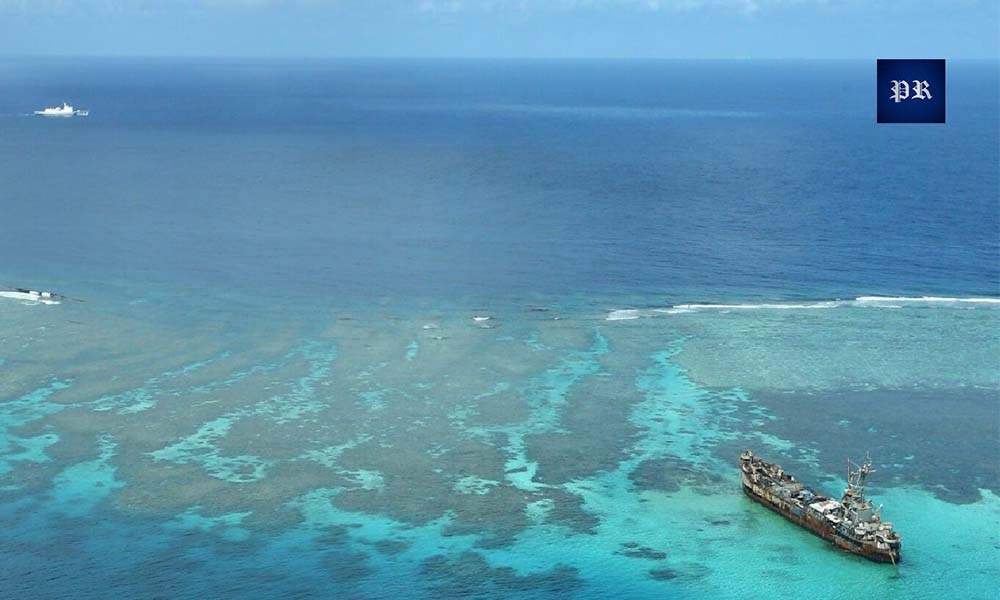
Long before talk of ammunition factories began, the waters between China and the Philippines were already tense — tense in ways that built slowly, year after year. The friction did not start with one incident. It accumulated across places like Second Thomas Shoal, Sabina Shoal, and Whitsun Reef, where encounters became more frequent and more physical. In 2021, more than 200 Chinese vessels gathered at Whitsun Reef, triggering alarm in Manila, which described them as maritime militia ships operating in formation. Beijing insisted they were sheltering from rough seas. But the pattern did not stop there. Through 2023, 2024, and into early 2026, confrontations continued — Philippine supply boats heading to Second Thomas Shoal were blocked, shadowed, and in several cases hit with high-pressure water cannons by Chinese coast guard vessels. In March 2024, one such incident damaged Philippine vessels and injured crew members, drawing protests from Manila and concern from allies. By early 2026, these encounters had become routine enough that regional commanders now treat them as a constant feature of the maritime environment, not an exception. The waters were already tight with pressure. Now imagine adding ammunition production lines and foreign-backed supply chains into this same contested space. What happens when tension meets preparation? What happens when disputed waters begin to look like logistical staging grounds?
Modern war has made one lesson brutally simple: wars are not lost when armies run out of courage — they are lost when they run out of supplies. The Ukraine war exposed this reality to the world. Ukrainian forces, at intense phases of fighting, fired thousands of artillery shells per day, forcing the United States and European countries to admit that their ammunition stockpiles were dangerously low and their factories too slow to replenish them. Western nations responded by expanding production lines, reopening dormant plants, and investing billions into new industrial capacity. That experience did more than change European defense policy — it reshaped thinking in Asia. Planners began asking hard questions. What happens if a crisis erupts in the Taiwan Strait or South China Sea? How long would supplies last? How fast could reinforcements arrive across thousands of kilometers of ocean? These questions pushed strategists toward a new approach known as forward-positioned industrial resilience — placing production closer to potential flashpoints rather than relying on distant factories.https://www.youtube.com/watch?v=cDjccA24I-w
That is where the Philippines enters the picture again. Distance is not just geography — it is time, and time decides outcomes in conflict. Supplies shipped from distant mainland factories may take days or weeks to arrive. But supplies produced closer to contested zones move faster, respond faster, and sustain operations longer. That is the cold logic behind the proposal. Yet the deeper question remains unsettled. If these islands are already surrounded by disputed waters and regular confrontations, does building supply lines there strengthen deterrence — or slowly turn the region into something more dangerous? History suggests that logistics hubs bring strength, but they also bring attention. And attention, in tense waters, often brings pressure.https://indopacificreport.com/china-warns-philippine-aircraft-over-scarborough-shoal-tensions-rise/
Regional Impact, Strategic Risk, and the Taiwan Factor — The Domino Effect Across Asia
In geopolitics, risk rarely stays local. One decision in one country can shift calculations across an entire region. If an ammunition facility rises in the Philippines, the impact will not stop at its shores. China will watch closely, and history suggests it will respond in kind. In recent years, Chinese coast guard and naval vessels have kept steady pressure across disputed waters, maintaining near-constant patrols near contested reefs and shoals. A new military-linked production site in the Philippines would likely be seen not as defense, but as positioning — another piece in what Beijing views as a tightening regional security network. The response could be predictable: more patrols, more maritime militia deployments, stronger presence at sea. Not sudden war, but steady pressure. That is how great-power rivalry usually unfolds — step by step, reaction by reaction.
Other Southeast Asian countries will read this moment differently. Some will quietly welcome stronger security networks, especially those that have faced their own maritime pressure. Vietnam and Indonesia, for example, have both strengthened naval patrols and defense partnerships in recent years, reflecting concern about long-term maritime security. But others will hesitate. Malaysia and Thailand have traditionally moved carefully between competing powers. Their leaders will ask a simple question: does strengthening one country’s defenses make the region safer, or does it increase the chance of miscalculation? These mixed reactions are what make Southeast Asia strategically fragile — not because countries are weak, but because they are cautious.https://www.youtube.com/watch?v=cDjccA24I-w
China Warns Philippine Aircraft Over Scarborough Shoal – Tensions Rise!
Yet beneath all these regional reactions lies a quieter, more decisive factor — Taiwan. Even when not openly mentioned, Taiwan sits at the center of the strategic map. The northern Philippines lies roughly 300 to 500 kilometers from Taiwan, close enough to support logistics, fuel supply, surveillance, and rapid resupply operations in any crisis scenario. In modern conflict planning, distance defines survival. If a Taiwan contingency were ever to emerge, supply lines would matter as much as ships or aircraft. Ammunition, fuel, spare parts — these must arrive quickly, not weeks later. That is why planners increasingly look at the Philippines as a potential logistics hub. But this raises the most difficult question of all: does becoming a logistics center strengthen deterrence, or does it quietly transform the Philippines into a frontline state — the kind of place that, in past rivalries like Cold War West Germany or South Korea, became both protected and exposed at the same time?
Potential Outcomes — Three Strategic Futures
History shows that big geopolitical shifts rarely move in straight lines. They branch into paths. Some lead to stability. Others to tension. What matters is not just what is built, but how others react to it. Seen through a long-range strategic lens, like the kind George Friedman often applies, this proposed ammunition facility is less about today’s headlines and more about tomorrow’s balance of power. It is a move that opens three possible futures — each realistic, each shaped by how nations calculate risk and strength.https://www.youtube.com/watch?v=0Ui5dKcoz-4
The first scenario is deterrence success — the quiet victory that often goes unnoticed. In this future, the facility is built, supply chains become faster, and ammunition stocks can be replenished quickly across the region. The Philippines becomes a reliable logistics hub, capable of supporting allied operations without long delays from distant factories. In strategic thinking, speed equals strength. If China sees that supply lines are strong and reliable, it may think twice before applying pressure in contested waters. Deterrence does not require firing weapons; it requires convincing your rival that fighting you will cost too much. This is how balance works — not through confrontation, but through preparedness that makes conflict unattractive.
U.S. Deployed Two Warships in Scarborough Shoal After Destructive Collision of Chinese Vessels
The second scenario is escalation — the path where action invites reaction. China could view the facility not as defensive, but as offensive positioning. That perception alone could trigger stronger responses. More patrol ships could appear near disputed reefs. Maritime militia fleets could increase their presence. New infrastructure — radar sites, runways, or fortified positions — could begin to appear along contested coastlines. Step by step, tension rises. Not in sudden explosions, but in daily encounters at sea — ships shadowing ships, aircraft flying closer, warnings issued over radio channels. This is how pressure builds in strategic competition. Not with one dramatic event, but with many small ones that slowly raise the risk of miscalculation.https://www.youtube.com/watch?v=0Ui5dKcoz-4
The third scenario is diplomatic containment — the path of hesitation and recalibration. In this future, political pressure, regional concerns, or economic calculations lead to a scaled-back version of the facility. Construction slows. Plans are revised. The project remains symbolic rather than fully operational. This reduces immediate tension, but it does not end rivalry. Strategic competition continues, only at a lower intensity. Nations keep building alliances. China continues strengthening its maritime presence. The United States and its partners keep searching for ways to maintain influence without triggering confrontation. This is the most common path in geopolitics — not peace, not war, but a long period of managed competition.
Final Reflection — A Powder Keg or a Shield
China’s warning still hangs in the air — “If the relevant country is willing to be a powder keg… it will only backfire.” That sentence forces a simple but serious question: is this new facility meant to act as a defensive shield that keeps conflict away, or could it slowly turn the Philippines into ground that others prepare to fight over? In today’s Indo-Pacific, the line between safety and risk is getting thinner, and every new structure carries strategic weight, because “In the Indo-Pacific, factories are no longer just factories — they are battlefields waiting to be activated.
https://youtu.be/BrxuDLzRlIM?si=l-uoQt9rDGtvn7Op