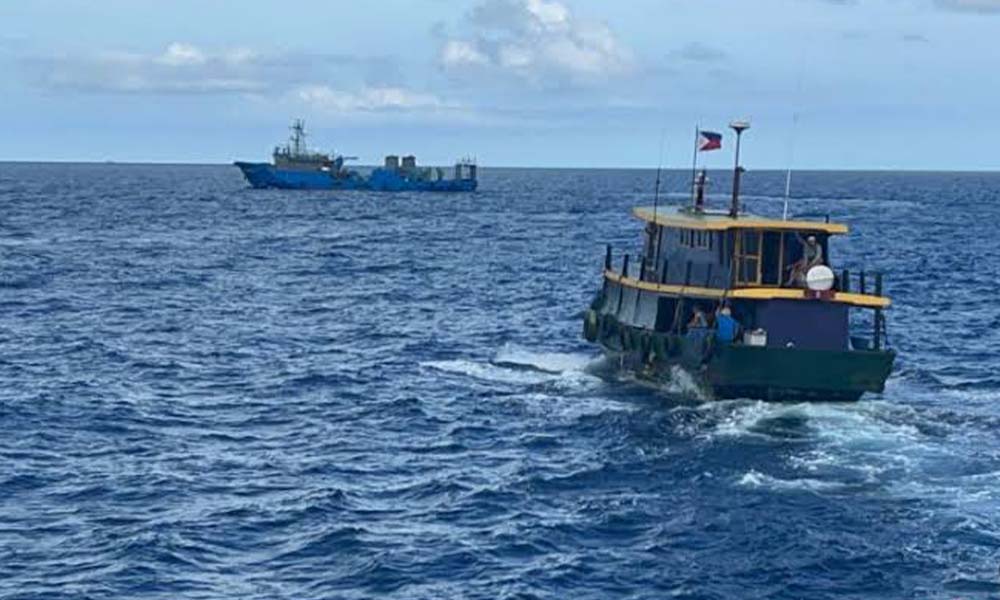
It was August 2025 when the world saw the unthinkable: a Chinese naval destroyer and a China Coast Guard cutter slamming into each other in chaotic pursuit of a much smaller Philippine ship near Scarborough Shoal. The incident, caught on video and broadcast worldwide, became the latest proof of how dangerous the contest for the South China Sea has become, a flashpoint where steel, sovereignty, and strategy collide.
This isn’t just any stretch of water. The South China Sea is one of the world’s most critical arteries, carrying more than $3.4 trillion in global trade every year. Beneath its surface lie vast oil and gas reserves, and across its horizon stretch some of the richest fishing grounds on Earth. Whoever dominates these waters doesn’t just control resources, they command a strategic lifeline of the Indo-Pacific. That’s why six nations, including the Philippines, Vietnam, Malaysia, Brunei, Taiwan, and especially China, all stake claims to the same reefs, shoals, and seas.
And now, the rhetoric has escalated again. Beijing accuses the Philippines of “courting outside powers” and “causing trouble,” pointing to Manila’s growing military drills with the U.S., Japan, and Australia. In Beijing’s narrative, the Philippines is the provocateur, dragging Western allies into Asia’s backyard. But in Manila’s counter-narrative, it is simply asserting its sovereign rights, backed by the 2016 Hague ruling that invalidated China’s sweeping “nine-dash line.” To Filipinos, it’s not about “causing trouble” it’s about defending territory, fishermen, and the rule of law.
At its core, this isn’t just a war of ships, it’s a war of stories. Who is the aggressor, who is the victim, and who will the world believe? That’s the real battle being waged in the South China Sea.
China’s Accusation: “Courting Outside Powers” and “Causing Trouble”
Beijing has wasted no time in sharpening its rhetoric against Manila. In a press briefing following the August 2025 Scarborough Shoal collision, Chinese Ministry of National Defense spokesperson Zhang Xiaogang accused the Philippines of “recklessly escalating tensions by leaning on foreign forces.” His words carried more than diplomatic bite; they were laced with China’s signature mix of historical idioms and veiled threats. Zhang went so far as to claim that the Philippines was “playing the role of an ass in a lion’s skin,” a metaphor aimed at portraying Manila as a small, weak state masquerading as a major power only because of its alliance with the United States. This kind of language is not unusual for Beijing, its state media and officials routinely paint the Philippines not as a sovereign actor, but as a pawn of Washington, stirring instability in waters Beijing claims as its own.
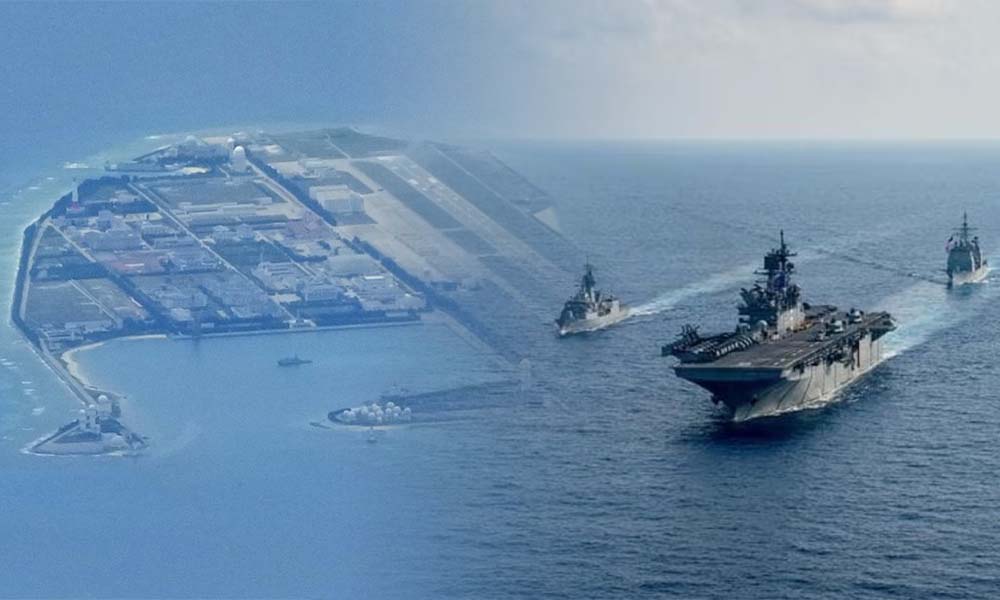
At the heart of this accusation is the growing role of so-called “outside powers.” For China, every joint drill or signed defense agreement between Manila and its allies is a deliberate provocation. In the past two years, the Philippines has rapidly deepened military cooperation with the United States, Japan, Australia, and even Canada, creating what some analysts call a “mini-lattice of deterrence” in the Indo-Pacific. Concrete numbers tell the story: in 2024, the Philippines and the U.S. approved more than 500 joint military activities for 2026, the most ambitious in their alliance’s history. In July 2025, Exercise Alon saw more than 3,600 Australian and Philippine troops training shoulder to shoulder in Luzon, complete with amphibious landings and live-fire drills. Observers from Canada, the U.K., and Japan were present, signaling a widening circle of support for Manila. To Beijing, these aren’t mere exercises, they are encirclement strategies, designed to contain its rise and challenge its dominance in the South China Sea.
China’s narrative also leans heavily on the idea that the Philippines is deliberately “causing trouble.” Specific incidents fuel this portrayal. Beijing cites the Philippine resupply missions to the BRP Sierra Madre at Second Thomas Shoal, where Filipino marines continue to hold out aboard the grounded warship. For Beijing, each run of food, water, or building supplies is framed as a “provocative act” that challenges Chinese sovereignty. Likewise, routine Philippine Coast Guard patrols near Scarborough Shoal are cast by Chinese officials as “illegal incursions” into “Chinese waters.” In Beijing’s telling, it is the Philippines, not the Chinese coast guard or militia, stirring conflict where peace might otherwise hold.
The historical backdrop reinforces this position. China’s claim to sovereignty over these shoals and reefs is based on its “nine-dash line” , a sweeping boundary it insists has historical and legal validity, even though it was struck down by the 2016 Permanent Court of Arbitration ruling in The Hague. For Beijing, that ruling is irrelevant; for Manila, it is the legal cornerstone of its case. The chasm between these two interpretations is where today’s confrontations erupt.
And woven through all of this is China’s powerful propaganda machine. State media outlets like Global Times and CCTV amplify Beijing’s stance, framing the Philippines as a reckless instigator manipulated by Washington. Chinese editorials accuse Manila of “weaponizing victimhood” and staging provocations to attract sympathy and foreign support. Disinformation campaigns, including online narratives suggesting Philippine actions are scripted by the Pentagon, flood social media. The goal is clear: flip the script, cast China as a law-abiding power, and portray the Philippines as the destabilizer in the South China Sea.
The Philippines’ Response: Asserting Sovereignty and International Law
The Philippines has had enough of being branded a “troublemaker.” In Manila’s view, it is not provoking conflict, it is defending its own backyard, armed with international law and the moral authority of sovereignty. Defense Secretary Gilberto Teodoro Jr. put it bluntly: China’s sweeping claims in the South China Sea are “the biggest fiction and lie of modern times.” The Department of Foreign Affairs echoes this message, stressing that cooperation with allies is Manila’s sovereign choice, not some act of provocation. For the Philippines, every patrol and every resupply mission is not aggression, it is survival.
The backbone of this stance is the 2016 Hague arbitral ruling. That decision, handed down under the United Nations Convention on the Law of the Sea, shredded China’s so-called nine-dash line and confirmed that features like Scarborough Shoal and waters around the Spratlys lie within the Philippines’ Exclusive Economic Zone. It also condemned China’s environmental destruction and interference with Philippine fishing rights. Though Beijing refuses to recognize it, Manila wields this ruling as both shield and sword, its legal anchor and diplomatic weapon. Each time Chinese vessels fire water cannons, aim military-grade lasers, or block Filipino boats, the Philippines frames it not just as harassment, but as a violation of binding international law.
The numbers tell the story of why Manila calls itself a frontline state. In June 2025, the Philippine Navy tracked 49 Chinese vessels operating in disputed areas in a single month, the highest tally of the year. These weren’t harmless fishing boats; they included coast guard cutters, militia fleets, and even navy destroyers. The risks are no longer abstract. Just this August, the world saw Chinese ships collide with each other while trying to block the much smaller BRP Suluan near Scarborough Shoal. Weeks earlier, Philippine resupply boats bound for the BRP Sierra Madre at Second Thomas Shoal were blasted with water cannons, leaving crews shaken and temporarily blinded by lasers. These encounters prove the stakes: one wrong move and a standoff could spiral into catastrophe.
And yet, Manila insists its actions are not about “causing trouble.” They are about holding the line. Resupply missions to the rusting Sierra Madre are framed as humanitarian necessities, keeping Filipino marines alive on Philippine soil. Coast Guard patrols at Scarborough Shoal are described as simple exercises of sovereignty, within waters that international law has affirmed as Manila’s. President Ferdinand Marcos Jr. made the message unmistakable: “We will not yield one square inch of our territory.” That defiance resonates at home, fueling national pride, and abroad, where allies see the Philippines as the frontline defender of a rules-based order under siege.
Through what it calls “assertive transparency,” Manila has mastered the art of turning China’s gray-zone tactics into global evidence. Videos of collisions, photos of blocked fishermen, and drone footage of swarms of Chinese ships are released not to inflame but to expose. Each revelation rallies support from allies and reminds the world that this is not just a local quarrel, it is a test case for international law itself.
In the Philippines’ narrative, the picture is simple: China is the aggressor, Manila is the defender. Beijing may brand it as an “ass in a lion’s skin,” but Filipinos see themselves as David standing firm against Goliath, armed not just with ships and alliances but with the slingshot of law. Every patrol is a message, every resupply a statement: the Philippines is not causing trouble, it is defending its home, its people, and the very principle that might not make right.
Satellite Reveals Damaged Chinese Coast Guard Ship Under Urgent Repairs in Hainan
Broader Geopolitical and Economic Implications
The South China Sea isn’t just about reefs and flags, it’s about money, energy, and leverage. Roughly a third of the world’s maritime trade flows through these waters; credible estimates place the value at about $3.37 trillion a year, alongside some of the world’s heaviest crude-oil and LNG traffic. Disrupt this corridor and you don’t just hit Manila or Beijing, you jolt supply chains from Los Angeles to Rotterdam. That’s why every ramming, water-cannon blast, or near-miss at shoals like Scarborough and Second Thomas isn’t a local spat, it’s a global risk indicator.
Regionally, the dispute slices through ASEAN’s unity. Some members prize economic ties with China and prefer quiet diplomacy; others most visibly the Philippines and sometimes Vietnam, push for firmer pushback and tighter coordination with extra-regional partners. The bloc has tried for years to craft a Code of Conduct with Beijing, but progress remains halting; legal ambiguities and diverging national interests have kept a binding, enforceable text out of reach. In short: ASEAN can convene, but it struggles to converge, leaving space for unilateral moves and mini-lateral coalitions to fill the gap.
Security planners see the trend line and worry. The operational density, more ships, more close passes, more “shouldering” and lasing, raises the risk of an accident that spirals. A miscalculation at sea can escalate quickly when it involves coast guards, maritime militia, and navy escorts operating in the same box. U.S. and Philippine alliance documents now spell out that their Mutual Defense Treaty covers armed attacks on public vessels including coast guards, anywhere in the South China Sea. That explicit language is meant to deter; it also means the consequences of a bad day on the water are larger than a single flag.
That’s where global stakeholders come in. The United States runs Freedom of Navigation Operations (FONOPs) to contest excessive maritime claims and signal that international law, not domestic maps, governs the sea lanes. Publicly logged operations, such as the USS Halsey near the Paracels, sit alongside a growing slate of U.S.–Philippine exercises and posture changes that deepen interoperability. Allies and partners aren’t on the sidelines either: France sent the Charles de Gaulle carrier group to train with Filipino forces this year, a very visible European vote for open seas; the U.K. has kept up transits, from OPV HMS Spey through the Taiwan Strait to a larger carrier strike group push into East Asia, arguing that freedom of navigation is indivisible from global trade. India, meanwhile, has sharpened its diplomatic line, backing UNCLOS principles and stressing that the South China Sea is part of the global commons, while Quad statements routinely call out coercion.
Expect this tense equilibrium to harden into the “new normal.” On most days, you’ll see frequent, low-level confrontations: close intercepts, lasing, water cannons, blocking runs, AIS spoofing, and swarms of militia boats massing and dispersing. On some days, you’ll see coalition drills and FONOPs calibrated to show presence without triggering escalation. The pathways to a worse future are well-known: a fatal collision during a resupply run; a temporary blockade around a grounded outpost; or a misread during multi-ship maneuvers that pulls treaty allies into the frame. Each pathway carries economic consequences because insurance premiums, freight rates, and ship routing decisions react to perceived risk almost in real time.
China Threatens to Tow Philippines BRP Sierra Madre Can Manila Stop It?
What, then, counts as a realistic off-ramp? First, ASEAN and China could still land a Code of Conduct but to matter, it must be legally tight, operationally clear (on ramming, lasing, water cannons, militia roles), and verifiable. Analysts are blunt that we’re not there yet; still, even an interim regime on incident-at-sea protocols would help. Second, continued law-centric diplomacy, from reiterating the 2016 arbitral award to coordinated statements by the EU, Quad, and G7 keeps guardrails visible and raises reputational costs for coercion. Third, transparency campaigns (publishing imagery and logs) and hotline/INCSEA-style mechanisms can reduce misreads at sea. None of this dissolves the core sovereignty disputes but together, these steps lower the temperature while preserving navigational freedoms that keep $3-plus trillion in trade moving.
Zoom out and the stakes are stark. The South China Sea has become a key arena of great-power competition precisely because its rules, routes, and resources are so central to everyone else’s prosperity. The Philippines has emerged as a frontline state, ASEAN is pulled between economics and security, and extra-regional navies are signaling that the sea’s rules remain global, not discretionary. That mix, law, leverage, and logistics, is why a spray of water in one corner of the map can ripple through inventory levels half a world away. The question isn’t whether the world is watching; it’s whether the world can shape the behavior that keeps the sea open while the politics remain contested.
Conclusion: A Contest of Narratives, a Test for the World
At the heart of the South China Sea standoff are two irreconcilable stories. From Beijing’s perspective, the Philippines is a “troublemaker,” a smaller state emboldened by outside powers, especially the United States and its allies, whose presence China frames as containment and provocation. Manila, however, rejects this narrative outright. For the Philippines, its patrols, resupply missions, and alliances are not acts of aggression but the actions of a sovereign nation defending its territory, its people, and its rights under international law against the bullying of a regional superpower.
But the truth is that this clash has never been just about two countries. The dispute radiates outward, across ASEAN, where divisions weaken unity; across the Indo-Pacific, where the U.S., Japan, Australia, and Europe are increasingly drawn in; and across the world economy, where trillions in annual trade ride on safe passage through these waters. Each collision at Scarborough, each water cannon blast at Second Thomas, is a reminder that the balance of power in Asia affects supply chains, alliances, and the credibility of international law everywhere.
That’s why the stakes are so high. If unchecked aggression prevails, international law risks being reduced to ink on paper, unable to restrain force or coercion. If, however, the Philippines and its allies succeed in standing firm on legality and collective defense, it will affirm that even the smallest nations have a shield in a rules-based order.
In the end, the South China Sea is more than a map of shoals and shipping lanes, it is a frontline in the global contest between might and right. The future stability of one of the world’s most vital waterways will depend not only on how China and the Philippines navigate their rivalry, but on whether the international community has the will to defend the principles that keep seas open, trade flowing, and peace within reach.