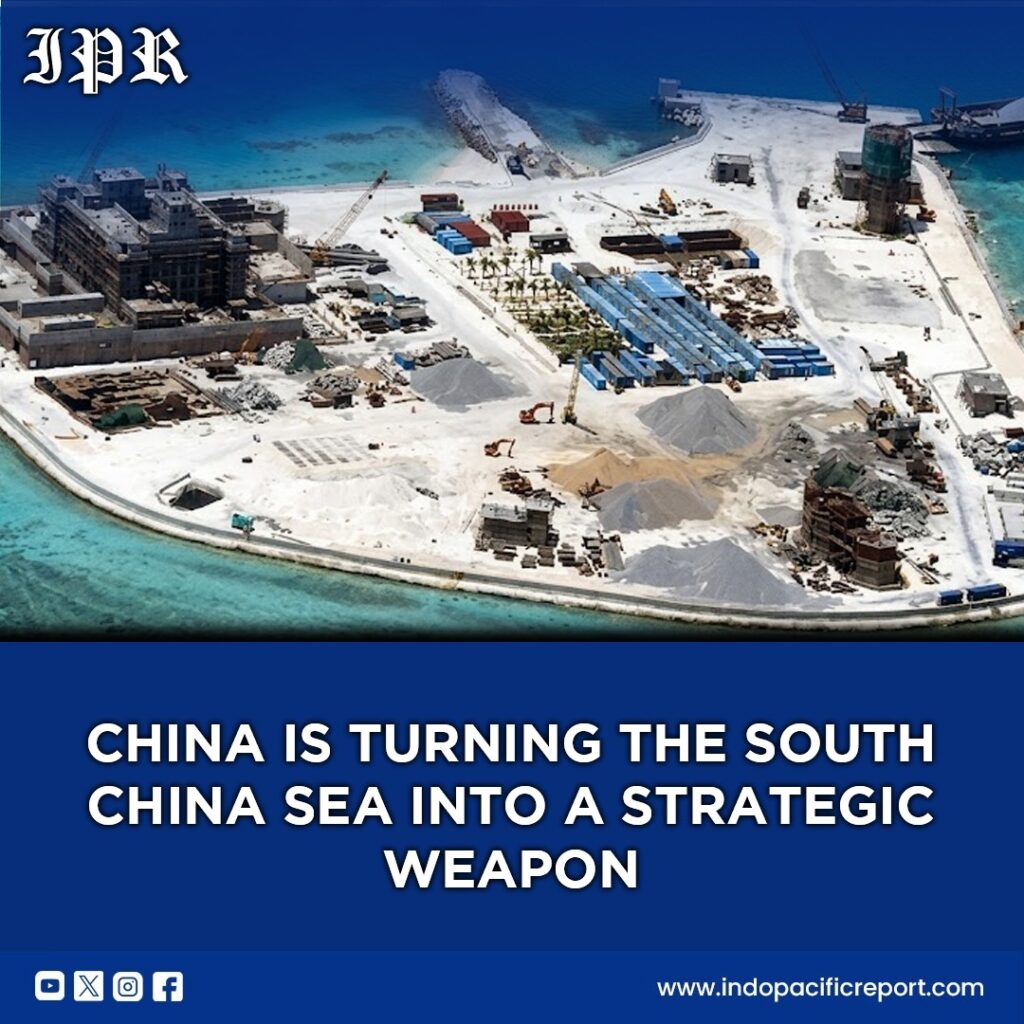
China’s recent actions in the South China Sea show that its strategy is not only about military control—it now extends to environmental manipulation. After dredging the sea floor, destroying coral reefs, and occupying large areas, Beijing is reportedly dumping human waste into the waters, causing massive algae blooms visible from space. At first glance, this may look like an ecological issue, but it has serious strategic consequences for the region.
From a great-power competition perspective, China is demonstrating that it can reshape the environment to its advantage. The South China Sea is one of the world’s busiest trade corridors, carrying a third of global maritime trade. By controlling reefs, islands, and now even the biological environment, China strengthens its position and limits the freedom of movement for rival navies. These are classic gray-zone tactics—actions that increase influence without triggering open conflict.
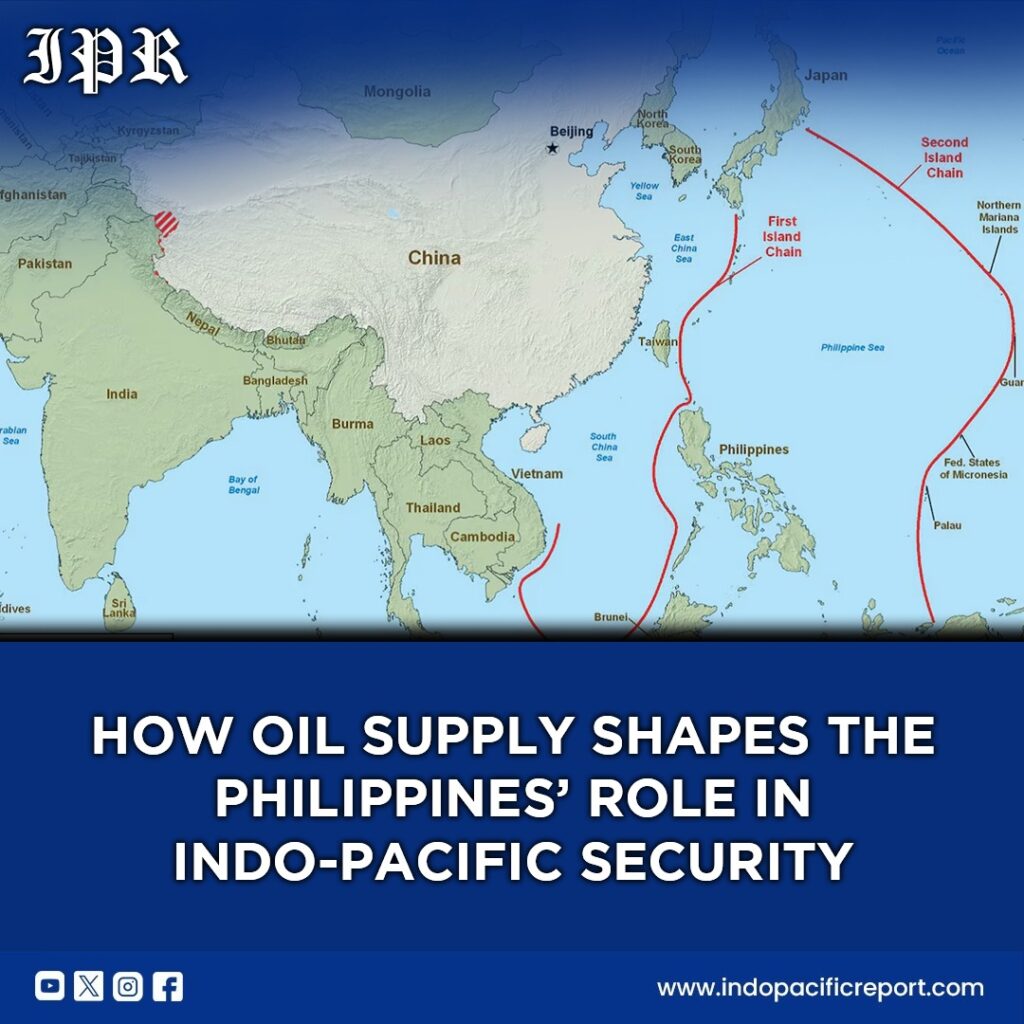
The environmental damage also exposes weaknesses in the regional security architecture. Multilateral rules like UNCLOS or ASEAN frameworks have limited ability to stop a major power from changing the sea floor or polluting the waters. Smaller countries like the Philippines and Vietnam cannot enforce these rules alone. For them, environmental security is now inseparable from national security and maritime control.
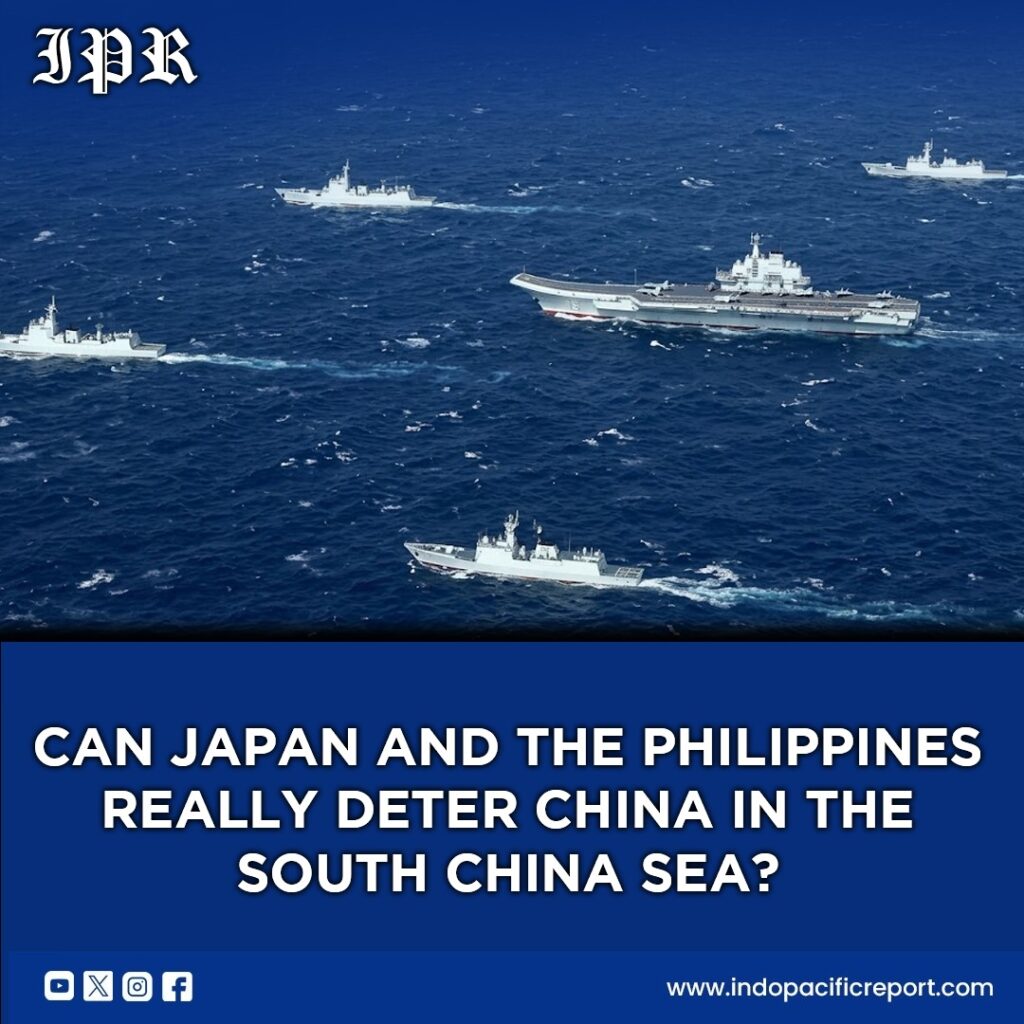
Alliances are increasingly important in this context. Countries with stakes in the South China Sea are seeking help from partners like the United States, Japan, and Australia. These allies provide satellite monitoring, intelligence, and naval presence to track Chinese activity. Middle powers like South Korea also contribute ships, drones, and sensors. Alliances are now about more than joint exercises—they are tools to monitor and respond to both military and environmental threats.
From a maritime and economic strategy lens, the consequences are serious. Algae blooms, destroyed reefs, and pollution reduce fish stocks and damage local fisheries. Millions of people depend on these waters for food and livelihood. Economically, controlling these waters also gives China leverage over shipping routes, maritime trade, and energy transport. Environmental control is becoming another layer of strategic power in the Indo-Pacific.
For the balance of power in the region, China’s activities entrench its asymmetric advantage. Militarily, it already dominates artificial islands and reefs. Now, ecological degradation further limits how smaller regional states can operate. Over time, this reduces flexibility for the Philippines, Vietnam, and their allies, while strengthening Beijing’s long-term hold over contested waters.
Looking ahead, the South China Sea is not just a territorial dispute. It is a test of how the Indo-Pacific will manage environmental coercion alongside military and economic competition. Regional states must strengthen maritime capabilities, improve surveillance, and work closely with allies. In this context, environmental monitoring becomes as critical as naval power. Countries that cannot defend the seas physically or biologically risk losing strategic influence.
Question for readers:
Can environmental degradation in the South China Sea become a tool of geopolitical power, and how should regional states respond?