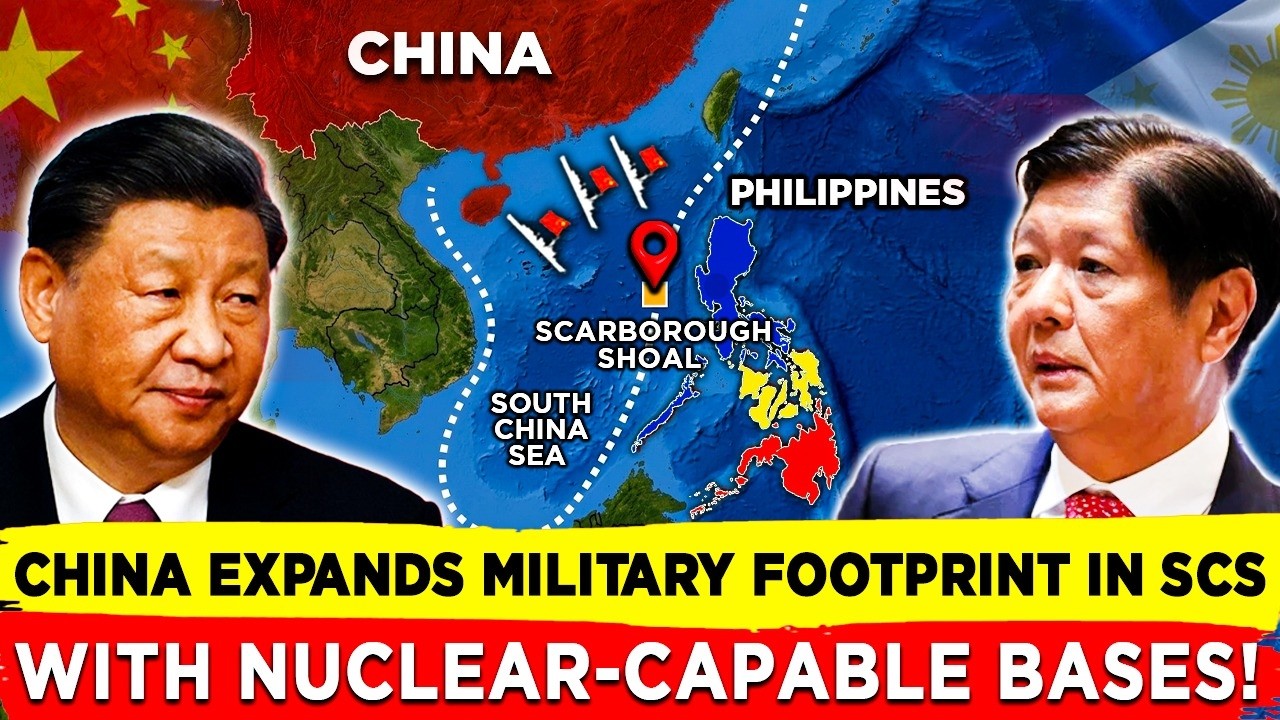
China Expands Military Footprint in the South China Sea with Nuclear-Capable Bases Amid Rising Regional Tensions
What if the next major global crisis doesn’t begin with a missile launch but with concrete being poured onto tiny reefs in the middle of the sea? That question suddenly feels a lot less hypothetical this week. Fresh satellite images and defense assessments show that China is steadily expanding military infrastructure across several artificial islands in the South China Sea, facilities analysts say could support advanced missile systems and potentially nuclear-capable strategic assets. For most people scrolling through the news, it might sound like just another geopolitical headline. But look a little closer and it feels different. Bigger. Almost like watching pieces of a much larger chessboard quietly fall into place.
And here’s the unsettling part. The South China Sea doesn’t look dramatic on a map. Just scattered reefs, shallow waters, and a few tiny specks of land. Yet every year, roughly $3.37 trillion worth of global trade moves through these waters. Oil tankers, cargo ships, energy routes, an entire artery of the global economy flows through this stretch of ocean. If something goes wrong here, it doesn’t stay regional for long. It ripples outward, touching supply chains, energy markets, and even grocery prices on the other side of the planet.
Take Mischief Reef, for example. A decade ago it was little more than a submerged coral formation. Fishermen passed by it without thinking twice. Today it has long airstrips, hardened shelters, radar systems, and missile-capable facilities. The transformation is so dramatic that one Southeast Asian naval officer once joked privately that “a reef turned into an aircraft carrier.” Except, it wasn’t really a joke.
This is where the tension begins to feel personal for the region. China’s sweeping claim to most of the South China Sea, marked by the now famous “Nine-Dash Line” overlaps directly with the maritime zones of the Philippines, Vietnam, Malaysia, Brunei, and Taiwan. For fishermen, coast guards, and naval patrols operating there, the dispute isn’t theoretical. It’s something they encounter face-to-face on the water. Sometimes in tense standoffs. Sometimes with water cannons, warning shots, or aggressive maneuvering between vessels.https://www.youtube.com/watch?v=P7dJtJ940GI
Meanwhile, outside powers are stepping in more frequently. The United States and its partners regularly conduct Freedom of Navigation Operations, sailing warships through contested waters to challenge what they see as excessive maritime claims. Every patrol, every flyover, every radar lock adds another layer of friction to an already crowded strategic space.
As Admiral John Aquilino, the commander of United States Indo-Pacific Command, once put it bluntly: “The South China Sea is not just a regional issue, it’s a global concern with implications for freedom of navigation and international law.” And that’s really the heart of the story.
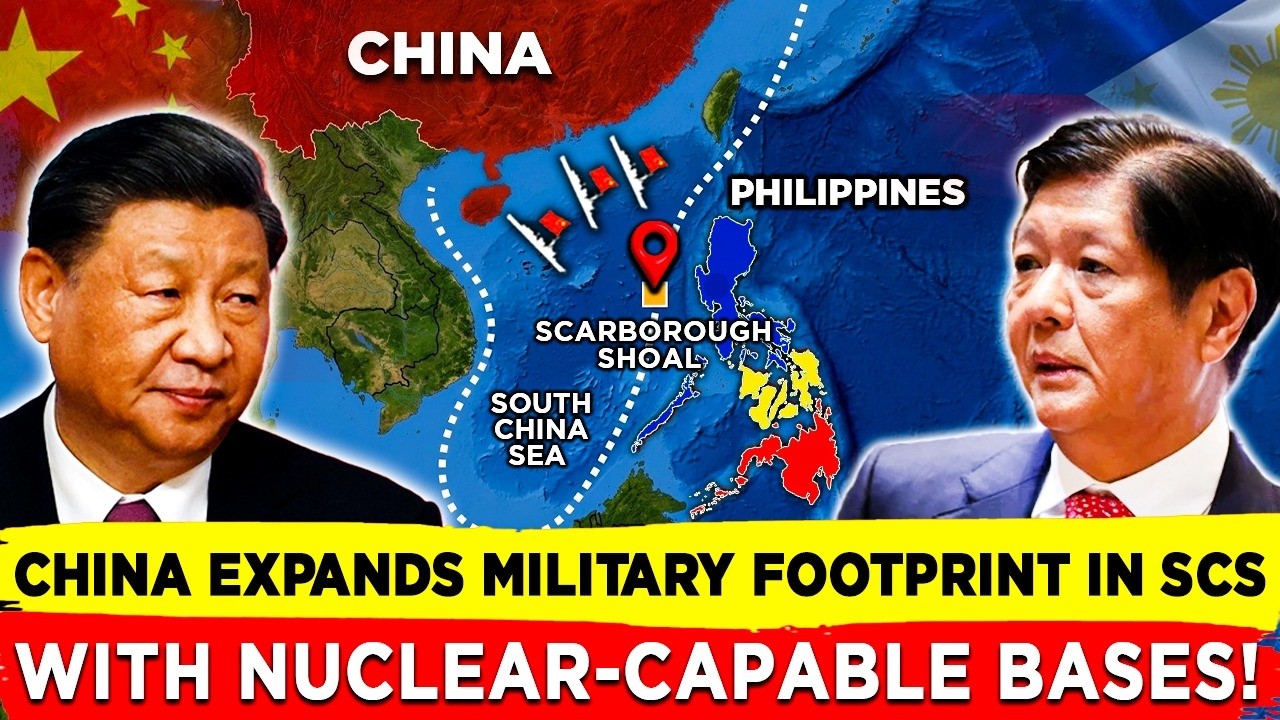
Because what’s unfolding in the South China Sea isn’t simply about islands or even military bases. It’s about who sets the rules in one of the world’s most important waterways. It’s about whether international law still holds weight when major powers disagree. And increasingly, it’s about whether a quiet competition for strategic dominance might one day turn into something much harder to contain. So the real question isn’t just what China is building in the South China Sea. The bigger question is what it might be preparing for and how the rest of the region, and the world, will respond.
Background
The South China Sea sits at the crossroads of geography, commerce, and power. On the map it may appear like a wide stretch of blue connecting Southeast Asia to the Pacific, but in reality it functions as one of the world’s most important maritime highways. Every day, enormous container ships and oil tankers move through these waters, linking the factories of East Asia with the markets of Europe and the energy producers of the Middle East. It is difficult to exaggerate how vital this route has become to the global economy. Entire supply chains depend on it. A disruption here would not just affect nearby countries, it would echo across global markets almost immediately.
But trade routes are only one part of the story. Beneath the seabed of the South China Sea lies another powerful incentive that keeps regional tensions simmering: natural resources. Energy assessments suggest that the seabed may contain around 11 billion barrels of oil and nearly 190 trillion cubic feet of natural gas. For countries with fast-growing economies and rising energy demands, those numbers are hard to ignore. Control over even a portion of these resources could reshape national energy strategies and reduce dependence on foreign imports. In many ways, the sea is not just a waterway, it is also a potential energy reserve waiting beneath layers of sediment.https://www.youtube.com/watch?v=P7dJtJ940GI
Then there is the human dimension, which often gets overlooked in high-level strategic debates. The South China Sea is one of the most productive fishing grounds on Earth, supplying roughly 10 to 12 percent of the global fish catch. Millions of people across Southeast Asia depend on these waters for their livelihoods. For coastal communities in places like Vietnam, the Philippines, and Malaysia, fishing here is not about geopolitics, it is about daily survival. Yet fishermen often find themselves on the frontlines of maritime disputes, encountering foreign coast guards, maritime militias, or naval patrols in increasingly crowded waters.
The roots of the territorial dispute stretch back decades. China’s sweeping claim over most of the South China Sea is illustrated through the so-called “Nine-Dash Line,” a boundary that first appeared on Chinese maps in the late 1940s. Beijing argues that this line reflects historical rights and centuries of Chinese activity in the region. However, several Southeast Asian countries strongly reject that interpretation. Instead, they base their claims on modern international maritime law, particularly the framework established under the United Nations Convention on the Law of the Sea, which defines exclusive economic zones extending 200 nautical miles from coastal states.https://indopacificreport.com/philippine-senator-urges-stronger-defense-against-china-on-pag-asa-island/
The legal clash between historical claims and international law came to a dramatic moment in 2016. That year, an international tribunal under the Permanent Court of Arbitration ruled overwhelmingly in favor of the Philippines in a case challenging China’s maritime claims. The decision concluded that the Nine-Dash Line had no legal basis under international law and that many of the disputed features could not generate expansive maritime zones. Beijing, however, rejected the ruling outright and has continued to assert its position, creating a situation where legal interpretation and geopolitical reality remain deeply at odds.
While legal debates continue, developments on the ground or more precisely, on the water, have moved forward rapidly. Over the past decade, China has carried out extensive land reclamation projects across several reefs and shoals in both the Spratly Islands and the Paracel Islands. What were once scattered coral outcrops have been transformed into large artificial islands with runways long enough for military aircraft, deep-water ports capable of hosting naval vessels, and sophisticated radar installations. These facilities are not merely symbolic outposts; they represent a permanent and expanding military footprint in the region.
Philippines Nears Strategic Defense Partnership with France to Enhance Naval Capabilities
Alongside the infrastructure has come a steady deployment of military assets. Fighter jets, surface-to-air missile systems, and naval patrol vessels have been observed operating from several of these installations. From a strategic perspective, these bases extend China’s surveillance and operational reach across much of the South China Sea. For neighboring countries and external powers, however, they also raise concerns that the balance of power in one of the world’s most critical waterways is shifting in ways that could shape regional security for decades to come.https://www.youtube.com/watch?v=aRb5vNT0L3E
Recent Expansion of China’s Military Footprint
If you zoom in on recent satellite imagery of the South China Sea, something striking appears. Reefs that once barely broke the surface of the water now look like small military cities. Concrete runways stretch across artificial islands, radar towers stand like watchful sentries, and deep-water harbors are carved into places that, not long ago, were just coral formations surrounded by fishermen’s boats. Over the past few years, China has quietly but steadily expanded these installations, turning them into some of the most strategically positioned military outposts in the region.
Two of the most significant locations are Fiery Cross Reef and Subi Reef. What used to be isolated reefs have been transformed into heavily fortified bases with long airstrips, hardened shelters, and large infrastructure capable of supporting sustained military operations. Analysts studying satellite imagery say some of the newly reinforced structures appear designed to store or deploy advanced missile systems, including platforms capable of carrying nuclear-capable intermediate-range missiles. In several images released in recent years, thick concrete facilities and underground-style structures suggest preparations for assets that require both protection and rapid launch capability.
US and Philippines Boost Presence in the Bashi Channel Amid Rising Tensions
The expansion has not been limited to building new bases. China has also been upgrading facilities that were already operational. Runways have been extended and strengthened so they can accommodate larger aircraft, while port facilities have been expanded to handle bigger warships. The effect is noticeable when you look at the scale of these installations today, they are no longer simple forward outposts but rather fully functioning military hubs. Surveillance technology has also become a central feature of these bases. Advanced radar systems, high-altitude drones, and increasingly sophisticated monitoring tools now allow Chinese forces to observe vast portions of the surrounding sea and airspace.https://www.youtube.com/watch?v=aRb5vNT0L3E
A particularly important node in this surveillance network is the growing military complex on Hainan Island. Located at the northern edge of the South China Sea, the island has long served as a key base for China’s naval and air forces. Recent upgrades have added powerful radar installations capable of scanning hundreds of kilometers across the region. In practical terms, that means aircraft movements, naval patrols, and even routine shipping activity can be tracked with far greater precision than before. For strategists, that kind of visibility dramatically strengthens situational awareness in contested waters.
Alongside infrastructure expansion has come a clear push to strengthen naval and air capabilities operating in the area. China has deployed increasingly advanced platforms, including the Type 093 submarine, which enhances underwater deterrence and patrol capacity. Surface operations have also grown more prominent with the presence of the aircraft carrier Shandong, capable of projecting air power far from the mainland. In the skies above the region, China’s fifth-generation Chengdu J‑20 fighter jets represent another step toward modernizing the country’s military reach.https://www.youtube.com/watch?v=P7dJtJ940GI
Military activity itself has also intensified. Exercises in the region have become more frequent and more complex, often involving coordinated naval and air maneuvers. Some drills reportedly simulate scenarios involving potential confrontation with outside powers, particularly the United States, whose naval forces regularly operate in nearby waters. These exercises serve multiple purposes: they train Chinese forces for high-intensity operations, signal strategic resolve to rivals, and demonstrate China’s growing ability to project power across one of the world’s most contested maritime regions.
Philippines-France Maritime Drills Strengthen Indo-Pacific Security
Taken together, these developments suggest something larger than routine military modernization. They point to a deliberate effort to build a network of forward positions capable of monitoring, controlling, and if necessary defending China’s interests across the South China Sea. For countries in the region and for global powers watching closely, the question is no longer whether China is strengthening its presence there. The real debate now centers on how far that expansion might go, and what it could mean for the balance of power in Asia’s most strategically sensitive waters.
Strategic Motivations Behind China’s Expansion
When you step back and look at the scale of China’s construction across the South China Sea, it’s hard not to ask the obvious question: why invest so much in remote reefs and contested waters? The answer isn’t just about territory. It’s about influence, security, and the long game of global power. For Beijing, these islands are not random military outposts, they are strategic footholds in one of the most important maritime regions on Earth.
One of the clearest motivations is regional power projection. The South China Sea has increasingly become a stage where major powers signal strength and resolve. For China, expanding military facilities there allows it to extend its defensive perimeter far beyond the mainland coastline. From Beijing’s perspective, this helps counterbalance the presence of foreign naval forces that regularly operate in the region. Warships from the United States and its allies conduct patrols meant to challenge expansive maritime claims, and Chinese strategists see forward bases as a way to maintain constant visibility and if necessary, deterrence, against those movements.https://www.youtube.com/watch?v=gcC1DRHBQ5w
At the same time, these installations reinforce China’s territorial claims. The scattered reefs and islands of the South China Sea may appear insignificant individually, but collectively they shape control over vast surrounding waters. By maintaining airstrips, radar stations, and military personnel on these features, China effectively strengthens its physical presence in disputed areas. In international politics, presence often translates into leverage. The longer a state maintains operational control in a contested zone, the harder it becomes for rivals to challenge that status without escalating tensions.
Another powerful driver is economic security. China is the world’s largest energy importer, and much of that energy flows through the sea lanes that cut across the South China Sea. Tankers carrying crude oil from the Middle East and Africa travel along these routes before reaching Chinese ports. Analysts often note that roughly 70 percent of China’s imported oil passes through these waters, making them one of the country’s most critical supply arteries. From Beijing’s standpoint, ensuring that these shipping lanes remain secure, especially during geopolitical crises, is a matter of national survival.
Japan–Philippines Security Shift: The Possible Transfer of Type-03 Air Defense System
Beneath the sea itself lies yet another strategic prize. Geological surveys suggest that the seabed may hold substantial deposits of oil, natural gas, and potentially rare earth minerals. Control over these resources would strengthen China’s long-term energy security while reducing vulnerability to external suppliers. In an era where energy access often shapes geopolitical competition, the prospect of untapped reserves beneath the South China Sea adds another layer of strategic urgency to the dispute.
Domestic politics also plays a role in shaping China’s approach. The leadership of the Chinese Communist Party places strong emphasis on national unity, sovereignty, and the idea of restoring China’s historical status as a major power. Demonstrating control over disputed maritime territories fits naturally into that narrative. Military modernization, visible through advanced aircraft, naval deployments, and fortified island bases, reinforces the image of a country that has regained both confidence and capability on the global stage.
For Chinese leadership, a stronger military presence in the region also serves as a message to domestic audiences. It signals that the government is actively protecting national interests and responding to external pressures. In that sense, infrastructure projects in distant reefs become symbols of national strength as much as they are strategic assets.https://www.youtube.com/watch?v=_T03Lq8kiLA
This connection between military strength and national development has been openly emphasized by Xi Jinping, who has repeatedly linked defense modernization with China’s broader rise as a global power. As he stated in 2019, “A strong military underpins China’s peaceful rise.” The remark captures a central idea in Beijing’s strategic thinking: stability and prosperity, in China’s view, depend on the ability to defend national interests with credible power.
Seen through that lens, the expansion in the South China Sea is not an isolated policy. It is part of a broader strategy aimed at securing vital trade routes, reinforcing territorial claims, and projecting influence across the Indo-Pacific. Whether this approach will stabilize the region or deepen strategic rivalry, however, remains one of the most pressing questions shaping the future of Asian security.
Regional and Global Reactions
As China’s military footprint across the South China Sea has expanded, reactions from the rest of the region have been immediate and sometimes uneasy. Countries in Southeast Asia are watching developments closely because the dispute isn’t happening somewhere far away. It’s unfolding right on their maritime doorstep. For several members of the Association of Southeast Asian Nations, the growing presence of Chinese bases has triggered a mix of diplomatic protest, cautious dialogue, and quiet military preparation.https://www.youtube.com/watch?v=P7dJtJ940GI
Governments across the region have repeatedly called for negotiations and adherence to international maritime law. Yet behind the scenes, many are also strengthening their own security capabilities. Vietnam, for instance, has steadily expanded and modernized its coast guard and naval patrol capacity, aiming to better monitor its maritime zones. The Philippines has taken a slightly different route by deepening defense cooperation with the United States, allowing greater coordination between the two militaries in response to growing tensions in disputed waters. For smaller states, the challenge is delicate: they must defend their maritime rights while avoiding escalation with a far more powerful neighbor.
Outside powers have also become increasingly involved. The United States, which sees the South China Sea as vital to global maritime freedom, continues to conduct Freedom of Navigation Operations to challenge what it considers excessive territorial claims. American naval deployments in the region often operate alongside partners such as Japan and Australia, signaling that the issue is no longer purely regional but part of a broader Indo-Pacific security landscape. One notable example came in 2023, when the aircraft carrier USS Ronald Reagan sailed through the South China Sea as part of a broader show of deterrence and reassurance to allies.
These patrols and exercises increasingly intersect with emerging security frameworks like the Quadrilateral Security Dialogue, commonly known as the Quad, which brings together the United States, Japan, India, and Australia. Although the Quad is not a formal military alliance, its growing cooperation in maritime security reflects a shared concern about maintaining open sea lanes and balancing China’s expanding influence.https://www.youtube.com/watch?v=_T03Lq8kiLA
At the legal level, international institutions have attempted to provide a framework for managing these disputes. The United Nations Convention on the Law of the Sea remains the primary legal basis for defining maritime rights and exclusive economic zones. In theory, it offers a clear structure for resolving overlapping claims. In practice, however, enforcement remains difficult when major powers reject rulings or interpret legal provisions differently. As international law expert Philippe Sands once observed, “International law is clear, but compliance remains a challenge.” His remark captures the frustrating gap between legal principles and geopolitical realities.
Implications
The strategic consequences of China’s expansion reach far beyond the reefs and islands where the construction is taking place. From a security perspective, the growing concentration of military assets in such a confined maritime space raises the risk of accidental confrontations. Naval patrols, coast guard vessels, fishing fleets, and military aircraft often operate within close proximity. In tense moments, even a small miscalculation, a collision, a warning shot, or an aggressive maneuver, could spiral into a broader crisis.https://www.youtube.com/watch?v=P7dJtJ940GI
Another concern involves the possibility of a regional arms buildup. As China strengthens its military infrastructure and missile capabilities, neighboring states may feel pressure to invest in more advanced defense technologies of their own. Over time, this dynamic could encourage a security competition across the region, with countries seeking stronger deterrence through modern weapons systems, expanded naval forces, or deeper security partnerships with external powers.
Economic implications are equally significant. The South China Sea functions as one of the world’s busiest commercial corridors, connecting manufacturing centers in Asia with markets across the globe. Any serious disruption, whether caused by conflict, military blockade, or heightened political tensions, could slow or reroute shipping traffic. That kind of disruption would ripple through global supply chains, affecting everything from energy shipments to consumer goods.
There is also the possibility that prolonged tensions could trigger economic responses from outside powers. In extreme scenarios, Western countries might consider sanctions or trade restrictions targeting Chinese institutions involved in militarization activities. Even if such measures remain unlikely in the near term, the mere possibility adds another layer of uncertainty to an already complex geopolitical environment.
Japan’s Growing Military Ties with the Philippines: What It Means for China and the Region?
Diplomatically, the balance of power across the Asia-Pacific is slowly evolving. China’s expanding capabilities strengthen its influence in regional security affairs, while neighboring states look for ways to preserve strategic autonomy. This dynamic is already shaping alliances and partnerships. Cooperation among Quad members has intensified, while Southeast Asian countries are attempting to coordinate positions within ASEAN in order to maintain collective leverage in negotiations.
Possible Future Scenarios
Looking ahead, several potential paths could shape the future of the South China Sea dispute. One possibility is continued escalation and militarization. Under this scenario, rival naval forces operate more aggressively in contested waters, leading to frequent standoffs and heightened strategic competition between China and outside powers, particularly the United States. In such an environment, military bases equipped with advanced missile systems could become tools of geopolitical leverage during crises.
A second path involves renewed diplomatic efforts to stabilize the situation. Regional organizations or international institutions could facilitate negotiations aimed at confidence-building measures, maritime communication protocols, or even limited arms-control arrangements for the region. Such agreements would not necessarily resolve the underlying territorial disputes, but they could help reduce the risk of accidental clashes.
The most likely near-term outcome may be a strategic status quo, an uneasy balance where militarization continues but open conflict is avoided. In this scenario, China maintains its expanding infrastructure while rival powers sustain regular patrols and surveillance activities. Tensions remain high, yet all sides exercise restraint because the cost of escalation would be enormous for everyone involved.
Conclusion
The developments unfolding in the South China Sea illustrate how geography, economics, and power politics can intersect in ways that shape global security. China’s expanding military presence, including infrastructure capable of supporting advanced missile systems, reflects a strategy driven by regional influence, protection of vital trade routes, and domestic political considerations.
For neighboring states and global powers alike, the implications are far-reaching. Security dynamics are shifting, economic stability is potentially at stake, and diplomatic relationships across the Indo-Pacific are being recalibrated in response to these changes. None of these developments exist in isolation; each is part of a larger strategic transformation underway in the region.
Avoiding escalation will require a careful balance between deterrence and diplomacy. International law provides a framework, but political will and sustained dialogue are essential for preventing disputes from turning into confrontation. Multilateral engagement, through regional organizations, bilateral agreements, and global institutions, remains one of the few tools capable of managing tensions in such a complex environment.
For now, the South China Sea remains one of the defining geopolitical hotspots of the twenty-first century. What happens there will not only influence the security architecture of Asia but also shape the broader dynamics of global power in the decades ahead.https://youtu.be/W5SLEfeZ_1M?si=icpxEVHaZiAosv4N
