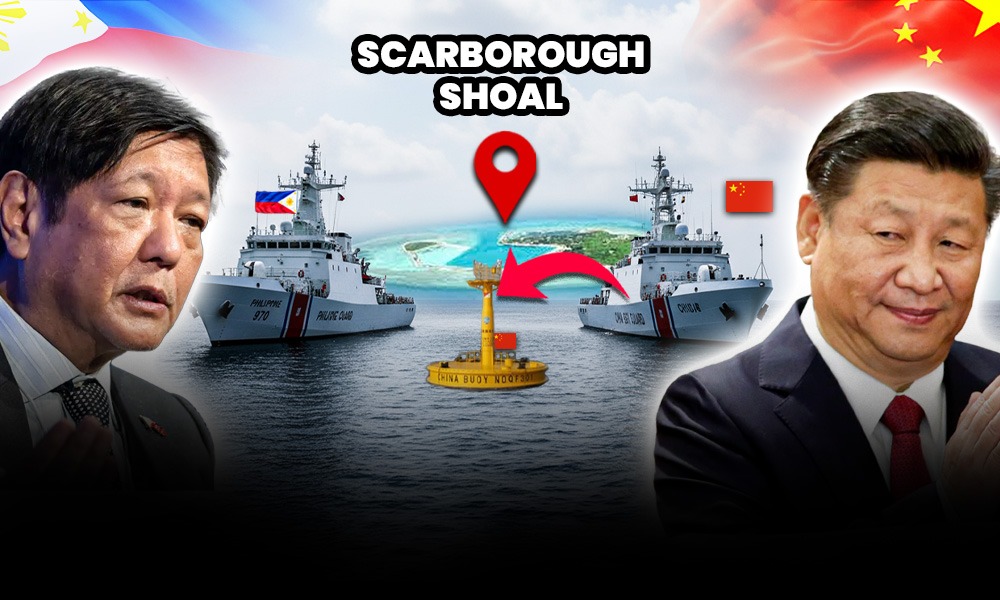
In a dramatic escalation that could reshape the Indo-Pacific security landscape, China deployed buoys, security officers, and J-16 fighter jets over Scarborough Shoal on October 17, 2025—right in the middle of Philippine military exercises in the West Philippine Sea.
The Philippine Coast Guard (PCG) has confirmed the placement of at least two new Chinese buoys in and around the shoal, backed by large patrol vessels CCG-101 and CCG-301, with a People’s Liberation Army (PLA) military exercise conducted just 17 nautical miles away.
This bold move comes just days after a dangerous aerial confrontation on October 13, when a PLA J-16 fighter jet aggressively intercepted a Philippine Coast Guard aircraft, prompting Manila to condemn the act as “reckless and illegal.”
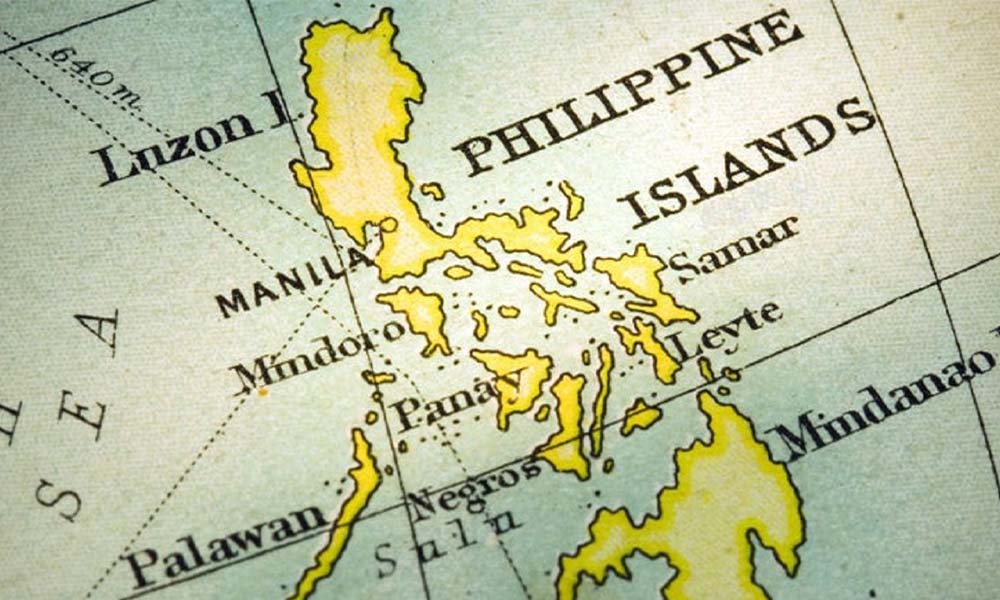
For Filipino citizens, this isn’t just another news headline—Scarborough Shoal sits only 124 nautical miles off Zambales Province, squarely within the Philippines’ Exclusive Economic Zone (EEZ). What was once a traditional fishing ground for generations of Filipino families is now being systematically walled off by a foreign power.
China’s message is unmistakable: “We control this sea. You just live near it.
The Philippines’ Defiant Response: No Retreat, No Surrender
Manila Refuses to Back Down
Despite China’s aggressive posturing, the Philippines did not pause its military drills, did not withdraw its vessels, and did not remain silent. This calculated defiance represents a fundamental shift in Manila’s approach to maritime sovereignty.
The Philippine government’s transparency strategy is proving remarkably effective—transforming every act of Chinese coercion into international diplomatic backlash. The United States, Japan, Australia, and multiple European nations have issued strong statements backing the Philippines, recognizing that Scarborough Shoal represents far more than a disputed reef.
International observers understand the stakes: If China successfully locks down Scarborough, it establishes a precedent that could see Taiwan targeted next, with the entire Pacific region potentially following.
Scarborough Shoal: Why This Remote Reef Matters to Global Security
Geographic and Legal Significance
Scarborough Shoal (known as Bajo de Masinloc in the Philippines and Huangyan Dao in China) occupies a critical strategic position:
- Distance from Philippines: Only 120 nautical miles from Luzon (closer than Manila is to Baguio)
- Legal status: Firmly within the Philippines’ 200-nautical-mile EEZ under UNCLOS
- Economic importance: Traditional fishing ground supporting thousands of Filipino families
- Strategic value: Controls access to vital South China Sea shipping lanes
The 2012 Standoff and Chinese Occupation
The shoal has been under de facto Chinese control since the 2012 maritime standoff, when Chinese maritime forces effectively sealed off access and expelled Filipino fishermen from their ancestral waters. This occupation continues despite the 2016 Permanent Court of Arbitration ruling that:
- Invalidated China’s Nine-Dash Line claims as having “no legal basis”
- Affirmed Scarborough as a traditional fishing area for multiple nations
- Confirmed the shoal’s location within the Philippines’ EEZ
Nearly a decade after this landmark ruling, China not only rejects the decision but has intensified its control through coast guard blockades, maritime militia swarms, and now, permanent infrastructure.
If China Tow Away Philippines’ BRP Sierra Madre From Ayungin Shoal
China’s Two-Pronged Strategy: Military Might Meets Legal Manipulation
Phase 1: Militarization Through “Gray-Zone” Tactics
China’s approach to securing Scarborough Shoal follows a carefully orchestrated playbook:
Aerial Intimidation
In early October 2025, Beijing deployed an H-6 bomber armed with YJ-12 supersonic anti-ship missiles—weapons with a 500-kilometer strike range capable of hitting targets across the West Philippine Sea with devastating precision.
Maritime Saturation
Chinese Coast Guard (CCG) operations around Scarborough reached 120 ship-days in January 2025—nearly double the late 2024 average. This represents not law enforcement but maritime occupation through overwhelming presence.
Infrastructure Development
The new buoy deployment represents the latest step in China’s incremental strategy:
- Physical markers establishing “Chinese territory”
- Surveillance platforms monitoring Philippine movements
- Legal pretexts for future enforcement actions
Phase 2: Legal Cover Through Environmental Theater
On September 11, 2025, Beijing declared a 3,524-hectare “national nature reserve” around Scarborough Shoal—a move international legal experts dismiss as a “fake legal shield” designed to:
- Justify expulsions of Filipino fishermen
- Block international access under environmental pretexts
- Rewrite maritime boundaries without military confrontation
This declaration directly contradicts the 2016 arbitration ruling and violates UNCLOS provisions on EEZ rights.
Philippine Resistance: A Multi-Layered Defense Strategy
Military and Coast Guard Response
The Philippine Coast Guard issued its strongest statement to date:
“In the face of such aggressive actions, the PCG remains steadfast in its commitment to uphold international law and safeguard maritime jurisdiction in the West Philippine Sea.”
Supporting Filipino Fishermen: The Kadiwa Initiative
The Kadiwa para sa Mangingisda support program provides:
- Fuel subsidies for fishing vessels
- Logistics support for extended operations
- Coast Guard escorts for fishermen near Scarborough
- Legal assistance for those harassed by Chinese forces
This initiative represents more than policy—it’s an act of sovereignty ensuring Filipino fishermen maintain access to their traditional grounds.
Diplomatic Documentation Campaign
Maritime observers report 121 separate confrontations between Chinese and Philippine vessels from August 2024 to May 2025—nearly one incident every three days. Each encounter is:
- Documented with video evidence
- Reported to international bodies
- Shared with allied nations
- Published for global awareness
International Response: A Growing Coalition Against Chinese Aggression
United States: Treaty Ally Stands Firm
Washington issued a forceful statement:
“The United States stands with our Philippine ally in rejecting China’s destabilizing attempt to enforce a ‘nature reserve’ that violates international law.”
The U.S. position is backed by the 1951 Mutual Defense Treaty, which obligates American military response to attacks on Philippine government vessels.
Regional and Global Support
Japan: Condemned China’s “bullying tactics” and praised Philippine “restraint and adherence to international law”
Australia: Called for “immediate de-escalation” and “respect for the 2016 arbitral ruling”
European Union: Expressed “grave concern” over China’s “coercive activities” in the South China Sea
This international solidarity represents Beijing’s worst fear: a united front committed to UNCLOS, the rules-based order, and freedom of navigation.
“Cease Its Farces”: China’s Warning to the Philippines Ignites South China Sea Crisis
Future Scenarios: From Crisis to Potential Conflict
The Nuclear Dimension: China’s “South China Sea Bastion” Strategy
Defense analysts warn that Beijing’s long-term objective involves transforming Scarborough into part of a “nuclear bastion” where:
- PLAN nuclear submarines (SSBNs) can operate undetected
- Second-strike nuclear capability enhances Chinese deterrence
- Strategic corridor connects Hainan Island to the Spratlys
- Control over Luzon Strait threatens U.S. carrier operations
The Taiwan Connection
Scarborough Shoal’s strategic location makes it crucial for any Taiwan contingency:
- Forward staging area for PLA operations
- Monitoring post for U.S. and allied movements
- Leverage point to coerce Philippine neutrality
- Chokepoint control over critical sea lanes
Escalation Risks: The Knife’s Edge
Current confrontation patterns create multiple escalation pathways:
Near-Term Risks
- PLA jets buzzing Philippine aircraft at 300-500 feet
- Water cannon attacks causing serious injuries or deaths
- Ship collisions during close-quarters maneuvering
- Miscommunication leading to warning shots
Trigger Points for Wider Conflict
- Filipino military/coast guard fatality could activate U.S. MDT obligations
- Chinese attempt to build permanent structures on the shoal
- Blockade of Philippine resupply missions using force
- Deployment of weapons systems to the shoal
Conclusion: A Global Test of International Law vs. Military Might
Scarborough Shoal has evolved from a fishing rights dispute into a critical test of the international order. The confrontation represents:
- A challenge to UNCLOS and international maritime law
- A test of U.S. alliance commitments in the Indo-Pacific
- A precedent for Chinese expansion across disputed territories
- A flashpoint that could trigger regional conflict
The Philippines’ refusal to yield despite overwhelming Chinese pressure demonstrates that principle can stand against power—but only with strong international backing and strategic patience.
As tensions escalate and confrontations multiply, the world watches a dangerous game where one miscalculation could transform a remote shoal into the spark that ignites the Indo-Pacific.