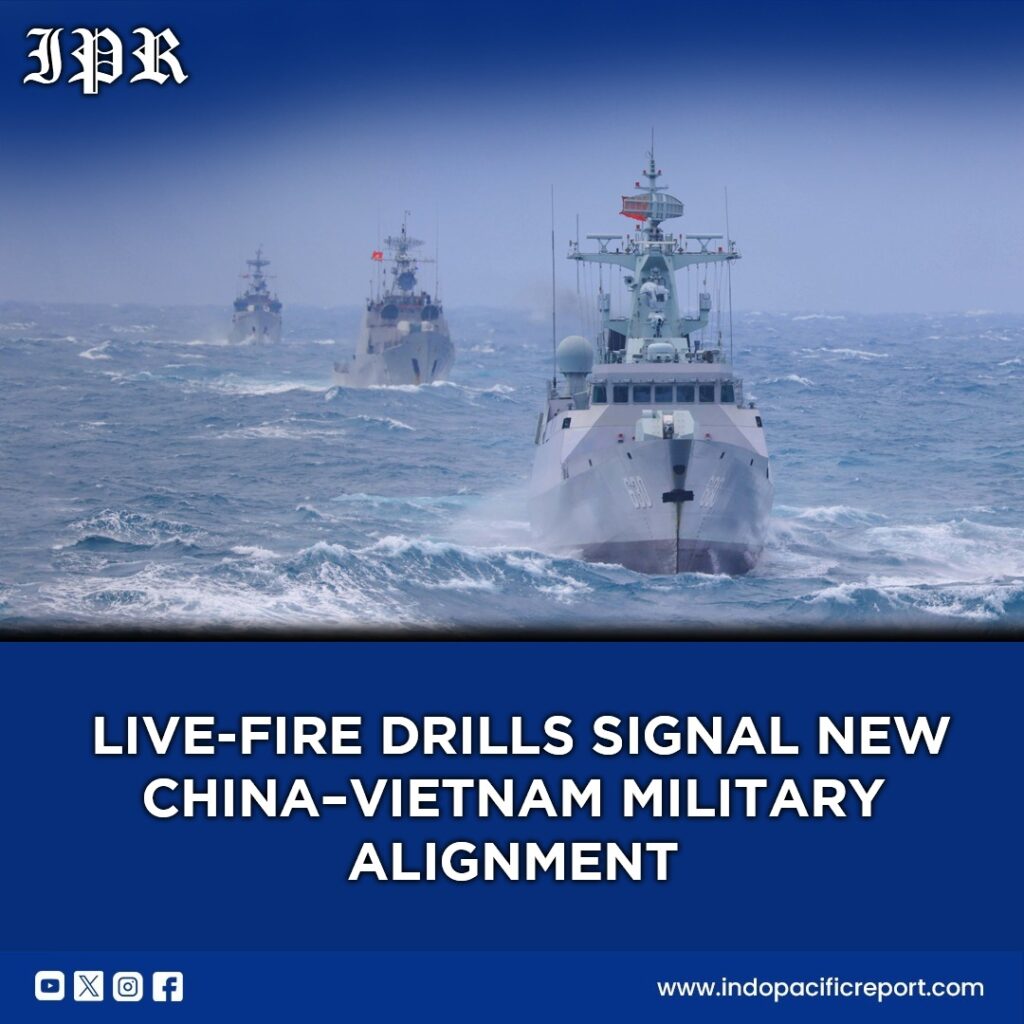
China and Vietnam are deepening their naval cooperation. The two countries recently agreed to add live-fire drills to future joint exercises in the Gulf of Tonkin. Vietnamese Communist Party chief To Lam called relations with Beijing a “top priority,” showing Hanoi’s desire to strengthen military ties. Vietnamese frigates Tran Hung Dao and Ly Thai To joined PLA Navy vessels for the 40th joint patrol. The exercises now include anti-piracy training and light-weapons drills, marking a shift from routine patrols to more advanced operational collaboration.
From a great-power competition perspective, these exercises reflect China’s effort to consolidate influence in Southeast Asia. Live-fire drills with Vietnam show Beijing can shape regional maritime security while projecting a cooperative image. For Vietnam, the exercises provide valuable training and improve naval readiness. At the same time, Hanoi must balance growing ties with Beijing against its security relationships with the United States and other regional partners, making this a delicate strategic dance.
These developments also impact regional security architecture. Adding live-fire drills increases interoperability and command readiness for both navies. While framed as anti-piracy operations, such drills demonstrate operational capability and coordination, signaling to other regional actors that both states can respond to maritime crises. Yet, this dual-use aspect—training plus signaling—creates uncertainty, especially in contested waters, which could influence future crisis dynamics.
Alliance dynamics are equally important. Vietnam continues to maintain strong security ties with the United States while expanding operational collaboration with China. This hedging strategy gives Hanoi flexibility but complicates how allies and competitors perceive its role in regional security. Neighboring ASEAN members and U.S. partners must account for Vietnam’s shifting position when planning joint exercises or maritime security strategies.
From a maritime and economic standpoint, enhanced China–Vietnam coordination strengthens anti-piracy efforts and safeguards critical shipping lanes. The Gulf of Tonkin and nearby waters are essential for trade and energy transport. By improving operational skills and coordination, both navies can better protect these routes. However, live-fire exercises also carry risks: miscalculations or accidents in busy sea lanes could escalate tensions and threaten regional commerce.
Strategically, these exercises subtly influence the Indo-Pacific balance of power. Deeper cooperation improves China’s regional influence while providing Vietnam with practical tactical benefits. At the same time, it may prompt other regional powers—like the U.S., Japan, and Australia—to step up their own naval exercises and capability development. The result is a more networked but competitive maritime environment, where cooperation and rivalry coexist.
Looking ahead, the key question is whether live-fire exercises are a foundation for genuine regional security cooperation or primarily a tool of signaling. If carefully managed, they could enhance crisis response and anti-piracy readiness. If mismanaged, they could increase mistrust and encourage regional arms build-up. The challenge for Southeast Asia is balancing operational collaboration, deterrence, and strategic autonomy amid great-power competition.
Audience Question:
Do China–Vietnam naval drills improve security, or risk escalating regional tensions?