The South China Sea is Boiling Over—Again
If you’re watching from Manila, Cebu, or California, you’re witnessing history unfold in real time. The South China Sea—a $5.3 trillion trade highway carrying a quarter of global commerce—has once again become the world’s most dangerous flashpoint. And at the center of the storm? China’s latest diplomatic broadside against the Philippines, calling Manila’s actions in disputed waters “farces”—a public humiliation meant to echo across the Indo-Pacific.
This isn’t just another geopolitical spat. It’s a clash of titans and underdogs, where sovereignty, pride, and survival are on the line. And the stakes couldn’t be higher.
China’s Warning: “Cease Its Farces” – What Just Happened?
On October 18, 2025, Chinese Ministry of National Defense spokesperson Zhang Xiaogang stepped before the cameras and delivered a blunt ultimatum:
The Philippines must give up its unrealistic illusions and cease its farces in the South China Sea.
This wasn’t just routine propaganda. It was a deliberate, public dressing-down—a message loud enough for Washington, Tokyo, and every Filipino fisherman to hear.
The Immediate Triggers: Two Explosive Incidents
- “Illegal Intrusion” in the Spratlys (Nansha Islands)
- China accused the Philippines of sending vessels into “Chinese waters” near the Spratly Islands (called Kalayaan Island Group by Manila).
- Philippine response: “These are our Exclusive Economic Zone (EEZ) waters, recognized under UNCLOS.”
- Sovereignty Showdown Over Scarborough Shoal (Huangyan Island)
- A Philippine defense official reaffirmed Manila’s claim over Scarborough Shoal (Bajo de Masinloc).
- China’s reaction: “This is our historic territory—your claims are baseless.
The Escalation Spiral: From Standoffs to Near-Warfare
What was once occasional tension has become a weekly crisis:
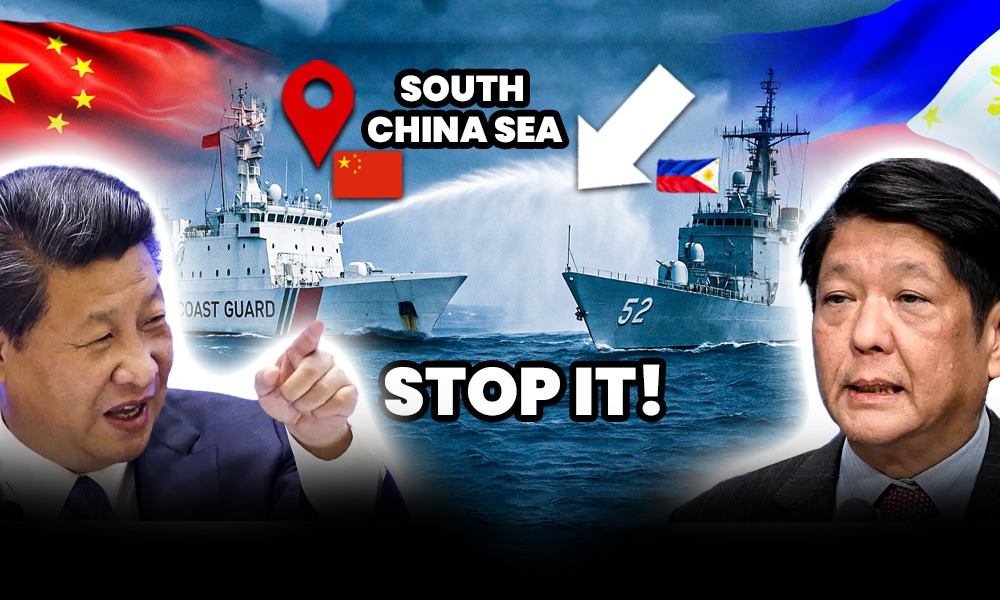
- Chinese Coast Guard (CCG) vessels now routinely blast Philippine ships with water cannons, ram them, and block resupply missions.
- Viral videos show Filipino sailors dodging high-pressure water jets, their voices panicked over radio as Chinese ships close in like predators.
- October 12, 2025: A CCG ship rams and damages the Philippine vessel BRP Datu Pagbuaya near Thitu Island (Pag-asa).
- China’s claim: “The Filipino crew violated our sovereignty.”
- Philippines’ response: “This was an act of aggression—we will not yield a single inch.”
Just days later (October 16), China’s military claimed it “expelled” two Philippine aircraft near Scarborough Shoal, accusing them of “illegally entering Chinese airspace.”
The Philippine Air Force fired back:
“China’s actions endanger pilots and violate international airspace rules.”
And then came Zhang Xiaogang’s hammer blow: “Cease its farces.”
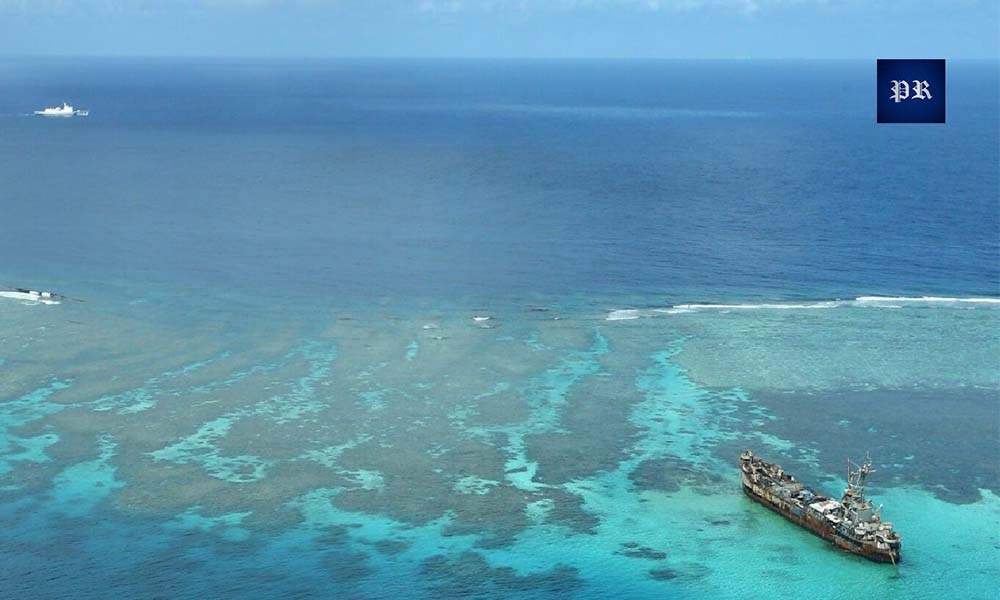
If China Tow Away Philippines’ BRP Sierra Madre From Ayungin Shoal
Why Does China Call the Philippines’ Actions a “Farce”?
From Beijing’s perspective, the Philippines is staging provocations to:
Attract global sympathy (by inviting journalists on resupply missions).
Drag the U.S. into the conflict (via the Mutual Defense Treaty).
Internationalize the dispute (by filing diplomatic protests and releasing footage of Chinese aggression).
China’s official narrative:
- The Nansha Islands and Scarborough Shoal are historically Chinese.
- The Philippines is distorting history to justify its infringements.
- We will take resolute measures to defend our sovereignty.
China’s “Legal” Argument: Treaties, Maps, and a Century of Claims
Beijing’s case rests on three key treaties:
- 1898 Treaty of Paris (Spain cedes Philippines to the U.S.) – China claims this excluded Scarborough Shoal.
- 1900 Treaty of Washington – Allegedly confirms U.S. recognition of Chinese claims.
- 1930 U.S.-Britain Convention – Supposedly sets Philippine boundaries east of 118° longitude, leaving Scarborough Shoal (west of this line) as Chinese.
China’s conclusion:
Huangyan Dao (Scarborough Shoal) was never yours.
The Reality: International Law vs. Historical Revisionism
The Philippines’ counterargument is simple:
The 2016 Arbitral Ruling (Permanent Court of Arbitration) invalidated China’s nine-dash line.
Scarborough Shoal is within the Philippines’ EEZ under UNCLOS.
China’s “historic claims” have no legal basis—they’re political fiction.
President Ferdinand “Bongbong” Marcos Jr. has been unwavering:
We are not the intruders. We are the rightful defenders of our seas.
The Philippines Fights Back—Without Firing a Shot
Since 2023, the Marcos administration has shifted from quiet diplomacy to confrontation backed by law and alliances.
1. Legal Warfare: The 2016 Arbitral Ruling as a Shield
- November 2024: Marcos enshrined the Arbitral Ruling into Philippine law, making it domestic policy.
- China’s response: “The ruling is null and void.”
- Philippines’ move: “We don’t need China’s permission to enforce international law.
CNOOC’s Offshore Operations Signal China’s Takeover of Philippine Offshore Oil
2. Alliance Power: The U.S., Japan, and Australia Stand With Manila
- March 2024: U.S. Defense Secretary Lloyd Austin reaffirmed that the 1951 Mutual Defense Treaty (MDT) covers attacks on Philippine vessels in the South China Sea.
- Translation: If China sinks a Philippine ship, the U.S. could intervene militarily.
- April 2024: U.S.-Japan-Philippines trilateral summit—four direct condemnations of China’s behavior.
- May 2025: Philippines-Japan joint naval drills (anti-submarine warfare exercises).
3. The Transparency Offensive: Turning Chinese Aggression Into Viral Outrage
The Philippine Coast Guard’s “transparency initiative” has become a weapon:
- Every water cannon attack is filmed in 4K.
- Footage is released within hours, going viral on social media.
- Allies (U.S., Japan, EU) issue condemnations within 24 hours.
Result: China is diplomatically isolated, while the Philippines gains global sympathy.
The Dangerous Game: Gray-Zone Warfare and the Risk of Miscalculation
China’s gray-zone tactics (actions short of war but beyond diplomacy) include:
Water cannon attacks (now routine).
Laser pointing (blinding Filipino sailors).
Radio jamming (disrupting communications).
Blockades (cutting off Ayungin Shoal resupply missions).
Nature reserve” declarations (bureaucratic land grabs, like Scarborough Shoal’s new “protected” status).
The Breaking Point: When Words Stop Working
- Communication lines are collapsing:
- 2024: Philippine defense officials said China ignores de-escalation calls.
- Hotlines meant to prevent accidents? Often unanswered.
- The risk of miscalculation:
- One wrong move—a collision, a stray shot, a sinking—could spark a regional crisis.
The Human Cost: Fishermen and Families Caught in the Crossfire
- Filipino fishermen from Zambales and Palawan report:
- Chinese ships chase them away.
- Their nets are destroyed.
- *They risk their lives just to fish in their own waters.
- In China, nationalists demand “teaching the Philippines a lesson.”
- In the Philippines, fishermen and coast guard crews are terrified but defiant.
What’s Next? Three Possible Scenarios
1. The Diplomatic Off-Ramp (Unlikely but Possible)
- China and the Philippines agree to talks (under ASEAN’s “Code of Conduct”).
- A temporary truce—but no real resolution.
2. The New Normal (Most Likely)
- More confrontations, more water cannon attacks, more ramming incidents.
- The U.S. increases patrols, Japan and Australia step up support.
- A frozen conflict—neither side backs down, but no full-blown war.
3. The Nightmare Scenario (Low Probability, High Impact)
- A major incident (e.g., a Philippine ship sinks, a Chinese vessel fires live rounds).
- The U.S. is forced to respond under the MDT.
- A regional crisis—China vs. U.S. allies, with global economic fallout.
Chinese Coast Guard Rams Philippine Vessel Near Pag-asa Island in South China Sea
Why This Matters Beyond the South China Sea
1. The $5.3 Trillion Question: Global Trade at Risk
- 25% of global maritime trade passes through these waters.
- Oil tankers, container ships, gas carriers—disruptions = global supply chain chaos.
2. The Energy War: Who Controls the Seabed?
- Untapped oil and gas reserves beneath the Spratlys and Scarborough Shoal.
- Whoever controls the islands controls the future of energy in Asia.
3. The New Cold War: U.S. vs. China in the Indo-Pacific
- The South China Sea is the frontline of U.S.-China rivalry.
- If China dominates here, it controls the first island chain—a strategic nightmare for the U.S. and its allies.
Conclusion: A Crisis With No Easy Exit
China’s “cease its farces” warning isn’t just rhetoric—it’s a declaration of intent. Beijing is doubling down, using coercion, legal warfare, and military pressure to force the Philippines into submission.
But Manila isn’t backing down. Armed with international law, alliances, and moral authority, the Philippines is fighting a different kind of war—one where restraint is strength, and truth is a weapon.
The Big Question: What Happens When Words Fail?
- Will China escalate further?
- Will the U.S. be forced to intervene?
- Can diplomacy still work, or is the South China Sea on a collision course?
One thing is certain: The world is watching. And the next move could change everything.