Can the Philippines Hold the First Island Chain? The Real Test of America’s Denial Strategy
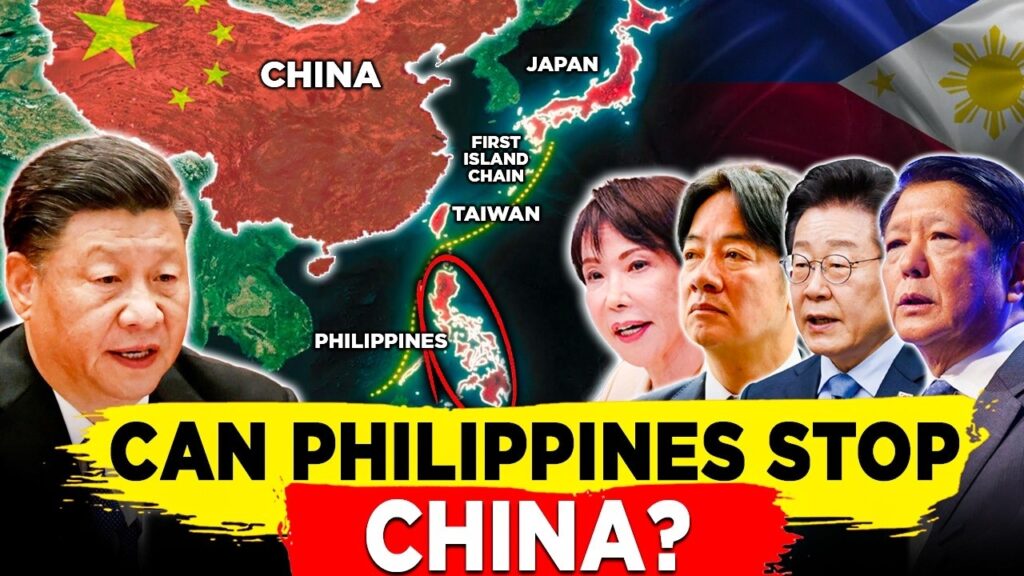
Look at a map of the Indo-Pacific and one thing becomes clear almost instantly: geography still matters. A lot. Stretching across the western edge of the Pacific is a long arc of islands, Japan at the top, Taiwan in the middle, and the Philippines further south. Together they form what strategists call the First Island Chain, a natural barrier that runs along China’s maritime frontier. For decades, that chain quietly shaped the balance of power in Asia.
If Chinese naval forces want to reach the open Pacific Ocean, they must pass through gaps in that island arc. If rival powers can monitor or control those gaps, they can limit China’s ability to project military power far from its shores. That’s why the chain has suddenly become one of the most talked-about concepts in modern military strategy.
And in the middle of that arc sits the Philippines, a country of more than 7,000 islands, positioned almost perfectly between the South China Sea, the Philippine Sea, and the Taiwan Strait. In other words, right at the crossroads of the Western Pacific.
https://www.youtube.com/watch?v=0bvvgt8wZKI
For the United States, which is increasingly shifting its strategy toward what analysts call a “denial strategy,” that geography suddenly looks incredibly valuable. But it also raises a hard question. Can the Philippines actually help hold this defensive line if tensions with China intensify? Or is the island chain more fragile than it appears?

The Logic Behind the First Island Chain
The idea of the First Island Chain isn’t new. In fact, it dates back to the Cold War. American strategists once saw the island arc, from Japan through Taiwan to the Philippines, as a kind of maritime containment line. By maintaining strong alliances along that chain, the United States could limit Soviet and Chinese naval expansion into the Pacific. For decades the concept sat quietly in military textbooks.
Then China’s navy began to grow. Today the People’s Liberation Army Navy is the largest navy in the world by number of ships. According to assessments by the United States Department of Defense, China now operates more than 370 battle-force vessels, and that number continues to climb.
Will China Agree to the Philippines proposed Code of Conduct for the SCS
The strategic implication is obvious. If Chinese fleets can move freely beyond the First Island Chain, they gain direct access to the wider Pacific Ocean, area where American forces have historically dominated. For Beijing, breaking through the chain would mark a huge strategic milestone. For Washington and its allies, preventing that outcome has become a central goal.
America’s Shift From Dominance to Denial
For much of the past half-century, the United States relied on a strategy of dominance. Aircraft carrier strike groups patrolled the Pacific. Large bases in places like Okinawa and Guam allowed American forces to project power across the region. But modern technology has changed the battlefield. China now possesses advanced anti-ship missiles such as the DF‑21D anti‑ship ballistic missile, sometimes described as a “carrier killer.” Weapons like these make large naval formations and fixed bases more vulnerable than they once were. As a result, American planners have begun shifting toward a different approach.https://www.youtube.com/watch?v=2SuVI9-Et50
Instead of trying to dominate every part of the region, the goal is to deny China the ability to control key maritime areas. This idea has been championed by strategists such as Elbridge Colby, who argue that the real objective is preventing Chinese regional hegemony rather than achieving total military superiority. Denial strategy relies on several key principles.
Why Philippines China Tensions in South China Sea May Never Truly End
Forces are distributed across multiple islands instead of concentrated in a few large bases. Long-range precision missiles can target enemy ships from land. Sensors and radar networks monitor movement across vast ocean spaces. And most importantly, alliances become central to the entire system. Without regional partners, the network simply doesn’t work.
Why Does the Philippines Matters So Much?
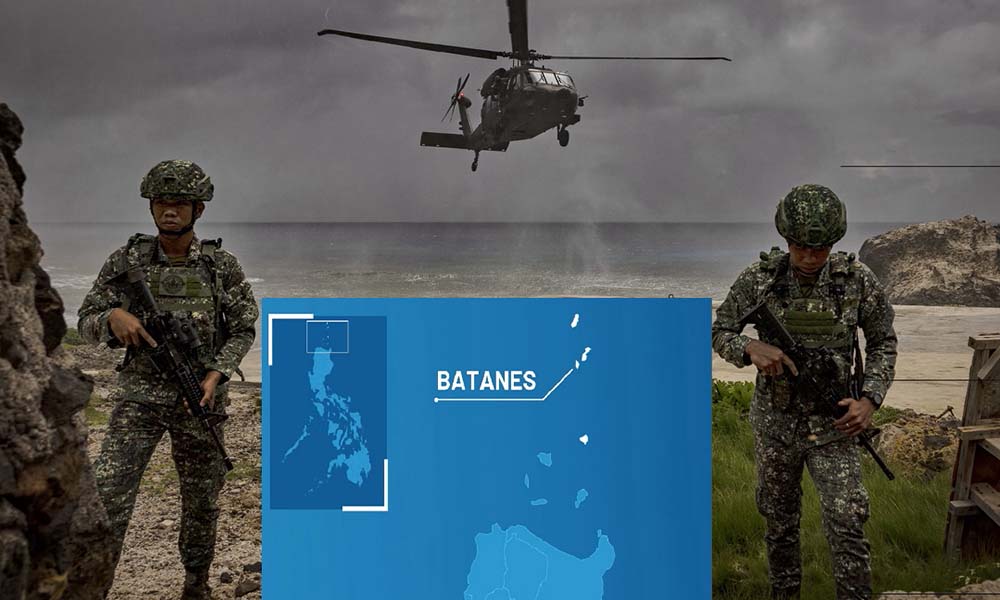
Among all those partners, the Philippines occupies a uniquely important position. Its northern island of Luzon sits only about 400 kilometers from Taiwan. Its western coastline faces the South China Sea, where several territorial disputes with China continue to simmer.
From a strategic perspective, the country is a natural observation point for naval traffic moving between the South China Sea and the Pacific. Control or even just monitoring, of these waters could shape the outcome of any future conflict in the region.
That is why the United States has expanded access to Philippine military facilities under the Enhanced Defense Cooperation Agreement, commonly known as EDCA. The agreement allows American forces to operate from several Philippine bases, store equipment, and rotate troops through the country during exercises or emergencies. Recent years have seen that cooperation deepen dramatically.
Large-scale exercises like Balikatan now involve thousands of troops practicing joint operations, coastal defense, and humanitarian response scenarios. For Washington, these bases create a flexible network of positions along the First Island Chain. For Manila, they offer something equally valuable: deterrence.
The Reality of Philippine Military Power
Despite its strategic location, the Philippines faces a basic challenge. Its military capabilities remain relatively limited. For many years the Armed Forces of the Philippines focused mainly on internal security issues, counterinsurgency operations against rebel groups rather than preparing for external conflicts.https://www.youtube.com/watch?v=FtWh-0X6s4A
As a result, its naval and air forces lagged behind those of many neighboring states. At one point, the country went a decade without modern fighter jets. That situation has begun to change. The Philippines has acquired FA‑50PH fighter jet aircraft from South Korea, new frigates for its navy, and advanced radar systems to improve maritime surveillance.
Perhaps most significant is the purchase of the BrahMos cruise missile, a powerful coastal defense system developed by India. With a range of nearly 300 kilometers, it allows Philippine forces to threaten enemy ships approaching its coastline. Still, gaps remain.
The country lacks robust air defense systems and possesses only a modest fleet of major naval vessels. Intelligence, logistics, and satellite support remain heavily dependent on American assistance. In other words, geography gives the Philippines strategic value but capability still matters.
China’s Pressure on the Island Chain
China, meanwhile, is not sitting still. Beijing has expanded both its navy and its coast guard presence across the South China Sea. Artificial islands built on disputed reefs now host runways, radar installations, and missile systems. Chinese coast guard ships frequently patrol waters near Philippine-controlled areas, and maritime militia vessels often swarm contested features.
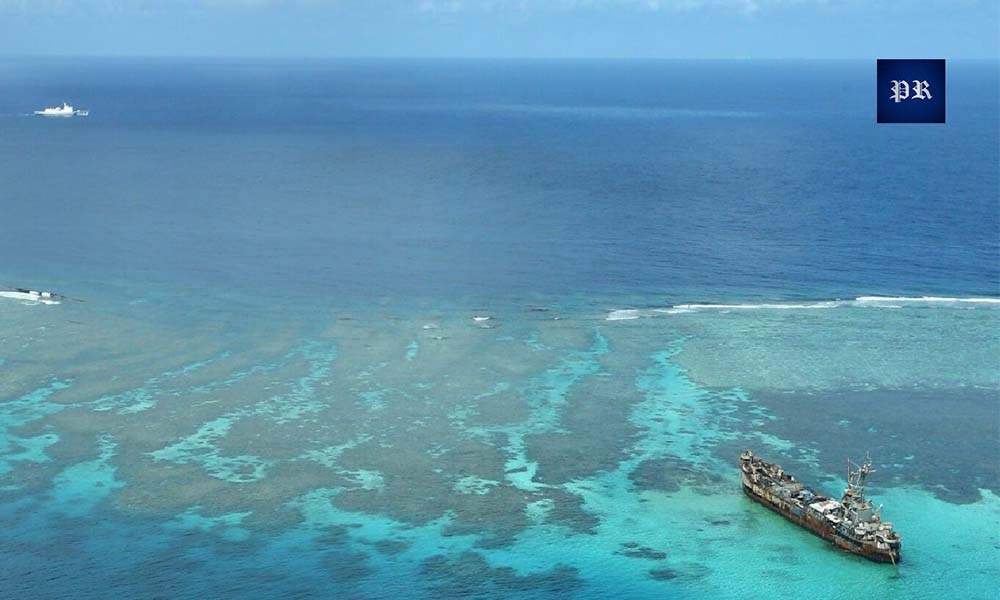
One of the most tense flashpoints is Second Thomas Shoal, where Philippine forces maintain a small outpost aboard the grounded ship BRP Sierra Madre. Resupply missions to that outpost have repeatedly faced harassment from Chinese vessels, including water cannon incidents and blocking maneuvers.https://indopacificreport.com/will-china-agree-philippines-code-of-conduct-scs/
These confrontations fall into what analysts call the gray zone, actions that stop short of open warfare but still apply pressure. China’s long-term goal appears clear: weaken the defensive barrier of the First Island Chain and gain freer access to the Pacific.
Philippines Needs Submarines Now More Than Ever to Deter China
The Taiwan Factor
Any discussion of the First Island Chain inevitably leads to Taiwan. If a crisis over Taiwan erupted, the northern Philippines would likely play a crucial logistical role for American forces. Bases in Luzon could support surveillance aircraft, supply operations, and potentially missile deployments. But this strategic value comes with serious risk.https://www.youtube.com/watch?v=FtWh-0X6s4A
Chinese missile strikes could target facilities used by U.S. forces. In other words, hosting allied operations might make the Philippines a frontline target in a conflict it did not initiate. For Manila, this creates a difficult balancing act. Support the alliance and strengthen deterrence or try to remain distant from a potential great-power confrontation. Neither option is simple.
Strengthening the Defensive Line
If the First Island Chain is going to hold, several steps could improve its resilience. Military planners often emphasize the importance of distributed deterrence, placing smaller units and missile systems across multiple islands rather than relying on a few large bases.
Additional coastal missile batteries, improved air defenses, and expanded naval patrol capacity could strengthen the Philippines’ ability to monitor and defend its waters. Alliance integration also matters. Shared intelligence networks, compatible weapons systems, and joint command structures allow allied forces to operate more effectively together. Regional partnerships could play a role as well.
https://www.youtube.com/watch?v=yxdEZ_968OE
Countries like Australia and Japan have already increased defense cooperation with the Philippines, adding new layers to the region’s emerging security architecture.
China Deploys Buoys & Jets Inside Philippine Waters West Philippine Sea Tension Rises
Can the Philippines Hold the Line?
In the end, the fate of the First Island Chain will not depend on geography alone. The Philippines undeniably sits at one of the most strategically important crossroads in the Indo-Pacific. Its islands overlook critical sea lanes and potential military chokepoints.
But strategic importance does not automatically translate into strategic strength. Whether the Philippines can truly serve as a pillar of America’s denial strategy will depend on three things. First, continued military modernization that strengthens its ability to defend its own waters. Second, deeper alliance integration with the United States, ensuring that deterrence remains credible. And third, resilience against the constant gray-zone pressure exerted by China.
If those elements come together, the First Island Chain could remain a powerful barrier shaping the balance of power in the Pacific. If they fail, the strategic map of the region could change dramatically. And the consequences would be felt far beyond the waters of Southeast Asia.https://youtu.be/JcQ-Dui9Fyo?si=zBq7PIW8iEarbt6J