Australia and the Philippines Reaffirm South China Sea Order Amid Rising Tensions
MANILA, August 2025 — In an explicit show of solidarity, Australia and the Philippines have strengthened their resolve to uphold a rules-based international order in the increasingly contentious South China Sea region, responding to mounting confrontations with China.
A United Front in the Face of Escalation
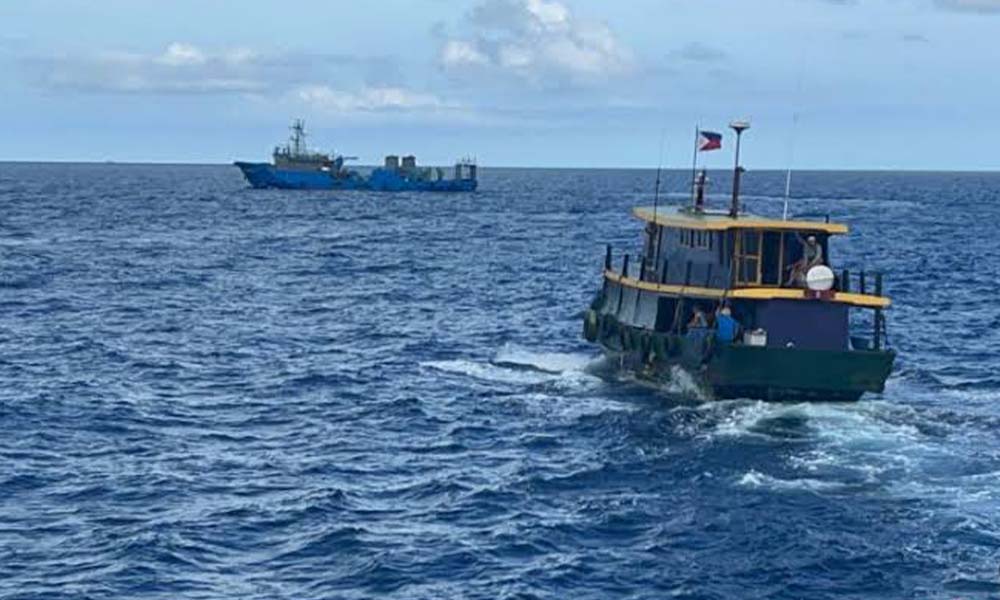
As tensions intensified, particularly around the strategically sensitive Second Thomas Shoal, the Philippines took a firm stand. Its military outpost—grounded atop the BRP Sierra Madre since 1999—was shadowed by a significant deployment of Chinese coast guard and militia vessels, supported by helicopters, drones, and water cannon maneuvers, some armed with heavy ordnance. At one point, a Chinese vessel came within 50 meters of the PHP naval outpost, prompting a swift and robust response from Filipino forces.
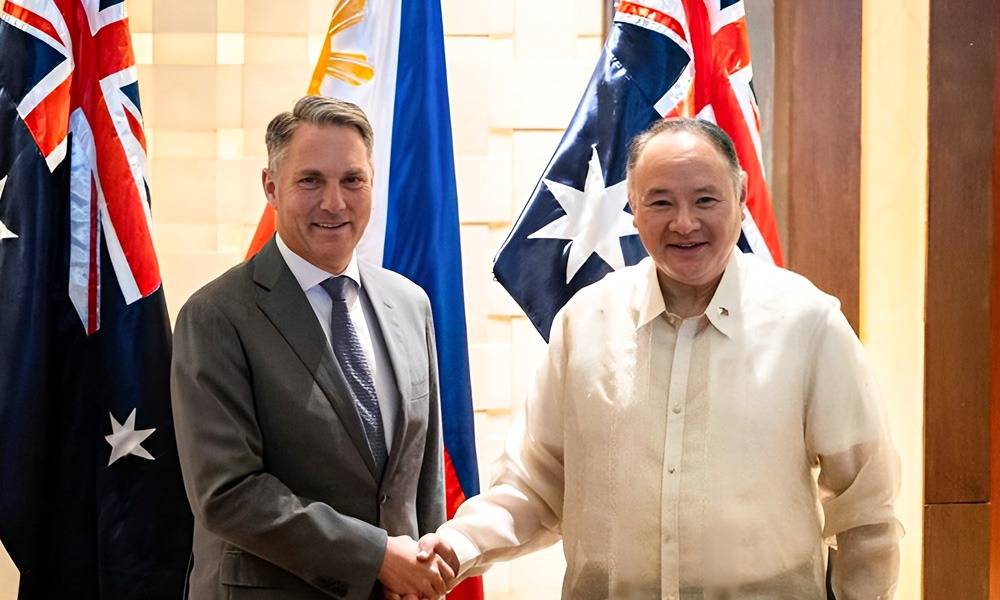
Australian Defense Minister Richard Marles traveled to Manila in the midst of this volatile environment, reiterating Australia’s “commitment to a rules-based international order” alongside Philippine Defense Secretary Gilberto Teodoro.
Trump Sparks Global Trade War with Sweeping Tariffs on Canada, China, and Mexico
Joint Response: Military Exercises and Infrastructure Initiatives
Amid growing Chinese assertiveness, Australia and the Philippines signed a “statement of intent” outlining expanded defence cooperation for the coming year. The agreement paves the way for more frequent joint military exercises and closer coordination on defense infrastructure development across five sites in the Philippines.
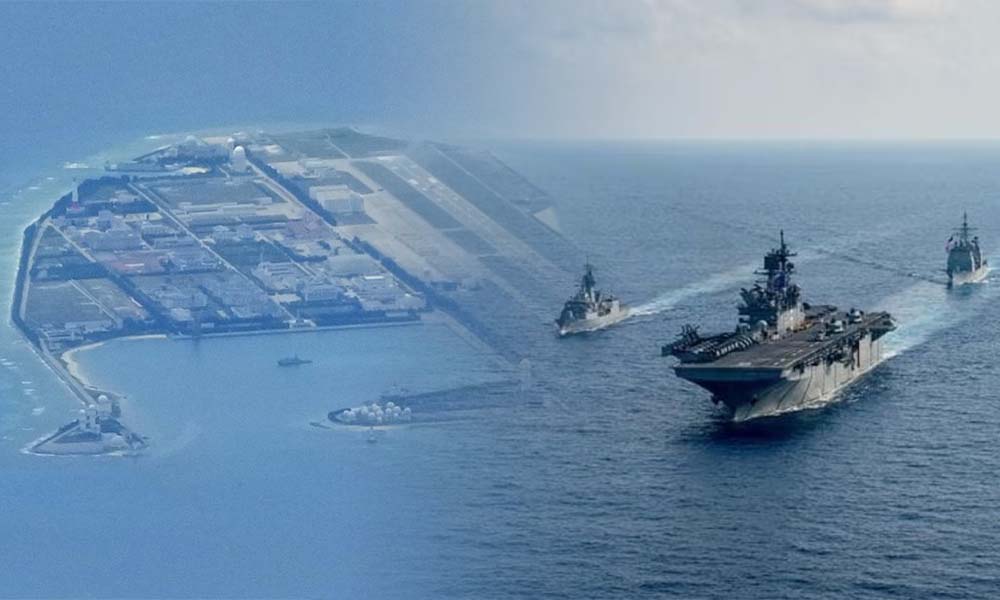
Already underway, the two nations are executing their largest joint military drills to date, Exercise “Alon”, involving over 3,600 personnel. The live-fire maneuvers feature cutting-edge assets including Australian guided-missile destroyers, F/A-18 fighter jets, C-130 transports, anti-tank weaponry, and special forces sharpshooters. Observers from allied nations such as the U.S., Canada, Japan, South Korea, New Zealand, and Indonesia are also present.
49 New Warships The Philippines Just Shocked China in the South China Sea
Context: A Broader Pattern of Aggression and Response
Recent months have seen a string of tense incidents, including a collision at Scarborough Shoal involving Chinese vessels and a Philippine patrol ship—further raising alarm among regional security experts.
These developments coincide with broader diplomatic and strategic trends:
Australia’s push for deeper military collaboration with Indo-Pacific allies, including the U.S. and Japan, to counterbalance China’s regional ambitions.
The Philippines’ “transparency initiative,” which exposes encounters such as coercive water cannon use and militia presence to international scrutiny.
Why Malaysia Thinks Philippines is the Most Dangerous Country
Why It Matters
The renewed partnership sends a powerful message to regional actors: democratic partners are uniting under shared principles of international law and sovereignty, particularly defined by the 2016 arbitral ruling that invalidated China’s sweeping maritime claims.
In deploying both diplomatic and military instruments, Australia and the Philippines are signaling that they will not yield to coercion. Their actions reaffirm a regional commitment to freedom of navigation, collective deterrence, and operational readiness.