French Navy Joins Philippine Navy in Strategic Sulu Sea Drills as China Watches
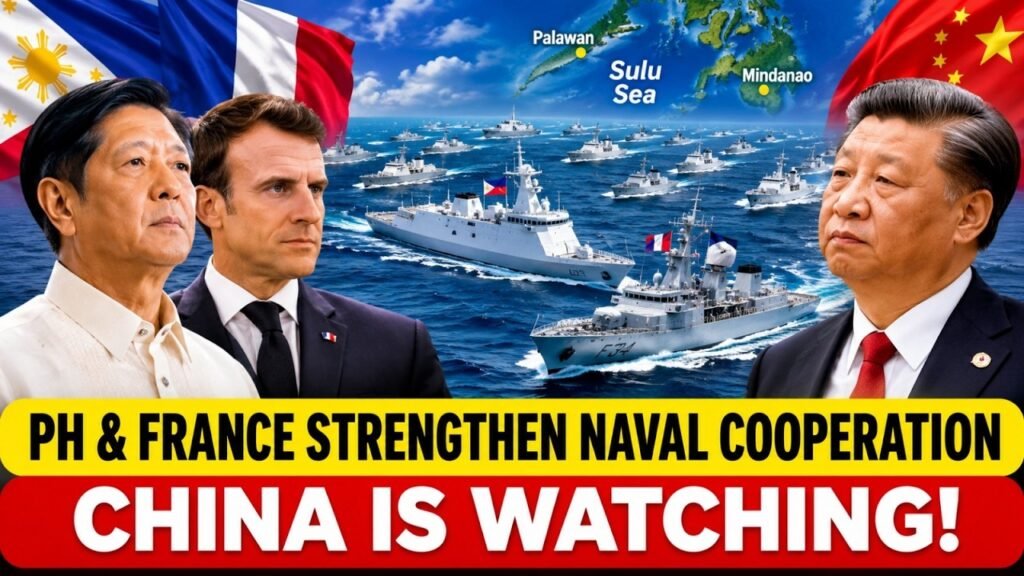
The Philippines and France have taken another important step in strengthening their maritime security relationship after completing their third Bilateral Maritime Cooperative Activity in the Sulu Sea from November 20 to 22, 2026. The three-day exercise brought together naval vessels, helicopters, aircraft and military personnel from both countries to improve coordination and develop practical experience in joint maritime operations. Although the activity may appear to be another routine naval exercise, its wider significance goes beyond the participation of two warships. It reflects France’s growing interest in Southeast Asian maritime security and the Philippines’ continuing efforts to strengthen its defense partnerships across the Indo-Pacific region.
The Philippine Navy’s BRP Diego Silang (FFG-7) operated alongside the French Navy’s FS Vendémiaire, while the Philippine Coast Guard’s BRP Sarangani and supporting aircraft from the Philippine Air Force also participated. Both countries conducted communications exercises, personnel exchanges, helicopter-supported replenishment, coordinated naval manoeuvres and cross-ship boarding drills. These activities provided an opportunity for their forces to understand each other’s operational procedures and improve their ability to work together at sea. According to the Armed Forces of the Philippines, the exercise was designed to strengthen maritime interoperability and deepen the growing defense relationship between Manila and Paris.
What the Philippines and France Actually Practised
The third Philippines-France Bilateral Maritime Cooperative Activity involved several military and maritime security organizations rather than simply bringing two naval vessels together. The Philippine Navy deployed its guided-missile frigate BRP Diego Silang, supported by an AW109 naval helicopter. The Philippine Coast Guard participated through BRP Sarangani, while the Philippine Air Force provided C-208B aircraft and S-70i Black Hawk helicopters. France contributed its Floréal-class frigate FS Vendémiaire and a Dauphin-family helicopter. This combination of naval, coast guard and aviation assets created an opportunity to practise coordination across different services and operational environments One of the main objectives was to improve communication between the participating forces. During communications exercises, commonly known as COMMEX, naval personnel tested their ability to exchange information, understand instructions and coordinate activities through established communication procedures. These skills are essential when ships from different countries operate together because even a small misunderstanding involving navigation, positioning or operational instructions can create unnecessary risks. Regular communication exercises help officers and sailors become familiar with the procedures used by their international counterparts, making future cooperation more efficient.
Philippines and US Build a Strategic Defence Network Near Taiwan to Deter China
The participating forces also conducted personnel exchanges, allowing officers and sailors to interact directly and gain a better understanding of each other’s naval practices. These exchanges are important because interoperability is not achieved simply by placing different countries’ warships in the same area. It requires people to understand how other forces communicate, organize their operations and respond to changing situations. Familiarity between crews can reduce confusion and help build professional trust, particularly when future activities involve more complicated maritime tasks. Another important part of the exercise was vertical replenishment, commonly known as VERTREP. This procedure involves using helicopters to transfer supplies and equipment between ships. Naval vessels operating at sea cannot always return to port whenever they require additional supplies, so helicopter-supported transfers can help maintain their operational endurance. However, these activities require careful coordination between pilots, flight crews and personnel working aboard the vessels. Practising such procedures helps participating forces understand the safety requirements and communication arrangements involved in transferring supplies between ships.
The exercise also included division tactics and officer-of-the-watch manoeuvres. Division tactics involve coordinating the movements of multiple ships, while officer-of-the-watch manoeuvres focus on navigation, bridge operations, communication and maintaining safe distances between vessels. These activities help crews understand how different ships can move together without creating navigational difficulties. A photo exercise, or PHOTOEX, also allowed participating vessels to practise coordinated formations and document their presence at sea. Cross-ship Visit, Board, Search and Seizure training, commonly known as VBSS, was another significant component. These procedures are used in maritime security and law enforcement activities when authorized personnel need to approach, board and inspect a vessel. Such training can be relevant to counter-smuggling operations, maritime law enforcement and other security situations where boarding procedures must be conducted safely and according to applicable legal authority. Taken together, these activities demonstrate that the exercise focused on practical interoperability rather than advanced combat operations. The participating forces did not announce a live missile exercise, anti-submarine warfare operation or combat mission against another country. Instead, they concentrated on communication, logistics, navigation, coordinated ship movements and boarding procedures. This distinction is important because it explains the actual military value of the activity without exaggerating its capabilities or strategic consequences.
Why the Sulu Sea Is Important for Philippine Maritime Security
The Sulu Sea is an important maritime area in the southern Philippines, located between Palawan, Mindanao, the Sulu Archipelago and the Malaysian state of Sabah. Its surrounding waterways connect different parts of the Philippine archipelago with neighbouring regional maritime routes, including access toward the Celebes Sea. Important passages and narrow waterways in this wider maritime environment make the region significant for commercial movement, local transportation, fishing and security operations. The geography of the Sulu Sea creates several challenges for maritime authorities. The region contains numerous islands, coastal communities and maritime passages where commercial vessels, fishing boats and local transportation operate close to national boundaries. Monitoring such a large and complicated maritime environment requires effective surveillance, communication and coordination between different government agencies. A navy may provide military protection and maritime presence, while the coast guard has important responsibilities involving maritime law enforcement, safety and emergency response. Aircraft and helicopters can support these activities by extending surveillance and transportation capabilities. The wider Sulu-Celebes maritime area has also experienced serious transnational security challenges.
Illegal fishing, smuggling, human trafficking and unauthorized cross-border movements have created difficulties for regional authorities. In previous years, piracy and the abduction of crew members for ransom were also major security concerns. These challenges demonstrate why maritime security cannot be managed by one country acting alone. Criminal networks and illegal activities can move across national boundaries, making information-sharing and regional cooperation essential. There have been encouraging improvements in the security situation. The Philippine Coast Guard reported in January 2025 that the threat of crew abduction for ransom in the Sulu-Celebes Seas had been downgraded from high to low. ReCAAP’s January 2026 assessment also reported no abduction incidents since January 2020. These developments suggest that sustained regional cooperation and security efforts have contributed to improvements. However, they should not be interpreted as evidence that every maritime security challenge has disappeared. Illegal fishing, smuggling and other maritime concerns still require consistent attention.
The latest Philippines-France naval exercise is relevant because it provides an opportunity to improve the practical skills needed to manage this environment. Better communications can support information-sharing between maritime authorities, while coordinated ship manoeuvres can improve familiarity between crews. VBSS training can strengthen understanding of authorized boarding procedures, and helicopter replenishment can improve logistical coordination between vessels. The participation of the Philippine Coast Guard is particularly important because maritime security involves more than traditional naval defense. It also requires law enforcement, maritime safety and cooperation between civilian and military agencies. It is equally important to understand that the exercise was not officially announced as an operation against China. The Sulu Sea has its own geographical and maritime security requirements, which differ from the contested waters around Scarborough Shoal, Second Thomas Shoal and the Spratly Islands. Although the broader development has strategic implications for the Philippines’ regional defense relationships, the immediate purpose of the November activity was to strengthen maritime cooperation in the southern Philippines.
Why France Is Increasing Its Presence in the Indo-Pacific
France’s growing engagement with the Philippines is connected to its own long-term interests in the Indo-Pacific. Unlike several European countries that mainly operate in the region through occasional military deployments, France has permanent territories and communities across the Indian and Pacific Oceans. These include New Caledonia, French Polynesia, Réunion, Mayotte and Wallis and Futuna. Their geographical location gives France direct responsibilities in the wider Indo-Pacific and makes maritime security an important part of its national interests. Protecting these territories requires France to maintain the ability to monitor maritime activity, safeguard sovereignty, respond to emergencies and support communities spread across vast ocean areas. France also has an interest in protecting international shipping routes, addressing illegal fishing and combating transnational maritime crime. These responsibilities explain why Paris continues to develop relationships with countries across Southeast Asia and the wider Indo-Pacific. However, maintaining a permanent naval presence across such a large geographical area is difficult for any country. French naval resources are limited, and its forces must operate across multiple regions while fulfilling national and international responsibilities. This makes partnerships with regional countries increasingly important. Joint exercises, naval visits, personnel exchanges and defense agreements allow France to develop relationships that can support future cooperation without requiring a permanent military deployment in every country.
The Philippines is particularly relevant because of its geographical position and growing role in regional maritime security. Its archipelagic territory connects important parts of Southeast Asia and the western Pacific, while its government continues to modernize naval and coast guard capabilities. Manila is also expanding its defense relationships rather than depending entirely on one external partner. For France, this creates an opportunity to strengthen its regional presence through cooperation with a country that has direct responsibilities in a strategically important maritime environment. France’s approach also reflects its broader interest in sovereignty, international law, regional stability and multilateral cooperation. Paris has consistently emphasized the importance of international maritime law and a rules-based regional order. These priorities create common ground with the Philippines, which relies on international law to support its maritime rights and interests. The November 2026 exercise therefore represents more than a symbolic diplomatic gesture. It demonstrates how France can contribute to regional security through practical naval engagement and institutional cooperation. Paris does not need to establish a permanent military base in the Philippines to become a more active partner. Regular naval deployments, maritime exercises and agreements governing military visits can create a meaningful relationship while allowing both countries to retain their independent national command structures.
The Philippines-France Visiting Forces Agreement: Why It Matters
One of the most important developments behind the growing Philippines-France defense relationship is the Status of Visiting Forces Agreement, commonly known as the SOVFA. The agreement provides a more formal legal framework for military cooperation between the two countries. Before its completion, Manila and Paris had already been exploring ways to strengthen their defense relationship through diplomatic discussions and military engagement. In December 2023, the two countries began working through a Letter of Intent, followed by formal negotiations for a visiting forces agreement in June 2025. On March 26, 2026, Philippine and French defense officials signed the agreement in Paris, marking a significant step in their bilateral security relationship.The Philippine Senate ratified the agreement on October 8, 2026, providing another important step toward its implementation. The Philippine Department of National Defense welcomed the Senate’s decision and described the agreement as the first visiting forces arrangement of its kind between the Philippines and a European country. This development gives both governments a clearer institutional framework for organizing qualifying military visits, joint exercises and other mutually agreed defense activities.
The importance of a visiting forces agreement becomes clearer when military personnel travel to another country for training or joint activities. Governments need agreed rules covering the legal status of visiting personnel, the conditions of their presence and the arrangements under which military cooperation can take place. Without a clear framework, organizing repeated exercises and professional exchanges can become more complicated. The SOVFA is intended to provide greater predictability and make future military engagement easier to arrange. However, the agreement should not be confused with a mutual defense treaty. It does not automatically require France to defend the Philippines in the event of a military conflict, nor does it establish a permanent French military base or a joint naval command. Both countries retain their own military structures and national decision-making authority. The agreement provides a framework for cooperation, but the specific activities still depend on mutual arrangements and the applicable legal requirements.
This distinction is important because the value of the SOVFA will depend on how effectively both governments use it. If the agreement supports more frequent naval exercises, personnel exchanges, training programmes and maritime security cooperation, it could help transform the relationship into a more durable partnership. If practical cooperation remains limited, its overall impact will naturally be smaller. The third maritime exercise in the Sulu Sea provides an example of the type of engagement that a stronger institutional relationship can support.
From Occasional Naval Engagement to a Developing Defense Partnership
The November 2026 maritime exercise is part of a wider pattern of growing military contact between the Philippines and France. Their cooperation did not begin with the latest activity in the Sulu Sea. Over the past few years, both countries have gradually increased naval engagement, professional exchanges and defense discussions. These developments show that Manila and Paris are interested in building a relationship that goes beyond occasional diplomatic meetings. An important stage came in February 2025 during the French Navy’s Mission Clemenceau 25 deployment. The French aircraft carrier Charles de Gaulle and its accompanying strike group operated in the wider region, providing an opportunity for French and Philippine forces to conduct maritime and aviation cooperation. From February 20 to 23, French and Philippine naval vessels carried out joint sea training. French Rafale Marine aircraft also conducted cooperation flights with Philippine FA-50 fighter aircraft, while French Atlantique 2 maritime patrol aircraft operated in coordination with Philippine forces. The deployment demonstrated the range of naval and aviation capabilities France could bring to regional engagement. In November 2025, the two countries conducted their second bilateral maritime cooperative activity in waters off Eastern Mindanao. This provided another opportunity for their forces to become familiar with each other’s operating procedures and improve coordination. Repeated engagement is important because military interoperability develops gradually through experience, communication and practical training rather than through a single exercise. The third activity, conducted in the Sulu Sea from November 20 to 22, 2026, represents another stage in that process. This time, the exercise brought together BRP Diego Silang, FS Vendémiaire, BRP Sarangani and supporting aircraft and helicopters from both countries. The programme covered communication, logistical coordination, naval manoeuvres, personnel exchanges and maritime boarding procedures. The participation of multiple Philippine services also highlighted the importance of coordination between the navy, coast guard and air force.
France’s Role in the Philippines’ Wider Defense and Security Network
The Philippines is gradually expanding its defense relationships because its maritime security requirements are too extensive to be addressed through a single international partnership. As an archipelagic country with thousands of islands and a large maritime domain, it faces continuous challenges involving coastal protection, surveillance, maritime law enforcement and the modernization of its armed forces. Building relationships with several countries provides Manila with additional opportunities for training, defense cooperation and diplomatic support. The United States remains the Philippines’ most important treaty ally. Their Mutual Defense Treaty provides the foundation for a long-standing security relationship, while the Enhanced Defense Cooperation Agreement supports expanded defense cooperation and access to agreed military facilities. These arrangements are different from the Philippines-France relationship and carry their own legal and strategic responsibilities. Japan has also become an increasingly important partner for Philippine maritime security. Cooperation includes defense assistance, maritime capacity-building and support for improving the capabilities of Philippine security agencies. Australia contributes through joint military training, exercises and defense engagement, while New Zealand also maintains military and security cooperation with Manila. France adds a European dimension to this wider network through naval deployments, defense agreements and practical maritime activities.
Each partnership serves a different purpose, and these countries do not have identical legal commitments or military responsibilities toward the Philippines. France’s participation in a maritime exercise does not give it the same role as the United States under the existing defense treaty. Similarly, a bilateral naval activity does not create the obligations associated with a formal mutual defense arrangement.
The wider regional environment also demonstrates why the Philippines is interested in strengthening cooperation with multiple partners. On November 10, 2026, Australia, Japan, the Philippines and the United States issued a joint statement following their October 28 meeting in Cebu. Their announced priorities included improving interoperability, expanding combined exercises, strengthening regional deterrence and enhancing coordination in defense investments. The initiative is separate from the Philippines-France maritime exercise, but it reflects the broader direction of Manila’s security policy. France’s contribution should be understood within this larger framework. It provides another source of naval engagement, professional experience and diplomatic cooperation. Its permanent interests in the Indo-Pacific also make it different from countries that only visit the region occasionally. For Manila, maintaining relationships with several partners can create more options for training and maritime engagement while reducing dependence on a single external source of support.
This strategy is better described as defense diversification rather than a change of alliances. The Philippines is not abandoning Washington or replacing its existing partners with Paris. It is expanding the number of countries with which it can cooperate to improve its maritime security and strengthen its international position. The long-term success of this approach will depend on whether these partnerships produce practical improvements in Philippine capabilities.
What Does the Philippines-France Naval Exercise Mean for China?
The broader geopolitical context cannot be ignored when examining the Philippines-France defense relationship. The Philippines and China continue to face serious disagreements over maritime rights and competing claims in the South China Sea. Beijing maintains extensive maritime claims and regularly operates naval and coast guard vessels in contested waters. Manila, meanwhile, continues to assert its maritime rights and emphasizes the importance of international law, freedom of navigation and peaceful dispute resolution.
One of the most important legal developments in this dispute was the arbitral award issued on July 12, 2016, under the United Nations Convention on the Law of the Sea. The tribunal rejected China’s claimed historic rights within the nine-dash line to the extent that they exceeded the maritime entitlements permitted under UNCLOS. The ruling also addressed several maritime rights and activities in the South China Sea. However, it did not decide sovereignty over land territory or determine ownership of every island and maritime feature in the disputed region. For the Philippines, international support for UNCLOS and the 2016 arbitral award remains an important part of its diplomatic position. France has expressed support for international maritime law and the rules-based international order, creating common ground between the two countries. French diplomatic support does not resolve the dispute, but it gives Manila another international partner that emphasizes the importance of legal principles in managing maritime disagreements.
The growing naval relationship could also have a longer-term strategic impact. Regular exercises allow more international forces to become familiar with Philippine maritime operations and create opportunities for future cooperation. As these relationships develop, the Philippines may find it easier to coordinate with partners on maritime awareness, professional training and security-related activities.
However, the November exercise should not be presented as an anti-China military operation. The Armed Forces of the Philippines described the activity in terms of maritime interoperability and defense cooperation. It did not announce that the exercise was designed to confront China or change the military balance in the South China Sea. Its immediate operational setting was the Sulu Sea, which has different geographical conditions and maritime security requirements from the disputed waters farther north. China may view the expansion of Philippine defense relationships as part of Manila’s broader effort to strengthen its external security network. That is a reasonable strategic assessment, but it should not be confused with evidence of an official Chinese response to this specific exercise. The more balanced conclusion is that the Philippines is developing additional defense relationships that may strengthen its long-term maritime resilience, while the latest activity itself remains focused on practical cooperation with France.
The Real Limits of Three Days of Naval Cooperation
Although the third Philippines-France maritime exercise represents progress, it is important to maintain realistic expectations about what three days of naval cooperation can achieve. A successful exercise does not automatically create a permanent military presence, solve maritime security challenges or guarantee that two countries will operate effectively together during a major crisis. The value of the activity lies in the experience gained by participating forces and the professional relationships developed through practical training.
The November exercise did not establish a French military base in the Philippines, create a permanent French naval deployment in the Sulu Sea or establish a combined Philippine-French naval command. It also did not create an automatic French commitment to intervene in a future military conflict. These distinctions are important because defense cooperation and military alliances are two different things. The Philippines and France are developing a closer relationship, but their respective armed forces continue to operate under their own national authorities. There are also technical challenges that both countries must address if they want to develop deeper interoperability. Different military forces may use different communication systems, operational procedures and command structures. Sharing maritime information requires agreed arrangements and professional trust. Logistics, maintenance, technical compatibility and training standards can also affect how effectively ships and aircraft operate together. These challenges cannot be resolved through one or two exercises. They require regular engagement and long-term planning.
The Philippines must also continue investing in its own military capabilities. International partnerships can provide valuable training opportunities, but they cannot replace modern naval vessels, effective maritime surveillance systems, capable aircraft, maintenance infrastructure and properly trained personnel. A strong maritime security system requires sufficient resources and the ability to sustain operations over time. Foreign cooperation becomes more valuable when Philippine forces have the equipment and institutional capacity to use the experience gained through joint activities. France also faces limitations. Its responsibilities extend across the Indian and Pacific Oceans, where it must protect overseas territories, maintain maritime awareness and respond to different security requirements. Its naval resources are finite, and it cannot maintain a continuous presence in every important maritime area. Cooperation with the Philippines therefore provides an opportunity for regular engagement, but it does not mean that French warships will remain permanently available in Southeast Asian waters. The next stage of the relationship will depend on practical developments rather than diplomatic statements. More frequent maritime exercises, additional personnel exchanges, stronger communication arrangements and the effective implementation of the visiting forces agreement would demonstrate that the partnership is becoming more established. These developments would provide clearer evidence of progress than claims about a sudden transformation in the regional military balance.
What Comes Next for Philippines-France Maritime Cooperation?
The third Bilateral Maritime Cooperative Activity has demonstrated that the Philippines and France are willing to develop a more practical defense relationship. Operationally, their forces brought together naval vessels, helicopters, aircraft and maritime personnel to practise coordinated activities at sea. Institutionally, the Status of Visiting Forces Agreement provides a more developed legal framework for future military engagement. Strategically, the partnership gives Manila another international relationship through which it can strengthen maritime security cooperation across the Indo-Pacific. For the Philippines, continued cooperation with France could provide valuable opportunities to improve naval experience, develop professional relationships and expand maritime security coordination. The participation of the Philippine Navy, Coast Guard and Air Force is particularly relevant because effective maritime protection requires cooperation between different services. A more connected approach could help improve surveillance, communications and responses to maritime security challenges in different parts of the archipelago. For France, the Philippines offers an important regional partner located in a strategically significant maritime environment. Regular engagement allows Paris to strengthen its Indo-Pacific relationships, demonstrate its commitment to maritime security and develop practical cooperation without establishing a permanent military base. The relationship also supports France’s wider interest in maintaining a stable maritime order based on international law and regional cooperation.
Conclusion: A New Chapter in Philippines-France Defense Relations
The third Philippines-France maritime exercise in the Sulu Sea is an important development in the growing defense relationship between Manila and Paris. By bringing together naval vessels, coast guard personnel, aircraft and helicopters, the two countries demonstrated their willingness to improve practical maritime coordination. The exercise focused on communications, personnel exchanges, helicopter replenishment, naval manoeuvres and boarding procedures, providing valuable experience for forces operating in a complex maritime environment. Its wider importance comes from the timing of the activity. The Philippines is strengthening its defense relationships across the Indo-Pacific, while France is seeking to maintain an active role in a region where it has permanent territorial, maritime and strategic interests. The Status of Visiting Forces Agreement provides a more formal framework for this cooperation, while repeated naval activities demonstrate that both countries are interested in developing practical engagement.
Nevertheless, the relationship should be understood realistically. France is not replacing the United States as a Philippine security partner, and the two countries have not created a new mutual defense alliance. The latest exercise did not establish a permanent French military presence or change the balance of naval power in the South China Sea. Its importance lies in developing operational familiarity, strengthening professional relationships and creating opportunities for future maritime cooperation. Ultimately, the real test will be whether the Philippines and France can maintain this momentum. Another successful exercise, more regular personnel exchanges and deeper institutional cooperation would suggest that their relationship is becoming a lasting part of the Indo-Pacific security environment. The three days of activity in the Sulu Sea have provided another foundation for that goal. What happens next will determine whether this developing partnership becomes a consistent and meaningful contribution to regional maritime security.
About Indo-Pacific Report
For more geopolitical analysis, strategy coverage, and Indo-Pacific security reporting, visit Indo-Pacific Report:
Website
Facebook
YouTube
French Navy Joins Philippine Navy in Strategic Sulu Sea Drills as China Watches