Philippines’ Massive Sulu Sea Gas Prospect Raises Stakes for China
The Philippines may be approaching one of its most important offshore energy opportunities in decades. Beneath the waters of the Sulu Sea, a natural gas prospect known as Halcon has attracted growing attention after its estimated resource potential increased to approximately eight trillion cubic feet (Tcf). If exploration eventually confirms a commercially recoverable resource of this scale, Halcon could become an important addition to the country’s domestic energy supply and help strengthen its long-term energy security.
However, the numbers require careful interpretation. Halcon is still an undrilled exploration prospect, meaning natural gas has not yet been confirmed through an exploratory well. The companies involved have estimated a geological chance of success of approximately 24 percent. This means there is considerable uncertainty, despite the encouraging geological assessment and revised resource estimate.
The Philippines is particularly interested in new domestic gas opportunities because its energy system faces growing pressure from declining production at the established Malampaya gas field and increasing reliance on imported liquefied natural gas (LNG).
Imported fuel exposes the country to international price fluctuations, supply disruptions and geopolitical developments that can affect the cost and reliability of electricity. Against this background, the Halcon gas prospect represents more than an offshore exploration project. It raises an important question about whether the Philippines can develop its own natural resources to support economic growth, reduce some dependence on imported energy and build a more resilient electricity system. Understanding Halcon requires examining its geological potential, investment prospects, regional importance and the challenges that still stand between an estimated resource and actual gas production.
Where Is the Halcon Gas Prospect Located in the Philippines?
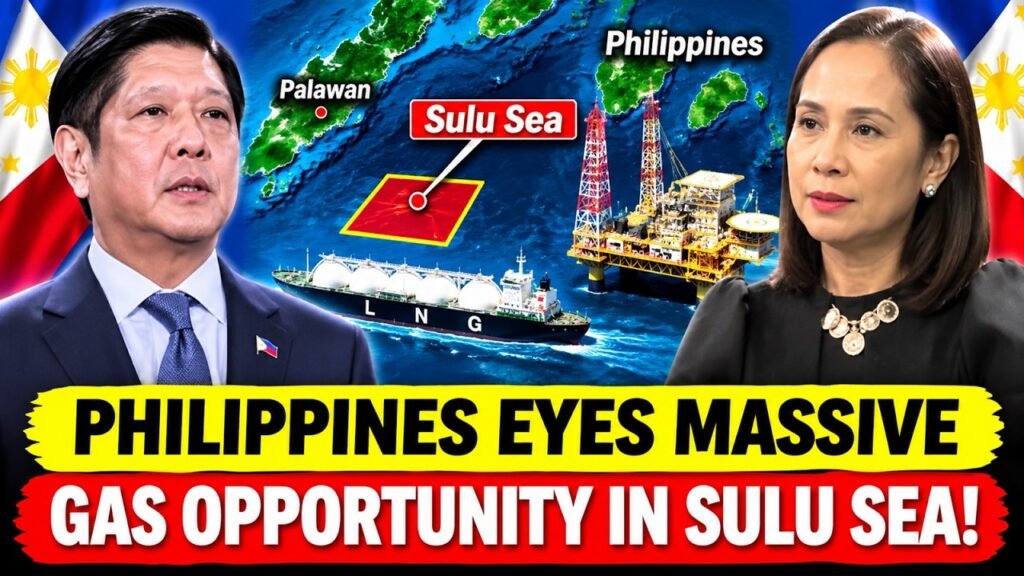
The Halcon gas prospect is located within Service Contract 80 (SC 80), offshore the Bangsamoro Autonomous Region in Muslim Mindanao. Its geological setting is associated with the Southwest Sulu Sea and the wider Sandakan Basin, an area connected to the sedimentary systems surrounding Borneo. This regional geological environment is important because neighbouring offshore areas of Indonesia and Malaysia have already demonstrated significant hydrocarbon potential. The location gives Halcon an interesting geological background for exploration. Sedimentary basins develop over millions of years as layers of sand, mud and organic material accumulate and become buried beneath the Earth’s surface. Under suitable temperature and pressure conditions, organic material can generate hydrocarbons, which may eventually migrate into porous reservoir rocks. If appropriate geological structures and sealing formations are present, these hydrocarbons can become trapped underground.
Halcon is associated with potential sandstone reservoirs, including turbidite formations. These geological deposits are generally formed when underwater sediment flows transport sand and other materials across the seabed. Over geological time, these deposits can develop into porous rock formations capable of storing natural gas. However, the presence of potentially suitable reservoir rocks does not automatically mean that a commercially useful gas accumulation exists. For a petroleum system to work, several geological conditions must come together. Source rocks must generate hydrocarbons, suitable pathways must allow them to migrate, reservoir formations must provide enough space to store them, and geological seals must prevent the hydrocarbons from escaping. Three-dimensional seismic imaging helps exploration companies examine these underground structures and identify locations that may justify further investigation.
This geological information makes the Sulu Sea an interesting area for exploration, but seismic data alone cannot confirm a discovery. Only exploratory drilling and subsequent testing can establish whether Halcon contains natural gas and whether that gas can be recovered commercially.
Why 8 Trillion Cubic Feet in the Sulu Sea Matters for the Philippines
Halcon Gas Resource Estimate Increased to Eight Trillion Cubic Feet?
One of the biggest developments surrounding the Philippines’ Halcon gas prospect was the September 2026 revision of its estimated resource potential. The best estimate increased from approximately 2.6 trillion cubic feet to eight trillion cubic feet, bringing the prospect into greater focus among companies and observers following the Philippine energy industry. The revised assessment also presents a wide range of possible resource outcomes. The low estimate is approximately 1.7 trillion cubic feet, while the high estimate reaches around 22.6 trillion cubic feet. These figures reflect different geological possibilities rather than confirmed quantities of natural gas. In petroleum exploration, such estimates help companies understand the uncertainty associated with an undrilled prospect. The terminology used in these assessments is important. The 1U, 2U and 3U categories generally represent low, best and high estimates of prospective resources. They are commonly associated with P90, P50 and P10 probability measures. A P90 estimate represents a conservative resource case, while P50 is the central or best-estimate case. P10 represents a higher potential outcome that carries greater uncertainty.
For Halcon, the eight-trillion-cubic-foot figure represents the revised best estimate, not a confirmed gas reserve. The geological chance of success has reportedly increased from 18 percent to 24 percent, suggesting that additional geological interpretation and sedimentological expertise have improved the technical understanding of the prospect. Nevertheless, a 24 percent geological chance of success means that considerable exploration risk remains. The distinction between prospective resources and proven reserves is especially important. Prospective resources refer to quantities of hydrocarbons estimated to exist in an undrilled accumulation and potentially be recoverable. Reserves, by contrast, relate to discovered resources that can be commercially recovered under defined conditions. Therefore, the increase to eight trillion cubic feet is an encouraging development for the Philippines, but it should not be described as an eight-trillion-cubic-foot gas discovery. The real test will come when the consortium moves towards exploratory drilling.
What Does Indonesia’s Geng North Gas Discovery Mean for Halcon?
The wider hydrocarbon potential of the Borneo region provides an important geological comparison for companies examining the Halcon prospect. One of the most significant developments in this regional energy landscape was the Geng North gas discovery, announced by Italy’s energy company Eni in October 2023 offshore Indonesia. Geng North was estimated to contain approximately five trillion cubic feet of gas in place, alongside up to 400 million barrels of condensate in place. The discovery demonstrated that the wider region has the geological conditions capable of supporting significant offshore hydrocarbon accumulations. For companies evaluating Halcon, discoveries in neighbouring geological environments can provide useful information.
Geological similarities may help specialists understand sedimentary formations, reservoir characteristics and the processes responsible for generating and trapping hydrocarbons. Such comparisons can strengthen exploration interest and help companies improve their technical assessments. However, the Geng North discovery does not prove that Halcon contains a similar quantity of natural gas. Differences in reservoir quality, geological structures, depth, pressure conditions and development costs can significantly affect the commercial value of separate offshore prospects. The comparison is therefore useful but should not be exaggerated. Indonesia’s discovery demonstrates the broader potential of the regional geological environment, while Halcon still requires its own exploration well to establish whether commercially meaningful gas is present.
Halcon Is Not the Only Gas Opportunity in Service Contract 80
Although Halcon has attracted attention because of its revised eight-trillion-cubic-foot estimate, it is not the only important gas opportunity within Service Contract 80. The contract area also includes the Dabakan-1 and Palendag-1A discoveries, which are associated with approximately 470 billion cubic feet of reported 2C contingent gas resources. The distinction between these discoveries and Halcon is important when assessing the overall potential of the area. Dabakan and Palendag represent discovered gas accumulations, whereas Halcon remains an undrilled exploration prospect. This means the existing discoveries have a different level of geological certainty from the much larger prospective resource estimate associated with Halcon. Contingent resources are quantities of natural gas estimated to be potentially recoverable from known discoveries but are not yet sufficiently mature to qualify as reserves. Technical limitations, development costs, infrastructure requirements, regulatory approvals and commercial conditions may prevent these resources from immediately entering production. The existing discoveries nevertheless provide valuable geological information for the wider contract area. Their results can help companies improve their understanding of underground formations and make more informed decisions about future exploration and development activities.
The Halcon gas prospect is supported by an international consortium involving Tetragon Energy, Sunda Energy, PXP Energy and The Philodrill Corporation. Tetragon Energy acts as the operator and holds a 37.5 percent participating interest. Sunda Energy also holds 37.5 percent, while Philippine companies PXP Energy and The Philodrill Corporation each hold 12.5 percent. The operator is responsible for coordinating the technical and operational activities associated with the service contract. The other participating companies share interests in the project and contribute to the overall financial exposure and exploration arrangements. International partnerships are particularly important in offshore petroleum exploration because these projects require significant capital, specialised technology and experienced technical teams. Deepwater exploration can involve complex seismic interpretation, offshore drilling operations and expensive equipment, making it difficult for smaller companies to carry the entire financial burden independently. A potential farm-out arrangement could help the consortium attract a larger exploration company with additional financial resources and offshore technical experience. Under such an arrangement, an existing participant may transfer part of its interest to another company in exchange for financial commitments or other agreed obligations.
Why Is 2027 Important for the Future of Halcon Gas Exploration?
The next major milestone for the Halcon gas prospect is expected to involve the reprocessing of approximately 4,600 square kilometres of existing three-dimensional seismic data across the Philippine acreage. The objective is to improve the quality of underground images and provide a clearer understanding of the geological structures beneath the Sulu Sea. Seismic surveys are an important part of offshore oil and gas exploration. They work by recording how sound waves travel through different geological layers and reflect back towards measuring instruments. Specialists analyse these reflections to construct images of underground formations, helping them identify potential reservoirs, geological traps and structures that may contain hydrocarbons.
Reprocessing existing seismic information can provide better images and improve the interpretation of formations that may not have been fully understood during earlier assessments. For Halcon, the improved information could help determine whether the prospect has sufficient geological characteristics to justify the expense of exploratory drilling. Initial results are expected in early 2027, while the full technical dataset is anticipated around the middle of the year. These findings could also influence discussions with potential farm-out partners and help the consortium assess its next financial and operational commitments. However, seismic reprocessing has clear limitations. Even high-quality three-dimensional seismic images cannot establish the presence of commercially recoverable gas with certainty. They can improve geological understanding, but drilling and testing remain essential to confirm a discovery. The 2027 technical results could therefore represent an important decision point for the project. They may help determine whether Halcon moves closer to an exploration well or requires additional geological assessment before companies commit further investment.
Why Does the Philippines Need More Domestic Natural Gas?
The Philippines’ interest in Halcon becomes clearer when viewed against the country’s wider energy challenges. For many years, the Malampaya gas field has played an important role in supplying natural gas to power plants, particularly in Luzon. It helped establish domestic natural gas as an important part of the country’s electricity generation system. However, as Malampaya has matured, maintaining domestic gas production has become a growing challenge. The Philippines has increasingly turned towards imported liquefied natural gas to support its energy requirements and provide additional fuel for electricity generation. Government energy figures for 2025 underline this dependence. Imports accounted for approximately 52 percent of the country’s total primary energy supply, while imported LNG represented around 55 percent of natural gas supply. These figures demonstrate why the Philippines is interested in developing additional domestic resources rather than relying too heavily on international fuel markets. Imported LNG provides an important supply option, but it also exposes the country to international market volatility. Prices can rise because of stronger global demand, production disruptions, geopolitical tensions, shipping difficulties and competition between importing countries. For an island economy that requires reliable electricity, such developments can create significant economic pressure.
Could Halcon Reduce the Philippines’ Dependence on Imported LNG?
If exploration confirms a significant natural gas accumulation and the project becomes commercially viable, Halcon could help the Philippines diversify its domestic energy supply. Additional local gas production could reduce some exposure to international LNG price fluctuations and provide another source of fuel for electricity generation. A stronger domestic gas supply could also benefit industries that depend on reliable and reasonably priced energy. Manufacturing, industrial processing and other energy-intensive sectors require predictable electricity costs to maintain production and attract investment. Domestic natural gas could provide an additional option for supporting these economic activities. Another potential advantage is greater flexibility in the country’s energy procurement strategy. When domestic gas is available, the Philippines may have more options when negotiating LNG supply agreements and managing its overall fuel requirements. A diversified energy portfolio can help reduce the risks associated with depending excessively on a single source of supply.
However, Halcon should not be presented as an automatic solution to the Philippines’ LNG dependence. The actual contribution would depend on the quantity of gas discovered, the recoverable proportion, production costs, development timelines and the country’s future energy demand.
Even if the eight-trillion-cubic-foot prospective resource estimate eventually proves broadly accurate, the amount that could reach Philippine power plants would depend on technical and commercial factors. The country would still need to maintain other energy sources and develop a balanced approach to electricity generation. The strongest argument for Halcon is therefore not that it will eliminate imported LNG, but that it could give the Philippines another important domestic supply option. For a country seeking greater energy security, that additional flexibility could have considerable long-term value. One of the biggest questions surrounding Halcon is how natural gas could eventually be transported from offshore production facilities to the Philippine domestic market. Discovering gas beneath the seabed is only one part of the development process. The resource must also be extracted, processed and delivered to customers at a commercially competitive cost.
What Could Halcon Mean for the Bangsamoro Region?
The Halcon gas prospect also has an important regional dimension because Service Contract 80 is located offshore the Bangsamoro Autonomous Region in Muslim Mindanao. If the project eventually advances towards commercial development, its potential economic implications could extend beyond the national energy market. ffshore energy projects can create demand for a wide range of services, including marine transportation, logistics, engineering, equipment maintenance and specialised technical support. Local businesses may have opportunities to participate in the supply chain, while training programmes could help develop a skilled workforce capable of supporting future energy projects. Government revenues and related economic activity could also contribute to regional development, depending on the applicable arrangements and the project’s eventual performance. For a region seeking stronger economic opportunities, responsible offshore energy development could potentially support investment and employment. However, these benefits should not be treated as guaranteed outcomes. Offshore exploration and production require careful coordination between national and regional institutions, including the Department of Energy and the Bangsamoro government’s Ministry of Environment, Natural Resources and Energy within their respective responsibilities. Environmental protection will also be essential. The Sulu Sea supports marine ecosystems and coastal economic activities that depend on healthy waters. Offshore operations must therefore follow appropriate environmental assessments, operational safety standards and regulatory requirements.
The strategic importance of the Halcon gas prospect is closely connected to the Philippines’ wider economic and energy security. It should not be portrayed as a military response to China or as a project that will automatically change the regional balance of power. Its importance is more directly related to the country’s ability to secure reliable energy supplies and reduce some vulnerability to external disruptions. The Philippines depends significantly on imported fuel, making international shipping routes and global energy markets important to its economic stability. Changes in international LNG prices, transportation costs or regional geopolitical conditions can influence the availability and affordability of energy. Developing additional domestic natural gas resources could provide another layer of protection against these external pressures. Local production would not make the Philippines independent of international markets, but it could improve supply flexibility and reduce the proportion of energy requirements exposed to imported fuel prices.
Why Is Halcon Important for Philippine Energy Security
Despite its impressive resource estimate, the Halcon gas prospect faces several challenges that could influence its future. The first and most important is geological uncertainty. With a reported 24 percent chance of success, the prospect still carries considerable exploration risk. The eight-trillion-cubic-foot estimate is based on geological assessment, not a confirmed discovery, and drilling remains necessary to establish whether the expected accumulation exists. The second challenge is financing. Offshore exploration and deepwater drilling require substantial investment, and the current consortium may need additional financial partners to move the project towards an exploration well. A larger international energy company could bring capital, technical experience and the ability to manage complex offshore operations. The third challenge is infrastructure. Natural gas must be extracted, processed and transported to customers. Building offshore production facilities, pipelines or floating LNG infrastructure could involve major engineering and financial commitments. If the cost of delivering gas becomes too high, even a significant discovery may not be commercially attractive.The fourth challenge is market uncertainty. The future value of Halcon will depend on gas prices, operating costs, expected production volumes and the availability of long-term buyers. Investors must determine whether Philippine domestic gas can compete with imported LNG and other energy sources under realistic market conditions. The fifth challenge involves environmental protection and regulatory coordination. Offshore drilling must meet appropriate safety and environmental requirements
What Happens Next? The Future Timeline
The next several years could determine whether Halcon moves closer to becoming an important Philippine energy project. The first major milestone is the expected release of initial seismic reprocessing results in early 2027, followed by the anticipated completion of the full technical dataset around the middle of that year. Once the results become available, the consortium will have an opportunity to evaluate the improved geological information and determine whether Halcon justifies further investment. The findings could also influence farm-out discussions and help attract a larger exploration partner capable of supporting drilling operations. If the technical and financial conditions are favourable, exploratory drilling could become the next major step. However, drilling should be considered a potential development rather than a guaranteed event on a fixed schedule. The final decision will depend on geological confidence, available capital and the willingness of investors to accept the risks.
Three broad outcomes are possible. The first would be a successful exploration well confirming a significant gas accumulation. In that situation, the consortium could move towards appraisal drilling, resource evaluation and commercial development planning.
The second possibility is that drilling confirms the presence of natural gas but reveals a smaller or more technically challenging resource than expected. Such a discovery could still have value, but the companies would need to reassess its commercial potential and determine whether additional investment would be justified. The third possibility is that exploration fails to identify a commercially significant accumulation. This would represent a setback for Halcon and require the consortium to reconsider its plans for the prospect and the wider Service Contract 80 area. Even in the most favourable scenario, years of appraisal, engineering, financing and infrastructure development could separate an initial discovery from actual gas production. The most important thing to watch in 2027 will therefore be whether improved seismic information creates sufficient confidence for the companies to commit to the next stage.
Conclusion
The Philippines’ Halcon gas prospect has emerged as an important offshore energy opportunity following the revision of its estimated potential to approximately eight trillion cubic feet. Located in the Sulu Sea within Service Contract 80, the prospect has attracted attention because the country needs additional domestic energy options to support electricity generation, industrial growth and long-term energy security. Its potential significance is considerable. If exploration confirms a commercially recoverable gas accumulation, Halcon could provide another source of domestic natural gas, reduce some exposure to imported LNG prices and support the development of the Philippine offshore energy industry. It could also create economic opportunities for the Bangsamoro region and contribute to the country’s wider energy diversification strategy. However, the distinction between potential and proven resources must remain clear. Halcon has not yet been drilled, its estimated geological chance of success is approximately 24 percent, and its development would require significant investment, infrastructure and regulatory coordination.
About Indo-Pacific Report
For more geopolitical analysis, strategy coverage, and Indo-Pacific security reporting, visit Indo-Pacific Report:
Website
Facebook
YouTube
Philippines’ Massive Sulu Sea Gas Prospect Raises Stakes for China