Philippines Builds a Four Nation Military Front Against China
The Philippines is strengthening its military relationships with three major Indo-Pacific powers as tensions in the South China Sea continue to influence regional security. The United States, Japan and Australia are becoming increasingly important defence partners for Manila, creating a wider network of military cooperation that could change the strategic balance in the western Pacific. Although the four countries have not established a formal military alliance, their growing cooperation suggests that the Philippines is moving towards a more coordinated approach to national defence and regional security. A significant development came on October 28, 2026, when the defence ministers of the Philippines, the United States, Japan and Australia met in Cebu during the 13th ASEAN Defence Ministers’ Meeting-Plus (ADMM-Plus).
Australian Defence Minister Richard Marles provided further details after the meeting, explaining that the four countries had discussed coordinating their regional military concepts, exploring joint investment in Philippine defence infrastructure and improving communication among defence policy experts. These discussions indicate that cooperation is gradually moving beyond diplomatic statements towards practical planning, infrastructure development and closer military coordination. However, it is important to understand what this development actually represents. It is not the creation of a new NATO-style alliance, a unified military command or an agreement requiring all four countries to fight together in a conflict. Instead, it is an effort to strengthen existing defence arrangements and make cooperation between the partners more effective. The development reflects a wider change in Philippine foreign and defence policy. Manila is no longer relying exclusively on its traditional alliance with Washington to strengthen its security position. It is building closer relationships with Japan and Australia, two countries that possess important military capabilities, regional influence and shared interests in maintaining stability across the Indo-Pacific. For the Philippines, this wider network could improve maritime surveillance, military training, logistical support and the ability to respond to growing pressure in disputed waters.
Why the Philippines Is Strengthening Its Military Partnerships
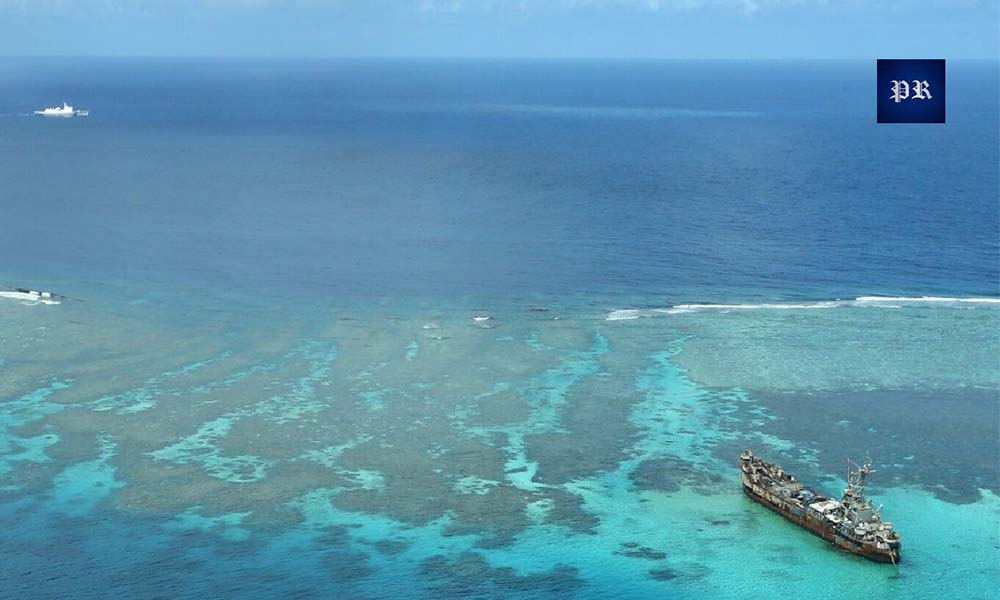
The South China Sea is one of the most important security challenges facing the Philippines. The dispute involves competing maritime claims, access to fishing grounds, natural resources, freedom of navigation and control over strategically important waters. For Manila, the issue is not simply about territorial disagreements. It concerns national sovereignty, maritime rights, economic security and the ability of Philippine vessels and personnel to operate safely within areas where the country maintains lawful maritime entitlements. China’s growing maritime presence has made the situation increasingly complicated. Chinese coast guard vessels and maritime militia have repeatedly operated in disputed areas, creating confrontations with Philippine fishing boats, government vessels and military personnel. These encounters are particularly sensitive around Scarborough Shoal and Second Thomas Shoal, where competing claims and repeated maritime incidents have become major sources of tension. The presence of Philippine personnel aboard the grounded BRP Sierra Madre at Second Thomas Shoal makes the situation especially important because resupply missions can become dangerous encounters involving vessels from both countries.
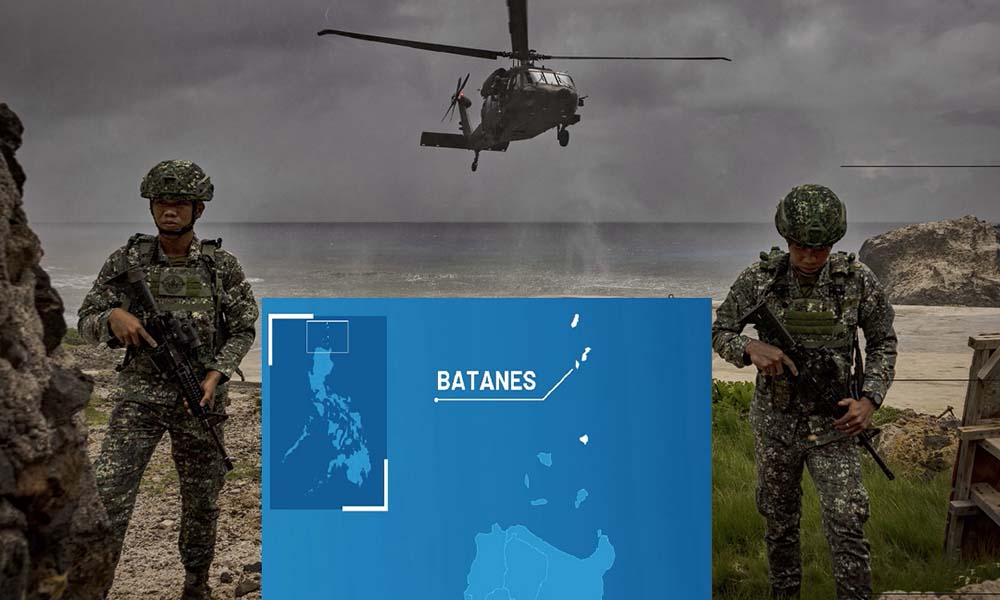
The Philippines faces a considerable capability challenge. China possesses a much larger navy, coast guard and maritime surveillance network, while the Philippine military must protect a vast archipelago with comparatively limited resources. Manila therefore needs more than additional warships and aircraft. It requires stronger coastal defence, modern radar systems, maritime surveillance, secure communications, trained personnel and reliable infrastructure capable of supporting operations across its islands. These capabilities are essential for monitoring activity, protecting maritime interests and responding quickly when tensions increase. Geography also explains why the Philippines has become increasingly important to regional security planning. The country sits between the South China Sea and the western Pacific, close to Taiwan and major international shipping routes. Northern Luzon faces the approaches to the Bashi Channel, while Palawan occupies an important position along the western maritime frontier. This geographical location makes Philippine ports, airfields and military facilities strategically relevant to the wider Indo-Pacific security environment. Stronger defence cooperation can therefore serve both Philippine national interests and the regional interests of its partners.
The United States Remains the Foundation of Philippine Defence
The United States is the most important military partner of the Philippines because their relationship is supported by a formal mutual defence treaty. Signed in 1951, the Mutual Defense Treaty established the legal foundation for cooperation between Washington and Manila. Although the regional security environment has changed considerably since the agreement was signed, the treaty remains central to the Philippine defence strategy, particularly as maritime tensions with China continue. An important clarification came in February 2023, when both governments issued the Bilateral Defense Guidelines. These guidelines explained that an armed attack on Philippine or American armed forces, aircraft or public vessels, including coast guard vessels, in the Pacific, including the South China Sea, would fall within the scope of their mutual defence commitments. This clarification is significant because it reduces uncertainty about how the alliance applies to serious maritime incidents. It does not mean that every confrontation automatically triggers military intervention, but it establishes that attacks against covered vessels and personnel could have wider consequences for the alliance.
US Offers Philippines $5 Billion for Nuclear Power — China Is Watching!
Another major element is the Enhanced Defense Cooperation Agreement, commonly known as EDCA. The agreement allows American forces to access designated Philippine military locations for authorised activities, including training, infrastructure development and rotational deployments. The arrangement has expanded to nine agreed locations, following the announcement of four additional sites in 2023. These facilities remain under Philippine ownership and control. EDCA does not transfer Philippine territory to the United States or establish permanent American military bases. Its importance lies in improving logistics, operational access, infrastructure and the ability to support joint military activities. Military exercises provide another practical foundation for the relationship. The annual Balikatan exercise has become one of the most important demonstrations of Philippine-American defence cooperation. The 41st edition took place from April 20 to May 8, 2026, and involved more than 17,000 personnel from seven participating countries: the Philippines, the United States, Australia, Japan, Canada, France and New Zealand. The exercise covered several operational areas, including land, sea, air and cyberspace, while providing participating forces with opportunities to improve coordination and readiness.
The growing multinational character of Balikatan is particularly important. Japan’s active participation, alongside Australian and other partner forces, demonstrates how an established bilateral exercise can become a platform for wider regional cooperation. Such activities allow military personnel to become familiar with one another’s procedures, communications systems and operational requirements. This familiarity can make future cooperation more efficient during humanitarian emergencies, maritime security operations or serious regional crises. Washington also continues to support Philippine military modernisation and regional defence consultations. The alliance gives Manila access to an established security relationship, American military capabilities and a framework for cooperation that has existed for decades. However, the Philippines recognises that its long-term defence requirements extend beyond the American relationship. Japan is increasingly becoming another important partner, particularly in military access, equipment cooperation and logistical support.
Japan Is Strengthening the Philippines’ Northern Defence Connection
Japan has become one of the Philippines’ most important emerging defence partners because both countries have growing concerns about maritime security and regional stability. Tokyo is particularly concerned about China’s military and coast guard activities in the East China Sea, including tensions surrounding the Senkaku Islands. Manila faces similar challenges in the South China Sea. Although the two countries have different territorial disputes, they share an interest in preventing unilateral changes to the regional status quo through force or coercion.
One of the most important developments in their relationship is the Reciprocal Access Agreement (RAA), signed on July 8, 2024, and brought into force on September 11, 2025. The agreement establishes procedures for military personnel from one country to visit the other for approved defence activities, including joint exercises and disaster relief operations. It also provides a clearer legal framework for visiting forces and helps reduce administrative barriers to military cooperation. Its importance is that Japan and the Philippines can now organise more practical defence activities under an established bilateral arrangement.
Japan’s participation in Balikatan 2026 demonstrated how this agreement could support deeper military cooperation. Japanese Self-Defense Forces took part in the exercise, including activities involving missile training. This was an important step because Japan’s involvement moved beyond observation and diplomatic engagement towards more active participation in multinational military exercises. For the Philippines, working alongside Japanese forces provides opportunities to improve training, operational familiarity and defence coordination. Another significant agreement is the Acquisition and Cross-Servicing Agreement (ACSA), signed on January 15, 2026, and brought into force on August 22, 2026. It creates a framework for the reciprocal provision of supplies and services between the Japanese Self-Defense Forces and the Armed Forces of the Philippines. This arrangement can make it easier for participating forces to obtain authorised logistical support during joint exercises and other approved activities. Such cooperation may involve supplies, transportation-related support and other services covered by the agreement.
Australia Is Expanding the Southern Military Connection
Australia plays a different but equally important role in the emerging Philippine defence network. Canberra has long regarded maritime security and regional stability as important national interests because its economy depends heavily on international trade routes and a peaceful Indo-Pacific environment. The Philippines occupies a strategically important position in Southeast Asia, making closer defence cooperation with Manila relevant to Australia’s wider regional security objectives. Military training has become one of the strongest parts of the relationship. Australian forces participated in Balikatan 2026 alongside the Philippines, the United States, Japan and other partner countries. Their participation provided additional opportunities for combined training, operational coordination and military exchanges. These activities are important because modern defence cooperation depends not only on agreements between governments but also on whether military personnel can communicate, understand procedures and operate effectively alongside one another. The two countries are also expanding their discussions on defence infrastructure. During their August 2026 defence ministerial engagement, Philippine and Australian officials discussed projects intended to strengthen military.
Maritime cooperation is another important area. On August 19–25, 2026, Australia, the Philippines and the United States conducted maritime cooperative activities involving naval and coast guard assets. Such activities help participating forces practise communications, maritime surveillance, coordination between vessels and logistical support. They also provide opportunities to demonstrate that countries can work together while operating in international waters and supporting regional maritime security. Infrastructure discussions are particularly relevant because the Philippines is an archipelago with military facilities spread across numerous islands. Ports, airfields, maintenance facilities, communications systems and reliable supply networks are necessary to support effective operations. During the October 28 meeting in Cebu, Marles confirmed that the four countries had discussed opportunities for joint investment in Philippine defence infrastructure, including projects in Luzon and Mindanao. These discussions indicate growing interest in strengthening the practical foundations of defence cooperation, although individual projects should not be treated as funded or completed until official confirmation is available.
How Four Separate Defence Partnerships Are Becoming a Connected Network
The most important feature of the emerging four-country framework is the effort to connect existing defence relationships. The Philippines already has a formal alliance with the United States, a Reciprocal Access Agreement and logistics arrangement with Japan, and expanding defence cooperation with Australia. These partnerships developed separately, but they increasingly overlap through joint exercises, military consultations and regional security initiatives. This interconnected approach matters because modern military cooperation requires more than political declarations. Countries must understand one another’s procedures, establish reliable communication channels, coordinate logistical support and develop the ability to work together during different types of security challenges. Regular consultations can help defence officials identify common priorities, while joint exercises allow military personnel to practise cooperation in realistic environments. Balikatan 2026 is an important example of this wider development. Although the exercise is traditionally associated with the Philippines and the United States, its expanded multinational participation demonstrates how other partners can contribute to the same training environment. Japan’s participation and Australia’s involvement create additional opportunities for interoperability. Exercises such as Alon also provide a platform for strengthening the Philippines’ relationships with regional partners.
Institutional cooperation is developing alongside these military activities. The four countries signed the Terms of Reference for an Indo-Pacific Chiefs of Defense Cooperation Council in June 2026, establishing another channel for communication among senior military leaders. Such arrangements can support discussions about regional challenges, military cooperation and interoperability. They do not automatically create a combined command structure, but they can make consultations more regular and help countries understand each other’s strategic priorities.
Maritime security activities provide another example of how cooperation can extend beyond conventional military exercises. In September 2026, regional partners participated in maritime security activities in Subic under the ASEAN Defence Ministers’ Meeting-Plus framework. These activities included areas such as maritime patrol, search and rescue, medical evacuation, diving and environmental protection. Cooperation involving critical undersea infrastructure also reflects the growing importance of protecting communication cables and other strategic maritime assets.
Why the Emerging Defence Network Matters to China
China is likely to view closer defence cooperation between the Philippines, the United States, Japan and Australia as an important development in the Indo-Pacific security environment. Beijing has consistently opposed what it describes as the formation of military blocs and external interference in regional disputes. From China’s perspective, greater American, Japanese and Australian involvement in Philippine defence could complicate its strategic position in the South China Sea.The main concern for Beijing is not simply the number of military exercises taking place. It is the possibility that the Philippines could become better connected to several countries with advanced military capabilities, regional intelligence networks and established defence arrangements. A more capable Philippines would have greater opportunities to monitor maritime activity, identify potential threats and coordinate with international partners. This could make it more difficult for China to apply pressure without attracting wider regional attention. The geographical position of the Philippines adds another dimension. The country is located along the First Island Chain, a strategically important area connecting Japan, Taiwan and the western Pacific. Northern Luzon is particularly important because of its proximity to the Bashi Channel, which connects the South China Sea with the Pacific Ocean. This location makes the Philippines relevant to American and Japanese regional security planning, particularly during discussions about maritime access, military mobility and the wider Taiwan Strait environment.
For China, the development of additional defence cooperation around the Philippines could create greater uncertainty during a regional crisis. If Manila improves its maritime surveillance and communication capabilities, it may become more difficult to operate in disputed waters without being observed. If the Philippines regularly trains with American, Japanese and Australian forces, coordination during an emergency could become more efficient. If defence infrastructure improves, the country may also become better prepared to support authorised military activities and humanitarian operations. The legal dimension also strengthens the Philippines’ diplomatic position. On July 12, 2016, an international arbitral tribunal issued an award in the Philippines-China South China Sea arbitration. The tribunal rejected China’s claimed historic rights within the nine-dash line where those claims exceed the maritime entitlements permitted under the United Nations Convention on the Law of the Sea. It also made important findings concerning China’s interference with Philippine sovereign rights in parts of the country’s exclusive economic zone. China rejects the award, but the ruling remains legally binding on the parties under the arbitration framework. Japan’s concerns about China’s activities in the East China Sea also help explain its growing interest in Philippine security. Tokyo views stability in the South China Sea as connected to the wider regional balance because major shipping routes and maritime security interests extend across both areas. Australia similarly has an interest in preventing regional disputes from escalating into conflicts that could disrupt international trade and weaken the security environment.
ASEAN Remains Important to the Philippines’ Regional Strategy.
This means ADMM-Plus is not an anti-China military organisation. China itself participates in the platform, alongside several other major regional powers. The forum is designed to encourage dialogue, cooperation and confidence-building among countries that may have different security interests. This is particularly important in a region where economic interdependence and geopolitical competition exist at the same time.
For Manila, the four-country defence framework and ASEAN diplomacy serve different purposes. Cooperation with the United States, Japan and Australia provides a more focused environment for defence planning, training and military coordination. ASEAN offers a broader platform where the Philippines can raise maritime concerns, promote international law and engage countries that may not support its preferred security approach.
This distinction is strategically useful. Not all ASEAN members have the same relationship with China, and they do not share identical views about military cooperation with external powers. Some countries have territorial disputes with Beijing, while others prioritise economic relations and regional stability. As a result, it would be incorrect to suggest that ASEAN as a whole supports the emerging four-country defence network.
The Philippines must therefore balance two approaches. It can strengthen practical defence relationships with selected partners while continuing to use ASEAN as a platform for regional dialogue and diplomatic engagement. Maintaining both channels is important because lasting regional stability cannot depend on military cooperation alone. It also requires communication, respect for international law and diplomatic efforts to manage disagreements.
Is the Philippines Becoming a Central Indo-Pacific Defence Hub?
The Philippines is gradually becoming an important geographical and strategic partner in the Indo-Pacific security environment. Its location between the South China Sea and the western Pacific gives it importance beyond its immediate territorial disputes with China. As Washington, Tokyo and Canberra expand their defence relationships with Manila, the country is gaining opportunities to strengthen its military infrastructure, improve maritime awareness and participate more actively in regional security cooperation. The United States provides the strongest institutional foundation through its mutual defence treaty, EDCA and established military exercises. Japan is strengthening its relationship with the Philippines through reciprocal military access, logistical cooperation, training and potential equipment transfers. Australia is expanding the southern dimension through military exercises, infrastructure discussions and maritime security activities. Together, these partnerships offer Manila a broader range of opportunities to improve its national defence.
However, becoming a regional defence hub does not mean that the Philippines will automatically become the centre of a new military alliance against China. Its strategic importance will depend on how effectively it develops its own military capabilities, maintains infrastructure and manages relationships with its international partners. The country must also preserve its diplomatic engagement with ASEAN and avoid allowing defence cooperation to create unnecessary regional instability. The October 28, 2026, meeting in Cebu is therefore important because it demonstrates a growing interest in connecting four existing defence relationships. It reflects a shift towards more regular consultations, wider military exercises and practical cooperation on infrastructure and defence planning. Whether these discussions become a lasting strategic framework will depend on what the four governments implement in the coming years.
About Indo-Pacific Report
For more geopolitical analysis, strategy coverage, and Indo-Pacific security reporting, visit Indo-Pacific Report:
Website
Facebook
YouTube