Subic Bay’s Military Comeback Puts Luzon on China’s Radar
Subic Bay is gradually emerging as an important industrial and strategic location in the Western Pacific, raising new questions about the Philippines’ growing role in US defence planning and regional security. Once one of America’s most important overseas naval facilities, Subic is now attracting renewed attention because of its commercial shipbuilding activities, military logistics operations, proposed ammunition manufacturing projects, and plans to expand maritime repair capabilities. These developments are taking place at a time when tensions between the United States and China continue to influence security decisions across the Indo-Pacific.
In April 2026, the US Army staged military equipment at a facility in Subic to support exercises and potential alliance contingencies. This activity demonstrated how existing commercial infrastructure in the Philippines could contribute to American military logistics without necessarily becoming a permanent US military base. In September 2026, another important development emerged when the US Trade and Development Agency supported a feasibility study examining the possibility of expanding ship-repair capacity at Subic Drydock Corporation. At the same time, proposals for ammunition manufacturing and storage have increased interest in the area’s long-term industrial potential. However, the developments require careful examination. Subic Bay has not been established as the world’s largest weapons manufacturing facility, and there is no confirmed evidence that all the proposed projects are part of one integrated military complex. Commercial shipbuilding, equipment storage, ship repair, and ammunition manufacturing are separate activities with different objectives and implementation stages. Treating them as one completed weapons facility would exaggerate what is currently known.
Nevertheless, the combination of these developments could gradually transform Subic into a valuable industrial and military-support hub. Its location, port infrastructure, shipyard facilities, and transport connections offer advantages for both commercial maritime activity and regional defence logistics. If additional projects move forward, the area could become increasingly important for maintaining ships, storing military equipment, and supporting supply networks across the Western Pacific. This transformation also raises an important security question for the Philippines. Greater defence cooperation with Washington could improve military readiness, strengthen industrial capabilities, and support economic development. However, infrastructure that becomes important to military operations could also attract greater strategic attention during a major regional confrontation. The central issue is therefore not simply whether Subic can support American military activities, but whether its growing importance will strengthen Philippine security or create additional vulnerabilities for Luzon.
FROM AMERICA’S NAVAL STRONGHOLD TO A NEW STRATEGIC HUB
To understand Subic Bay’s growing importance, it is necessary to examine its historical relationship with the United States and the transformation that followed the departure of American forces. For several decades, Subic Bay served as one of Washington’s most valuable overseas naval installations. Its deep-water harbour, extensive industrial facilities, ship-repair infrastructure, and strategic position made it an important support centre for American naval operations throughout the Western Pacific. Ships operating across the region could use the facility for maintenance, refuelling, supplies, and other essential services, reducing their dependence on more distant bases. Subic’s importance was not based on geography alone. The installation developed an extensive industrial ecosystem that included shipyards, warehouses, transportation facilities, maintenance infrastructure, and a workforce with experience in maritime operations. These capabilities made it possible to support large naval vessels and other military requirements. During the Cold War, when the United States maintained a substantial military presence in Asia, Subic Bay played an important role in sustaining American operations and supporting its wider regional commitments.
U.S. Activates Guam Missile Defense near Philippines as China’s Threat Grows
Following the decision, US military forces departed Subic, and the former naval installation gradually transitioned toward civilian commercial development. Instead of functioning as a major American naval base, the area became part of the Subic Bay Freeport Zone, attracting industrial investment, commercial shipping, manufacturing, and other business activities. However, the departure of American forces did not eliminate the strategic value of Subic’s infrastructure. A deep-water port remains valuable regardless of whether it is operated for commercial or military purposes. Warehouses can store industrial materials or equipment, shipyards can maintain commercial vessels, and transportation networks can move cargo between ports, industrial zones, and other locations. These facilities may operate primarily for civilian purposes while retaining capabilities that could become useful during a regional emergency. The history of Subic’s shipyard demonstrates how its industrial importance has continued to evolve. Hanjin Heavy Industries and Construction Philippines, which operated a major shipbuilding facility in the area, collapsed in 2019, creating uncertainty about the future of one of the country’s most significant maritime industrial properties.
The situation changed in 2022 when Cerberus Capital Management acquired the shipyard property, opening the way for its redevelopment and renewed industrial activity. Another important development followed in September 2025, when HD Hyundai Heavy Industries Philippines began commercial shipbuilding operations at Agila Subic. The return of shipbuilding activity highlighted the area’s potential to attract international investment, create industrial employment, and strengthen the Philippines’ maritime manufacturing capabilities. It also demonstrated that Subic’s industrial facilities could once again become relevant to the wider regional maritime economy. These developments should not automatically be interpreted as a return to the former American naval base. The shipyard is part of a commercial industrial environment, and its private ownership does not make it an American government military installation. Similarly, commercial shipbuilding does not mean that weapons or American warships are necessarily being manufactured there. Understanding the difference between commercial industrial activity and military operations is essential when assessing Subic’s changing role.
The larger strategic significance comes from the possibility that several capabilities could develop alongside one another. Commercial ports can receive cargo and equipment, shipyards can support maritime construction, repair facilities can maintain vessels, and warehouses can provide storage space. If additional military-support and ammunition-related projects are eventually established, these capabilities could contribute to a more extensive regional supply network. This is why Subic Bay is receiving renewed attention in discussions about the future of US-Philippine defence cooperation. Rather than simply returning to the traditional military-base model, the area could develop into a civilian industrial centre whose commercial infrastructure also supports selected military requirements. Whether that transformation becomes a coordinated long-term strategy will depend on future agreements, investment decisions, and the actual projects that move from proposals into operation.
THE WEAPONS FACTORY CLAIM: WHAT IS ACTUALLY CONFIRMED?
The suggestion that Subic Bay has already become the world’s largest weapons manufacturing facility is a dramatic claim, but the available evidence does not establish that such a facility is currently operating there. The reality involves several separate developments, including ammunition manufacturing proposals, commercial shipbuilding, military equipment staging, and possible expansion of maritime repair services. Each initiative has a different purpose, and each is at a different stage of development. Understanding these differences is necessary to separate confirmed activities from future possibilities. One of the most important developments concerns a proposed ammunition manufacturing and storage facility. In June 2025, a US congressional appropriations directive called for relevant agencies to assess the feasibility of establishing a joint ammunition manufacturing and storage facility at Subic Bay. The proposal attracted attention because it could potentially connect Philippine industrial capacity with the defence supply requirements of the United States and its regional partners. Philippine Defense Secretary Gilberto Teodoro expressed openness to the potential benefits, including industrial investment and employment opportunities.
WHY AMERICA NEEDS A STRONGER PACIFIC SUPPLY CHAIN
Modern military power is no longer determined only by the number of aircraft, warships, missiles, or combat vehicles a country possesses. The ability to maintain, transport, repair, and resupply these assets is equally important, particularly during a prolonged regional conflict. A military force may have advanced equipment and highly trained personnel, but its operational effectiveness can decline rapidly if spare parts, fuel, ammunition, and technical support cannot reach the required locations. This is one of the major challenges facing the United States as it prepares for a more competitive security environment in the Indo-Pacific. For decades, American military operations across the Western Pacific have depended on a network of bases, ports, warehouses, maintenance facilities, and supply routes. However, increasing Chinese military capabilities have made the security of these supply networks a more important consideration. In a potential conflict, major ports and military installations could face disruption, while long-distance transportation routes could become more difficult to use. This creates pressure on Washington to develop a more distributed logistics system that does not depend entirely on a small number of large facilities.
Subic Bay could contribute to this effort because of its geographical position and existing industrial infrastructure. Located on the western coast of Luzon, the port provides access to important maritime routes connecting the South China Sea with the wider Western Pacific. Its deep-water harbour, commercial facilities, shipyard infrastructure, and industrial land offer opportunities for receiving equipment, storing supplies, and supporting maritime operations. If additional repair and manufacturing projects are implemented, the area’s contribution to regional military sustainment could become more significant. One of the main advantages of developing local logistics capabilities is the possibility of reducing transportation delays. Equipment and supplies that must travel thousands of kilometres from the United States or other distant production centres can take considerable time to reach operational forces. Forward storage and regional maintenance facilities could shorten some of these supply routes and make it easier to respond to changing operational requirements. For example, if a military vessel requires maintenance while operating in the Western Pacific, access to capable regional ship-repair facilities could reduce the need to send it to a distant location. Ammunition production is another important part of the wider supply-chain discussion. Modern military operations can consume large quantities of ammunition, particularly when precision weapons, artillery systems, and naval guns are used over extended periods. If the Philippines eventually establishes suitable ammunition manufacturing capabilities, it could contribute to regional supply diversification and reduce some dependence on distant production facilities. However, ammunition manufacturing requires specialised machinery, trained technicians, reliable electricity, quality-control systems, secure storage, and consistent access to raw materials. A proposed factory would therefore need substantial investment and long-term planning before it could make a meaningful contribution.
SUBIC’S MILITARY LOGISTICS ROLE IS ALREADY REAL
Although the proposed ammunition manufacturing project has not been established as an operational weapons factory, Subic Bay’s connection to military logistics is already supported by documented activity. The US Army’s decision to stage equipment at Agila Subic in April 2026 for Balikatan exercises and possible alliance contingencies demonstrates how commercial infrastructure can support military preparations. This development is important because it shows that the Philippines’ existing industrial facilities can contribute to defence cooperation without necessarily being converted into permanent military installations. Military equipment staging is a practical part of modern defence planning. Forces operating across large geographical areas need locations where vehicles, communications equipment, engineering supplies, and other materials can be received, organised, stored, and moved when required. Instead of transporting every item from distant bases whenever an exercise or emergency occurs, military planners can use selected regional facilities to position equipment closer to potential areas of operation. This approach can reduce logistical delays and provide greater flexibility during military exercises and alliance contingencies.
Agila Subic’s role in supporting Balikatan 2026 illustrates how this arrangement can work. The Philippines and the United States regularly conduct joint military exercises to improve coordination, communication, and operational readiness. Such exercises require more than soldiers and combat equipment. They also depend on transportation arrangements, temporary storage, maintenance support, fuel supplies, and access to suitable infrastructure. Commercial facilities such as those in Subic can provide some of these services when agreements and operational requirements permit.
WHY LUZON MATTERS IN A REGIONAL CONFLICT
Subic Bay’s strategic importance cannot be fully understood without examining the geographical position of Luzon. As the largest island in the Philippines, Luzon contains major population centres, commercial ports, transportation networks, industrial facilities, and important military infrastructure. Its location places the Philippines within one of the most strategically significant maritime environments in the Indo-Pacific, where American and Chinese military interests increasingly overlap. As regional tensions continue to influence defence planning, Luzon’s geographical position has become an important consideration for both Manila and Washington.
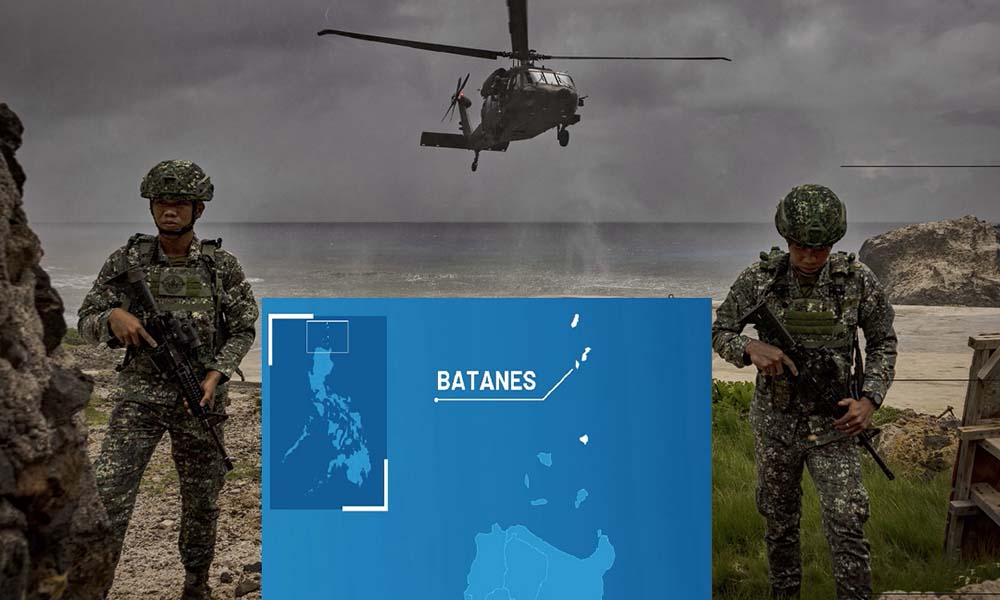
Subic Bay is located on the western coast of Luzon, giving it access to maritime routes connected to the South China Sea. This location is important because the South China Sea carries substantial international shipping and connects several major economies across East and Southeast Asia. It is also an area of overlapping territorial and maritime claims, where disagreements between China and several Southeast Asian countries have created recurring security tensions. For the Philippines, maintaining access to these waters is closely connected to maritime security, economic activity, and the protection of national interests. Luzon’s strategic importance extends beyond its western coastline. Northern Luzon faces the approaches toward the Luzon Strait, which separates the Philippines from Taiwan. This waterway connects the South China Sea with the Philippine Sea and wider Pacific Ocean, making it an important geographical feature in regional military planning. In a potential Taiwan Strait crisis, access through surrounding maritime routes could influence naval movements, transportation, surveillance, and military logistics.
However, the geographical importance of the strait does not mean that the Philippines would automatically become a direct participant in every confrontation involving Taiwan. The distance between northern Luzon and Taiwan has also increased international attention toward the Philippines’ role in regional security. The country’s northern islands and surrounding waters are geographically close to important routes connecting Taiwan with the wider Western Pacific. This position gives Manila a significant role in discussions about regional stability, particularly as the United States strengthens its defence cooperation with Philippine forces. Nevertheless, decisions about military access, operational support, and participation in a crisis remain matters of Philippine national policy and sovereign authority.

This distinction matters when discussing Subic Bay. Its industrial and logistical capabilities could complement the wider defence network between the Philippines and the United States, but that does not establish that every shipyard, warehouse, or commercial property in the area is formally designated for American military use. The legal status of each facility and the arrangements governing its use must be examined separately. Without this distinction, discussions about Subic’s strategic importance can easily become exaggerated or misleading.
The Philippines also faces different security challenges in the South China Sea and around Taiwan. A confrontation in the South China Sea could involve disputes over maritime access, pressure on Philippine vessels, confrontations between coast guard forces, or challenges to the country’s maritime rights. A crisis involving Taiwan could create a different set of operational and political demands, particularly because of the island’s geographical position and its importance to regional trade and military movement. Although both situations could affect Philippine security, they should not be treated as identical scenarios.
About Indo-Pacific Report
For more geopolitical analysis, strategy coverage, and Indo-Pacific security reporting, visit Indo-Pacific Report:
Website
Facebook
YouTube