China’s New Reef Project Raises a Major Security Question for the Philippines
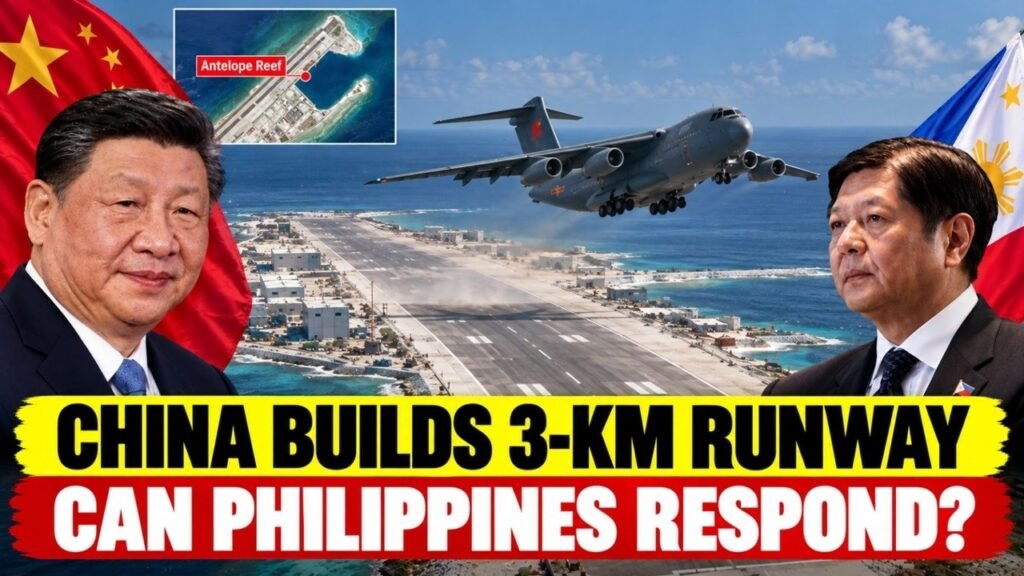
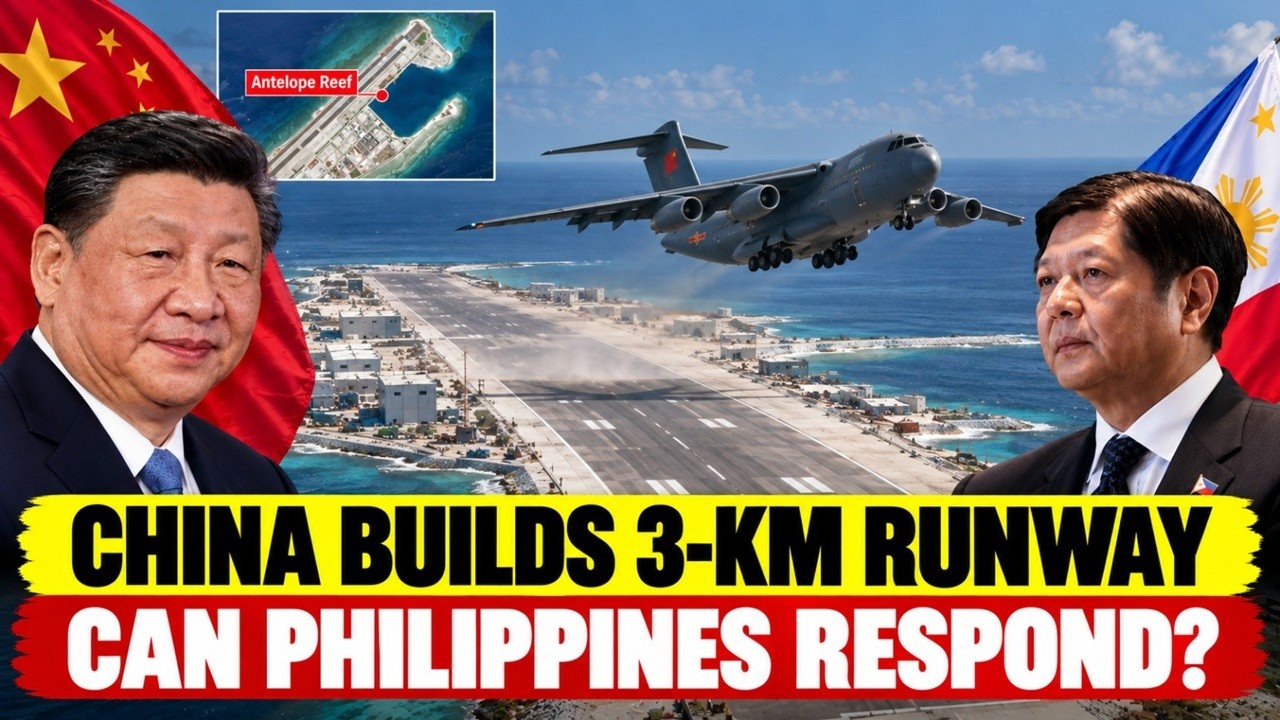
China’s construction of a new runway on Antelope Reef in the disputed Paracel Islands could add another important location to Beijing’s growing network of infrastructure in the South China Sea. The project has attracted attention because it may expand China’s ability to support aircraft, monitor maritime activity and maintain a more persistent presence across strategically important waters. For the Philippines, the development raises a broader question: how can a country with more limited military resources protect its maritime interests when a larger neighbour continues to expand its regional capabilities?
According to a Reuters report published on October 2, 2026, satellite imagery showed construction activity accelerating at Antelope Reef, including ground preparation, gravel piles, concrete work and the development of a wharf. Analysts cited in the reporting estimated that the runway could be completed and become operational around mid-2027.
The significance of this project extends beyond the construction of a single runway. China already operates military-capable facilities at several locations in the South China Sea, including Woody Island in the Paracel Islands and Subi Reef, Fiery Cross Reef and Mischief Reef in the Spratly Islands. Additional infrastructure could give Beijing more options for positioning aircraft, supporting maritime operations and moving supplies. Nevertheless, a runway alone does not guarantee control over surrounding waters or establish how frequently military aircraft will operate from the site.
Antelope Reef’s Strategic Location in the South China Sea
Antelope Reef is located in the Paracel Islands, an archipelago in the northern South China Sea. China has controlled the Paracels since 1974, while Vietnam and Taiwan also claim the island group. The Philippines does not claim Antelope Reef, which means the dispute is not identical to the territorial and maritime disputes involving Philippine interests in the Spratly Islands and other parts of the South China Sea. However, geography makes the development relevant to the wider regional security environment. The northern South China Sea contains important maritime routes and is strategically connected to China’s southern coastline, military facilities and naval operations. Infrastructure established on remote reefs can reduce the operational distance between mainland support facilities and selected maritime areas. It can also give a country additional locations from which to observe activity and sustain a presence. For the Philippines, the concern is therefore not that Antelope Reef directly changes Philippine sovereignty claims. The more important issue is how China’s expanding infrastructure could influence the regional balance of power. If Beijing gains additional options for supporting aircraft and maritime forces, Manila may face a more demanding environment when conducting patrols, monitoring disputed waters or coordinating with security partners.
For the Philippines, the most practical response is not to copy every Chinese military investment. Such an approach would place considerable pressure on national resources without necessarily resolving the country’s main security challenges. Instead, Manila needs a coordinated strategy that combines maritime surveillance, credible defensive capabilities, reliable logistics, stronger international partnerships and effective diplomacy. The objective should be to make coercion more difficult while preserving the Philippines’ ability to exercise its lawful maritime rights.
From One Reef to a Wider Network of Chinese Outposts
Antelope Reef is best understood as part of a wider pattern of infrastructure development rather than as an isolated construction project. China’s existing facilities in the Paracel and Spratly Islands provide different forms of logistical and operational support across the South China Sea. Runways, ports, surveillance equipment and communications systems can work together to improve the flexibility of military and maritime operations. A network of facilities can give planners more choices about where to position aircraft, support ships and organise supplies. It may also reduce dependence on a single operating location. Depending on their equipment and use, these facilities could support activities conducted by the People’s Liberation Army, China Coast Guard and other Chinese maritime forces. However, the existence of several outposts does not automatically mean that China can control every part of the South China Sea. Fixed installations require continuing investment, protection, maintenance and supply. Their usefulness depends on the forces available to operate them and the wider military environment. The challenge for the Philippines is to understand how these facilities work together and prepare for their cumulative effect rather than reacting to each new construction project separately.
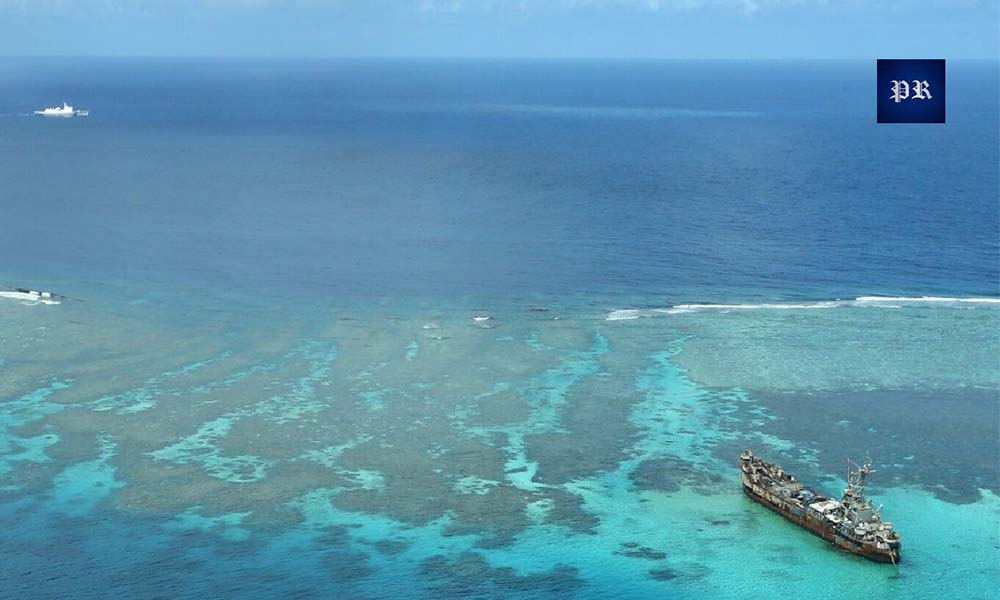
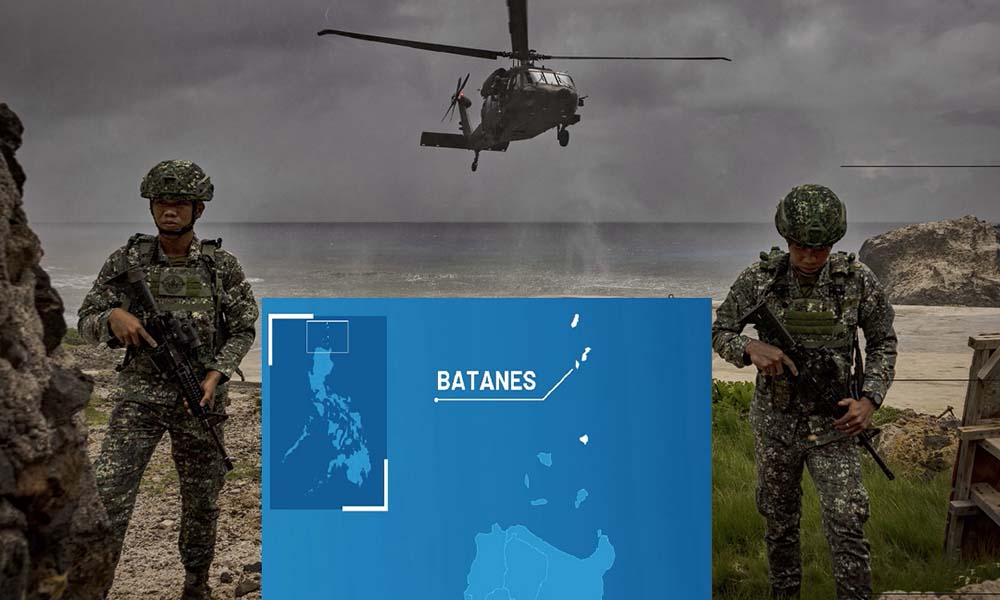
Philippines’ Two-Front Strategy at Palawan and Scarborough Shoal — China is watching
A runway measuring approximately three kilometres could potentially support a range of military aircraft, depending on its final design, pavement strength, supporting facilities and operating conditions. Yet the length of an airstrip does not determine an airbase’s complete operational capability. Aircraft parking areas, maintenance facilities, fuel supplies, communications systems, trained personnel and reliable transport links are equally important. If Antelope Reef becomes a fully equipped military-capable facility, it could provide China with additional options for fighter deployments, transport flights, surveillance missions and logistical support. These are potential capabilities rather than confirmation that specific aircraft or military units will be stationed there. The available evidence of construction does not, by itself, establish the precise missions the facility will eventually perform. The value of the runway will also depend on how it connects with China’s existing network. An aircraft operating from an offshore facility requires maintenance, spare parts, fuel, personnel and communication links. Repeated operations are much more demanding than simply allowing an aircraft to land. Similarly, a newly constructed wharf could assist with transport and supply activities, but its actual contribution will depend on its completed capacity and the facilities available at the site.
Maritime Surveillance and the Challenge of Maintaining Presence
One potential consequence of additional Chinese infrastructure is improved flexibility in monitoring maritime activity. Aircraft, ships, coastal sensors and satellite systems can provide different types of information about movements across a large area. When this information is combined effectively, it can help authorities develop a clearer picture of maritime activity and respond more quickly to changing conditions. For the Philippines, maintaining awareness is important because maritime security involves more than responding to direct military attacks. Philippine authorities must also monitor vessel movements, conduct patrols, support personnel and document incidents in areas where competing maritime claims create continuing tensions. If another Chinese facility contributes to a broader surveillance network, Manila may need to devote greater attention to maintaining reliable information about activity across its maritime approaches. Nevertheless, it would be premature to conclude that Antelope Reef will automatically be used to target Philippine forces. The eventual role of the facility remains uncertain, and its effectiveness will depend on the sensors, aircraft, communications and personnel deployed there. A careful assessment should distinguish observed construction from potential military applications and confirmed operational activity.
The main concern for Manila is that additional Chinese facilities could help Beijing sustain a presence across several areas for longer periods. Better logistical support may make it easier to move supplies, rotate personnel and maintain operations. Additional aircraft operating from remote locations could also create more options for regional monitoring and response, depending on the systems available. These capabilities could increase the demands placed on Philippine ships, aircraft, coast guard personnel and defence budgets. Manila would need to maintain awareness of developments, decide how to respond to incidents and ensure that its forces have the supplies required for extended deployments. Such demands could become more difficult to manage if several maritime incidents occurred at the same time. This possibility does not establish that China intends to initiate simultaneous confrontations or that the runway will necessarily produce a particular outcome. Rather, it highlights a planning challenge. The Philippines must be prepared to manage pressure across different locations without allowing limited resources, delayed information or weak coordination to undermine its response.
Why the Philippines Needs Deterrence Beyond Territorial Defence
Deterrence is often associated with preventing a military attack, but the Philippines also needs to protect its ability to carry out routine maritime activities in a contested environment. A country may continue to maintain its legal claims while facing practical difficulties in conducting patrols, supporting personnel or responding to pressure at sea. For this reason, Philippine deterrence should include reliable maritime awareness, persistent coast guard operations, clear procedures for documenting incidents and defensive capabilities that remain usable during periods of tension. Public communication and diplomatic engagement also matter because verified information can help explain developments to domestic audiences and international partners. A credible strategy should make it more difficult for any adversary to achieve its objectives through coercion. At the same time, Manila must retain the ability to distinguish routine maritime activity from developments that require a more serious response. Effective deterrence is not simply about displaying military strength; it is also about making sound decisions, maintaining readiness and avoiding unnecessary escalation. The Philippines needs a connected maritime surveillance system that combines information from coastal radar, satellites, patrol aircraft, drones, naval vessels and partner countries.
Each source provides a different perspective, and their combined value depends on how quickly information can be assessed and shared with decision-makers. The purpose is not merely to collect more data. It is to identify meaningful developments early enough to support a timely response. If surveillance reveals a change in vessel activity, unusual construction or increased aircraft movements, Philippine authorities need procedures for checking the information, assessing its significance and deciding whether further action is required. Coordination between the Philippine Navy, Philippine Coast Guard, Air Force and civilian agencies is therefore essential. Information collected by one organisation becomes more useful when other relevant agencies can access and understand it. Commercial satellite imagery and open-source research can also help document visible changes at contested locations and support evidence-based public reporting. However, surveillance alone cannot solve every problem. Detecting a vessel does not automatically provide the means to monitor it continuously or respond in person. Information must be connected to trained personnel, reliable communications, available ships and aircraft, and clear operating procedures. The real measure of progress is whether better awareness produces faster decisions and more effective maritime operations.
Build Deterrence Without Trying to Match China Weapon for Weapon
The Philippines does not have to reproduce China’s entire military network to improve its own security. A more realistic approach is deterrence by denial, which seeks to reduce the likelihood that an adversary can achieve its objectives through military pressure. If coercion is unlikely to produce the intended result, it becomes less attractive as a policy option. Mobile coastal defence systems, maritime surveillance, resilient communications and well-supported forces can all contribute to this approach. The Philippines’ BrahMos coastal-defence capability is one element of its wider defence modernisation. Mobile anti-ship missile systems can potentially complicate an adversary’s planning, but their effectiveness depends on detection, targeting information, trained personnel, maintenance and appropriate command decisions. No individual weapon can independently counter an entire network of ships, aircraft, surveillance systems and offshore facilities. Equipment must be supported by spare parts, ammunition, trained crews, dependable communications and realistic exercises. Purchasing a sophisticated system without funding its long-term operation may produce less security than expected. The Philippines should therefore assess military investments according to how well they work together. The priority should be a coherent defensive system that can continue operating under pressure, rather than a collection of high-profile acquisitions that lack sufficient logistical support. The objective is to reduce the chances that a stronger adversary can translate military advantages into political concessions.
Military capability depends on more than the number of weapons or platforms a country possesses. Fuel, maintenance, spare parts, ammunition, trained personnel, transport and repair facilities determine whether forces can remain operational over an extended period. These requirements become particularly important when a country must maintain patrols across a large maritime area. For the Philippines, resilience means avoiding excessive dependence on a small number of facilities or supply routes. Alternative operating locations, reliable communications and distributed support arrangements can help reduce the impact of disruptions. Such arrangements must be properly equipped, maintained and integrated into a broader defence plan to deliver meaningful benefits. Exercises should test whether surveillance information reaches decision-makers quickly, whether different military services can coordinate effectively and whether supplies can reach units when normal arrangements are disrupted. They should also examine the practical consequences of equipment failures, communication difficulties and prolonged deployments. Defence planning must account for financial limits. Expensive platforms require continuing funding, while essential support systems may attract less public attention. The Philippines also faces significant natural-disaster risks, making resilient transport, communications and emergency logistics important for civilian protection as well as national security. A sustainable defence strategy should therefore consider long-term operating costs and wider national needs.
The US–Philippines Mutual Defense Treaty
The United States and the Philippines have maintained a Mutual Defense Treaty since 1951. In May 2023, both governments issued Bilateral Defense Guidelines that reaffirmed their commitments and clarified areas for closer cooperation. The guidelines state that an armed attack in the Pacific, including anywhere in the South China Sea, against either country’s armed forces, public vessels or aircraft, including coast guard vessels, would invoke mutual-defence commitments under the treaty.These arrangements form an important part of the Philippines’ security planning, but their significance should not be exaggerated. They do not mean that every maritime disagreement automatically triggers a military response. The circumstances of an incident, the applicable treaty provisions and decisions made by both governments remain important. The practical value of the alliance depends on preparation before a crisis occurs. Joint exercises, intelligence-sharing, communications, logistics and compatible operating procedures can help the two countries coordinate more effectively. Cooperation can also help improve the Philippines’ own capabilities, allowing its forces to respond to routine maritime challenges without depending on an ally for every decision.
Japan’s Growing Role in Philippine Maritime Security
Japan has become an increasingly important defence and security partner for the Philippines. The Japan–Philippines Reciprocal Access Agreement entered into force on September 11, 2025, establishing procedures for cooperative activities conducted when one country’s forces visit the other. The agreement is intended to facilitate activities such as joint exercises and disaster relief while improving interoperability between the two forces The two countries have also established a framework for reciprocal provision of supplies and services through their Acquisition and Cross-Servicing Agreement. Japan’s Ministry of Foreign Affairs confirmed that the agreement entered into force on August 22, 2026, supporting closer logistical cooperation between the Japanese Self-Defense Forces and the Armed Forces of the Philippines. These arrangements could make joint activities and logistical coordination more practical, but agreements alone do not guarantee a particular military outcome. Their value depends on implementation, training, available resources and the ability of both countries to work together when required. For Manila, cooperation with Tokyo provides another opportunity to strengthen readiness and improve the sustainability of its maritime security efforts. The Philippines can also work with Australia and other regional partners to improve maritime awareness, defence training, information-sharing and disaster-response capacity. Cooperation across several countries can help build a broader understanding of maritime developments and reduce dependence on a single security partner. At the same time, regional diplomacy remains important. The Association of Southeast Asian Nations provides a platform for dialogue on regional security, although member states do not always share the same priorities or assessments of China. Progress therefore requires sustained engagement, practical cooperation and realistic expectations about what regional institutions can achieve.
Use the Time Before Mid-2027 to Address Capability Gaps
The projected mid-2027 completion date gives Philippine planners a potential planning horizon, but it should not be treated as a guaranteed deadline. Construction schedules can change, and the military significance of the completed facility will depend on its eventual configuration and deployment arrangements. The Philippines should use the available time to identify gaps in maritime surveillance, logistics, communications, personnel training and operational readiness. These areas require sustained investment and cannot necessarily be improved through a single procurement decision. A new radar system or weapon may contribute to national defence, but its value depends on the wider network that supports it. Practical exercises can help identify weaknesses before a crisis. If information takes too long to reach decision-makers, communications fail between agencies or supplies cannot reach deployed units reliably, these problems should be addressed as part of routine defence planning. Such improvements are less visible than new weapons, but they can make an important difference to sustained readiness.
The government should also communicate clearly about what is known and what remains uncertain regarding Antelope Reef. Separating verified developments from projections can improve public understanding, support responsible reporting and reduce the risk of exaggerated assessments influencing policy decisions. International law should remain central to the Philippines’ approach. The country can document maritime incidents, share verified evidence with partners, pursue diplomatic protests and use appropriate legal mechanisms to defend its position. These measures do not replace defence capabilities, but they can strengthen the credibility of Philippine claims and help communicate its concerns to the international community. A balanced strategy should combine national capability, international partnerships and diplomacy. The Philippines needs enough independent capacity to manage routine challenges while using cooperation to improve readiness and reduce the risks associated with a major security crisis.
Measure Deterrence Through Results, Not Headlines
The effectiveness of Philippine defence modernisation should be assessed through practical outcomes rather than the number of new systems announced or acquired. Important measures include how quickly authorities detect maritime developments, how reliably agencies share information, how consistently patrols can be maintained and how effectively forces can sustain operations over time. The same principle applies to international partnerships. The number of joint exercises or signed agreements is not enough to establish how well forces can cooperate in a difficult situation. What matters is whether personnel understand common procedures, communication systems work together and logistical arrangements can support operations when conditions become challenging. Regular assessments can help the Philippines direct limited resources towards its most significant gaps. They can also reveal whether existing investments are delivering the intended results or whether additional training, maintenance and support are needed. A defence strategy should remain flexible enough to respond to changes in regional conditions without abandoning its core priorities. The goal is not to promise that every confrontation will be avoided or that the Philippines can eliminate every military disadvantage. It is to improve the country’s ability to make informed decisions, sustain lawful activities and resist pressure without allowing a stronger adversary to determine the outcome automatically.
China’s development of Antelope Reef illustrates how infrastructure can influence regional security over time. A runway may provide additional operating options, but it does not independently determine the balance of power. Its significance will depend on the aircraft, personnel, supplies, surveillance systems and supporting facilities eventually available at the site. For the Philippines, the appropriate response is a long-term strategy that combines persistent maritime awareness, mobile defensive capabilities, resilient infrastructure, sustainable logistics and practical cooperation with security partners. Diplomacy, international law and effective crisis communication should reinforce these efforts rather than be treated as alternatives to national defence. The Philippines must also recognise that regional security is shaped by economic resources, political decisions and the willingness of governments to manage disagreements responsibly. Military preparedness can reduce vulnerabilities, but communication and diplomacy remain necessary to prevent misunderstandings from developing into larger confrontations. Ultimately, the Antelope Reef runway is one development within a much wider strategic environment. The Philippines cannot control China’s construction decisions, but it can improve its own readiness and strengthen the systems needed to protect its interests. The central question is whether Manila can use the time available to build a more resilient defence before the new facility becomes fully operational.
Conclusion
China’s construction of a potential three-kilometre runway on Antelope Reef could expand its options for supporting aircraft and maritime operations in the South China Sea. Reuters reporting and satellite imagery indicate that the project is progressing, with analysts projecting possible completion around mid-2027. However, the facility’s eventual capabilities and operational role remain uncertain.For the Philippines, the challenge is not simply to respond to another Chinese construction project. It is to prepare for a regional environment in which surveillance, logistics and the ability to sustain operations may become increasingly important. Attempting to match China facility for facility would be an expensive and potentially unrealistic strategy. A more sustainable approach would prioritise reliable information, well-supported defensive systems, operational readiness and partnerships that produce practical results. The United States, Japan, Australia and other regional partners can contribute to these efforts, while diplomacy and international law can help Manila defend its position and manage tensions. No single weapon, military base or treaty can guarantee a favourable outcome in every confrontation. What the Philippines can do is reduce its vulnerabilities, strengthen its ability to respond and make coercion less likely to succeed. China’s new runway may increase Beijing’s operational options, but it does not determine the future of the South China Sea on its own. The decisive issue is whether the Philippines can build a coordinated and sustainable defence system that protects its lawful maritime interests without unnecessarily escalating regional tensions. Its response to Antelope Reef should therefore be part of a wider national strategy: one that combines preparedness, resilience, cooperation and clear-eyed diplomacy.
About Indo-Pacific Report
For more geopolitical analysis, strategy coverage, and Indo-Pacific security reporting, visit Indo-Pacific Report:
Website
Facebook
YouTube
China’s New Reef Project Raises a Major Security Question for the Philippines