US Is Spreading Military Access Across the Philippines to Deter China
The Philippines is strengthening defense cooperation with the United States in one of the Indo-Pacific’s most strategically sensitive regions. Northern Luzon faces the approaches to Taiwan, while Palawan looks toward the South China Sea, where Manila has long-standing maritime concerns. These geographic realities help explain why President Ferdinand Marcos Jr.’s decision to expand access under the Enhanced Defense Cooperation Agreement (EDCA) attracted regional attention. On March 22, 2023, Marcos announced four additional EDCA locations, increasing the agreed network from five sites to nine. The additions extended the network into northern Luzon and southern Palawan.
The idea was to spread access and supporting infrastructure across more parts of the archipelago instead of relying on a smaller number of locations. In principle, this could improve logistics, joint training, disaster response, and support for Philippine defense. But a site announced on a map is not automatically a fully functioning military hub. Construction, land arrangements, equipment, personnel, transport links, and coordination all affect what a location can actually do. By 2026, public comments from Philippine and American officials highlighted both implementation challenges and reported progress. The central question is therefore not simply how many EDCA sites exist, but whether the network can deliver practical benefits for Philippine security.
What EDCA Means—and What It Does Not Mean
The phrase “American military bases” can give a misleading impression of the arrangement. The nine EDCA locations are not nine permanent, independently operated U.S.-owned bases. The Enhanced Defense Cooperation Agreement, signed in 2014, provides a framework for rotational access by U.S. forces to agreed Philippine military locations and for the development of facilities, prepositioning of equipment, training, and other forms of cooperation. The framework can also support humanitarian assistance and disaster-relief operations. The Philippines retains sovereignty over the locations. EDCA should not be understood as giving Washington unrestricted authority to use every facility for any operation it chooses. It operates alongside two other important agreements: the 1951 Mutual Defense Treaty, which sets out the alliance’s mutual-defense commitments, and the Visiting Forces Agreement, which addresses the legal status of visiting U.S. personnel. Each agreement has a distinct role, and none means that every facility will automatically be available for every possible contingency. The practical value of EDCA lies in access and readiness. Better runways, storage, communications, transport infrastructure, and equipment support can help forces move and coordinate more effectively. Yet access alone is not capability. A facility needs suitable infrastructure, supplies, maintenance, security, personnel, and reliable connections to other locations. The strategy is best understood as an effort to distribute access and improve cooperation while keeping the Philippines’ sovereignty and decision-making central.
Northern Luzon: Why the Taiwan Strait Is Part of the Discussion
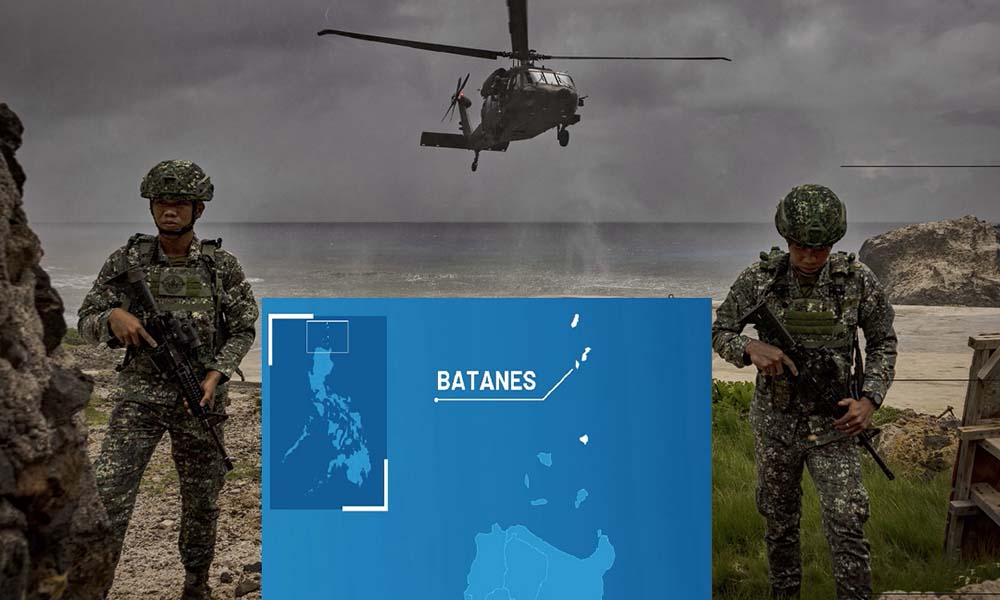
Three of the four locations added in 2023 are in northern Luzon: Naval Base Camilo Osias in Santa Ana, Lal-lo Airport in Cagayan, and Camp Melchor Dela Cruz in Gamu, Isabela. Their significance is closely tied to geography. Northern Luzon faces the Luzon Strait, the passage between the Philippines and Taiwan that connects the South China Sea with the Philippine Sea. A major crisis around Taiwan could affect the Philippines because of its proximity, its alliance with the United States, and its responsibility to protect its own territory and population. Access to facilities in northern Luzon could provide additional options for joint exercises, logistics, movement of personnel, and support for Philippine forces. Improved infrastructure may also help with humanitarian operations after typhoons or other emergencies. However, geographic proximity should not be confused with a specific military capability. These locations do not give Manila control of the Luzon Strait, nor does their existence prove that they would be used for a particular operation in a future Taiwan crisis.
The strategic benefit is flexibility. A wider network can reduce reliance on facilities farther away and offer more choices when moving supplies or supporting forces. At the same time, proximity to Taiwan can heighten concern in Beijing, which may interpret expanded U.S. access as strengthening American options in a potential confrontation with China. Manila must therefore weigh the value of stronger defense cooperation against the risk of becoming more exposed to regional tensions. The importance of the northern sites will ultimately depend on what they can support and how Philippine leaders authorize their use.
Palawan and Balabac: The Western Maritime Front
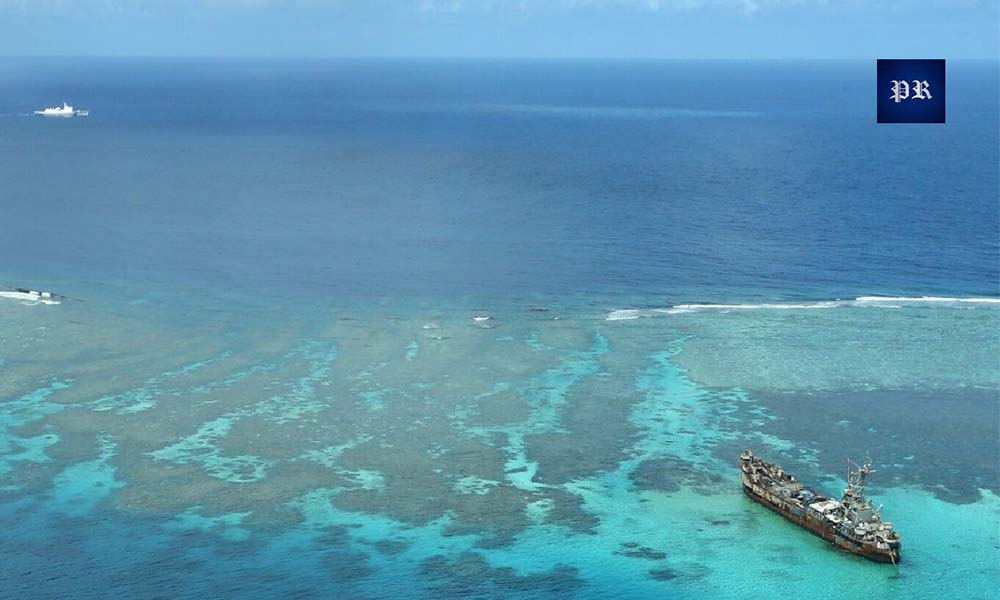
The fourth location added in 2023 is in Balabac, in southern Palawan, bringing the EDCA network closer to the Philippines’ western maritime approaches. This area is strategically relevant because of its proximity to the South China Sea and the wider region around the Spratly Islands, where territorial and maritime claims overlap. For the Philippines, the ability to monitor, supply, and support forces across these waters is an important part of protecting national interests. Infrastructure in Palawan could improve the movement of personnel and supplies, maintenance, coordination, and support for maritime operations.
This matters in an archipelago where distance between islands can complicate logistics. Additional support points may give Philippine forces more options and make it easier to sustain activity across different regions. Still, a strategically located facility does not automatically create naval superiority or resolve maritime disputes. Its usefulness depends on infrastructure, available equipment, trained personnel, secure communications, and the ability to deliver supplies when needed. Balabac’s location also makes regional communication important, including with neighboring countries such as Malaysia. Manila’s challenge is to develop practical defense capacity while explaining the purpose of the infrastructure and avoiding unnecessary misunderstandings. Together, northern Luzon and southern Palawan give the network broader geographic reach, but the value of that reach depends on readiness rather than location alone.
The Nine EDCA Locations: A Network or Nine Separate Projects?
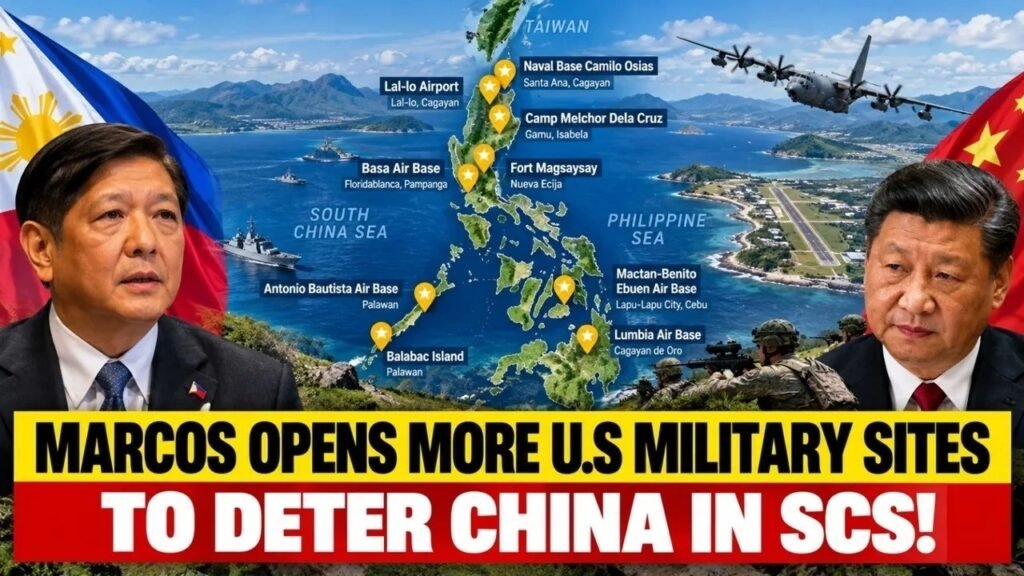
The five original EDCA locations are Basa Air Base in Pampanga, Fort Magsaysay in Nueva Ecija, Antonio Bautista Air Base in Palawan, Mactan-Benito Ebuen Air Base in Cebu, and Lumbia Air Base in Cagayan de Oro. The four locations added in 2023 are Naval Base Camilo Osias, Lal-lo Airport, Camp Melchor Dela Cruz, and Balabac. Together, they distribute access across northern Luzon, central parts of the country, Mindanao, and Palawan. The intended advantage is not simply the number of locations. A network can offer flexibility, backup options, and support across a wide geographic area—but only if the sites can connect and function effectively. An air base, an airport, a naval facility, and an army installation serve different purposes. One cannot automatically replace another, and each location’s contribution depends on the infrastructure and activities it can realistically support.
U.S. Activates Guam Missile Defense near Philippines as China’s Threat Grows
For example, a facility may have upgraded buildings or a runway but still lack sufficient storage, maintenance capacity, transport connections, or equipment. Communications and coordination also matter. If supplies cannot be moved reliably between locations, geographic distribution may provide less resilience than expected. A backup site is valuable only when it is ready and capable of performing the task required of it. For this reason, nine designated EDCA locations should not be treated as nine fully operational military hubs. The 2023 expansion created the potential for greater flexibility. Turning that potential into a functioning network requires sustained investment, planning, maintenance, and cooperation between the two governments.
Why China Objects to Expanded U.S. Access
Manila describes EDCA as a way to strengthen Philippine defense and improve cooperation with a treaty ally. Washington gains more options for working with the Philippines in a strategically important part of the Indo-Pacific. Beijing views the arrangement differently, particularly because the added locations are relevant to Taiwan and the South China Sea. China has objected to the expansion of U.S. military access in the Philippines. This difference in interpretation reflects what security analysts call a security dilemma. One government may take steps it considers defensive, while another sees those steps as potentially threatening. The second government may respond by strengthening its own military posture, which then reinforces the first government’s belief that more security measures are needed. The cycle can increase tension even when neither side says it wants conflict.
That does not make conflict inevitable, nor should every Chinese military or diplomatic action automatically be attributed to EDCA. It does mean that the placement of infrastructure can have consequences beyond the facilities themselves. If tensions around Taiwan and the South China Sea rose at the same time, the strategic relevance of the Philippines could increase, creating both opportunities for cooperation and difficult choices for Manila. The Philippine government’s task is to make defense decisions based on national interests, communicate the purpose of cooperation clearly, and retain control over decisions involving Philippine territory. The objective should not be simply to expand the American presence. It should be to improve the Philippines’ ability to protect its people and interests while managing the risks of strategic competition.
The Implementation Gap: Are the Sites Ready in 2026?
The implementation of EDCA has become a key test of the expansion. In April 2026, Philippine Defense Secretary Gilberto Teodoro raised concerns about slow project execution and unresolved land-tenure issues, saying that U.S. use of the sites had been marginal and noting that some locations lacked an air force presence. His comments highlighted a basic problem: a location cannot provide the intended strategic flexibility if the infrastructure or arrangements needed to use it remain incomplete. Land questions can delay construction or complicate access. Projects may also progress at different speeds, and the needs of each site vary. A facility’s appearance on an official list does not establish that it is ready to support every intended activity. The relevant questions include whether construction is complete, equipment is available, logistics are reliable, and personnel can use the site effectively.
On August 13, 2026, U.S. Under Secretary of War for Policy Elbridge Colby said substantial progress had been made in developing EDCA locations over the previous 18 months and expressed confidence that work would continue. These comments need not directly contradict Teodoro’s concerns. Construction may be advancing while land, staffing, or operational issues remain unresolved at particular sites. Progress on infrastructure is meaningful, but it is not the same as full readiness. The best way to judge the network is to look for practical evidence: completed projects, resolved land issues, reliable communications and supplies, appropriate equipment, effective joint exercises, and improved support for Philippine defense and disaster response. This implementation gap is not a minor administrative detail. It separates the strategic potential announced in 2023 from the capability that can actually be used.
Philippine Sovereignty and the Impact on Local Communities
EDCA is often discussed through maps and military strategy, but the locations also exist within Philippine communities. Decisions about land, construction, security, and infrastructure can affect residents directly. When the four additional locations were announced in 2023, concerns were raised about the possibility that the Philippines could be drawn into a conflict between the United States and China, particularly over Taiwan. Infrastructure investment may also bring potential local benefits. Transport links, power systems, warehouses, and facilities useful during emergencies can support disaster response and may create economic activity through construction and related work. But these possible benefits do not remove questions about land use, environmental effects, community consultation, or the risks associated with hosting military-related facilities. Support for local development does not necessarily mean unconditional support for every possible military use.
Sovereignty is more than a legal principle. It also depends on how the Philippine government makes decisions, communicates with affected communities, and ensures that cooperation serves national priorities. Manila needs to maintain meaningful authority under the relevant agreements and consider whether the benefits of particular projects justify their costs and risks. Local concerns can also affect implementation. Land disputes or opposition may delay projects, while a lack of clear communication can undermine public trust. A sustainable defense arrangement must therefore be workable not only for military planners but also within the country that hosts it. The central question is how cooperation can strengthen national security while respecting Philippine decision-making and the interests of communities near the sites.
Three Possible Futures for the EDCA Network
One possible outcome is credible deterrence. Infrastructure becomes more usable, logistics improve, and cooperation contributes to Philippine military modernization. The country gains more options for moving personnel and equipment, conducting exercises, supporting maritime activity, and responding to natural disasters. In this scenario, U.S. access adds flexibility while Philippine capabilities also grow. A second possibility is limited operational value. The locations remain geographically well distributed, but delays, incomplete facilities, or inadequate support prevent them from delivering their intended benefits. Cooperation continues, yet the difference between the network on paper and the network in practice remains significant. This outcome would show why site numbers alone are a poor measure of defense effectiveness.
A third possibility is that the sites become more useful while strategic competition also intensifies. The Philippines gains additional options, but Beijing becomes more concerned about the regional military balance and responds with diplomatic pressure, military signaling, or other measures. This is not a prediction that any one response will occur; it is a reminder that improved deterrence and heightened tension can exist at the same time. These outcomes are not mutually exclusive. The network could improve Philippine readiness and still increase the country’s strategic exposure. That is why EDCA should be considered alongside broader national investments in maritime awareness, naval and coast guard capabilities, air defense, logistics, and the ability to sustain operations. Cooperation with an ally can help, but it cannot replace Philippine capacity or sound planning. The ultimate measure of success is whether the country becomes better able to defend its interests and make sovereign decisions.
What Comes Next: Making the Nine Locations Work
By 2026, the central challenge had shifted from announcing more locations to making the existing network useful. On August 31, Philippine Ambassador to Washington Jose Manuel Romualdez said Manila and Washington should complete work at the nine existing sites before seriously considering further expansion. Additional locations, he indicated, remained a distant prospect. That position reflects the practical demands of developing and maintaining facilities across a geographically dispersed country. Teodoro’s April concerns about delays and land tenure, alongside Colby’s August assessment of progress, point to the need for transparent, site-by-site evaluation. The next phase should be judged by completed infrastructure, resolved access issues, functioning logistics, available equipment, effective exercises, and demonstrable improvements in Philippine defense and disaster response. Public statements about progress are useful, but observable results are more important.
Adding more locations would bring additional costs for construction, maintenance, personnel, equipment, and transport. If the existing sites are not ready, expansion could spread resources too thinly. A smaller number of genuinely usable facilities may provide more value than a larger network with significant gaps. Marcos’s strategy was based on the idea that geography could create flexibility. The four additions expanded the agreed EDCA network from five sites to nine, connecting areas relevant to Taiwan and the South China Sea. But geography is only the starting point. The final result depends on the condition of the facilities, the connections between them, the strength of Philippine forces, and the decisions made by both governments. The real test is whether the network helps the Philippines protect its territory, respond to emergencies, and resist coercion while retaining control over its own security choices.
Conclusion: The Real Test Is Capability, Not the Number of Sites
The expansion of EDCA gave the Philippines and the United States a wider framework for defense cooperation across strategically important parts of the archipelago. Northern Luzon offers geographic relevance to the approaches around Taiwan, while Palawan is important to the country’s western maritime outlook. The nine-location network may improve logistics, training, disaster response, and support for Philippine forces, but those benefits are not automatic. The questions that matter now are practical: Are projects complete? Are land issues resolved? Can equipment and supplies move reliably? Do Philippine forces have the capabilities to make use of the infrastructure? And can cooperation strengthen deterrence without undermining public trust or limiting Manila’s sovereign choices? The answers will determine whether the expansion becomes a meaningful improvement in national resilience or remains a strategy with unrealized potential. Nine locations later, the decisive question is no longer where the sites appear on a map. It is whether they can help the Philippines defend its interests when pressure comes from several directions at once.
About Indo-Pacific Report
For more geopolitical analysis, strategy coverage, and Indo-Pacific security reporting, visit Indo-Pacific Report:
Website
Facebook
YouTube
US Is Spreading Military Access Across the Philippines to Deter China