Philippines Deploys BRAHMOS Missiles in LUZON to Deter China!
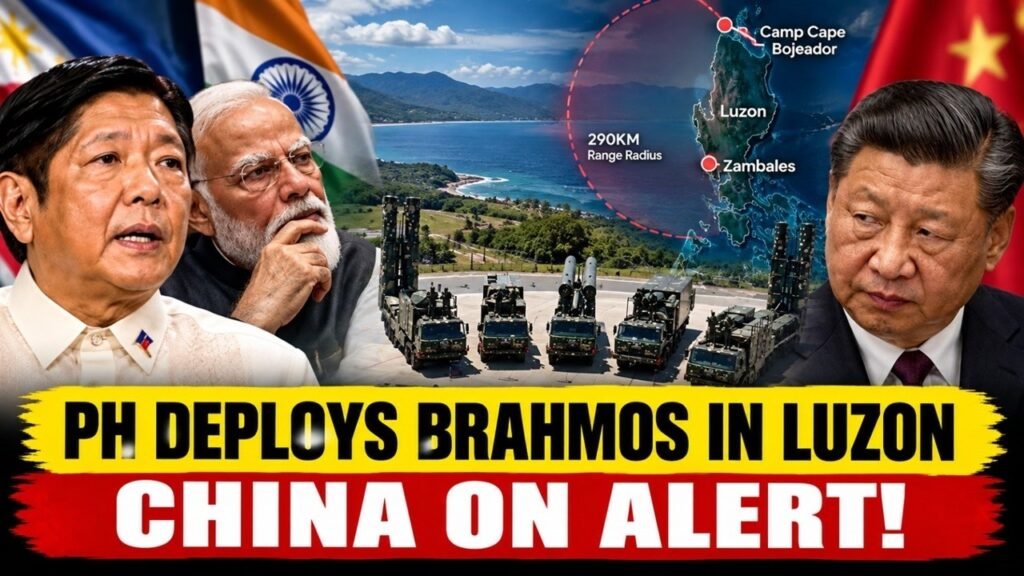
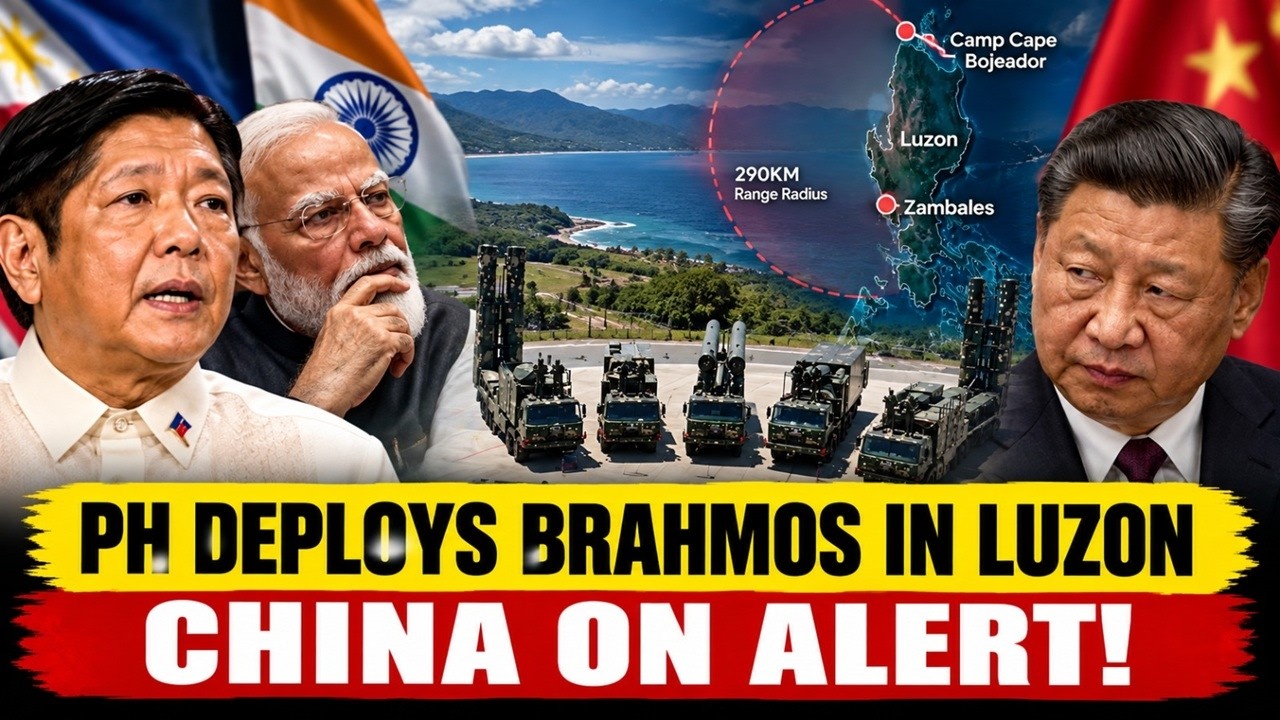
The Philippines is moving into a new phase of its coastal-defense modernization with the development of a BrahMos missile facility in Western Luzon. The development is significant not simply because Manila now possesses a modern land-based anti-ship missile, but because the Philippines is building an operational system around it. The Philippine Marine Corps and its Coastal Defense Regiment are developing the personnel, training, command procedures, surveillance capabilities and logistical support required to turn BrahMos from a newly acquired weapon into a usable military capability.
The location of the facility makes the development even more important. Western Luzon faces the South China Sea and sits relatively close to maritime areas that have become increasingly important in the Philippines-China dispute. Zambales is also geographically positioned toward waters associated with the long-running tensions surrounding Scarborough Shoal. The presence of a Philippine coastal-defense capability in this part of Luzon does not change the legal or political status of disputed maritime features, nor does it give Manila automatic control over surrounding waters. What it does provide is another military option that could influence how surface vessels operate near Philippine territory during a serious crisis. The development should therefore be understood as part of a broader Philippine strategy. Manila does not have the resources to compete with China ship for ship, and attempting to replicate China’s naval force would require enormous financial and technological resources. Instead, the Philippines is increasingly looking toward a combination of coastal missiles, drones, radar, aircraft, naval forces, mobile units and military partnerships. The objective is to use Philippine geography as part of the country’s defense architecture.
Why Western Luzon Is So Important to the Philippines
Western Luzon has become strategically important because of its position along the South China Sea. The western coastline of Luzon provides the Philippines with access to maritime approaches that are central to the country’s economic, security and territorial interests. It also places Philippine military facilities relatively close to areas where Chinese coast guard and other maritime forces have operated for years. This geography gives the BrahMos deployment a significance that goes beyond the missile itself. A land-based anti-ship missile does not need to be carried into contested waters by a warship. Instead, the launch system can operate from Philippine territory while potentially threatening surface vessels operating within its effective engagement area. The exact usefulness of such a system depends on many factors, including detection, identification, targeting information, command decisions, weather, electronic conditions and the ability of the missile unit to survive an attack.
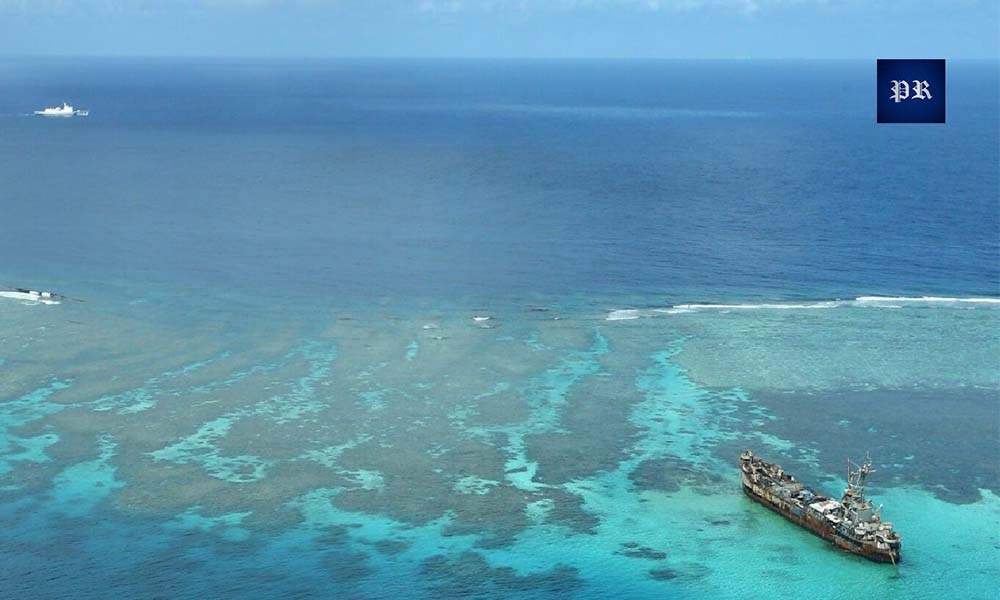
That distinction is important because the Philippines is not trying to establish permanent control over every part of the South China Sea. Its more realistic objective is to create defensive capabilities that make certain approaches more difficult for a potential adversary to use freely. This is the basic idea behind sea denial. A smaller military does not necessarily need to dominate the ocean in order to make maritime operations more complicated and costly for a stronger force. The Zambales location is especially relevant because of its relationship to the maritime approaches west of Luzon. Scarborough Shoal has remained one of the most sensitive points in the Philippines-China maritime relationship, and Chinese maritime vessels have maintained a significant presence around the feature. A Philippine coastal missile capability does not mean that Manila can simply use BrahMos against vessels operating around the shoal. Any real-world employment would depend on political decisions, rules of engagement, identification procedures and the wider circumstances of a crisis. Nevertheless, the existence of the capability adds another factor to military planning.
Philippines Maps Thitu Island in the South China Sea — China Is Watching
From Naval Disadvantage to Geographic Advantage
China has a much larger military force than the Philippines, particularly in naval and air capabilities. The People’s Liberation Army Navy operates a large and increasingly modern fleet, while China also possesses extensive surveillance, aviation, missile and logistical infrastructure. The Philippines cannot realistically close this gap simply by purchasing more conventional warships. This is where geography becomes important. The Philippines is an archipelago with thousands of islands and a long coastline. That creates serious logistical challenges, but it also provides multiple locations from which defensive systems can operate. Land-based missile batteries can potentially be dispersed across different areas, while drones and radar systems can provide surveillance over surrounding waters.
A coastal missile force can therefore act as a force multiplier. A missile launcher positioned on Philippine territory does not have to expose itself by sailing into contested waters. It can remain on land and potentially receive targeting information from other military assets. If the system is mobile, it can also change positions, making it more difficult for an opponent to treat it as a fixed target. However, geography alone does not create an effective missile force. The Philippines needs a functioning network connecting sensors, commanders and launchers. A missile battery that cannot locate a target is of limited use against moving ships. A radar that detects a vessel but cannot pass accurate information to the missile unit is equally limited. The real military challenge is therefore to create a complete system rather than simply deploy launchers.
The Real Breakthrough Is the Philippine Coastal Kill Chain
One of the most important developments surrounding Philippine BrahMos operations is the growing focus on the maritime kill chain. The term describes the series of actions required to detect a target, identify it, locate it accurately, maintain a track and eventually provide the information needed for a weapon engagement. For a coastal-defense force, this process is extremely important. A ship at sea is constantly moving, and its location can change significantly between initial detection and the moment a weapon is ready for launch. Philippine forces therefore need reliable surveillance and communications systems capable of maintaining an updated picture of maritime activity.
Recent U.S.-Philippine training has highlighted this requirement. During exercises in Northern Luzon, American and Philippine Marines practiced procedures involving drones, maritime targeting and ground-based anti-ship missile operations against simulated targets. The significance of such training is that it focuses attention on the entire process rather than treating BrahMos as an isolated weapon. A missile can be extremely capable on paper, but its effectiveness in a real conflict depends heavily on the information available to the crew operating it. The Philippines therefore needs to continue improving its ability to connect drones, radar, command-and-control systems and missile batteries. This is also where international military cooperation becomes relevant. Exercises with the United States and other partners give Philippine forces opportunities to practice communications, coordination and operational procedures. However, training exercises should not automatically be interpreted as proof that all allied systems would be fully integrated into a single wartime targeting network. Actual intelligence-sharing arrangements and operational decisions would depend on the circumstances of a real crisis.
Why Drones and Radar Could Matter as Much as BrahMos
The most visible part of the Philippine coastal-defense system is the BrahMos launcher, but the less visible sensors may ultimately determine how useful the missile becomes. Drones can provide information about maritime activity, while radar systems can help detect and track vessels over the surrounding sea. The Philippine military therefore needs to develop what can be described as a maritime awareness network. The purpose is to understand what is happening in nearby waters before commanders have to make decisions. This requires not only sensors but also trained personnel who can interpret information and distinguish between different types of vessels.
The challenge becomes greater in a crowded maritime environment such as the South China Sea. Fishing vessels, commercial ships, coast guard vessels, naval ships and other craft can operate within the same general area. A coastal-defense force cannot simply assume that every detected vessel is a military target. Identification and decision-making are essential parts of responsible military operations. This is why the training of the Coastal Defense Regiment matters. Manila is not merely acquiring missiles; it is learning how to operate them within a broader command structure. Over time, the effectiveness of this system will depend on how well personnel can combine surveillance, communications, mobility and missile operations.
From a $375 Million Purchase to an Operational Missile Force
The Philippines signed a roughly $375 million agreement with India for three BrahMos missile batteries. The acquisition represented an important milestone in Philippine military modernization because it introduced a dedicated land-based anti-ship missile capability into the Armed Forces of the Philippines. The first BrahMos deliveries arrived in the Philippines in 2024, and the country became the first foreign operator of the system. The acquisition also strengthened defense cooperation between India and the Philippines, giving New Delhi an important defense relationship in Southeast Asia.
But purchasing a missile system and operating it effectively are two different things. A military needs trained personnel, maintenance facilities, spare parts, communications equipment, logistics, transport, command procedures and regular exercises. Crews must understand not only how to launch the missile but also how to operate the entire battery under difficult conditions. The Western Luzon facility is important in this context because it represents the development of permanent infrastructure around the system. The Philippine Marine Corps is moving toward a situation in which BrahMos is not simply a newly delivered weapon but part of an organized coastal-defense force. This transition can take years. Operational readiness is built through repetition, maintenance and experience. Philippine personnel need to learn how to move the system, establish positions, maintain communications, coordinate with other military units and respond to changing maritime conditions.
Why BrahMos Creates a New Calculation for China
The arrival of Philippine BrahMos missiles does not eliminate China’s military advantage. China’s navy remains far larger, and Beijing has extensive air, missile, surveillance and logistical capabilities that the Philippines cannot match. The significance of BrahMos is therefore not that it suddenly changes the balance of power. Instead, it introduces another variable into Chinese military planning. A surface force operating near Philippine territory would potentially have to consider the presence of land-based anti-ship missiles and the surveillance network supporting them. This can create uncertainty. An adversary may not always know exactly where a mobile launcher is positioned, what Philippine sensors can see or how quickly targeting information can be processed. Even without a missile being fired, those uncertainties can affect planning.
Military deterrence often works partly through uncertainty. A weapon does not necessarily have to be used to have an effect. If an opponent believes that operating in a particular area carries additional risks, it may need to allocate more resources to surveillance, defense and planning. That does not mean BrahMos automatically deters Chinese vessels from operating in the South China Sea. Chinese maritime activity is influenced by many political and military factors. The more measured conclusion is that the Philippine system adds another capability that Chinese planners must consider.
Mobility and Multiple Salvos Are Important
The mobility of coastal missile launchers is one of the most important aspects of the Philippine strategy. A fixed launcher is easier to identify and potentially target than a system that can move between prepared or temporary positions. Mobility, however, is not simply about driving a launcher from one location to another. A real mobile missile force requires suitable roads, transport support, communications, fuel, maintenance and trained personnel. The unit must also be capable of moving without losing its connection to the wider command network.
Reload capability can also influence the sustainability of the system. A battery that can conduct more than one engagement cycle has different operational characteristics from a force designed only for a single salvo. Yet actual sustained operations would depend on logistics, available missiles, security conditions and the ability of the unit to survive after its initial engagement. The Philippines therefore has to think about BrahMos as a complete force rather than a collection of launch vehicles. Mobility, concealment, communications and logistics all contribute to whether the missile force remains useful during a prolonged crisis.
Northern Luzon Expands the Strategic Picture
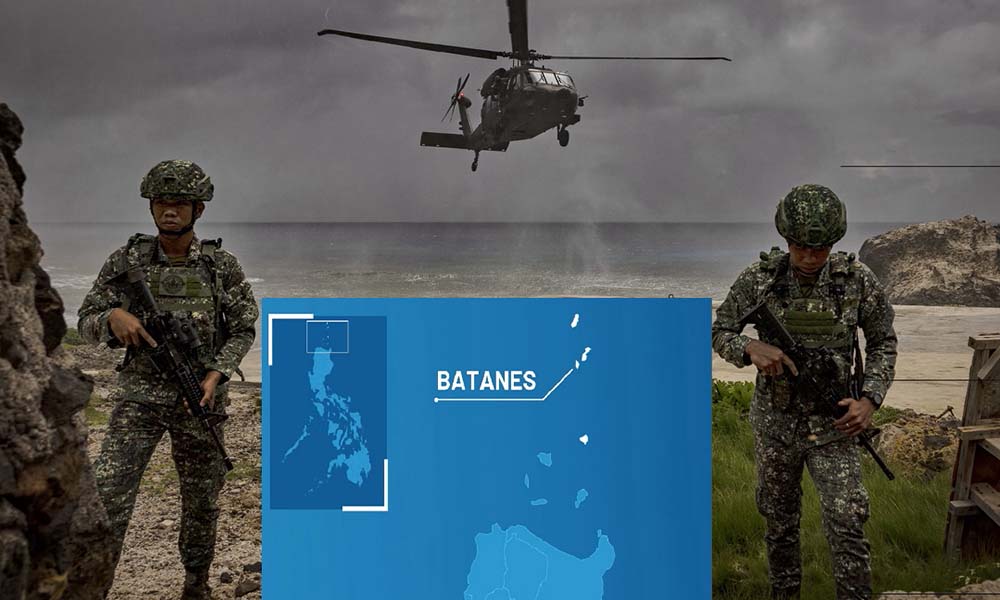
Western Luzon is only one part of the Philippine coastal-defense development. Northern Luzon has also become increasingly important because of its proximity to the Luzon Strait. In March 2026, the Philippine Marine Corps activated the 273rd Marine Company at Camp Cape Bojeador in Northern Luzon. The development expanded the organizational presence of the Coastal Defense Regiment toward the northern maritime approaches. It is important not to overstate this development. The activation of a coastal-defense unit does not by itself mean that a complete BrahMos battery is permanently deployed at that location. What it demonstrates is that Manila is expanding the organizational structure needed for coastal defense in another strategically important area.
The geography of Northern Luzon is different from that of Western Luzon. Western Luzon looks toward the South China Sea, while Northern Luzon sits near the Luzon Strait and the waters leading toward the Philippine Sea. The strait has major regional significance because of its location between the Philippines and Taiwan and its connection between important maritime areas. This gives the Philippine military another reason to develop a distributed defense structure. A force that operates from multiple locations can potentially monitor different maritime approaches and avoid relying on a single defensive position.
The Philippines occupies an important geographical position within the First Island Chain, a broad arc of islands extending from Japan through Taiwan and the Philippines. Northern Luzon is particularly significant because it sits close to Taiwan and the Luzon Strait. For Philippine defense planners, this geography has immediate national-defense implications. The country needs to protect its northern approaches regardless of wider regional events. At the same time, developments in the Luzon Strait can have consequences for the broader security environment of the western Pacific. It would be premature, however, to assume that Philippine coastal-defense forces are being developed primarily for a possible Taiwan conflict. The Philippines has its own national interests, territorial concerns and defense priorities. Any role Philippine forces might play during a Taiwan-related crisis would depend on political decisions and circumstances at the time.
The Philippines Is Building a Distributed Defense Strategy
The development of BrahMos should be viewed as part of a wider shift toward distributed defense. Instead of placing all defensive power in a few major bases or relying almost entirely on naval vessels, the Philippines is developing a mixture of mobile and geographically dispersed capabilities. This approach makes sense for an archipelagic country. Philippine forces can potentially use different islands and coastal areas for surveillance, logistics and defense. Drones can monitor maritime activity, radar can support detection, aircraft can provide additional information, naval vessels can contribute maritime presence and coastal missiles can provide a land-based strike option.
The purpose is not to make every military unit capable of doing everything. Instead, the objective is to make different units support each other. A drone can help identify a vessel. A radar can provide additional tracking information. Commanders can combine information from different sources before deciding what action is appropriate. This type of network becomes more valuable when military forces are geographically separated. It also creates additional challenges for an adversary attempting to locate and neutralize the entire defensive system.
The basic strategic reality is that China has significantly greater military resources than the Philippines. Manila cannot realistically build a fleet that mirrors China’s navy in size or capability. The Philippine approach is therefore based partly on asymmetry. Land-based missiles can threaten surface vessels without requiring Philippine warships to remain directly exposed. Drones and radar can improve maritime awareness without requiring large numbers of expensive ships. Mobile units can provide flexibility without permanently concentrating forces in one location. This does not mean the Philippines no longer needs a navy or air force. In fact, coastal missiles work best when connected to those other capabilities. Naval vessels, aircraft and land-based forces can contribute different forms of surveillance and defense. The broader objective is to make Philippine territory itself part of the country’s maritime defense system. In this approach, the coastline is not simply the place from which the military operates. It becomes an active component of national defense.
Scarborough Shoal Remains Central to the Story
Scarborough Shoal is one of the most important geographic points in understanding why Western Luzon matters. The feature has been at the center of repeated tensions between Manila and Beijing, and Chinese maritime forces have maintained a presence around the surrounding waters. The proximity of Zambales to the South China Sea means that the Philippine coastal-defense network is being developed in a strategically relevant direction. But it is important to distinguish military capability from political action. The presence of BrahMos does not mean the Philippines intends to use it against Chinese vessels around Scarborough Shoal. Any decision to employ a missile would involve major political and military considerations. The identification of a target, the circumstances of an incident, the rules of engagement and the potential consequences would all matter. What BrahMos does provide is another layer of defense. It means that the Philippine military has a land-based capability that can potentially contribute to maritime deterrence without relying exclusively on ships.
The timing reflects several developments occurring at the same time. The Philippines is modernizing its armed forces, maritime tensions remain significant, the Coastal Defense Regiment is expanding, and Manila’s security cooperation with the United States and Japan is becoming more active. The completion of the Western Luzon facility shows that the Philippines is moving beyond procurement and toward operational integration. That is a major step because the military value of a weapon depends on the system surrounding it. The Zambales facility also reflects Manila’s understanding of its own geography. The country does not need to dominate the South China Sea to strengthen its defense. It can instead attempt to make approaches near Philippine territory more difficult for a potential adversary to exploit. That is the central logic behind the BrahMos deployment.
About Indo-Pacific Report
For more geopolitical analysis, strategy coverage, and Indo-Pacific security reporting, visit Indo-Pacific Report:
Website
Facebook
YouTube
Philippines Deploys BRAHMOS Missiles in LUZON to Deter China!