France Joins the Philippines’ Luzon Corridor China Is Watching!
France’s entry into the Luzon Economic Corridor is becoming an important development in the Philippines’ wider economic and industrial strategy. At first glance, the French contribution may appear to be mainly about infrastructure because France is supporting the financing of 100 bridges through official development assistance. But the story becomes more significant when this infrastructure support is viewed alongside French investment in the aeronautics sector.
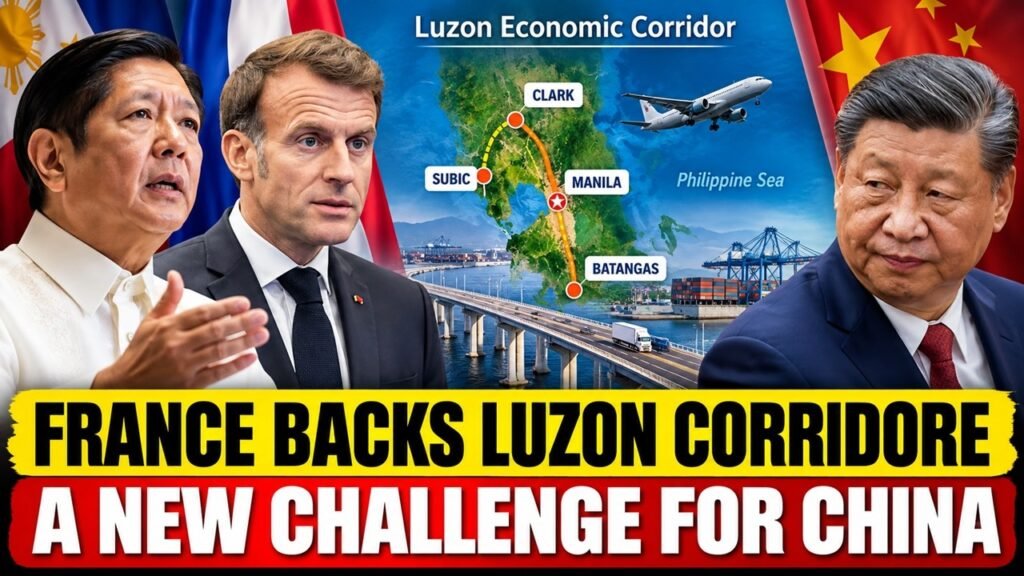
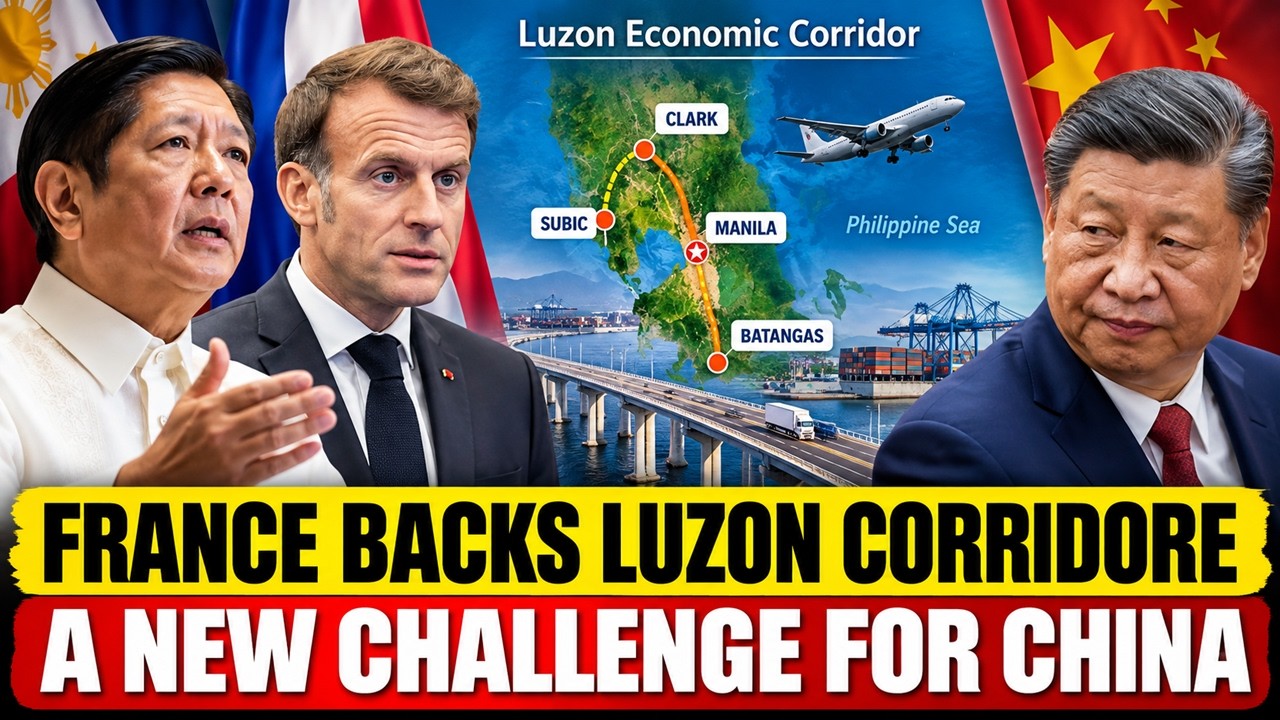
One part of the French contribution is focused on improving how people and goods move, while the other is connected to the development of higher-value industrial capacity. Together, these two areas reveal the direction in which the Philippines wants its economy to move. The Luzon Economic Corridor was launched in 2024 through cooperation among the Philippines, the United States and Japan. Its core geography connects four of Luzon’s most important economic areas: Subic Bay, Clark, Metro Manila and Batangas. Since its creation, the initiative has expanded rapidly. Australia, Canada, Denmark, France, Italy, South Korea, Sweden and the United Kingdom joined the partnership in May 2026. In September 2026, the European Union and Spain also joined, bringing the wider partnership to 13 members. This expansion shows that the corridor is no longer simply a three-country infrastructure initiative. It is increasingly becoming a broad international platform for infrastructure, investment, manufacturing, logistics, energy and technology. For Manila, the objective is much bigger than constructing individual bridges or improving individual transport routes. The larger goal is to create an economic network in which transport, energy, digital infrastructure, logistics and advanced manufacturing reinforce each other. This is why France’s involvement deserves particular attention. The combination of bridges and aeronautics reflects two essential parts of economic development: connectivity and production.
What Is the Luzon Economic Corridor?
The Luzon Economic Corridor is a major infrastructure and economic development initiative designed to connect Subic Bay, Clark, Metro Manila and Batangas more efficiently. These four locations already have important economic functions, but their potential can increase significantly when they operate as part of a connected regional network. Instead of treating each location as a separate economic center, the corridor seeks to improve the links between them so that businesses, workers, goods, investment and technology can move more efficiently. Subic Bay has long been important because of its port, industrial facilities and strategic location. Clark has become increasingly important for aviation, logistics, technology, tourism and industrial development. Metro Manila remains the Philippines’ primary financial and commercial center, with a huge concentration of companies, services, consumers and workers. Batangas has major manufacturing, energy and port facilities and plays an important role in Philippine trade. Each location has different strengths, and the corridor aims to make those strengths more complementary. The economic logic is relatively simple. A factory becomes more competitive when its raw materials can arrive quickly and its finished products can reach ports or airports without unpredictable delays. A port becomes more valuable when factories and warehouses can reach it efficiently. An airport becomes more commercially useful when it is connected to industrial areas and logistics networks. A manufacturing zone becomes more attractive when electricity, roads, digital infrastructure and skilled workers are available nearby. This means that the Luzon Economic Corridor is not simply a road-building program. It is an attempt to improve the economic connections between some of the Philippines’ most important commercial and industrial locations. If those connections become faster, more reliable and less expensive, the entire Luzon region could become more attractive to investors.
Why France’s 100 Bridges Matter to the Philippine Economy
The headline figure of 100 bridges immediately attracts attention, but the real importance of France’s contribution is not simply the number of bridges. The larger issue is connectivity. Every missing link in a transport network can create delays, increase costs and reduce the economic value of surrounding infrastructure. Bridges can remove some of those physical barriers and make road networks more efficient. For businesses, transport reliability is extremely important. A company planning a manufacturing operation needs to know how quickly components can move between suppliers, factories, warehouses, ports and airports. If transportation is unpredictable, businesses may need larger inventories, additional storage facilities or alternative routes. All of these factors increase operating costs. Better bridge infrastructure can help reduce these problems by improving the continuity of road networks. When bridges connect previously difficult or inefficient routes, transportation can become more predictable. That can benefit manufacturers, logistics companies, agricultural producers, retailers and consumers. The economic effect can become even greater when several infrastructure improvements work together. A bridge by itself does not create a manufacturing industry. However, a bridge that connects an industrial area to a major highway, logistics center, airport or port can increase the usefulness of the entire network. That is why France’s bridge financing should be viewed within the wider Luzon Economic Corridor rather than as an isolated infrastructure commitment. The Philippines has faced infrastructure and connectivity challenges for years, particularly as its economy and urban population have expanded. Congestion, long transport times and uneven infrastructure can make it more difficult for businesses to operate efficiently. Improving connectivity around Subic, Clark, Manila and Batangas could therefore have an important effect on the competitiveness of the wider Luzon region.
France Is Also Bringing Aeronautics Investment to the Philippines
The second major part of France’s involvement is potentially even more significant from an industrial-development perspective. France is supporting industrial capacity building through foreign direct investment in the aeronautics sector. This introduces a completely different dimension to the corridor because aeronautics is a high-value and technically demanding industry. Aeronautics requires engineering expertise, precision manufacturing, quality control, specialized maintenance, advanced technical training and reliable supply chains. Developing these capabilities can help a country move toward more sophisticated forms of manufacturing. The Philippines already has experience in electronics, manufacturing and business services, but the country is competing with other Asian economies for higher-value investment. Investors increasingly look for locations that offer not only competitive costs but also skilled workers, reliable infrastructure, efficient logistics, strong digital connectivity and access to international markets. An aeronautics investment can contribute to this process by creating opportunities for engineers, technicians, maintenance professionals and specialized manufacturers. It can also encourage the development of domestic suppliers that can eventually provide components, services and technical support to international companies. It would be unrealistic to suggest that one French investment will immediately transform the Philippines into a major global aerospace center. Industrial development normally happens gradually. The more realistic opportunity is that projects in the aeronautics sector can help develop skills, supplier networks and technical standards that support broader industrial upgrading. This is where the relationship between French infrastructure support and aeronautics investment becomes particularly interesting. The bridges help improve movement across the economic corridor, while advanced industrial investment creates economic activity that benefits from those connections.
Subic Bay, Clark, Manila and Batangas Form the Economic Backbone
The four locations at the center of the Luzon Economic Corridor are important precisely because they are different from one another. Their economic strengths can complement each other if transportation and infrastructure connections are improved. Subic Bay is a major maritime and industrial gateway. Its port infrastructure gives businesses access to international shipping, while its surrounding economic zones provide opportunities for industrial activity. Improved connections between Subic and the rest of the corridor can increase its usefulness to manufacturers and logistics companies. Clark has developed rapidly as a major aviation and logistics center. Its international airport, industrial zones and growing business environment make it an important part of the corridor. Clark can potentially serve as a bridge between manufacturing, aviation, logistics and technology. Metro Manila remains the economic heart of the Philippines. It is home to the country’s major banks, corporations, financial institutions, professional services companies and consumer markets. However, congestion and high operating costs create challenges. Stronger connections between Metro Manila and surrounding economic centers can help distribute economic activity more efficiently. Batangas is another important industrial and logistics location. It has manufacturing facilities, energy infrastructure, port facilities and access to international trade. Better connections between Batangas and the other three economic centers could allow companies to use the strengths of the wider corridor instead of operating within a single location. The larger idea is that these places can function as one economic system. A company may have a factory in Batangas, suppliers near Manila, logistics operations around Clark and export activity through Subic. The more efficient those connections become, the more attractive the entire corridor can become for investment.
Why the European Union and Spain Matter
The international expansion of the Luzon Economic Corridor is one of the most important developments surrounding the project. The initiative began with the Philippines, the United States and Japan, but it has since attracted a much broader group of international partners. Australia, Canada, Denmark, France, Italy, South Korea, Sweden and the United Kingdom joined in May 2026. The European Union and Spain followed in September 2026. This brought the partnership to 13 members and significantly expanded the range of expertise and investment possibilities connected to the corridor. The importance of this expansion goes beyond diplomacy. Different countries have different industrial strengths, financial capabilities and areas of technical expertise. Denmark brings experience relevant to shipbuilding and green maritime development. Italy has interests in transport, manufacturing and semiconductors. South Korea brings major capabilities in technology, digital infrastructure, transportation and advanced manufacturing. Sweden is associated with feasibility work around freight railway development, while the United Kingdom can contribute technical assistance, export finance and investment expertise. This diversity can benefit the Philippines because the country does not need to depend on one international partner for every part of its development strategy. Instead, different partners can contribute to different sectors. The challenge, however, is coordination. Having many partners can create opportunities, but it can also make projects more complicated. The Philippines will need to ensure that infrastructure investments are connected with industrial projects and that different initiatives support a common economic strategy.
The entry of the European Union and Spain adds another important dimension to the Luzon Economic Corridor. The European Union is aligning its Global Gateway initiative with priorities connected to the corridor, including green energy, energy efficiency, digital connectivity, innovation and skills development. The EU’s involvement is important because modern economic corridors require more than roads and bridges. Manufacturing increasingly depends on reliable electricity, secure digital networks, data systems, clean energy and technically skilled workers. Green and digital infrastructure can therefore directly affect industrial competitiveness. Spain also brings expertise relevant to the corridor, including railways, aviation, shipbuilding, modular infrastructure, air navigation and renewable-energy connectivity. These capabilities fit closely with the sectors that the Philippines is trying to develop. The European involvement also changes the broader economic significance of the corridor. The Philippines is becoming a more important destination for international companies looking to diversify supply chains and establish stronger positions in Southeast Asia. European engagement can give Philippine projects access to additional companies, technology, financing and industrial networks.
The Corridor Is Becoming an Economic Platform
The most important change may be that the Luzon Economic Corridor is beginning to look less like one infrastructure project and more like an economic platform. Consider the economic chain. Better roads and bridges can reduce transportation costs. Better transport can make factories more attractive to investors. New factories can create demand for local suppliers. Local suppliers can create more jobs and technical skills. Skilled workers can make the region more attractive to additional investors. More investment can then create demand for even better infrastructure. This creates the possibility of a positive economic cycle. But the cycle is not automatic. A bridge does not create a supply chain on its own. A new railway does not automatically produce industrial growth. A modern airport does not automatically create an aviation manufacturing cluster. A foreign investor does not automatically create a strong domestic supplier network. These outcomes require coordination, reliable energy, digital connectivity, workforce development, predictable regulation and access to markets. The Philippines therefore needs to connect infrastructure planning with industrial policy. Roads and bridges should support actual economic activity. Energy projects should support factories and logistics facilities. Digital infrastructure should support modern businesses. Training programs should provide the skills that investors actually require. If those connections are successfully created, the value of the corridor could become much greater than the value of its individual projects.
The growing international interest in the Luzon Economic Corridor was highlighted by the September 2026 investment forum in Manila, where more than 600 investors, industry leaders and government officials gathered to discuss opportunities linked to the corridor. The significance of this gathering is that the project is moving beyond government-to-government cooperation. Infrastructure and industrial development ultimately depend on private companies willing to invest money, build facilities, employ workers and operate businesses for many years. The Philippine government wants international investment to bring more than financial capital. The wider objective is to attract technology, expertise, management capabilities and access to international supply chains while also developing Filipino talent and local suppliers. That approach is important because the long-term benefits of foreign investment depend heavily on how deeply it becomes connected to the domestic economy. If an international company imports almost everything it needs and operates separately from local businesses, the economic spillovers may be limited. If it trains Filipino workers, purchases from domestic suppliers and develops local technical capabilities, the impact can be much greater. This is one of the most important questions surrounding the Luzon Economic Corridor: can foreign investment help create a stronger Philippine industrial base rather than simply create isolated projects?
Philippines Pushes Its Defense Line 200 Nautical Miles Offshore — China Is Watching!
What the Corridor Could Mean for Philippine Manufacturing
The Luzon Economic Corridor could become particularly important for Philippine manufacturing. The country already has strong capabilities in electronics, semiconductors, business services and other industries, but competition across Asia is intense. Countries across the region are competing for investment from multinational companies that want reliable infrastructure, competitive costs, skilled workers and access to international markets. The Philippines therefore needs to improve several conditions simultaneously. Better transportation can reduce logistics costs. Reliable energy can improve factory operations. Digital infrastructure can support automation and modern production systems. Better airports and ports can improve access to international markets. Skills development can help companies recruit workers for increasingly technical jobs. This is where advanced manufacturing becomes especially important. Aeronautics, semiconductors and other high-value industries require a different type of economic environment from traditional manufacturing. Companies need precision, engineering capabilities, quality control and specialized suppliers. If the Philippines can build these capabilities around the Luzon corridor, the country could gradually move toward a more sophisticated role in regional supply chains. The benefits could extend beyond the companies directly involved. Workers trained in advanced industries can move into other technical sectors. Domestic suppliers that meet international standards can serve multiple multinational companies. Universities and training institutions can develop programs around new industrial requirements. That is how an individual investment can potentially contribute to a much larger industrial ecosystem.
The Biggest Challenge Is Now Execution
The Luzon Economic Corridor has already achieved something that many infrastructure initiatives struggle to achieve: it has attracted a growing group of international partners. The difficult part now is implementation. Projects must move from announcements to financing. Financing must move to construction. Construction must move to functioning infrastructure. Foreign investment must move from agreements to actual production. Training programs must produce workers with skills that employers need. This process requires strong coordination between Philippine government agencies, local governments, foreign governments, development institutions and private companies. The larger the corridor becomes, the more important this coordination will be. A railway is most valuable when it connects to roads, ports and industrial zones. A port is more valuable when manufacturers can reach it efficiently. An industrial park is more attractive when electricity and digital infrastructure are reliable. An airport becomes more useful when logistics networks connect it to production centers. The Philippines therefore has to think about the corridor as a single economic system rather than a collection of unrelated projects.
France’s role is particularly useful for understanding the wider strategy because it touches both infrastructure and industrial development. The 100 bridges address physical connectivity. Aeronautics investment addresses industrial capability. One helps move economic activity, while the other helps create higher-value economic activity. This combination fits the Philippines’ larger economic ambition very closely. Manila needs infrastructure that makes businesses more competitive, but it also needs industries that can take advantage of that infrastructure. The Philippines does not simply need more foreign capital. It needs investment that brings technology, technical knowledge, skills, international standards and supplier opportunities. It also needs domestic companies capable of participating in global value chains. If Philippine suppliers can become part of aeronautics, electronics, semiconductor, maritime and other advanced manufacturing networks, the benefits of the corridor could spread throughout the domestic economy. That is why France’s participation is more significant than a simple bridge-financing announcement. It reflects the broader direction of the Luzon Economic Corridor.
What Happens Next for the Luzon Economic Corridor?
The next phase of the Luzon Economic Corridor will be determined by implementation. The Philippines now has a large international group of partners, growing investor interest and a wide range of proposed projects. The challenge is to turn those commitments into infrastructure and industries that actually operate. That means improving transport connections between Subic, Clark, Manila and Batangas. It means strengthening ports and airports, developing freight rail, improving energy infrastructure and expanding secure digital networks. It also means creating the workforce and supplier base required by modern industries. The Philippines will also need to make sure that the benefits of the corridor are not concentrated only in large foreign companies. Filipino workers, small and medium-sized businesses, engineers, technicians and local suppliers should have opportunities to participate. If that happens, the corridor could become a platform for long-term industrial development rather than simply a collection of foreign-funded infrastructure projects.
Conclusion
France’s participation in the Luzon Economic Corridor is important because it connects two major aspects of the Philippines’ economic strategy: infrastructure and industrial development. French support for 100 bridges can help improve connectivity, while aeronautics investment can contribute to the Philippines’ push toward higher-value manufacturing capabilities. But France is only one part of a much larger international network. The Luzon Economic Corridor began with the Philippines, the United States and Japan in 2024. It expanded with eight additional partners in May 2026 and then added the European Union and Spain in September, bringing the partnership to 13 members. The sectors connected to the corridor now include transportation, railways, aviation, shipbuilding, semiconductors, energy, digital infrastructure, logistics and advanced manufacturing. The real measure of success will not be how many countries participate. It will be whether those countries’ investments create a functioning economic system. If bridges reduce bottlenecks, railways improve freight movement, ports become more efficient, energy systems support factories, digital networks support modern industries and foreign investors develop Philippine suppliers, the Luzon Economic Corridor could become one of the most important platforms for Philippine industrial development. France has entered the corridor with bridges and aeronautics. Europe is becoming more deeply involved. Hundreds of investors are now looking at opportunities around the project. The next chapter is therefore no longer mainly about who is joining. It is about what gets built, what industries emerge, how many Filipino workers gain new opportunities and whether the Philippines can turn international investment into lasting domestic economic capability. That is ultimately the real promise of the Luzon Economic Corridor: not simply connecting Subic, Clark, Manila and Batangas, but connecting infrastructure, investment, technology, industry and people into one stronger economic network.
About Indo-Pacific Report
For more geopolitical analysis, strategy coverage, and Indo-Pacific security reporting, visit Indo-Pacific Report:
Website
Facebook
YouTube