Why the Philippines & Singapore Are Quietly Preparing for China
The Philippines and Singapore have taken another step toward closer defence cooperation, but the significance of their latest meeting is less about a dramatic announcement and more about the institutions being built behind the scenes. On September 4, 2026, Philippine and Singaporean defence officials met in Singapore for the ninth Philippines-Singapore Defense Policy Dialogue. The meeting provided an opportunity for both sides to review their existing defence relationship, discuss regional and global security developments, examine upcoming bilateral engagements and consider how the two countries can continue working through ASEAN-led defence mechanisms.
At first glance, a policy dialogue between defence officials may not appear as significant as a new military agreement, major weapons purchase or joint military exercise. However, defence relationships are often developed gradually through repeated consultations, professional exchanges, training programmes, institutional contacts and agreements that allow officials and military personnel to communicate regularly. The Philippines and Singapore have already established many of these channels, meaning the September 2026 meeting should be understood as another stage in an ongoing process rather than the beginning of a completely new partnership.
What Happened at the 9th Philippines-Singapore Defense Policy Dialogue?
The ninth Philippines-Singapore Defense Policy Dialogue was held in Singapore on September 4, 2026. Philippine and Singaporean defence officials discussed ways to strengthen military collaboration and reviewed upcoming engagements between the Philippine Department of National Defense and Singapore’s Ministry of Defence. The meeting was hosted by Singapore’s Ministry of Defence Deputy Secretary for Policy, Brigadier General Frederick Choo, and co-chaired by Philippine Department of National Defense Assistant Secretary Marita I. Yoro.
The Philippine Embassy in Singapore described the Defense Policy Dialogue as a working-level mechanism for reviewing bilateral defence relations, exchanging views on regional and global security developments and establishing shared defence priorities. This makes the dialogue different from a high-level summit designed primarily to produce a major political announcement. Its purpose is to maintain communication between defence institutions and provide a structured environment in which both countries can examine their cooperation and decide where further engagement is practical.
U.S. Funds $1.4 Million Subic Bay Expansion to Counter China in SCS
This Defence Relationship Did Not Start in 2026
The September 2026 dialogue should not be viewed as the starting point of Philippines-Singapore defence cooperation. The two countries have maintained defence contacts for years, with cooperation developing through military visits, professional exchanges, education and training activities, multilateral meetings and humanitarian assistance. A major step came in July 2024, when Singapore and the Philippines signed a Memorandum of Understanding on Defense Cooperation. The agreement created a broader framework for strengthening defence engagement between the two countries. It covered areas of mutual interest including military education and training, counter-terrorism and other defence-related activities. The agreement also supported continued cooperation through ASEAN defence mechanisms such as ADMM and ADMM-Plus.
The eighth Defense Policy Dialogue was held in Bohol in July 2025. By the time officials met again in Singapore in September 2026, the relationship had therefore developed through several layers of engagement. The ninth dialogue continued this established process and provided another opportunity to assess where the partnership could go next. It is also important to understand what the 2024 memorandum does not mean. It is not a mutual-defence treaty and does not automatically require either country to fight on behalf of the other. The document provides a framework for cooperation and closer defence engagement. Keeping this distinction clear is important because describing the relationship as a formal military alliance would go beyond what the existing agreements establish.
Why Institutional Defence Cooperation Matters
Defence cooperation is often associated with fighter aircraft, warships, missiles and military exercises, but institutions and communication channels can be equally important. If two countries expect their armed forces to cooperate during a crisis, their officials need to understand each other before that crisis occurs. They need established contacts, communication procedures and a basic understanding of each other’s military structures. Regular policy dialogues help create this foundation. Defence officials can discuss developments in the region without waiting for a crisis. They can identify areas of disagreement, clarify priorities and determine which forms of cooperation are realistic. Over time, these interactions can create professional relationships between officials who may later have to communicate during an emergency.
There is also an institutional benefit for defence ministries. Regular engagement allows officials to track existing agreements and identify whether planned activities are actually being implemented. This is particularly relevant to the Philippines and Singapore because their defence cooperation framework includes longer-term engagement rather than a single event. In this sense, the ninth Defense Policy Dialogue matters because it keeps the machinery of cooperation functioning. The meeting itself may not produce a dramatic headline, but repeated institutional engagement can gradually make a defence relationship more predictable, structured and practical.
From Military Training to Humanitarian Assistance
The Philippines-Singapore defence relationship extends beyond traditional military security. Education and training are important components because both countries benefit when their military personnel have opportunities to exchange professional knowledge and experience. Training cooperation can cover different areas depending on the priorities of the two governments and armed forces. Professional exchanges can help personnel understand different approaches to planning, command, logistics, disaster response and other defence-related activities. Such programmes can also strengthen personal relationships between officers and defence officials.
Counter-terrorism is another area in which Singapore and the Philippines have developed cooperation. Both countries have an interest in preventing terrorism and responding to security threats that can cross national borders. Information-sharing and professional coordination can be particularly important because terrorist networks and other non-state security threats do not necessarily operate within the boundaries of one country. The relationship also includes humanitarian assistance and disaster relief. This is particularly relevant to Southeast Asia, where natural disasters can create large-scale humanitarian emergencies. Military organizations often possess transport aircraft, helicopters, logistics systems, communications equipment and trained personnel that can support civilian disaster-response agencies.
Why the Maritime Dimension Matters
Maritime security is another important element in understanding Philippines-Singapore defence cooperation. The Philippines is an archipelagic country consisting of thousands of islands and has extensive responsibilities across its maritime domain. Singapore, meanwhile, is a major maritime and commercial centre located near some of the world’s most important shipping routes. The two countries therefore have different but complementary maritime experiences. The Philippines has to manage maritime security across a vast geographical area, while Singapore has developed extensive expertise around maritime connectivity, port security, trade routes and regional defence cooperation.
This does not mean that Singapore is automatically expected to provide a particular military capability to the Philippines. The latest Defense Policy Dialogue did not announce such an arrangement. Instead, the potential value of the relationship can also come from professional exchanges, information-sharing, discussions about maritime security and cooperation through regional institutions. The wider South China Sea situation is naturally part of the strategic environment surrounding the Philippines. Developments in the South China Sea affect regional security calculations and have increased the importance of maritime awareness and communication among Southeast Asian countries. Singapore also has a strong interest in regional stability because its economy and strategic position are closely connected to international trade and maritime routes.
However, the Philippines-Singapore defence relationship should not automatically be described as an anti-China military partnership. The official description of the September 2026 dialogue focuses on bilateral defence cooperation, regional security developments and ASEAN defence mechanisms. There was no announcement of a new military bloc or mutual-defence arrangement directed against China. This distinction is important because Southeast Asian countries generally maintain multiple defence and diplomatic relationships at the same time. Cooperation with one country does not necessarily mean opposition to another. Singapore, for example, maintains defence relationships with a range of countries while also participating in ASEAN-led mechanisms. The Philippines likewise maintains multiple bilateral and multilateral security relationships.
The ASEAN Chairmanship Makes the Timing More Important
One of the most important aspects of the 2026 dialogue is its timing within the ASEAN calendar. The Philippines assumed the ASEAN chairmanship on January 1, 2026, while Singapore is scheduled to take over the chairmanship in 2027. ASEAN chairmanship involves coordinating a large number of regional meetings, discussions and initiatives throughout the year. Defence cooperation is one part of this broader regional agenda. The ASEAN Defence Ministers’ Meeting and ADMM-Plus provide important platforms for defence officials to discuss regional security issues and practical cooperation.
The Philippines and Singapore therefore have an additional reason to maintain close communication. Manila is currently responsible for coordinating ASEAN activities during its chairmanship, while Singapore is preparing for its own year of leadership. The transition creates an opportunity for both governments to discuss continuity in regional priorities. This does not mean that the two countries will automatically share identical positions on every security issue. ASEAN members have different national interests, geographical circumstances and relationships with major powers. However, regular bilateral communication can make coordination within ASEAN mechanisms easier.
Is the Philippines-Singapore Defence Relationship About China?
China is an important part of the strategic environment in Southeast Asia, particularly when maritime security and the South China Sea are discussed. The Philippines has ongoing maritime and security issues involving China, while Singapore closely follows developments that could affect regional stability, international trade and the rules governing the regional order. However, the September 2026 Defense Policy Dialogue should not be presented as the creation of an anti-China alliance. The official information released about the meeting does not describe such an arrangement. Instead, the stated areas of discussion involve strengthening bilateral military cooperation, regional security developments and cooperation through ASEAN defence mechanisms.
The Philippines-Singapore relationship should therefore be understood within this wider regional context. The two countries can deepen their defence cooperation without formally creating a bloc against another country. Their cooperation can focus on practical areas such as training, humanitarian assistance, counter-terrorism, maritime security and regional defence dialogue. That distinction is especially important when analysing developments in Southeast Asia because the region’s security architecture is not simply divided into two opposing camps. ASEAN states frequently attempt to maintain strategic flexibility while protecting national interests and supporting regional stability.
What Could Happen Next?
The long-term importance of the ninth Defense Policy Dialogue will depend on what happens after the meeting. A policy dialogue becomes more meaningful when discussions are followed by practical activity. One area to watch is military education and training. If the Philippines and Singapore increase professional exchanges or expand training opportunities, that would demonstrate that their defence cooperation is becoming more active. Service-level engagement between their armed forces could also provide a clearer indication of how the relationship is developing.
Counter-terrorism and information-sharing are also likely to remain relevant. Modern security threats increasingly involve information, communications and networks that cross borders. Greater institutional contact can help countries coordinate their responses, although the exact scope of information-sharing will depend on the agreements and policies established by both governments. Humanitarian assistance and disaster relief should also remain an important area to monitor. Joint training, exercises and planning can improve the ability of military organizations to cooperate during emergencies. For the Philippines, where natural disasters can create urgent logistical challenges, this type of cooperation can have direct practical value. Finally, observers should pay attention to cooperation through ADMM and ADMM-Plus as the Philippines completes its 2026 ASEAN chairmanship and Singapore prepares for 2027. The ability of both countries to maintain continuity across the leadership transition could become one of the more important regional aspects of their relationship.
The Bigger Picture for Southeast Asian Security
The Philippines and Singapore did not announce a new military alliance on September 4, 2026. Instead, they continued developing a defence relationship that already has institutional foundations, regular policy dialogue, military exchanges, training, counter-terrorism cooperation, humanitarian assistance and engagement through ASEAN defence mechanisms. That may sound less dramatic than a major weapons announcement, but it is important to understand how defence relationships actually develop. Countries often build security partnerships through repeated interaction rather than a single major agreement. Officials communicate regularly, military personnel develop professional contacts, institutions learn how to work together and governments establish frameworks for future cooperation.
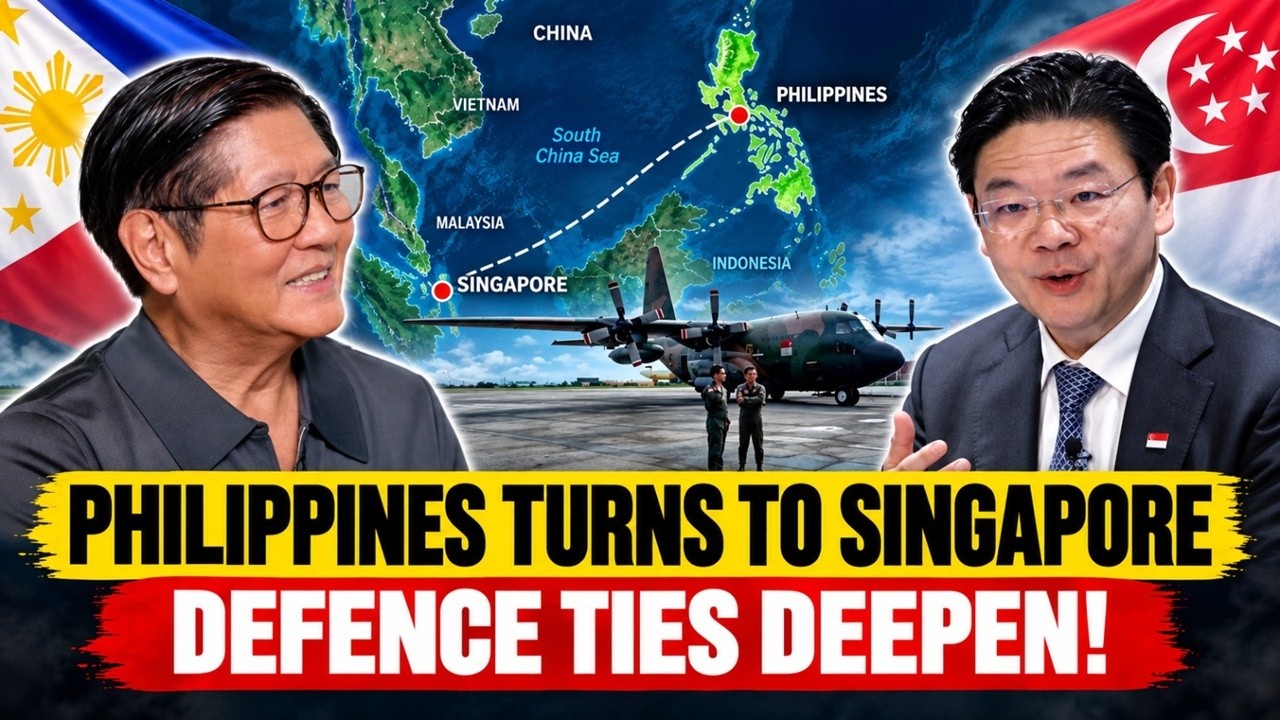
For the Philippines, Singapore represents an established Southeast Asian defence partner with which Manila can maintain institutional communication while it carries the responsibilities of the 2026 ASEAN chairmanship. For Singapore, closer engagement with the Philippines provides another channel for defence cooperation with an important ASEAN member as Singapore prepares to lead the organization in 2027. The real significance of the ninth Defense Policy Dialogue will therefore become clearer over time. The meeting itself did not transform the regional balance of power. What matters is whether the agreements, discussions and institutional contacts surrounding it lead to more frequent and practical cooperation.
About Indo-Pacific Report
For more geopolitical analysis, strategy coverage, and Indo-Pacific security reporting, visit Indo-Pacific Report:
Website
Facebook
YouTube
Why the Philippines & Singapore Are Quietly Preparing for China