Philippines Is Finally Getting 2 Submarines — China Will Have to Rethink the South China Sea
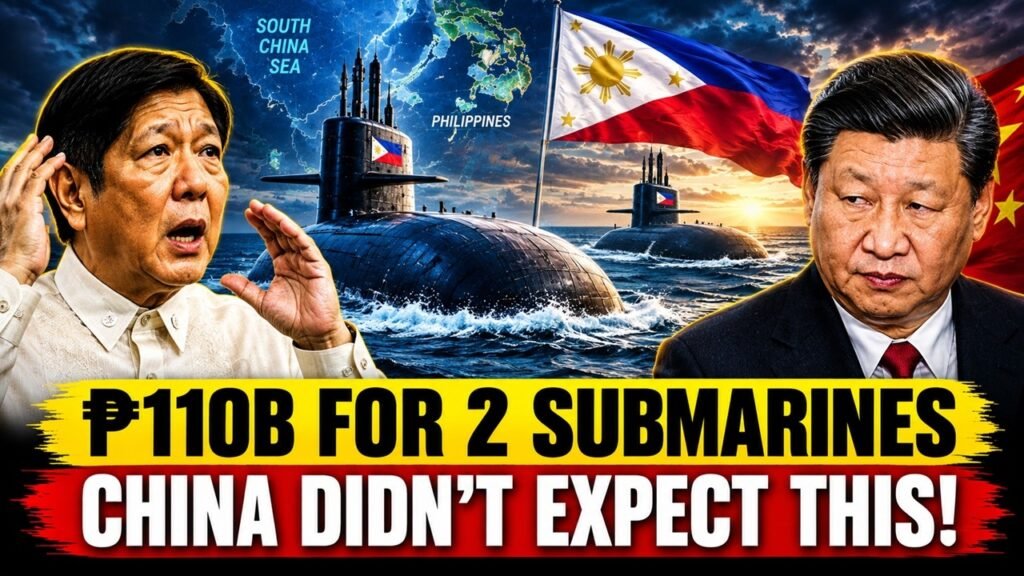
The Philippines has allocated between ₱80 billion and ₱110 billion for its planned acquisition of two diesel-electric submarines. However, this amount should not be understood simply as the purchase price of two submarines. The wider program includes the basing and logistical requirements needed to operate them, which makes the overall investment much more significant than the boats themselves.
For a country that has never operated a submarine fleet, establishing this capability means building an entirely new system from the ground up. The Philippine Navy will need trained submarine crews, specialized maintenance personnel, spare parts, training systems, infrastructure and operational procedures. These requirements will continue long after the submarines are delivered.
This is why the ₱80 billion to ₱110 billion figure is better understood as the cost of establishing an undersea capability rather than simply buying two military vessels. Manila is effectively investing in the people, infrastructure, knowledge and support system required to operate submarines for decades. The submarine program is also connected to the broader modernization of the Armed Forces of the Philippines. Under its evolving defense priorities, Manila is placing greater emphasis on external and archipelagic defense, particularly the protection of its maritime domain and its 200-nautical-mile exclusive economic zone. The real question, therefore, is not simply how much a Philippine submarine costs. The bigger question is how much it costs for the Philippines to build a submarine capability from scratch.
Why Does Manila Want Submarines?
The reason begins with geography. The Philippines is an archipelago made up of thousands of islands, meaning that a large part of the country’s security challenge exists at sea. Its maritime interests extend far beyond the coastline, including a 200-nautical-mile exclusive economic zone that Manila needs to monitor and protect. The Philippine Navy already operates surface ships and aircraft that can patrol maritime areas, respond to incidents and conduct surveillance. However, these platforms are generally more visible. A surface ship can be detected by radar and other sensors, while aircraft can also be tracked. A submarine introduces a different type of capability because it can operate beneath the surface while attempting to remain concealed. It is not completely invisible, and modern naval forces possess sophisticated systems for detecting submarines, but a quiet conventional submarine can still be difficult to locate and track.
That creates strategic uncertainty. An opposing force may know that a Philippine submarine could be operating in a particular area without knowing exactly where it is. This uncertainty can affect the way an adversary plans its operations and allocates resources. Submarines can also contribute to surveillance. They are not simply weapons platforms. Their ability to observe and track maritime activity while maintaining a concealed position can provide another layer of information for the Philippine military.
The third major advantage is sea denial. The Philippines is not acquiring two submarines because it expects to control the entire South China Sea. That would be unrealistic given China’s much larger naval capability. Instead, the objective is to make important waters more difficult and potentially more costly for an adversary to operate in. For Manila, therefore, the submarine is valuable because it adds a hidden presence to an existing network of ships, aircraft, missiles and surveillance systems.
The South China Sea Context
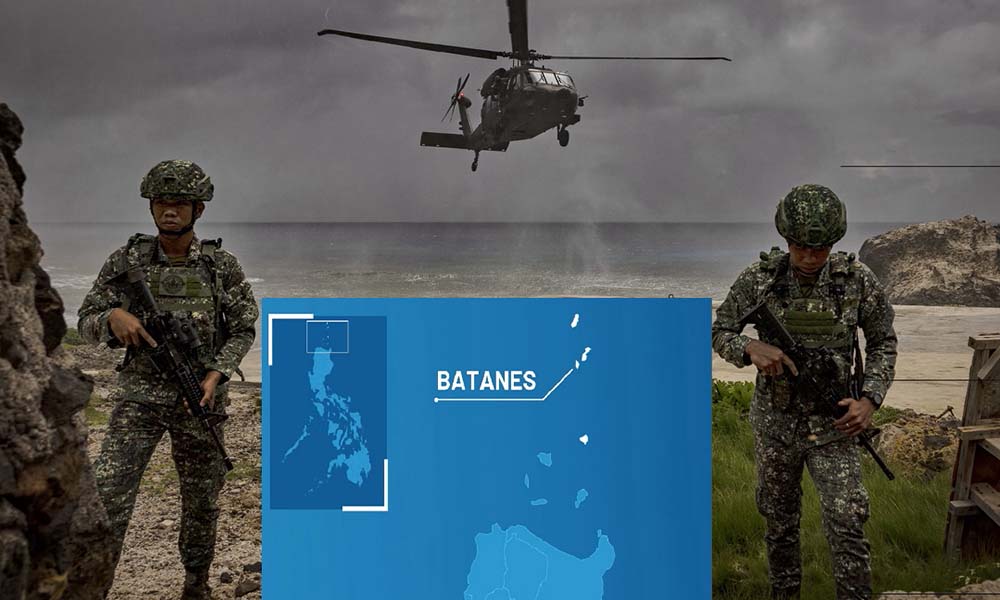
The timing of the Philippine submarine program is closely connected to the increasingly contested maritime environment around the country. According to the supplied source material, in May 2026 the Armed Forces of the Philippines reported monitoring 35 Chinese naval and coast guard vessels around four important West Philippine Sea features, including Ayungin Shoal, Bajo de Masinloc, Escoda Shoal and Pag-asa.
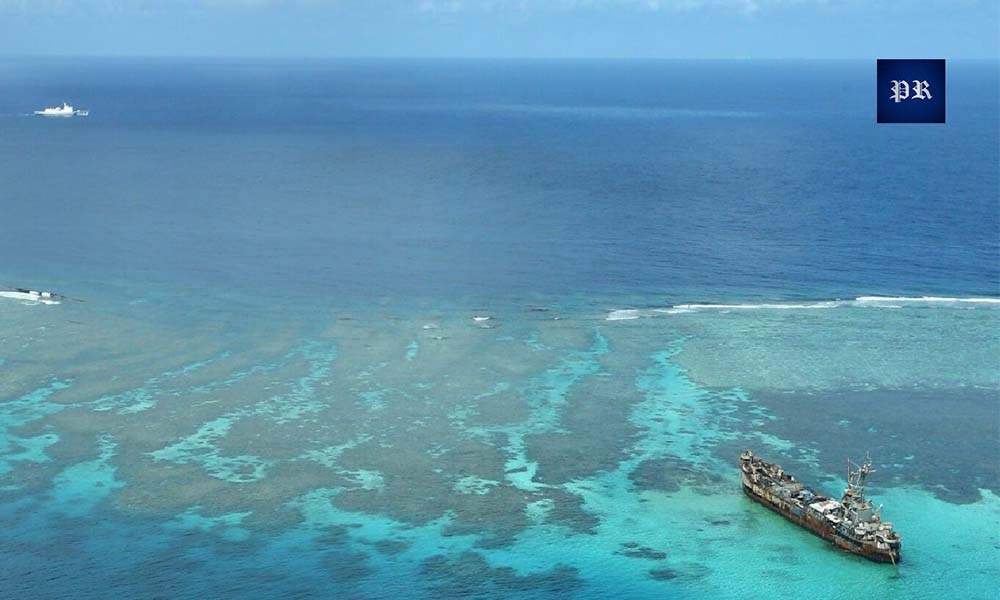
The pressure is not limited to one location. Philippine resupply missions to the BRP Sierra Madre at Second Thomas Shoal continue under difficult circumstances, while Chinese maritime forces maintain a persistent presence around Scarborough Shoal. The supplied material also describes water-cannon incidents near Scarborough Shoal in July 2026. This environment helps explain why an underwater capability is attractive to Manila. The Philippines is already strengthening its surface fleet, aircraft, missile systems and maritime surveillance capabilities, but most of these assets operate in environments where they can potentially be detected. A submarine creates a different problem for an opposing force. A Chinese naval or coast guard unit may know where Philippine surface vessels are operating and may track Philippine aircraft, but it cannot necessarily
The submarine therefore does not necessarily need to attack in order to create an effect. Its potential presence alone could force an opposing force to dedicate additional resources to searching, tracking and protecting its vessels.
This fits the broader idea of sea denial, where the objective is not necessarily to control an entire maritime area but to make it more difficult for a stronger opponent to operate freely. The Philippines’ Comprehensive Archipelagic Defense Concept also places greater emphasis on protecting the country’s maritime domain. The submarine program fits naturally into that wider approach because it would give Manila a capability that operates beneath the surface of the maritime environment it is trying to defend.
Which Countries Could Build the Philippine Submarines?
The competition for the Philippine submarine program involves several established submarine builders. The supplied source identifies Hanwha Ocean from South Korea, France’s Naval Group, Spain’s Navantia and the Fincantieri-thyssenkrupp Marine Systems partnership as major contenders.
However, the most important issue for Manila is not necessarily which submarine has the best specifications on paper. Because the Philippines has never operated submarines, the supplier’s ability to help create the wider support system could be just as important as the submarine itself. Hanwha Ocean has presented a proposal that goes beyond the submarines, including elements such as a submarine base, maintenance facilities, training, simulators and technology transfer. This type of package could be particularly important for a country starting its submarine capability from zero.
Philippines Is Building a 12-Frigate Navy China Won’t Like This Move
Naval Group is offering the Scorpène submarine, a design already operated by several countries, including India, Brazil, Chile and Malaysia. Its proposal has also emphasized infrastructure, training and long-term support, including the possibility of developing Subic Bay for submarine operations. Navantia is offering the S-80 submarine, while the Fincantieri-thyssenkrupp Marine Systems partnership is proposing the U212 NFS. Both bring long-established European submarine-building experience to the competition.
For Manila, the decision will ultimately involve much more than selecting a submarine design. The Philippine Navy will need to determine who can train Filipino crews, establish reliable maintenance arrangements, provide spare parts and weapons, support the submarines over their operational lifetime and potentially transfer technology that can help the country develop its own expertise. The supplier relationship could therefore last for decades. The company or partnership selected by Manila will not simply deliver two submarines; it could become a long-term partner in the development of the Philippines’ first submarine force.
What Would Two Philippine Submarines Mean for China?
Two Philippine submarines would not balance China’s much larger navy. The PLA Navy already operates a substantial submarine force and possesses a far greater overall fleet than the Philippine Navy. Manila is therefore not attempting to match China ship for ship. The strategic objective is more limited and more realistic: making Philippine waters harder to dominate. China already has to account for Philippine surface ships, aircraft, missiles and surveillance systems. A submarine would add another type of threat because its position could remain uncertain.
A Chinese naval force might know where Philippine surface vessels are operating and may be able to track aircraft, but it could have difficulty determining whether a Philippine submarine is operating somewhere beneath the same maritime area. That uncertainty could force an opposing navy to invest additional resources in submarine detection, tracking and protection. This is the basic logic of sea denial. The supplied source also notes that during Balikatan 2026, Philippine and allied forces conducted anti-submarine warfare training in the West Philippine Sea and successfully detected and tracked a subsurface contact.

That development is important because it indicates that the Philippines is beginning to build practical experience in the underwater domain. The country is not simply planning to acquire submarines; it is also developing some of the skills required to operate and defend against underwater forces. The strategic significance of the two submarines may therefore extend beyond their direct combat capability. Their value could come from the uncertainty they create and the additional calculations they force an opposing naval force to make. The Philippines would not become stronger than China at sea because of two submarines. But it could become more difficult to predict and potentially more difficult to operate against.
A Submarine Cannot Fight Alone
A submarine cannot operate effectively as an isolated platform. Its usefulness depends heavily on the information, communications and supporting forces around it. A submarine needs intelligence to understand the maritime environment, sensors to identify contacts, communications systems to receive and share information, and other forces that can contribute to surveillance and tracking.
This means the Philippine Navy will need to continue developing its wider underwater warfare network. Aircraft, frigates, helicopters, sonar systems, underwater sensors, maritime surveillance and secure communications can all contribute to the effectiveness of a submarine force. The supplied source describes the Philippine Navy’s existing undersea warfare capability as still modest, while also pointing to efforts to improve anti-submarine warfare capabilities. Balikatan 2026 provided another example of this development when Philippine and allied forces practiced detecting and tracking a subsurface contact in the West Philippine Sea.
Is the ₱110 Billion Investment Worth It?
The argument for submarines is that they provide a combination of stealth, surveillance, sea denial and uncertainty that other platforms cannot easily reproduce. For a smaller navy operating alongside a much larger maritime power, the ability to maintain a concealed presence could provide an important strategic advantage. However, the disadvantages are also significant. Submarines require highly specialized crews and maintenance personnel, dedicated infrastructure, extensive training and reliable logistics. These costs continue throughout the life of the vessels.
The fact that the Philippines plans to begin with only two submarines creates another challenge. If one submarine is undergoing maintenance while the other is training or unavailable for another reason, the country could temporarily have no submarine ready for an operational mission. This means the financial commitment does not end when the boats are delivered. Manila will need to maintain training programs, spare-parts inventories, infrastructure, technical expertise and operational systems for decades. The opportunity cost is therefore an important part of the debate. The question is not whether submarines are universally better than ships, aircraft or missiles. They are not. The question is whether the Philippines needs the unique capabilities of submarines badly enough to justify the cost of establishing an entirely new military branch of expertise.Ultimately, the success of the program will depend less on the number written on the purchase contract and more on whether Manila can sustain the system around the submarines.
What Happens Next?
The next stage of the program will determine whether the Philippines simply receives two submarines or develops the foundation of a sustainable submarine force. Manila will need to decide which supplier and submarine design best meet its requirements. It will also have to determine where the submarines will operate from, how Filipino crews will be trained, what weapons and sensors will be integrated, and how maintenance and logistics will be handled throughout the boats’ service lives. The two-submarine starting point also creates an important long-term question about fleet size. Two submarines cannot guarantee that two submarines will always be available for operations. Maintenance, training, repairs and upgrades will inevitably take boats out of service at different times. If Manila eventually wants more persistent underwater coverage, it could face a decision over whether to remain with two boats or expand the fleet in the future.
However, expanding the fleet would also increase the cost of personnel, infrastructure, maintenance, training and logistics. This is why there is a fundamental difference between having submarines and having a submarine force. The Philippines is starting from zero. The first two submarines could provide the initial platform around which Manila develops its crews, doctrine, infrastructure and technical expertise. If those supporting elements are developed successfully, the program could become the foundation of a permanent Philippine undersea capability.
Conclusion: The Beginning of a New Philippine Naval Capability
The headline figure of ₱80 billion to ₱110 billion represents much more than the purchase of two submarines. It represents an attempt by the Philippines to establish an entirely new military capability involving crews, infrastructure, training, maintenance, logistics, weapons and doctrine.Two submarines will not turn the Philippines into a naval superpower. They will not balance China’s much larger fleet, and they will not solve every problem facing Manila in the South China Sea.
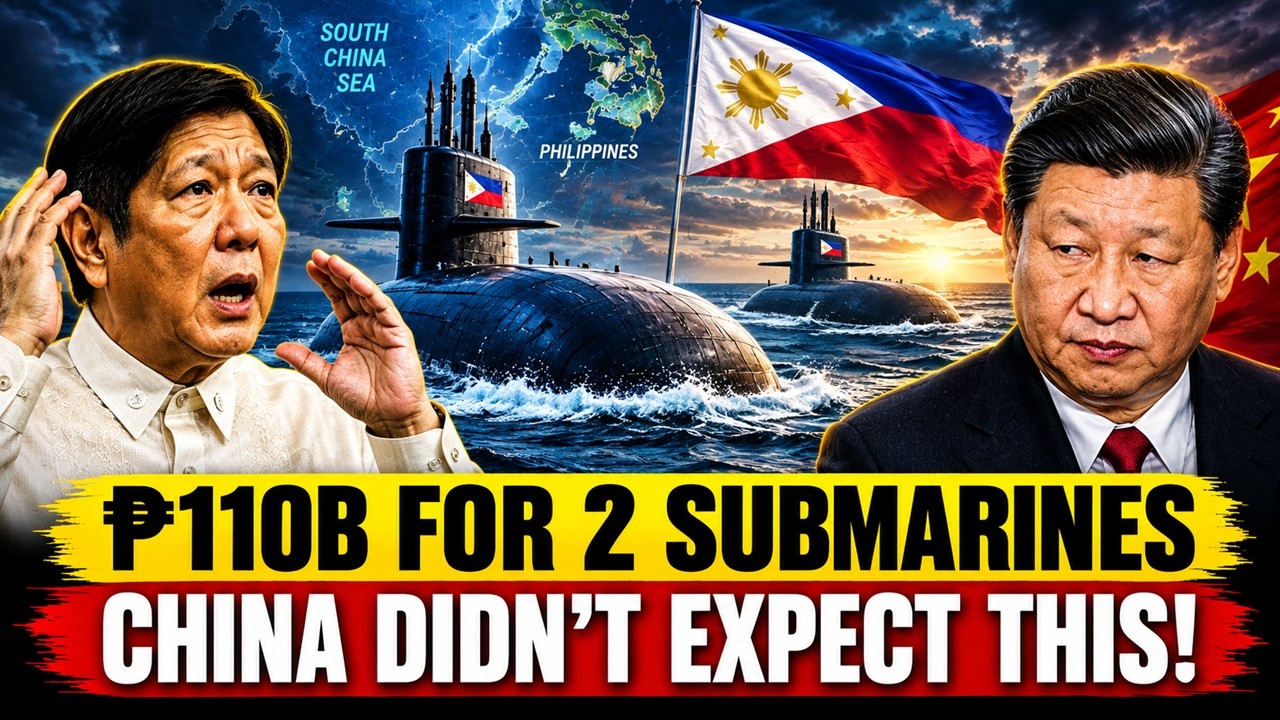
But they could provide the Philippine Navy with something it has never possessed before: a concealed undersea presence capable of supporting surveillance, deterrence and sea denial. That is perhaps the most important part of the program. The Philippines is not simply buying two submarines. It could be building the foundation of its first submarine force. The ultimate test, however, will not be whether Manila can purchase the submarines. It will be whether the country can build and sustain everything around them that makes those submarines operationally meaningful. If it succeeds, the first two boats could mark the beginning of a new era for the Philippine Navy — one in which the Philippines can defend its maritime interests not only from the surface and from the air, but also from beneath the waves.
About Indo-Pacific Report
For more geopolitical analysis, strategy coverage, and Indo-Pacific security reporting, visit Indo-Pacific Report:
Website
Facebook
YouTube
Philippines Is Finally Getting 2 Submarines — China Will Have to Rethink the South China Sea