44 Chinese Ships Are Sitting in Philippines Waters. Is This China’s New Strategy?
Imagine winning one of the most important international legal cases of the twenty first century.
A tribunal established under the United Nations Convention on the Law of the Sea rules overwhelmingly in your favor. The world’s highest maritime arbitration body declares that your opponent’s claims have no legal basis. The decision is hailed as a historic victory for international law.
And yet, ten years later, foreign coast guard ships and warships are still operating inside the waters you legally won.
That is the reality facing the Philippines today.
As Manila marks the tenth anniversary of its landmark 2016 arbitral victory with a new annual observance called “West Philippine Sea Victory Day,” the Armed Forces of the Philippines have reported a sharp increase in Chinese military and coast guard activity in disputed waters.
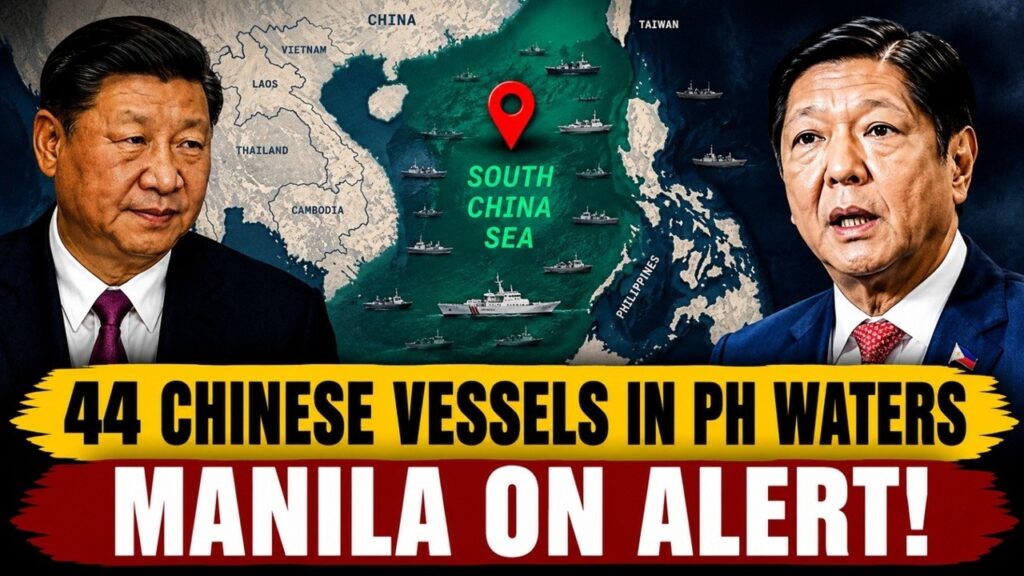
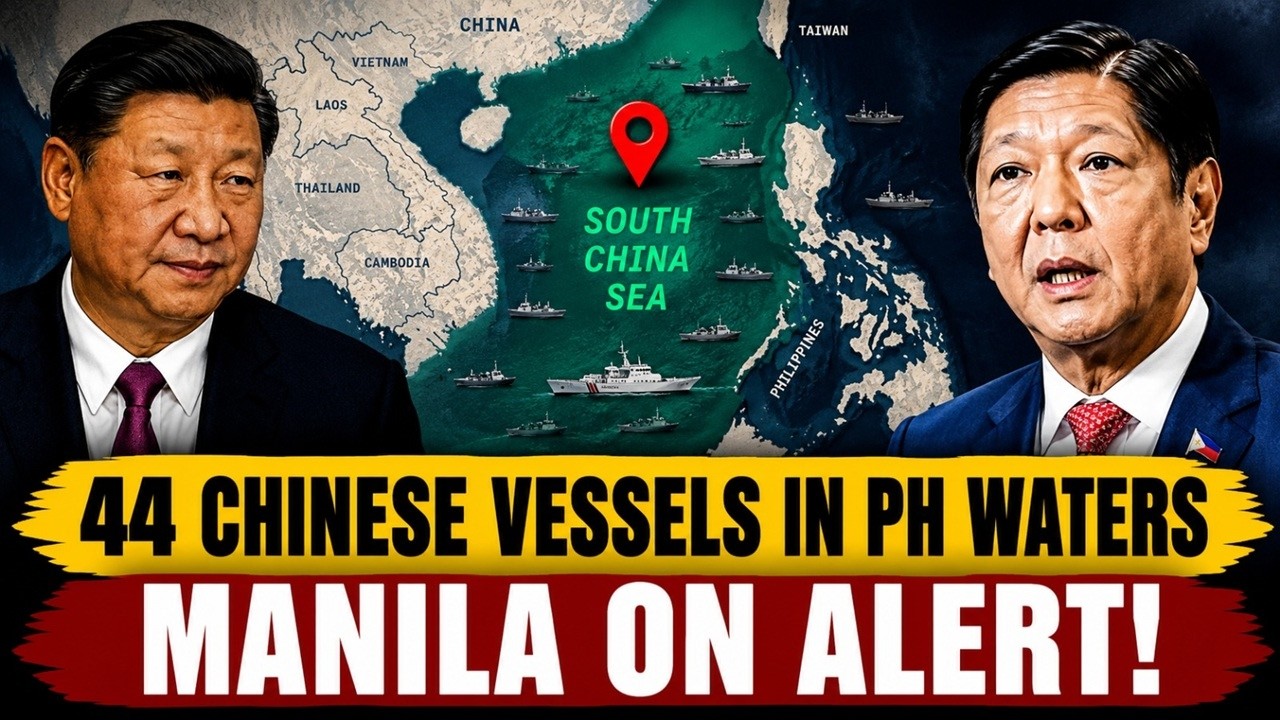
In just one week, from June 23 to June 29, Philippine forces monitored 44 Chinese vessels operating across four key features in the West Philippine Sea, more than double the number recorded during the previous reporting period.
The most striking numbers came from Scarborough Shoal.
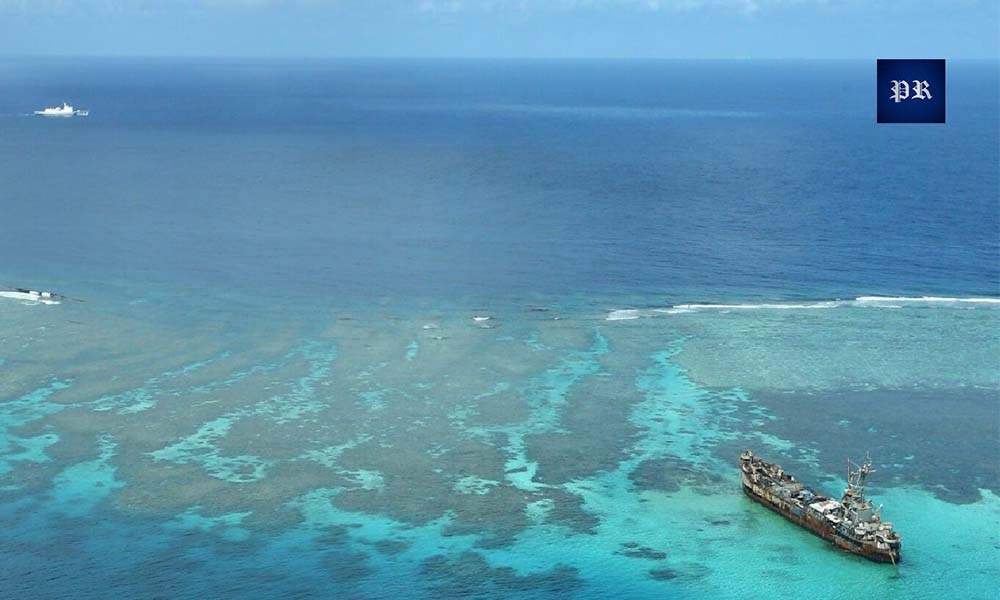
According to the Armed Forces of the Philippines, Chinese forces maintained a presence of 18 China Coast Guard vessels and 9 People’s Liberation Army Navy warships around the shoal.
These are not occasional patrols. They are not temporary deployments.
They represent something much more significant: a strategy of persistent presence.
And this reveals a larger geopolitical question that extends far beyond the South China Sea.
What happens when a country wins the legal battle, but the struggle over physical control continues indefinitely?
Because the story unfolding in the West Philippine Sea is no longer simply about reefs, shoals, or maritime boundaries.
It is about whether international law can survive when confronted by permanent presence.
THE VICTORY THAT CHANGED INTERNATIONAL LAW
To understand why the Philippines continues to commemorate July 12 every year, we need to go back exactly ten years.
On July 12, 2016, the Permanent Court of Arbitration in The Hague delivered what many legal scholars consider one of the most significant maritime rulings in modern history. After three years of proceedings, the tribunal ruled overwhelmingly in favor of the Philippines in its case against China.
The ruling struck at the heart of Beijing’s position in the South China Sea.
The tribunal concluded that China’s famous Nine-Dash Line, which covers almost 90 percent of the South China Sea, had no legal basis under international law. It further found that China had violated Philippine sovereign rights within its Exclusive Economic Zone, interfered with Filipino fishing activities at Scarborough Shoal, and constructed artificial islands in areas where it possessed no lawful maritime entitlement.
Perhaps the most important sentence in the entire ruling was this:
“China’s claims to historic rights within the nine-dash line are contrary to the Convention and without lawful effect.”
This was an extraordinary moment.
Philippines in Talks for KF 21 Boramae Fighter Jets | Can it Build Deterrence Against China?
A middle power had used international law to challenge one of the world’s largest and most powerful states—and won.
But the ruling also exposed one of the oldest truths in international politics.
Law can establish legitimacy.
Law can shape international opinion.
But law alone cannot remove ships from the sea.
And that is the dilemma that continues to define the South China Sea today.
WHAT THE NUMBERS SHOW TODAY
If the 2016 arbitration ruling represented the triumph of international law, then the numbers coming out of the West Philippine Sea today tell a very different story.
Because while the legal battle may have ended ten years ago, the struggle for physical presence never did.
According to the Armed Forces of the Philippines, between June 23 and June 29, 2026, Philippine forces monitored 44 Chinese government vessels operating across four major features in the West Philippine Sea. Just one week earlier, that number was only 17.
The largest concentration was at Scarborough Shoal.
There, the Philippines recorded an astonishing 18 China Coast Guard vessels accompanied by 9 People’s Liberation Army Navy warships, a total of 27 Chinese government ships operating around a single disputed feature.
Elsewhere, Philippine forces observed 8 Chinese Coast Guard vessels and 1 PLA Navy ship at Ayungin Shoal, 2 Coast Guard ships and 2 naval vessels at Escoda Shoal, and another 4 Chinese vessels near Pagasa Island.
These numbers matter because they reveal something fundamental about China’s strategy.
These are not occasional patrols.
They are not symbolic visits.
And they are certainly not accidents.
They represent what military strategists increasingly describe as a strategy of persistent presence: maintaining enough ships, for long enough, in enough places, that physical presence itself begins to create political reality.
Because in geopolitics, sovereignty is not only about who possesses the strongest legal argument.
It is also about who remains there when everyone else leaves.
THE STRATEGY OF PERMANENT PRESENCE
When people think about territorial disputes, they often imagine invasions, naval battles, and military occupations.
But China’s strategy in the South China Sea rarely works that way.
Instead of seizing territory through force, Beijing has perfected something far more subtle: the strategy of permanent presence.
The logic is remarkably simple.
Send coast guard ships.
Send naval escorts.
Send maritime militia vessels.
Send research ships.
Deploy floating platforms.
And then keep returning.
Again.
And again.
And again.
Eventually, presence itself begins to look like ownership.
We have already seen this strategy succeed before.
At Scarborough Shoal, Chinese vessels have maintained a near-continuous presence since the 2012 standoff. In recent years, the same pattern has emerged at Second Thomas Shoal, Sabina Shoal, and Escoda Shoal, where repeated deployments have gradually transformed temporary confrontations into permanent strategic realities.
The latest example may be the most revealing.
In May 2026, Philippine authorities discovered a Chinese floating platform at the entrance to Scarborough Shoal. Beijing described it as part of a program of “comprehensive research” in the South China Sea. The platform was later removed, but the message remained unmistakable: China was demonstrating not merely that it could enter these waters, but that it could establish a physical presence whenever it chose.
This is why the South China Sea dispute is so difficult to resolve.
Because the contest is no longer simply about legal ownership.
It is about who can maintain the most persistent presence.
And in international politics, persistent presence often creates a reality that legal documents alone cannot undo.
WHY “WEST PHILIPPINE SEA VICTORY DAY” MATTERS
At first glance, declaring a commemorative day may seem like a symbolic gesture.
After all, a holiday cannot remove foreign ships from disputed waters.
It cannot enforce maritime law.
And it cannot alter the balance of military power.
So why does it matter?
Because in geopolitics, symbols are often instruments of strategy.
In June 2026, the Cebu City Council unanimously declared July 12 as “West Philippine Sea Victory Day,” commemorating the tenth anniversary of the Philippines’ landmark arbitral victory against China. The resolution was designed not simply to remember the past, but to shape the future.
It seeks to strengthen national identity, preserve legal continuity, educate future generations, and reinforce a political consensus that the Philippines’ maritime claims cannot simply be forgotten.
Defense Secretary Gilberto Teodoro Jr. captured this idea perfectly when he described the 2016 arbitral ruling as:
“A victory which our country should embrace and fight to enforce.”
Perhaps the most revealing aspect o
Stay Connected
About Indo-Pacific Report
For more geopolitical analysis, strategy coverage, and Indo-Pacific security reporting, visit Indo-Pacific Report:
Website
Facebook
YouTube
44 Chinese Ships Are Sitting in Philippines Waters. Is This China’s New Strategy?