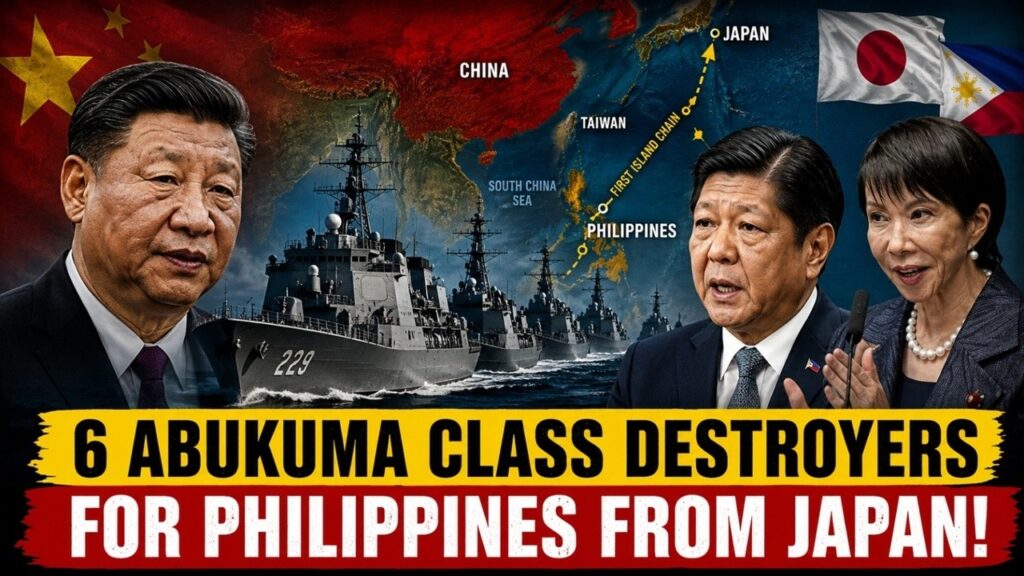
Japan to Give 6 Warships to the Philippines to DETER China in the WPS!
Japan’s decision to transfer six retired Abukuma-class destroyer escorts to the Philippines may appear to be a routine military handover, but its strategic importance reaches far beyond the ships themselves. The move reflects a rapidly changing Indo-Pacific security environment where geography, alliances, and deterrence matter as much as cutting-edge technology.
Why These Warships Matter
Although the Abukuma-class ships were built during the Cold War and are over 30 years old, they remain capable platforms for anti-submarine warfare, maritime patrol, escort duties, and coastal defense. For the Philippines, they provide a significant boost to naval capability while improving interoperability with Japan and the United States.
More importantly, the transfer signals the strengthening of regional security cooperation amid rising tensions in the South China Sea and around Taiwan.
Japan’s decision to transfer six Abukuma-class destroyer escorts to the Philippines is much more than a simple military equipment donation. It represents a strategic shift in the Indo-Pacific, where countries are increasingly working together to maintain stability amid China’s growing military presence in the South China Sea and the West Philippine Sea (WPS).
Although these destroyers were commissioned during the Cold War in the late 1980s and early 1990s, they remain highly capable for modern maritime security missions. Unlike large blue-water destroyers designed for long-range power projection, the Abukuma class was specifically built for coastal defense, anti-submarine warfare (ASW), convoy protection, and surveillance operations in confined waters.
For the Philippine Navy, acquiring these vessels would significantly improve its ability to patrol its Exclusive Economic Zone (EEZ), monitor foreign naval activity, protect vital sea lanes, and respond more effectively to maritime security challenges. The ships will also allow Philippine sailors to gain experience operating alongside advanced Japanese and U.S. naval forces, improving interoperability during multinational exercises.
The transfer also reflects Japan’s growing willingness to export defense equipment after decades of strict post-war restrictions. It highlights Tokyo’s increasing commitment to supporting like-minded regional partners facing common security challenges.
From a broader geopolitical perspective, these six warships strengthen the maritime defense network connecting Japan, the Philippines, and the United States. Even though the ships themselves will not dramatically alter the military balance, they contribute to a larger strategy of collective deterrence that aims to preserve freedom of navigation and regional stability.
In many ways, the significance of these destroyers lies not only in their capabilities but also in what they symbolize—a stronger security partnership between two maritime democracies determined to maintain a free and open Indo-Pacific.
If War Breaks Out Between China and the Philippines, Who Would Support Manila?
The First Island Chain and Strategic Geography
The First Island Chain stretches from Japan through Taiwan and the Philippines into Southeast Asia. It forms one of the world’s most strategically important maritime corridors. Control of these waters influences trade, military mobility, and regional stability.
The First Island Chain stretches from the Japanese home islands through the Ryukyu Islands, Taiwan, the northern Philippines, and onward toward Borneo. It forms a natural maritime barrier separating China’s coastline from the wider Pacific Ocean.
For decades, military strategists have considered this island chain one of the world’s most strategically important regions because it contains several critical chokepoints that control access between the East China Sea, South China Sea, and the Pacific Ocean.
Among the most important are the Miyako Strait near Japan, the Bashi Channel between Taiwan and the Philippines, and the Luzon Strait, all of which are essential routes for naval and commercial shipping. Any military conflict involving Taiwan or the South China Sea would almost certainly involve these waterways.
For China, unrestricted access through these chokepoints is essential for expanding the operational reach of the People’s Liberation Army Navy (PLAN). Beijing has invested heavily in building aircraft carriers, advanced destroyers, submarines, and long-range missile systems to reduce its dependence on these narrow passages.
On the other hand, the United States, Japan, and their regional partners see the First Island Chain as the foundation of their maritime defense strategy. Maintaining a strong military presence along this chain allows allied forces to monitor naval movements, conduct surveillance, protect international shipping lanes, and deter potential aggression.
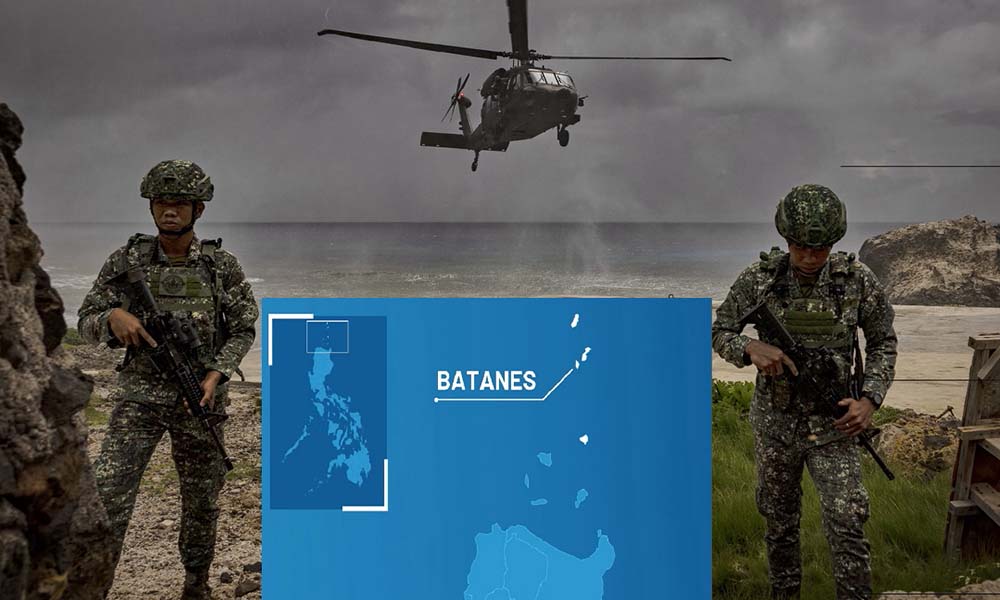
The Philippines occupies one of the most important positions within this strategic geography. Its northern islands overlook the Luzon Strait and Bashi Channel, making them crucial for monitoring naval traffic between the South China Sea and the Pacific Ocean.
As China continues to modernize its navy and expand operations beyond the First Island Chain, countries across the Indo-Pacific are increasing defense cooperation through joint military exercises, intelligence sharing, radar deployments, surveillance aircraft, and naval modernization programs.
Japan’s decision to transfer six destroyers should therefore be viewed within this larger strategic picture. The ships are not merely replacing aging Philippine naval assets; they are becoming part of a broader regional effort to strengthen maritime security, improve collective defense capabilities, and maintain the balance of power across one of the world’s most contested maritime regions.
The Philippines Is Becoming a Frontline Maritime Power
The Philippines is no longer viewed as a peripheral state. Its location near the South China Sea, the Luzon Strait, and the Bashi Channel makes it central to Indo-Pacific security.
Recent defense cooperation with Japan and the United States—including radar systems, surveillance aircraft, joint exercises, and now destroyers—supports Manila’s Comprehensive Archipelagic Defense Concept and strengthens maritime security.
For decades, the Philippines was often viewed as a secondary player in Southeast Asian geopolitics. However, the rapidly evolving security environment in the Indo-Pacific has dramatically changed that perception. Today, the Philippines is emerging as one of the region’s most important frontline maritime powers, largely because of its unique geographical location and its expanding defense partnerships with major allies.
Located at the crossroads of the South China Sea, the West Philippine Sea (WPS), the Luzon Strait, and the Bashi Channel, the Philippine archipelago occupies one of the world’s most strategically valuable positions. These waterways serve as vital maritime routes connecting the Pacific Ocean with East Asia and Southeast Asia. Every year, trillions of dollars worth of global trade pass through these waters, making their security essential not only for regional stability but also for the global economy.
The Luzon Strait and Bashi Channel are particularly important because they provide one of the few deep-water passages between the South China Sea and the Pacific Ocean. In any future regional crisis involving Taiwan or the South China Sea, these waterways would likely become key operational areas for naval forces. This makes the Philippines a crucial strategic partner for countries seeking to maintain freedom of navigation and a stable regional balance of power.
Recognizing these realities, the Philippine government has accelerated the modernization of its armed forces under the Comprehensive Archipelagic Defense Concept (CADC). Rather than focusing primarily on internal security, Manila is now investing heavily in strengthening its maritime defense capabilities to better protect its territorial waters, Exclusive Economic Zone (EEZ), and critical sea lanes.
Japan’s Historic Security Shift
For decades after World War II, Japan maintained a restrained defense posture. Today, Tokyo is expanding defense partnerships, easing defense export restrictions, and taking a more active regional security role.
The destroyer transfer symbolizes Japan’s evolution from a passive security partner into an active contributor to regional stability.
China and the Rise of Regional Security Networks
China’s growing military power has encouraged closer cooperation among neighboring countries. Instead of a formal Asian NATO, the Indo-Pacific is developing a flexible network of partnerships linking Japan, the Philippines, Australia, and the United States.
This model of networked deterrence improves resilience while helping preserve the regional balance of power.
China’s remarkable economic growth has been accompanied by one of the world’s fastest military modernization programs. The People’s Liberation Army Navy (PLAN) has expanded rapidly, becoming the world’s largest navy by number of ships, while Beijing continues investing heavily in aircraft carriers, advanced destroyers, submarines, long-range missiles, and maritime surveillance capabilities.
At the same time, China’s increasingly assertive activities in the South China Sea, East China Sea, and around Taiwan have raised concerns among many neighboring countries. Maritime disputes, coast guard confrontations, and military exercises have encouraged regional governments to strengthen their own defense partnerships.
Rather than creating a single alliance similar to NATO, Indo-Pacific countries are developing a flexible network of interconnected security relationships often described as networked deterrence.
Japan, the Philippines, Australia, and the United States are expanding intelligence sharing, conducting joint military exercises, improving defense interoperability, and increasing technology cooperation. Similar partnerships are also emerging with countries such as India, South Korea, Singapore, and several European nations that have increased their naval presence in the Indo-Pacific.
This decentralized approach provides several strategic advantages. Instead of relying on one formal alliance, countries build overlapping partnerships capable of responding to a wide range of security challenges. If tensions rise in one area, multiple partners can coordinate surveillance, logistics, humanitarian assistance, intelligence sharing, and military operations without requiring a rigid command structure.
Why Old Ships Still Matter
These destroyers will not transform the regional military balance on their own. However, they enhance maritime awareness, anti-submarine capability, and alliance interoperability—key elements of modern deterrence in contested waters.
At first glance, transferring more than three-decade-old destroyers may not appear particularly significant. However, military effectiveness is determined not only by age but also by mission requirements, operational environment, and strategic context.
The Abukuma-class destroyer escorts were specifically designed for anti-submarine warfare, maritime patrol, escort missions, coastal defense, and surveillance operations. These missions remain highly relevant today as submarine activity in the Western Pacific continues to increase.
China has invested heavily in expanding both its conventional and nuclear submarine fleets, making anti-submarine warfare one of the most important priorities for regional navies. Detecting and tracking submarines operating in narrow waterways such as the Luzon Strait and Bashi Channel is becoming increasingly critical.
Although these destroyers cannot compete directly with China’s newest Type 055 destroyers or advanced aircraft carriers, they provide capabilities that the Philippine Navy currently needs most. Their sonar systems, anti-submarine torpedoes, electronic warfare equipment, and anti-ship missiles significantly strengthen the Philippines’ ability to monitor and protect its maritime approaches.
Equally important, operating Japanese-built warships enhances interoperability with both the Japan Maritime Self-Defense Force and the U.S. Navy. Shared operational procedures, compatible communications systems, and regular joint exercises improve coordination during humanitarian missions, maritime patrols, and potential regional crises.
Perhaps the greatest value of these vessels lies in what they represent strategically. They symbolize the deepening defense relationship between Japan and the Philippines and reinforce the growing maritime security network stretching across the First Island Chain.
Final Thoughts
Japan’s transfer of six warships represents far more than military assistance. It reflects Japan’s strategic return, the Philippines’ growing geopolitical importance, and the emergence of a new maritime security architecture across the Indo-Pacific.
As regional competition intensifies, seemingly modest defense agreements can have lasting geopolitical consequences.
About Indo-Pacific Report
For more geopolitical analysis, strategy coverage, and Indo-Pacific security reporting, visit Indo-Pacific Report:
Website
Facebook
YouTube
Japan to Give 6 Warships to the Philippines to DETER China in the WPS!