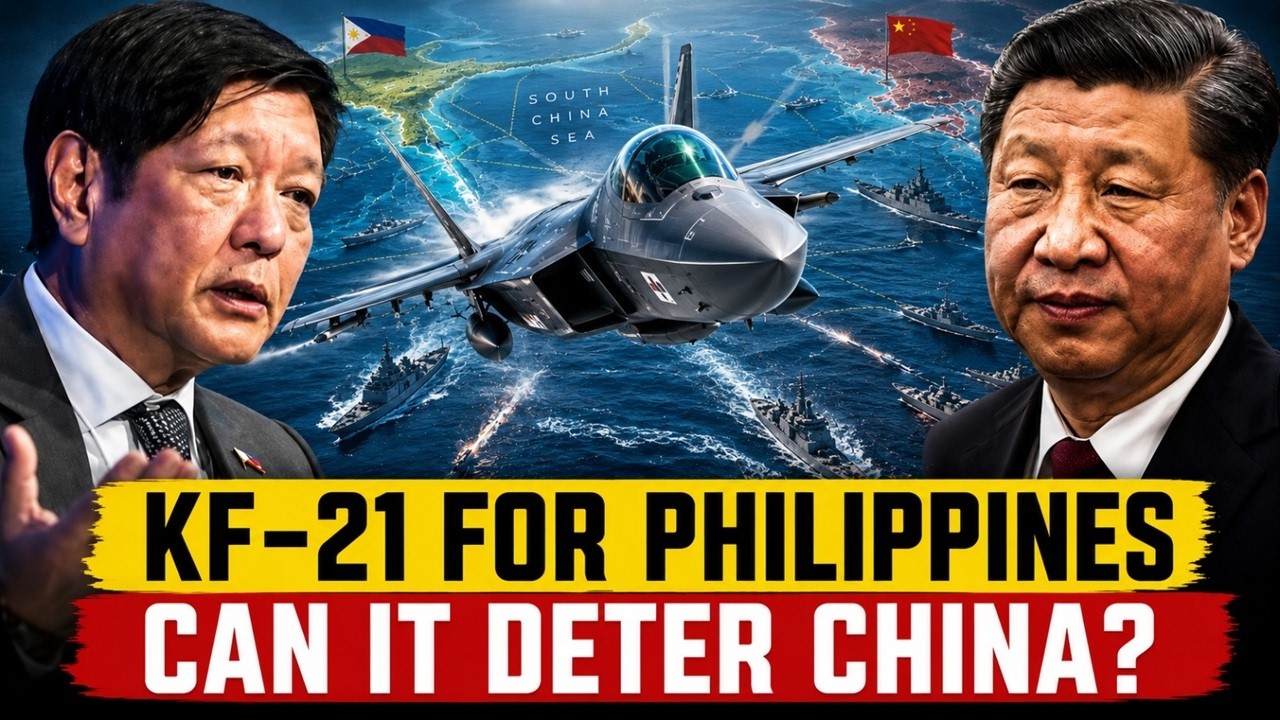
Philippines in Talks for KF 21 Boramae Fighter Jets | Can it Build Deterrence Against China?
Robert Kaplan once observed that geography is the most enduring force in international politics. Governments change, leaders come and go, but coastlines, islands, and strategic waterways continue shaping national security for generations.
Few countries illustrate that reality better than the Philippines. An archipelago of more than 7,600 islands.
Over 36,000 kilometers of coastline.
An Exclusive Economic Zone stretching roughly 2.2 million square kilometers.
And a location astride some of the world’s busiest maritime trade routes, positioned between the South China Sea and the wider Pacific Ocean.
For decades, this geography was less consequential than it appears today.
The Philippine military devoted much of the post-Cold War era to combating communist insurgencies, Islamist militancy, and domestic security threats. External defense remained a secondary concern because the country’s most immediate challenges originated within its own borders.
But geopolitics has a way of returning.
As tensions across the South China Sea intensified, Manila found itself confronting a strategic environment fundamentally different from the one it had prepared for. Maritime confrontations became increasingly frequent. Coast guard vessels faced off at disputed features. Water cannons, dangerous intercepts, and maritime blockades gradually became part of everyday regional headlines.
Protecting maritime sovereignty, however, requires more than ships alone. It demands the ability to monitor, control, and, if necessary, contest the skies above those waters.
That realization is driving one of the most significant shifts in Philippine defense policy in decades.
Among the platforms attracting particular attention is South Korea’s KF-21 Boramae. More than just a next-generation fighter, the program reflects Seoul’s emergence as a major defense-industrial power and its growing willingness to strengthen security partnerships across the Indo-Pacific through technology, joint development, and defense cooperation.
At first glance, this appears to be a story about a fighter aircraft.
In reality, it is a story about shifting regional power.
Because the question facing the Philippines today is no longer whether it needs modern airpower.
The question is whether it can build credible deterrence for the Philippines.
Why the Philippines Never Prioritized Air Superiority
To understand why the Philippines is now considering advanced fighters like the KF-21, we first need to understand a remarkable reality.
For nearly a decade, the Philippine Air Force operated without a true fighter capability.
In 2005, Manila retired its aging fleet of Northrop F-5 Freedom Fighters, marking the end of the country’s fighter era. For almost ten years afterward, one of Southeast Asia’s largest archipelagic nations had no dedicated aircraft capable of defending its own airspace.
At first glance, that decision appears difficult to justify. The Philippines sits between the South China Sea, the Philippine Sea, and the approaches to Taiwan—one of the most strategically sensitive regions in the world. Yet geography alone does not determine defense policy. Perceived threats do.
For much of the post-Cold War period, Philippine security planners were focused almost entirely on internal stability. The Armed Forces spent decades combating the Communist Party of the Philippines and its armed wing, the New People’s Army, while also confronting Islamist militant groups such as Abu Sayyaf and separatist movements in Mindanao.
These were not threats that demanded air superiority. They required helicopters, intelligence platforms, transport aircraft, and counterinsurgency operations.
Limited budgets reinforced those priorities. For years, the Philippines allocated relatively modest resources to defense, leaving little room for expensive fighter procurement or large-scale modernization. Rather than rebuilding the military all at once, Manila adopted what many analysts describe as a piecemeal modernization strategy—acquiring capabilities gradually as financial resources and security needs evolved.
China Already CONTROLS Scarborough Shoal | Can the Philippines Stop What’s Next?
From a policymaker’s perspective, the approach was rational. Governments invest in the threats they expect to face, and for decades those threats were overwhelmingly domestic.
The challenge was that while Manila remained focused inward, the strategic environment around it was changing. China’s military modernization accelerated, its maritime presence expanded across the South China Sea, and disputes that once seemed manageable became increasingly difficult to ignore.
Eventually, geography reasserted itself.
For a maritime nation surrounded by contested waters, neglecting airpower was never going to be a permanent strategy. The Philippines was about to discover that defending its sovereignty required not only ships at sea, but also aircraft capable of controlling the skies above them.
The South China Sea Changed Everything
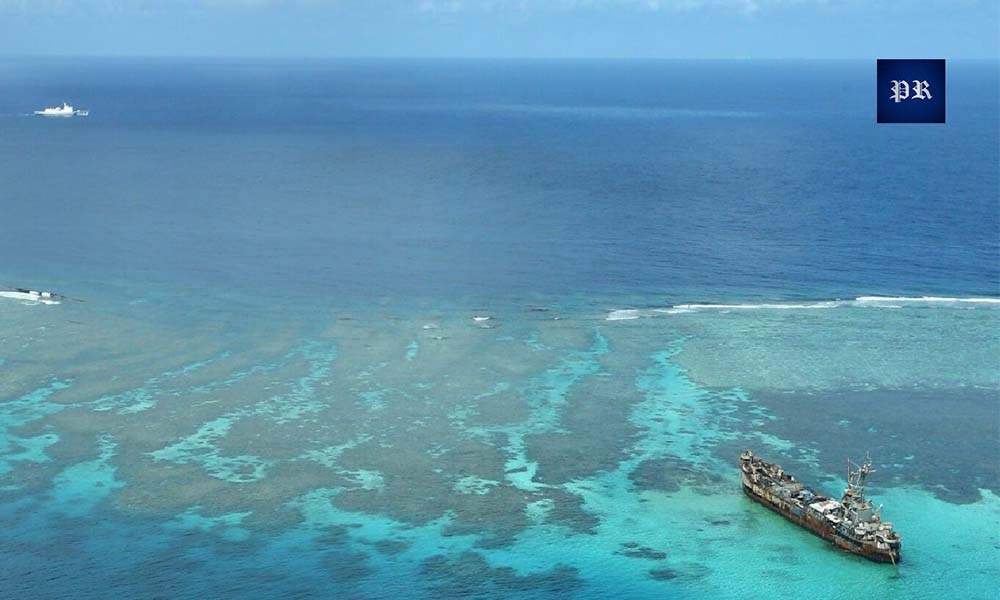
The turning point can be traced to a single place: Scarborough Shoal.
Located roughly 220 kilometers west of Luzon, the shoal lies well within the Philippines’ 200-nautical-mile Exclusive Economic Zone under the United Nations Convention on the Law of the Sea. Yet despite its proximity to the Philippines, it has remained under effective Chinese control since 2012.
The standoff that year fundamentally changed Manila’s perception of national security.
When Philippine authorities attempted to apprehend Chinese fishermen operating inside the lagoon, Chinese maritime vessels intervened, triggering a tense confrontation. After weeks of diplomatic negotiations, both sides reportedly agreed to withdraw. The Philippines complied. China did not.
No missiles were launched.
No naval battle took place.
No invasion force landed on the reef.
Yet the strategic outcome resembled a military victory. China established continuous control over Scarborough Shoal without crossing the threshold of conventional war.
This became one of the clearest examples of what security analysts describe as gray-zone strategy—using coast guard ships, maritime militia, and persistent presence to gradually alter the status quo while avoiding an armed conflict that could trigger international intervention. Instead of seizing territory overnight, control is established incrementally until the new reality becomes difficult to reverse.
Beijing, however, rejects accusations of coercion. Chinese officials maintain that Scarborough Shoal and much of the South China Sea have historically belonged to China, arguing that their coast guard operations are lawful activities conducted within sovereign waters. This sharp disagreement illustrates why the South China Sea remains one of the Indo-Pacific’s most contested geopolitical flashpoints.
Scarborough Shoal was only the beginning. Over the following decade, China expanded and militarized several disputed features, including Mischief Reef, Fiery Cross Reef, and Subi Reef. Artificial islands were transformed into strategic outposts equipped with long runways, advanced radar systems, hardened hangars, and missile installations, significantly extending Beijing’s ability to project power across the region.
For Philippine defense planners, the lesson was unmistakable. International law could strengthen Manila’s legal position, but it could not enforce sovereignty on the water.
To monitor vast maritime spaces, respond rapidly to emerging crises, and deter further encroachment, the Philippines needed something it had long neglected.
It needed credible airpower.
The Limits of the Current Philippine Air Force
Recognizing a threat is one thing.
Possessing the capability to respond is another.
That is the dilemma confronting the Philippines today.
Over the past decade, the Philippine Air Force has taken important steps toward rebuilding its combat aviation capability. The acquisition of South Korea’s FA-50 Fighting Eagle marked the return of supersonic fighters after nearly a decade without one. For a country rebuilding its air force almost from scratch, the FA-50 was a practical and affordable first step.
But it was never designed to establish air superiority.
The aircraft excels in pilot training, air policing, and light combat missions. It can conduct maritime patrols, provide close air support, and respond to limited security threats. However, the strategic environment confronting the Philippines has evolved far beyond those requirements.
Today, Manila faces the prospect of operating in one of the world’s most contested air and maritime theaters.
Across the South China Sea, China’s People’s Liberation Army Air Force fields one of the largest combat fleets on Earth, including advanced fourth-and-a-half-generation fighters like the J-10C and J-16, alongside the fifth-generation J-20 Mighty Dragon. These aircraft are supported by sophisticated airborne early warning platforms, long-range surface-to-air missile systems, and an extensive network of military bases stretching across China’s mainland and its artificial islands.
Recognizing this widening capability gap, the United States has also begun strengthening its air presence in the region. Recent deployments of the F-22 Raptor to the Philippines underscore Washington’s growing concern over maintaining air superiority in the Western Pacific. While these deployments reinforce alliance commitments, they also highlight a fundamental reality: allies can provide support, but they cannot permanently substitute for a nation’s own military capabilities.
This is precisely where the Philippine Air Force faces its greatest challenge.
Deterrence is not built on numbers alone. It is built on credibility. A country does not need to match a larger rival aircraft for aircraft, but it must possess enough capability to convince any potential adversary that coercion carries real risks. The FA-50 restored the Philippines’ fighter force.
The next phase of modernization seeks to make that force capable of defending the country’s increasingly contested skies.
And that is why attention is now shifting toward the KF-21 Boramae.

Why the KF-21 Matters
At first glance, the KF-21 Boramae appears to be just another fighter entering an already crowded global market.
In reality, it represents something far more significant.
For the Philippines, the KF-21 is not simply about acquiring a faster or more advanced aircraft. It is about transforming the Philippine Air Force from a force focused primarily on air policing into one capable of operating in a contested regional environment.
The aircraft occupies a unique position in modern air combat. Developed by South Korea’s Korea Aerospace Industries, the KF-21 bridges the gap between traditional fourth-generation fighters and the far more expensive fifth-generation platforms such as the F-35. Equipped with an Active Electronically Scanned Array (AESA) radar, advanced electronic warfare systems, modern sensors, and the ability to carry a wide range of beyond-visual-range missiles, it offers capabilities that were once available only to the world’s leading air forces.
What makes the KF-21 particularly attractive to countries like the Philippines is the balance it strikes between capability and affordability.
Unlike fifth-generation fighters, whose procurement and maintenance costs can strain even advanced economies, the KF-21 was designed to deliver credible air superiority without imposing an unsustainable financial burden. For a military modernizing under limited budgets, that balance is strategically important.
The aircraft also reflects a broader shift in Asia’s defense landscape.
For decades, South Korea depended heavily on imported military technology. Today, it designs and manufactures advanced fighter aircraft, submarines, missile systems, tanks, and naval vessels, emerging as one of the world’s fastest-growing defense exporters. The KF-21 has become the flagship of that transformation.
For Manila, acquiring such a platform would send an important message—not that it seeks confrontation with China, but that it is serious about defending its sovereignty and adapting to a changing security environment.
Military capability is often judged not by whether it is used, but by whether it convinces others that it can be used effectively.
In that sense, the KF-21 is more than a fighter aircraft.
It is an investment in deterrence, credibility, and the long-term ability of the Philippines to protect its interests in an increasingly contested Indo-Pacific.
Would the KF-21 Change China’s Calculations?
At this point, an obvious question emerges.
Even if the Philippines acquires the KF-21, would it actually change China’s behavior?
The answer depends on how we define success.
If success means matching China’s military power, then the answer is clearly no. China’s defense budget exceeds $230 billion annually, and the People’s Liberation Army Air Force operates one of the world’s largest and most technologically advanced combat fleets. No realistic Philippine procurement program could eliminate that imbalance.
But deterrence has never depended on parity.
Throughout history, smaller states have rarely sought to equal great powers in military strength. Instead, they have aimed to raise the costs and uncertainty of any potential aggression. During the Cold War, many NATO members understood that preventing conflict was less about matching the Soviet Union tank for tank or aircraft for aircraft, and more about making any attack prohibitively expensive.
The same logic applies in the South China Sea.
A squadron of KF-21s would not enable the Philippines to dominate the skies over the Western Pacific. What it could do is complicate China’s military planning. Modern fighters equipped with advanced sensors, beyond-visual-range missiles, and networked battlefield awareness increase surveillance capabilities, shorten response times, and force any potential adversary to account for a far more capable Philippine Air Force.
This growing emphasis on advanced airpower is also reflected in China’s own military modernization. Beijing continues to accelerate the development of next-generation aircraft, including new stealth platforms intended to complement and eventually succeed the J-20. The rapid pace of these programs highlights a broader reality: air superiority is becoming an increasingly decisive factor in Indo-Pacific security.
For Manila, this reinforces an important lesson.
The objective is not to defeat China in a conventional air war.
It is to ensure that coercion becomes more difficult, more uncertain, and therefore less attractive.
Because in geopolitics, the strongest deterrent is often not overwhelming power.
It is convincing a potential adversary that achieving its objectives will no longer be simple, predictable, or without significant cost.
South Korea’s Quiet Strategic Rise
For much of the Cold War, South Korea was viewed primarily as a frontline state whose security depended heavily on the United States. Its armed forces relied extensively on imported military technology, while its defense industry remained focused on supporting domestic requirements.
Today, that reality has changed dramatically.
Over the past two decades, South Korea has emerged as one of the world’s fastest-growing defense exporters. Its K2 Black Panther tanks have secured major contracts in Europe, K9 self-propelled howitzers are now in service across multiple continents, and the FA-50 light combat aircraft has found customers from Southeast Asia to Eastern Europe. The KF-21 represents the latest—and perhaps most ambitious—step in that transformation.
Building a modern fighter aircraft is one of the most demanding achievements in the defense industry. Only a handful of nations possess the technological expertise, industrial capacity, and financial resources necessary to design, test, and produce advanced combat aircraft domestically. By developing the KF-21, South Korea has joined an exclusive group of aerospace powers.
But Seoul’s ambitions extend beyond exporting military hardware.
South Korea is increasingly positioning itself as a trusted security partner across the Indo-Pacific. Rather than projecting power through military alliances alone, it is strengthening regional stability through defense cooperation, technology transfers, joint exercises, and industrial partnerships. This approach allows countries such as the Philippines to modernize their armed forces while diversifying away from an overwhelming dependence on traditional Western suppliers.
In many respects, the KF-21 symbolizes this broader strategic evolution.
It demonstrates that middle powers are no longer merely adapting to the regional balance of power—they are helping shape it.
For the Philippines, this creates new strategic options. Modernization is no longer limited to choosing between American or European platforms. South Korea has emerged as a capable, reliable, and increasingly influential defense partner.
The rise of the KF-21, therefore, reflects something much larger than a new fighter aircraft.
It reflects the rise of South Korea as a consequential geopolitical and defense-industrial power in the Indo-Pacific.
The New Indo-Pacific Defense Network
For much of the post-Cold War era, security in the Indo-Pacific followed a relatively straightforward model.
The United States stood at the center of the regional security architecture, while allies and partners relied heavily on American military power to maintain stability.
That framework still exists.
But it is no longer the complete picture.
Across the Indo-Pacific, a quieter but equally significant transformation is underway. Rather than depending exclusively on Washington, regional powers are investing more heavily in their own defense capabilities while simultaneously building a web of overlapping security partnerships.
The Philippines is a prime example of this shift.
In recent years, Manila has expanded defense cooperation not only with the United States but also with Japan, Australia, South Korea, and several European partners. Joint military exercises have increased in both scale and complexity. Intelligence sharing has deepened. Access agreements have multiplied. Meanwhile, defense procurement is becoming increasingly diversified, reducing reliance on any single supplier.
This strategy reflects an important geopolitical reality.
Modern security is no longer built solely through formal military alliances. It is reinforced by interconnected partnerships, shared technology, defense-industrial cooperation, and the ability of like-minded states to operate together during both peace and crisis.
The Philippines’ interest in the KF-21 fits naturally into this broader trend. Purchasing an advanced fighter is not simply about acquiring new aircraft; it is about strengthening long-term defense ties with a regional partner that has become one of Asia’s leading defense innovators.
Collectively, these developments reveal a larger strategic adjustment taking place across the Indo-Pacific.
As China’s military influence continues to expand, regional states are responding not through confrontation, but through balancing—investing in stronger national capabilities while weaving a broader network of security partnerships.
There is no Asian equivalent of NATO.
Instead, what is emerging is a flexible and interconnected security network, where cooperation, interoperability, and shared strategic interests are becoming the foundation of regional stability.
Viewed through this lens, the KF-21 is far more than a fighter aircraft.
It is one piece of a much larger transformation that is gradually reshaping the balance of power across the Indo-Pacific.
Conclusion
The potential acquisition of the KF-21 is ultimately not just a story about a fighter aircraft—it is a story about geography, deterrence, and strategic adaptation.
For decades, the Philippines could afford to prioritize internal security. Today, an increasingly contested Indo-Pacific demands a different approach. Whether Manila ultimately selects the KF-21 or another platform, one reality has become unmistakably clear:
For a maritime nation, control of the sea increasingly depends on control of the skies above it.
Philippines in Talks for KF 21 Boramae Fighter Jets | Can it Build Deterrence Against China?