U.S. Gives Philippines Eyes to Deter China in the South China Sea
The United States has transferred four solar-powered Triton sea drones to the Philippines, strengthening maritime surveillance in the West Philippine Sea amid rising South China Sea tensions. The United States has quietly taken another meaningful step in the South China Sea by transferring four solar-powered autonomous sea drones to the Philippines. On the surface, it looks like a straightforward military assistance package. In reality, it is a strategic move with implications for maritime surveillance, alliance coordination, and the wider balance of power in the Indo-Pacific.
The transfer, formally carried out at the Philippine Navy’s Naval Operating Base in Subic on June 22, gives Manila a new tool to monitor contested waters in the West Philippine Sea for longer periods and at lower operating cost. At a time when tensions with China remain high around Scarborough Shoal and Second Thomas Shoal, this matters far beyond the delivery of four unmanned systems.
Why the US transfer of sea drones to the Philippines matters
The most important point is simple: maritime competition is increasingly about awareness. In disputed waters, the side that can detect activity earlier, track it more consistently, and document it more clearly has a major advantage. That advantage is not only military. It also matters in diplomacy, law, public messaging, and deterrence.
For the Philippines, this has become a pressing national security issue. The country faces a constant challenge in monitoring a vast maritime space that includes busy shipping routes, fishing grounds, and contested features in the South China Sea. Chinese coast guard ships, maritime militia vessels, and other state-backed platforms operate regularly in areas claimed by Manila. Illegal fishing, coercive patrols, and gray-zone tactics often happen in ways that are designed to avoid immediate escalation while still changing realities on the water.
That is why maritime surveillance is now central to Philippine defense planning. A country cannot respond effectively to activities it cannot see. It cannot document violations properly if incidents occur outside its observation range. And it cannot build a credible case internationally without timely evidence. This is where the new US-provided sea drones become important.
What the Philippines received from the United States
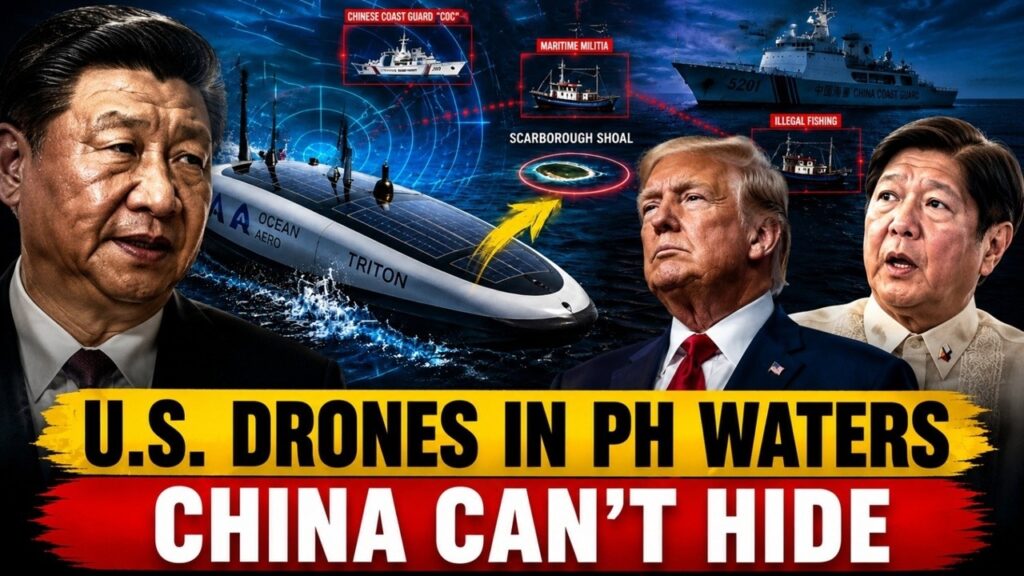
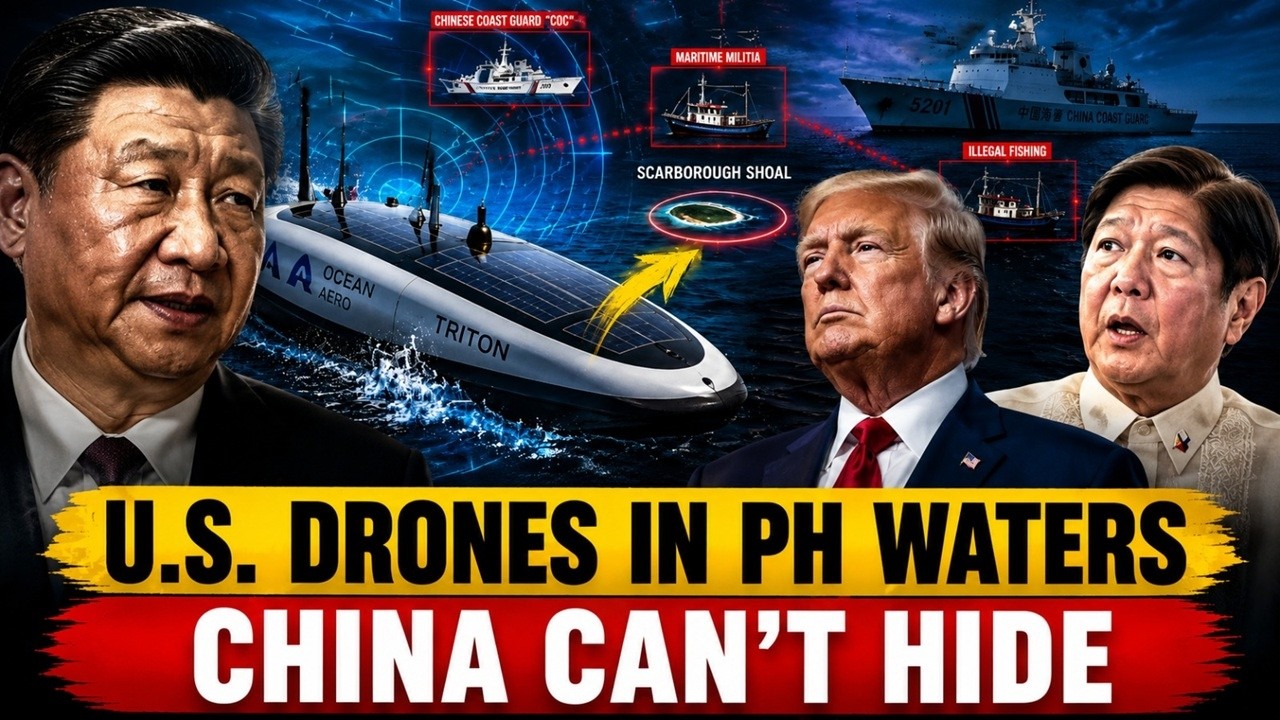
The systems transferred are Ocean Aero Triton autonomous underwater and surface vehicles. They are designed to operate both on the water’s surface and underwater, allowing them to collect and transmit data across long distances. Unlike conventional platforms that depend heavily on crews, fuel, and frequent recovery cycles, these drones are built for persistence.
China Already CONTROLS Scarborough Shoal | Can the Philippines Stop What’s Next?
Each Triton system can reportedly operate for extended periods using solar energy, making it especially useful for maritime surveillance in wide and contested waters. The package delivered to the Philippines includes four of these systems, with a total value of around $13 million.
That figure may not sound dramatic in the context of military spending, but the value lies in what the systems enable. For the Armed Forces of the Philippines, the drones offer a practical way to improve maritime domain awareness without the high recurring costs of deploying larger naval or air assets every day.
How solar-powered sea drones change maritime surveillance
The strategic value of solar-powered maritime drones comes down to endurance and cost. Traditional patrol systems have limits. Ships need crews, fuel, maintenance, and resupply. Aircraft offer speed and coverage, but they cannot remain over the same area indefinitely. Even advanced surveillance platforms face operational constraints that create gaps in observation.
Autonomous sea drones reduce some of those gaps. Because they are designed to stay in the field for longer periods, they can support persistent surveillance rather than short-duration patrols. In practical terms, that means the Philippines can maintain a better watch over areas where foreign vessels may be loitering, maneuvering, or attempting to create facts on the water.
This matters particularly in gray-zone competition. China’s maritime approach in the South China Sea often relies on pressure tactics that stop short of outright conflict. Coast guard ships, militia vessels, and other assets maintain a steady presence in disputed areas, test the responses of smaller states, and exploit moments when no one is watching closely enough. Persistent surveillance makes that strategy harder to sustain quietly.
The South China Sea context behind the drone transfer
The timing of the US transfer is as important as the hardware itself. The Philippines and China have experienced repeated friction in the South China Sea, especially around Scarborough Shoal and Second Thomas Shoal. These incidents are not isolated. They are part of a broader pattern in which Beijing uses coast guard deployments, maritime militia presence, and physical obstruction to strengthen its position in contested waters.
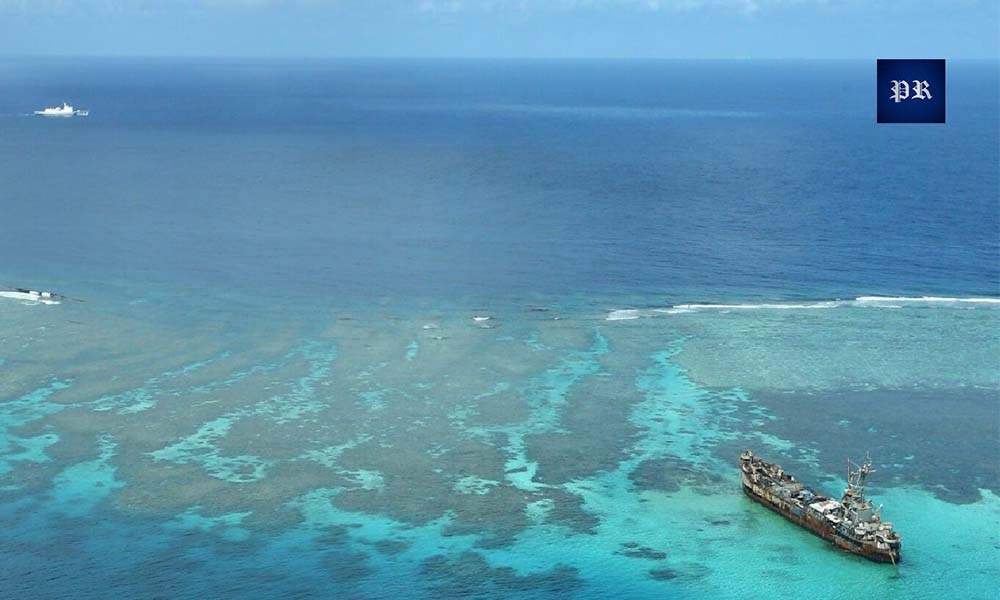
Scarborough Shoal remains one of the most politically sensitive flashpoints. Located well within the Philippines’ exclusive economic zone, it has long symbolized the wider sovereignty dispute between Manila and Beijing. Second Thomas Shoal has also become a regular site of confrontation, with Philippine resupply missions facing obstruction and harassment from Chinese vessels.
In this environment, the transfer of autonomous surveillance systems sends a clear message. Washington is not only reaffirming its alliance with Manila through statements and exercises. It is also helping the Philippines build practical capabilities that can improve its position in day-to-day maritime competition.

Why maritime domain awareness is becoming the real contest
For many years, security discussions in the Indo-Pacific focused heavily on warships, missiles, and air power. Those capabilities still matter, but they are only part of the story. In today’s maritime disputes, information has become a form of strategic power.
Maritime domain awareness is the ability to understand what is happening at sea: who is present, what they are doing, where they are moving, and whether their actions are legal or coercive. It is the foundation of almost every other response. Better awareness supports faster decision-making, more credible law enforcement, more effective naval operations, and stronger diplomatic protests backed by evidence.
That is why countries across the Indo-Pacific are investing in unmanned and autonomous systems. The future of maritime competition will not be decided only by the number of ships in a fleet. It will also be shaped by who can maintain the clearest and most persistent picture of the operating environment.
What this means for China’s gray-zone strategy
The new drones do not fundamentally alter the military balance in the South China Sea. Four autonomous systems are not going to deter a major naval power on their own, nor will they reverse China’s established presence around disputed features. But that does not mean they are insignificant.
Their real impact is that they can reduce the amount of strategic ambiguity in contested waters. Gray-zone tactics often depend on operating in spaces where visibility is limited and responses are slow. If surveillance improves, the ability to deny, downplay, or conceal coercive activity becomes weaker.
For Beijing, that is an inconvenience at minimum and a strategic problem over time. Better Philippine surveillance means more tracking, more documentation, and more opportunities to expose coercive behavior internationally. It also makes it easier for Manila and its partners to build a shared operating picture, which strengthens alliance coordination and crisis response.
A bigger shift in the US-Philippines defense relationship
The transfer of sea drones also reflects the broader trajectory of the US-Philippines alliance. Over the past few years, defense ties between the two countries have deepened noticeably. Military exercises have expanded, access arrangements have widened, and cooperation has become more focused on practical defense modernization rather than symbolic diplomacy alone.
That matters because capability transfers like this are not just about equipment. They are about building a stronger and more resilient Philippine maritime posture over time. If the drones are integrated effectively, they can support a wider surveillance architecture that includes coast guard assets, naval patrols, shore-based sensors, and allied intelligence cooperation.
In other words, the real significance of this move may not be the drones themselves, but what they represent: a longer-term effort to help the Philippines sustain territorial defense and maritime monitoring in one of the world’s most contested waterways.
The wider Indo-Pacific message
This development should also be read in a regional context. The Indo-Pacific is increasingly defined by a competition over access, presence, and information. Smaller coastal states are trying to protect sovereignty and economic rights in contested waters, while larger powers are attempting to shape the rules of behavior around them.
By helping the Philippines improve maritime surveillance, the United States is reinforcing a broader strategic principle: partners do not need identical military strength to become more resilient. Sometimes the most useful support is not a large combat platform, but a system that allows an ally to see more clearly, respond more quickly, and prove what is happening in its own waters.
That is why autonomous maritime systems are gaining importance. They are cheaper than major warships, easier to deploy in certain scenarios, and highly valuable for intelligence collection and surveillance. Over time, they are likely to become a standard feature of maritime competition across the Indo-Pacific.
Final assessment
The US decision to transfer four solar-powered sea drones to the Philippines is not a dramatic headline in the way a fighter jet sale or missile deployment might be. Yet strategically, it may prove more important than it first appears.
At its core, this move strengthens the Philippines’ ability to watch contested waters more consistently, document activity more effectively, and narrow the surveillance gaps that gray-zone actors often exploit. It also reinforces the idea that the future of South China Sea competition will depend not only on hard power, but on who can build the most reliable picture of events at sea.
For Manila, that means better maritime awareness. For Washington, it means a stronger frontline partner in the Indo-Pacific. And for Beijing, it means one more reminder that contested waters are becoming harder to dominate quietly.
If the South China Sea remains the central maritime flashpoint of Asia, then surveillance, persistence, and proof will matter almost as much as ships and missiles. That is what makes this transfer worth watching.
About Indo-Pacific Report
For more geopolitical analysis, strategy coverage, and Indo-Pacific security reporting, visit Indo-Pacific Report:
Website
Facebook
YouTube
U.S. Gives Philippines Eyes to Deter China in the South China Sea