China Just Banned a Philippine Defense Chief — Here’s Why It Backfired
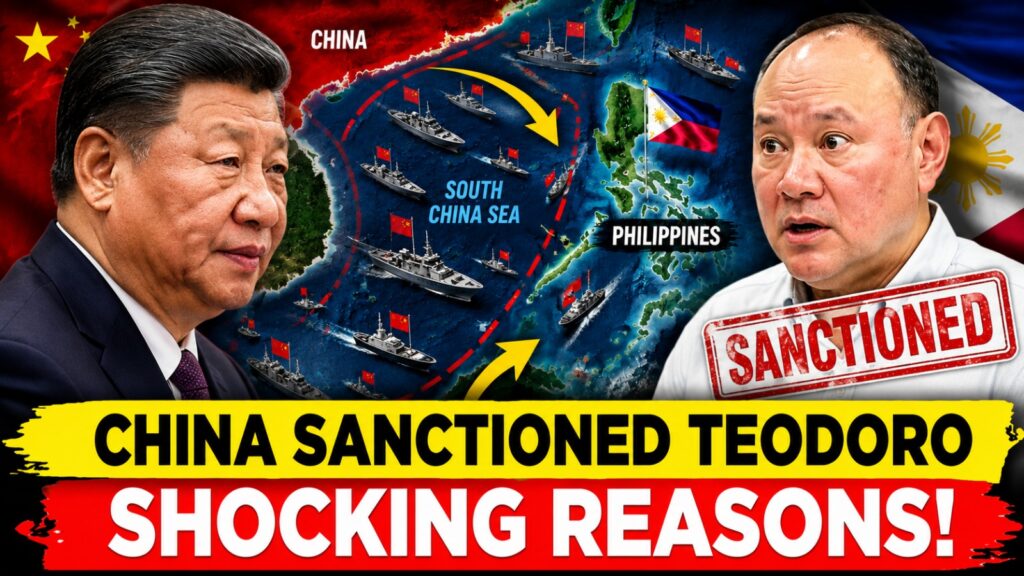
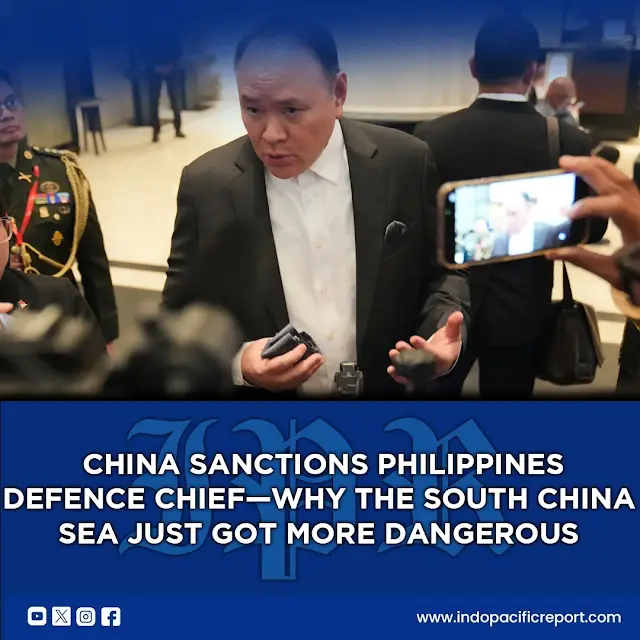
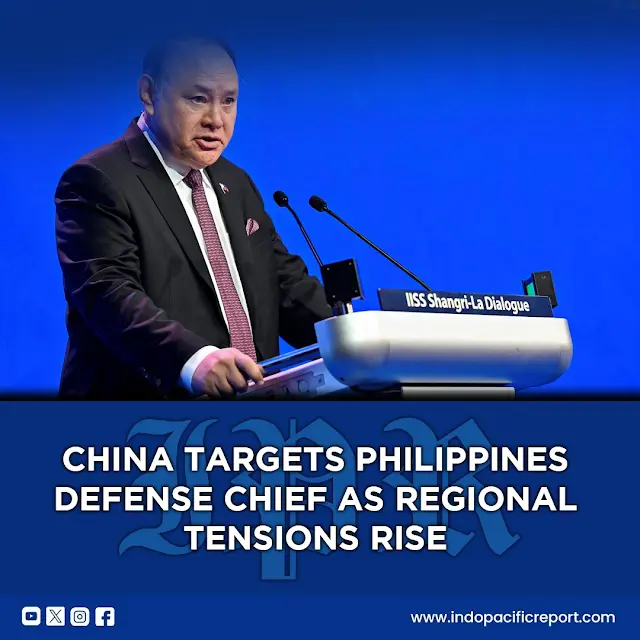
In June 2026, China imposed sanctions on Philippine Defense Secretary Gilberto Teodoro Jr., including travel restrictions and business bans affecting him and his family. Beijing cited his “irresponsible remarks” on South China Sea disputes as justification.
While framed as a diplomatic measure, the move has broader implications for regional security, alliance politics, and the evolving power competition in the Indo-Pacific.
This development raises a critical question: are sanctions becoming a new tool of geopolitical pressure in the South China Sea dispute?
China’s Sanctions and the South China Sea Context
The South China Sea remains one of the world’s most contested maritime regions, involving overlapping claims from China, the Philippines, Vietnam, Malaysia, and others. In recent years, tensions have escalated due to increased coast guard activity, military drills, and diplomatic confrontations.
China’s decision to sanction a sitting defense secretary marks a notable escalation in its diplomatic approach. Traditionally, sanctions are reserved for lower-level officials or post-tenure political figures. Targeting an active defense chief signals a more direct form of political pressure.
Why Gilberto Teodoro Was Targeted
Defense Secretary Teodoro has been one of Manila’s most outspoken officials on maritime security. He has repeatedly criticized China’s claims in the South China Sea and strengthened defense cooperation with the United States and Japan.
Key factors behind the sanctions include:
Strong public criticism of China’s maritime claims
Expansion of US-Philippines military cooperation
Deepening defense ties with Japan
High-profile statements at international forums
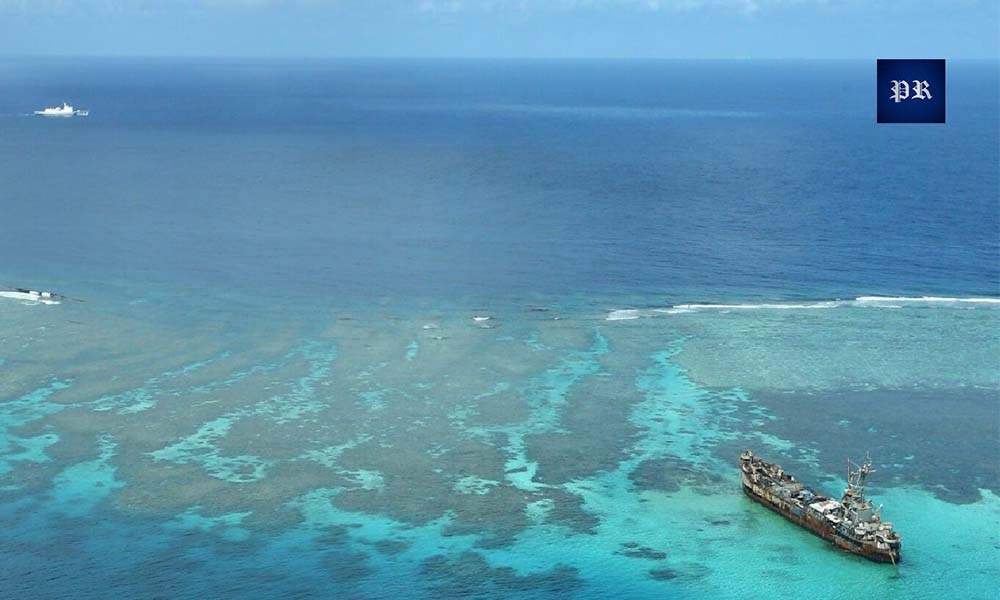
Maintaining a Deterrence Strategy for the Philippines in the Scarborough Shoal
Beijing argues these actions undermine regional stability, while Manila views them as necessary for national defense.
Manila’s Response: Firm but Measured
The Philippine government responded through diplomatic channels, calling the sanctions “unfriendly.” However, Teodoro himself adopted a firm stance, stating that the measures would not affect his duties or position.
This reaction highlights an important dynamic: rather than silencing officials, the sanctions may have reinforced domestic political support and strengthened the defense establishment’s resolve.
A Pattern of Sanctions?
This is not an isolated case. In 2025, China imposed similar restrictions on former Philippine Senator Francis Tolentino after he supported maritime legislation asserting Philippine rights in disputed waters.
Together, these cases suggest an emerging pattern:
China is increasingly using targeted sanctions as a tool to influence political discourse on the South China Sea.
However, the effectiveness of this strategy remains uncertain.
Impact on Regional Alliances
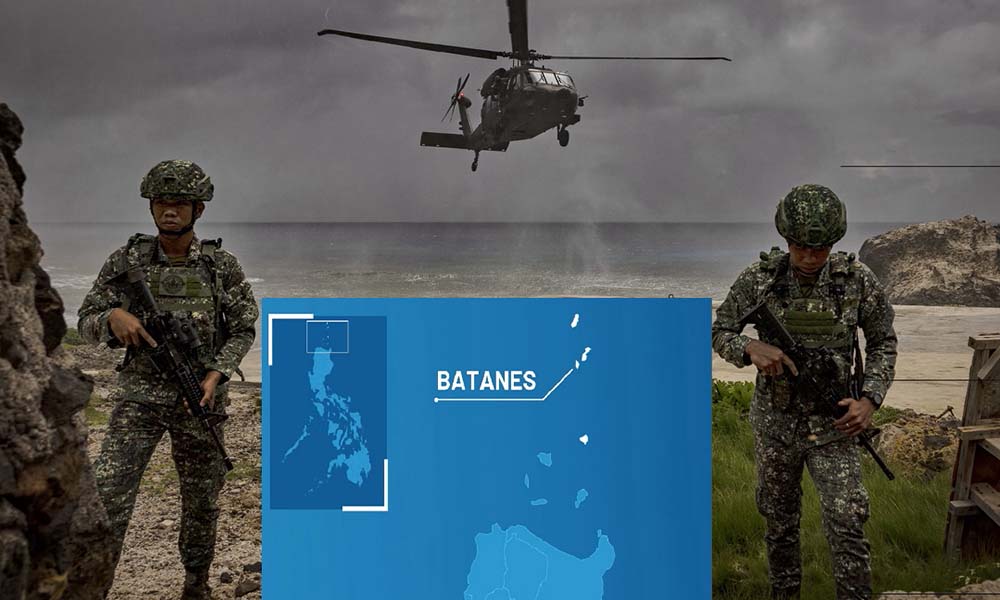
The sanctions come at a time of deepening security cooperation between the Philippines, the United States, and Japan.
The Philippines has expanded joint military exercises with the US and increased defense coordination with Japan. These alliances are widely seen as a counterbalance to China’s growing maritime assertiveness.
Rather than isolating Manila, the sanctions may reinforce its alignment with allied powers.
Strategic Implications for the Indo-Pacific
This development reflects a broader shift in regional geopolitics:
competition is no longer limited to military presence but now includes diplomatic and economic pressure tactics.
Key implications include:
Increased polarization between China and US-led alliances
Greater political sensitivity among Southeast Asian states
Rising importance of information and diplomatic warfare
Potential escalation of retaliatory measures
What Happens Next?
Several key questions will shape the future trajectory of this dispute:
Will China expand sanctions to more officials?
Will ASEAN take a collective position or remain neutral?
Will US and Japan deepen military commitments in response?
Will tensions at sea escalate alongside diplomatic pressure?
The answers will determine whether this remains a symbolic confrontation or evolves into a sustained geopolitical standoff.
Conclusion
China’s sanctions on the Philippine defense chief highlight a new phase in Indo-Pacific competition, where diplomacy, sanctions, and alliances are as significant as military power.
Rather than resolving tensions, such measures may be reinforcing strategic divisions in the region.
The South China Sea dispute is no longer just about maritime boundaries—it is increasingly about influence, alliances, and the rules of regional order.