Trump Says Iran Deal Is “Largely Negotiated”
Published by Indo-Pacific Report | Middle East Geopolitics | Iran Nuclear Talks | Global Energy Security
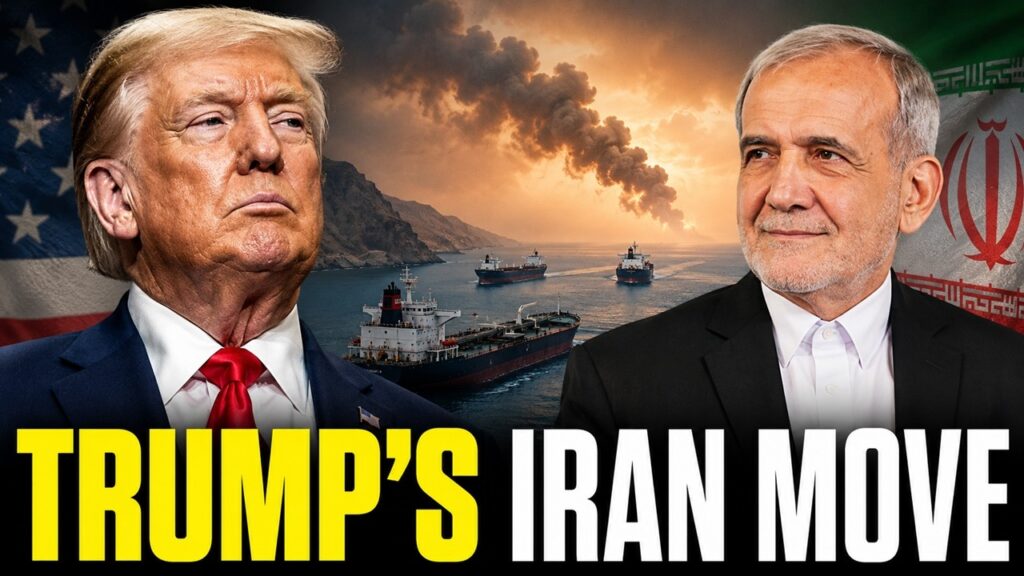
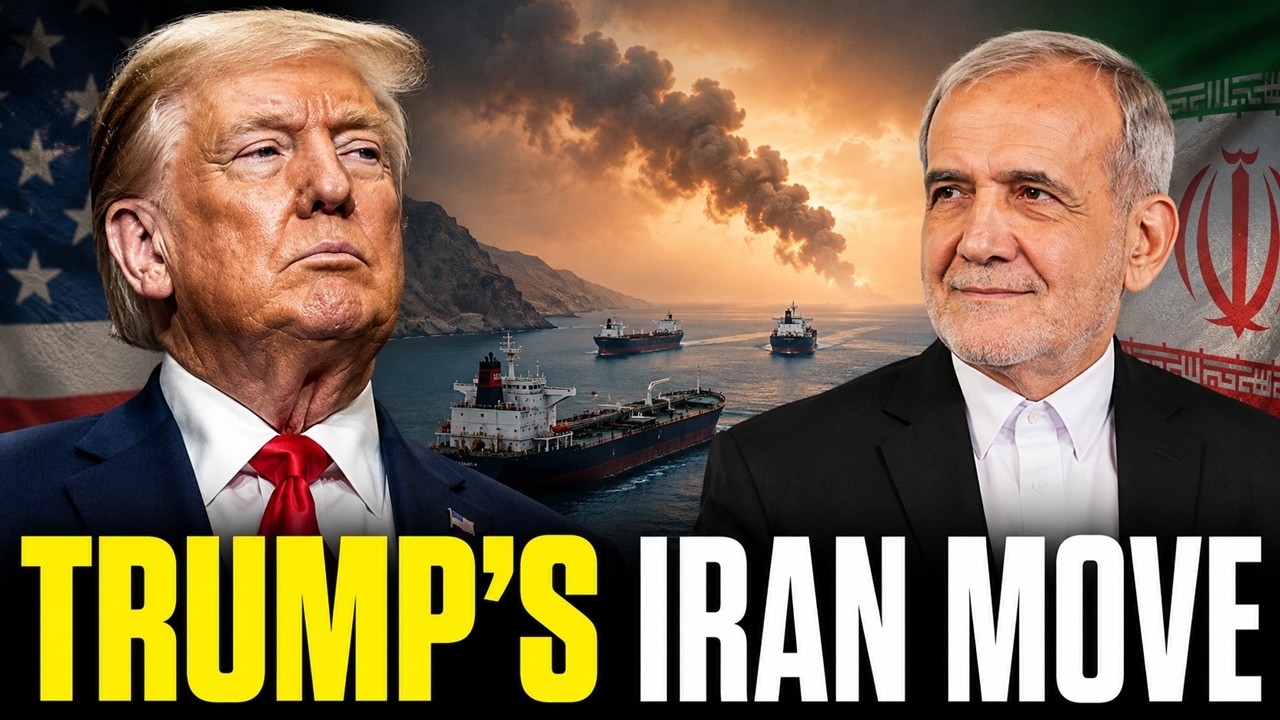
Donald Trump has made a striking claim: a new agreement with Iran is, in his words, “largely negotiated.” Secretary of State Marco Rubio went further, hinting that the world could soon hear “good news.”
If that is true, it would be one of the most consequential diplomatic developments of 2025. A deal with Iran could stabilize the Strait of Hormuz, reduce the threat of regional war, and ease pressure on global oil markets that have been rattled by months of escalating tensions.
But before anyone celebrates, the situation on the ground tells a more complicated story. The war may be cooling, but the distrust runs deep. The nuclear question is unresolved. Israel is watching with deep skepticism. And both Washington and Tehran are still preparing for the possibility that talks could collapse.
So what exactly is being negotiated? What are the sticking points? And what happens to the region if this deal falls apart? Here is what we know.
What Trump Is Claiming — And What That Actually Means
Trump’s statement that a deal is “largely negotiated” is significant, but it needs to be unpacked carefully. A framework being “largely” agreed upon is not the same as a final, signed agreement. And in Middle East diplomacy, the final details are often where everything falls apart.
According to multiple reports, the proposed framework includes two key components:
Reopening and stabilizing the Strait of Hormuz for international shipping
Restarting broader diplomatic negotiations between the US and Iran
US officials describe the progress as “significant.” That is diplomatic language for: we have moved forward, but we are not done yet.
What is notable is the shift in tone. For most of the past year, the US and Iran have been on a path of escalation — sanctions, military threats, proxy conflicts, and near-confrontations at sea. The fact that both sides are now openly talking about a framework is a meaningful change.
A deal being “largely negotiated” is not the same as a deal being done. In diplomacy, the final 10 percent is often the hardest.
For ongoing analysis of Middle East and Indo-Pacific geopolitics, visit Indo-Pacific Report.
The Strait of Hormuz: Why This Waterway Can Move the Entire Global Economy
To understand why this deal matters beyond just US-Iran relations, you need to understand the Strait of Hormuz.
The strait is a narrow waterway between Iran and Oman, connecting the Persian Gulf to the Gulf of Oman and the broader world. It is approximately 33 kilometers wide at its narrowest point. And through that 33-kilometer corridor flows roughly 20 percent of the world’s traded oil — around 17 to 18 million barrels per day.
Countries that depend on Hormuz include:
Japan, South Korea, and China — all of which import the majority of their oil through this route
India, which relies heavily on Gulf energy imports
European nations that purchase Gulf crude
Global shipping companies that move energy, goods, and raw materials through the Persian Gulf
When tensions rise around Hormuz — as they have repeatedly over the past year — oil markets react immediately. Insurance costs for shipping through the strait spike. Tanker operators reroute. And energy prices rise globally.
This is why stabilizing Hormuz is not just a US-Iran issue. It is a global economic issue. And it is why so many governments around the world — including allies in Asia and Europe — are watching these negotiations closely.
Watch our video analysis of the Strait of Hormuz crisis on the Indo-Pacific Report YouTube channel.
The Nuclear Problem: The Issue That Has Derailed Every Previous Deal
The Strait of Hormuz is actually the easier part of the negotiation. The harder issue — the one that has undermined every attempt at a US-Iran deal since 2015 — is Iran’s nuclear program.
What the US Wants
American negotiators are reportedly pushing for strict limits on Iran’s nuclear activities. Specifically, the US is seeking:
A significant reduction in Iran’s enriched uranium stockpiles
Hard caps on the level of uranium enrichment permitted
Robust international inspection and verification mechanisms
Restrictions on the development of ballistic missiles capable of carrying nuclear warheads
Iran and the US Are Exchanging Proposals. Here Is Why a Deal Is Still Out of Reach
What Iran Wants
Iran is not coming to the table without conditions of its own. Tehran is demanding:
Comprehensive sanctions relief, particularly on oil exports and the banking sector
Access to tens of billions of dollars in frozen Iranian assets held abroad
Recognition of its right to maintain a civilian nuclear program
Security guarantees against future unilateral US military action
The gap between these positions is significant. Iran has spent years and enormous economic pain developing its nuclear capabilities. It will not walk away from that investment without meaningful, verifiable concessions from Washington.
And Washington, particularly given the current political environment, is under pressure to deliver a deal that cannot be criticized as giving Iran a path to a bomb.
The 2015 nuclear deal collapsed in 2018 when Trump withdrew from it. Both sides remember that. Getting either government to fully trust the other again is the real challenge.
Israel’s Position: The Wildcard That Could Unravel Everything
Even if Washington and Tehran manage to bridge their differences, there is a third actor whose actions could fundamentally reshape the outcome: Israel.
Prime Minister Benjamin Netanyahu has reportedly made his position clear to Trump: Israel must retain the freedom to act militarily against Iranian threats, regardless of what any diplomatic agreement says. That is not just rhetoric. Israel has demonstrated multiple times that it is willing to conduct military strikes on Iranian assets in Syria and elsewhere when it believes its security is at risk.
Inside Israel, the skepticism toward any US-Iran deal runs deep. The concerns are well-founded from Israel’s perspective:
Any deal that allows Iran to retain nuclear infrastructure leaves open a potential path to a weapon
Sanctions relief would provide Iran with resources to fund proxy groups like Hezbollah and Hamas
A legitimized Iran is a more powerful Iran — and Israel sees that as a direct threat
Washington is trying to manage two competing priorities simultaneously: securing a deal that reduces regional tensions, and reassuring its closest ally in the Middle East that its security will not be compromised.
Those two goals are not impossible to reconcile. But they are genuinely difficult. And if Israel concludes that the deal endangers its security, it has both the capability and the stated willingness to act unilaterally.
Follow daily updates on Middle East security developments via our Facebook page.
The Region Is Still Tense: Diplomacy and Military Pressure Are Happening at the Same Time
Here is something that often gets lost in the coverage of these negotiations: the US and Iran are talking to each other while simultaneously preparing for the possibility that talks fail.
The United States still maintains a significant military presence in the Middle East:
Naval assets in the Persian Gulf and the Red Sea
Air Force units capable of striking Iranian targets
Sanctions enforcement mechanisms that remain active
Iran, for its part, continues to signal military strength. Iranian officials have made public statements about their ability to close the Strait of Hormuz in the event of conflict. Iran’s proxy network — from Hezbollah in Lebanon to Houthi forces in Yemen — remains active.
This is what makes the current moment so fragile. Negotiations are progressing, but neither side has stood down militarily. One failed round of talks, one provocative incident at sea, or one Israeli military strike on an Iranian facility could rapidly reverse whatever diplomatic progress has been made.
Diplomacy and deterrence are running in parallel. That is inherently unstable.
What a Successful Deal Would Actually Change
Let’s be realistic about what a US-Iran agreement — if it happens — would and would not accomplish.
What It Would Change
Oil prices would likely fall as Strait of Hormuz risk premiums are removed from energy markets
Iran’s economy would begin recovering as sanctions are eased, increasing regional stability
Diplomatic channels between Washington and Tehran would reopen after years of total breakdown
The risk of an accidental military escalation in the Gulf would decline significantly

What It Would NOT Change
Iran’s regional ambitions would not disappear — Tehran would still seek influence across the Middle East
The fundamental distrust between the US and Iran, built over decades, would not be resolved by one agreement
Israel’s security concerns would remain, and potentially intensify if Iran gains economic strength
The proxy conflicts in Yemen, Syria, and Lebanon would not automatically end
A deal, if achieved, would be a significant diplomatic win for the Trump administration and a meaningful step toward stability in one of the world’s most volatile regions. But it would not resolve the underlying tensions. It would manage them — at least temporarily.
Middle East diplomacy rarely produces permanent solutions. The goal is usually to reduce the temperature enough to prevent the next crisis. That alone would be worth something.
What Happens If the Deal Falls Apart?
This is the question that regional governments and energy markets are quietly preparing for.
If negotiations collapse — whether due to the nuclear gap, Israeli pressure, domestic politics in either country, or a miscalculation on the ground — the consequences would be significant:
Oil prices would spike sharply as Strait of Hormuz risk returns
US military posture in the region would likely intensify
Iran could accelerate its nuclear program in response to the breakdown
The probability of an Israeli military strike on Iranian nuclear facilities would increase
Proxy conflicts across the Middle East would likely intensify
None of these outcomes are inevitable. But they are all plausible. And the fact that both sides are negotiating under this shadow of mutual threat is what makes the current moment so high-stakes.
The Middle East Is Waiting — And So Is the Rest of the World
Donald Trump’s claim that a deal is “largely negotiated” is the most optimistic signal to emerge from US-Iran relations in years. If it holds, and if the remaining gaps on nuclear restrictions and sanctions can be bridged, the outcome would reshape the geopolitical landscape of the Middle East.
But the history of US-Iran diplomacy is a history of near-misses, collapsed agreements, and missed opportunities. The obstacles that remain — deep mutual distrust, the nuclear question, Israel’s security calculus, and the fragility of the current ceasefire environment — are real and serious.
The talks may be progressing. The deal may be close. But the crisis is not over yet.
And for a region where one wrong move can trigger a chain reaction that affects energy markets, military deployments, and geopolitical alignments worldwide, “close” is not the same as “safe.”
Stay Informed on Middle East and Indo-Pacific Geopolitics
For sharp, clear analysis of the Iran nuclear talks, Middle East security, and global energy geopolitics, visit Indo-Pacific Report — your dedicated source for strategic intelligence from the world’s most critical regions.
► Subscribe on YouTube
► Follow us on Facebook