China and Russia Accused Japan of Dangerous Rearmament. Tokyo Told Them They Are Wrong
By Indo-Pacific Report | May 2026
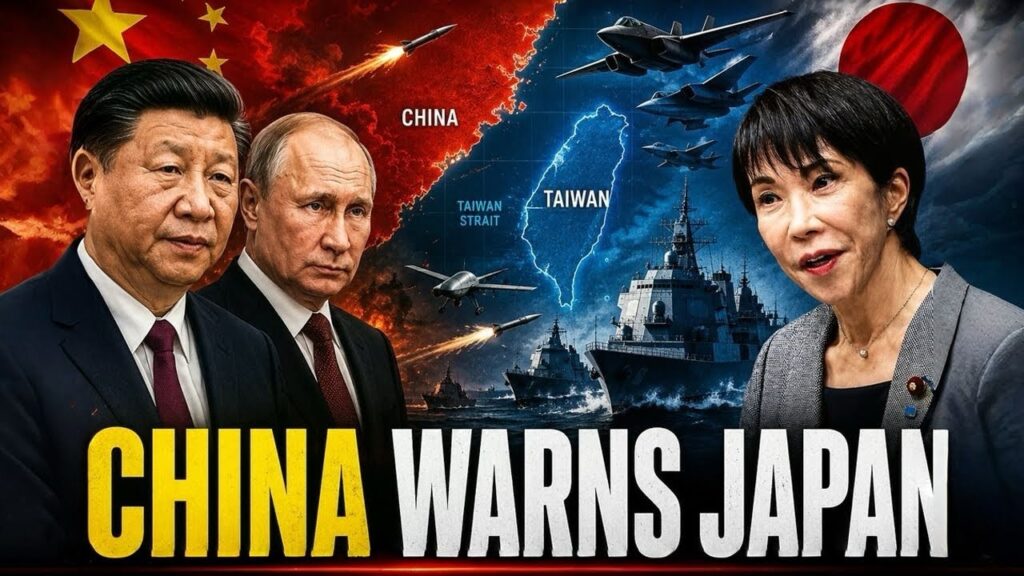
During their recent summit, Chinese President Xi Jinping and Russian President Vladimir Putin did something that would have been unremarkable in past decades but carries considerable weight today: they jointly criticized Japan’s military expansion and warned that Tokyo’s growing defense capabilities posed a risk to regional stability in Asia.
Japan’s response was direct and unambiguous. Japanese government official Masanao Ozaki dismissed the accusations as entirely unfounded. Tokyo made clear that its defense buildup is a response to real and increasing threats — threats that Japan’s officials pointedly attributed to China’s own military behavior in the Indo-Pacific. And for good measure, Tokyo added a call for Russia to end its war in Ukraine, escalating the diplomatic confrontation further.
The exchange captures something important about where the Indo-Pacific security environment stands in 2026. Japan is no longer the cautious, self-constrained military power that spent the postwar decades deliberately minimizing its international defense role. It is rearming purposefully and at speed, it is speaking openly about regional threats by name, and it is not backing down when confronted by the two largest authoritarian powers in Asia. Understanding why Japan made that shift — and what it means for the region — requires looking at both what changed in Tokyo and what is driving the broader competition it is now part of.
What China and Russia Said About Japan
The joint criticism of Japan emerged from the broader context of Xi and Putin’s summit meetings, during which both leaders have made a pattern of coordinating their messaging on shared concerns. Japan’s accelerating rearmament and its deepening security ties with the United States have been a consistent source of concern for both Beijing and Moscow — separately and increasingly together.
Their specific accusation was that Japan’s military buildup was destabilizing — that Tokyo was expanding beyond what defensive necessity required and in ways that shifted the regional balance of power in a direction they found threatening. The framing was predictable: China and Russia presented themselves as voices of stability and restraint, and Japan as the provocateur.
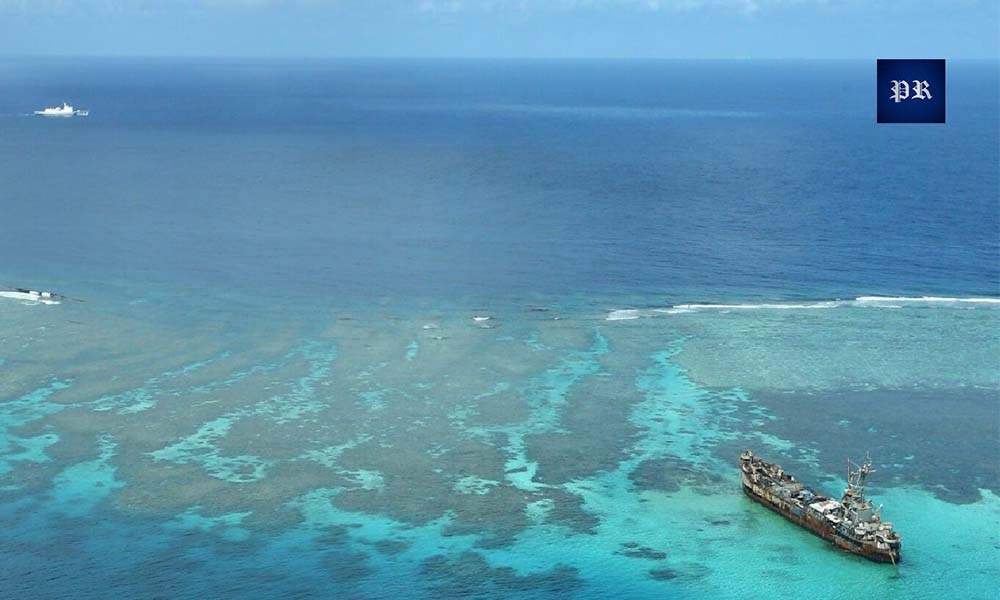
The irony in that framing is considerable. China has spent the past decade building artificial islands in the South China Sea, dramatically expanding its naval and air force capabilities, conducting increasingly aggressive military exercises around Taiwan, and deploying military assets in ways that have alarmed every neighboring country in the region. Russia is in the middle of the largest land war in Europe since 1945. The two governments accusing Japan of destabilization are, by any objective measure, the most active sources of military pressure in their respective neighborhoods.
What the joint criticism does reflect is genuine concern. Japan’s transformation from a constitutionally constrained, minimally armed country into one pursuing long-range strike capabilities, doubled defense spending, and expanded weapons exports is a real change in the regional balance. Beijing and Moscow are not wrong that this represents a significant shift. They are simply unwilling to acknowledge the role their own behavior played in producing it.
Why Japan’s Rebuttal Was More Than Diplomatic Noise
Japan’s rejection of the China-Russia criticism was not just a routine denial. The language and content of Tokyo’s response carried specific signals worth paying attention to.
Calling the accusations unfounded — rather than, for example, offering to discuss concerns through diplomatic channels — is a deliberate choice. It closes the door on the framing that there is a legitimate grievance to be negotiated. Japan is not saying it will reconsider its military posture in response to Chinese and Russian complaints. It is saying the complaints have no valid basis.
More significantly, Tokyo used the moment to go on offense. Rather than defending its own actions exclusively, Japanese officials directly criticized China’s military activities in the Indo-Pacific as the actual source of regional instability. Naming China as a threat in official government statements — rather than speaking in the careful, oblique language that Japanese diplomacy traditionally favored — reflects a fundamental shift in how Tokyo communicates about regional security.
https://indopacificreport.com/6907-2/
The call for Russia to end the Ukraine war added another dimension. Japan has been one of the more active G7 members in supporting Ukraine and maintaining pressure on Moscow. Inserting that demand into an exchange that was nominally about Japan’s own defense posture served as a reminder that Tokyo sees the Russia-China alignment as a connected challenge — not two separate bilateral relationships to be managed independently — and that it is willing to push back on both simultaneously.
Taken together, Japan’s response to the Xi-Putin criticism was a statement of strategic confidence. Tokyo is communicating that it knows what it is doing, it knows why it is doing it, and it is not going to be pressured into moderating its course by countries whose own military behavior is the primary reason the course was set in the first place.
Japan’s Military Transformation: What Has Actually Changed
Understanding the current confrontation requires understanding how dramatically Japan’s defense posture has changed in a short period of time. For most of the postwar era, Japan operated under a pacifist constitutional framework that limited its military to strictly defensive capabilities and prohibited it from exercising the right of collective self-defense — meaning it could not come to the aid of an ally under attack even if its own security interests were directly implicated.
That framework has been systematically dismantled and replaced over the past decade, with the pace accelerating sharply since 2022. Japan is now on a path to doubling its defense budget to roughly two percent of GDP — a figure that, given the size of the Japanese economy, translates into one of the largest defense budgets in the world. The target spending level and the pace of the increase represent a genuine transformation rather than a marginal adjustment.
Long-Range Strike Capability
Perhaps the most significant shift is Japan’s acquisition of genuine long-range strike capability. Tokyo has approved the purchase of Tomahawk cruise missiles from the United States and is developing its own extended-range missile systems. This means Japan can now threaten targets beyond its immediate territorial waters — including, if necessary, missile launch sites on foreign territory that are being used to attack Japan. The capability was previously prohibited under Japan’s constitutional interpretation. Its acquisition signals that Tokyo has fundamentally revised its assessment of what defensive necessity requires.
Weapons Exports
Japan has also lifted longstanding restrictions on military equipment exports that dated to the postwar period. Tokyo can now sell and transfer defense equipment to other countries, including potentially lethal weapons systems. This opens the door to Japan becoming a meaningful participant in global defense industrial cooperation — supplying partners in the Indo-Pacific and beyond with Japanese-manufactured military technology. For China, which views every expansion of Japan’s defense footprint as inherently threatening, this is among the most alarming of Tokyo’s recent policy changes.
China Just Built a Giant Island on Antelope Reef in 5 Months
Alliance Deepening
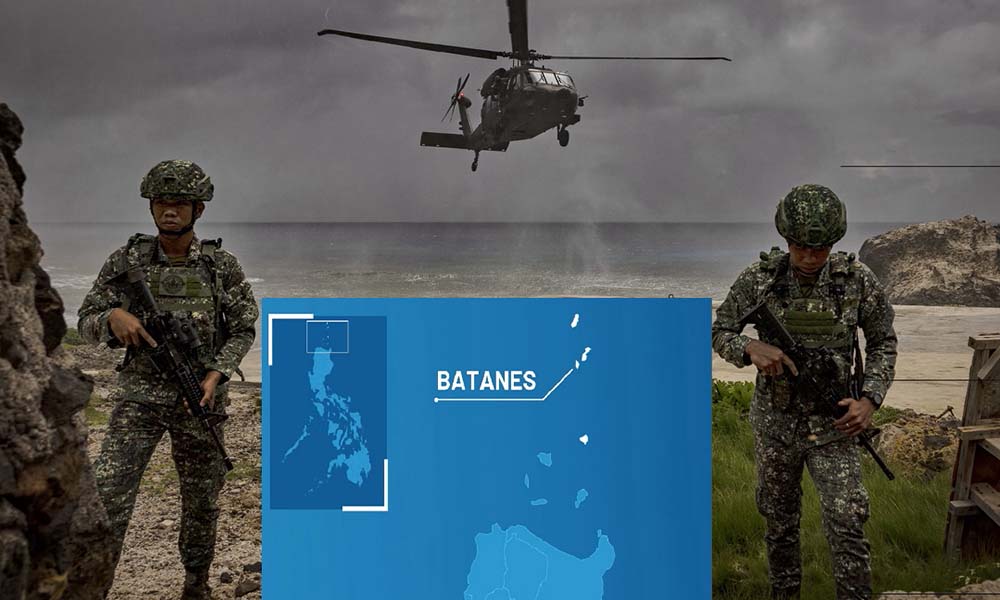
Japan has significantly deepened its security cooperation with the United States, expanded defense engagement with Australia and the United Kingdom through the AUKUS-adjacent JAUKUS technology sharing arrangement, and built new military partnerships with the Philippines and other Indo-Pacific states. The US-Japan alliance has been upgraded in both formal terms and practical capability, with joint command structures, expanded basing arrangements, and more integrated operational planning than at any point since the Cold War.
Taiwan: The Issue That Sharpens Everything
No single issue has done more to accelerate Japan’s military transformation than Taiwan. The possibility of a Chinese military attempt to take control of Taiwan is not an abstract geopolitical scenario for Japan — it is a direct and immediate security concern. Taiwan sits less than 110 kilometers from the Japanese Ryukyu Islands. A Chinese military operation to seize Taiwan would unfold essentially in Japan’s backyard and would inevitably involve the US-Japan alliance, given American treaty commitments and military deployments in the region.
Japanese Prime Minister Sanae Takaichi’s strong public statements supporting Taiwan’s security drew an angry response from Beijing. China warned Japan to stay out of Taiwan-related matters and framed any Japanese engagement with Taiwan’s security as interference in Chinese internal affairs. Tokyo has not retreated from that position.
The Taiwan question has become a test of Japanese strategic clarity. For years, Tokyo tried to maintain a careful ambiguity on Taiwan — maintaining strong economic and unofficial ties while avoiding statements that would directly challenge China’s position. That ambiguity has largely dissolved. Japanese officials now speak openly about the importance of Taiwan’s peace and stability, the connection between Taiwan’s security and Japan’s own, and the unacceptability of any attempt to change Taiwan’s status by force. That shift in language reflects a genuine shift in strategic assessment — and it is one of the clearest signals of how much Japan’s relationship with China has changed.
China’s increasingly aggressive military posture around Taiwan — regular incursions into Taiwan’s air defense identification zone, large-scale military exercises simulating a blockade, and the broader pattern of coercive pressure — has made the calculation straightforward from Tokyo’s perspective. The threat is real, it is proximate, and it directly involves Japanese security interests. Responding to it is not aggression. It is basic strategic logic.
The Broader Indo-Pacific Pattern
Japan’s confrontation with China and Russia does not exist in isolation. It is part of a broader and accelerating pattern of military competition across the Indo-Pacific that is reshaping the security architecture of the entire region.
China is simultaneously pressuring Taiwan, building and militarizing artificial islands in the South China Sea, pressing territorial claims against India in the Himalayas, and expanding its naval presence across the Indian Ocean. Each of these moves has prompted responses from affected countries — and those responses are collectively creating a more militarized regional environment that feeds back into Chinese threat assessments, producing further Chinese military investment and posturing.
The United States has responded by deepening alliance commitments, expanding military access agreements in the Philippines, strengthening the QUAD framework with Japan, Australia, and India, and investing heavily in the capabilities needed for potential high-end conflict in the Pacific. The AUKUS partnership is building Australia a submarine capability specifically designed for the kind of contested maritime environment that a Taiwan contingency or South China Sea conflict would create.
Japan sits at the center of this evolving picture. Geographically, it forms the northern anchor of the first island chain that constrains Chinese naval access to the Pacific. Economically, it is the third-largest economy in the world and one of the primary funders of Indo-Pacific infrastructure development as an alternative to Chinese investment. Militarily, its transformation into a capable, offense-ready defense partner for the United States changes the balance of forces in the region in ways that Beijing and Moscow are right to take seriously — even if their complaints about it ring hollow given their own behavior.

Russia’s role in this picture is less central but not irrelevant. Moscow’s alignment with Beijing, its provision of energy and economic partnership that helps cushion China from Western pressure, and the diversion of American attention and resources toward Europe that Russia’s Ukraine war creates — all of these benefit China’s strategic position in Asia even if Russia itself is not a primary actor in the Indo-Pacific. Japan’s call for Russia to end the Ukraine war is partly about Ukraine itself and partly about the indirect effects of the Russia-China alignment on the security environment Japan is trying to manage.
What Comes Next in Japan-China-Russia Relations
The current trajectory points toward continued deterioration rather than stabilization in Japan’s relationships with both China and Russia. The structural drivers of that deterioration are not going away.
Japan’s defense buildup is a multi-year program that will continue regardless of diplomatic complaints from Beijing or Moscow. The spending commitments are locked in, the procurement decisions are being made, and the alliance deepening with the United States and regional partners is an ongoing process rather than a one-time policy shift. China and Russia can complain about it, but they cannot reverse it through statements at a summit.
China’s military modernization and its coercive posture toward Taiwan will continue providing Japan with the justification it needs domestically for continued defense investment. Every Chinese military exercise around Taiwan, every incursion into the East China Sea near the Senkaku Islands, and every aggressive move in the South China Sea reinforces the Japanese domestic consensus that the spending is necessary. Beijing’s behavior is, in this sense, actively sustaining the Japanese rearmament it claims to oppose.
Russia’s ongoing war in Ukraine has permanently altered Japan’s calculus about the reliability of diplomatic frameworks and international norms as guarantors of security. If a nuclear-armed power can launch a full-scale invasion of a neighboring country and pay a manageable international price, the lesson Japan draws is that capable military deterrence — not diplomatic goodwill — is the foundation of security.
For the Indo-Pacific, the trajectory is a region that continues to militarize, where the major powers are investing heavily in capabilities designed for potential high-intensity conflict, and where the diplomatic structures for managing those tensions are being tested beyond their capacity. Japan’s rejection of the China-Russia criticism is a small but clear data point in that larger story — a country that has decided what it needs to do, is doing it, and is no longer interested in softening the message.
The Bottom Line
China and Russia calling Japan’s military buildup a threat to regional stability is a position that requires ignoring a considerable amount of context — including China’s own island-building, its Taiwan pressure campaign, its East China Sea assertiveness, and Russia’s active land war in Europe. Japan’s government is not interested in pretending that context does not exist.
Tokyo’s response to the Xi-Putin criticism was measured in language but clear in substance: Japan knows what it is responding to, it is going to keep responding to it, and the countries making the complaints are not in a position to credibly lecture anyone about regional stability.
That exchange — Beijing and Moscow complaining, Tokyo dismissing and pushing back — is a small window into the larger competition that is reshaping Asia. The Indo-Pacific is entering a period of sustained military competition where every major power is investing heavily in capability, where alliances and alignments are hardening, and where the space for the kind of diplomatic ambiguity that used to characterize Japan’s approach to regional security has largely closed.
Japan made a decision to compete rather than accommodate. The consequences of that decision — for the region, for the US alliance, and for the broader balance of power in Asia — will be playing out for the rest of this decade.
Follow Indo-Pacific Report for More Indo-Pacific Analysis
For ongoing coverage of Japan’s military transformation, Indo-Pacific security competition, Taiwan tensions, and China-US-Japan dynamics, follow Indo-Pacific Report across all platforms:
Website
Facebook
YouTube