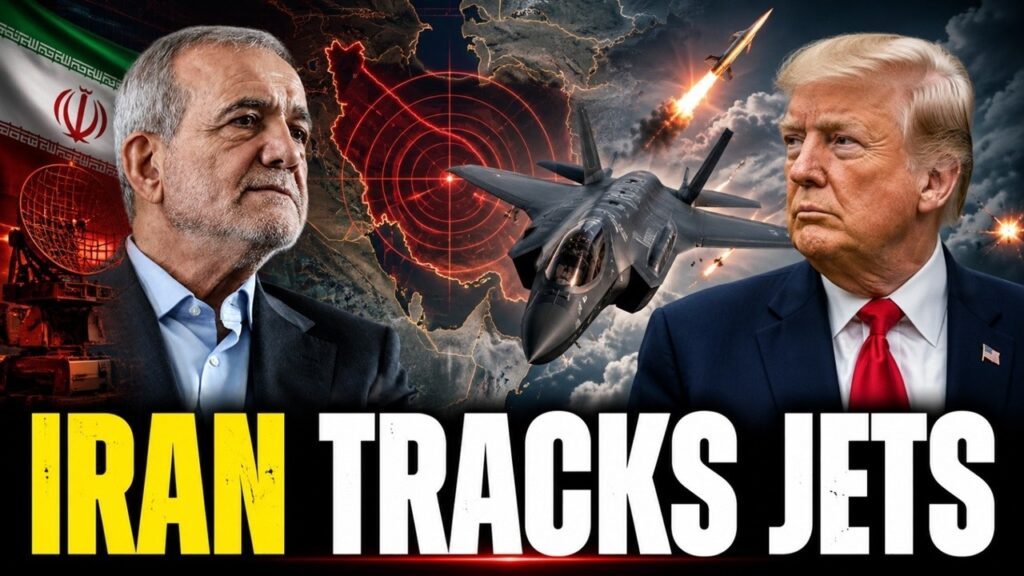
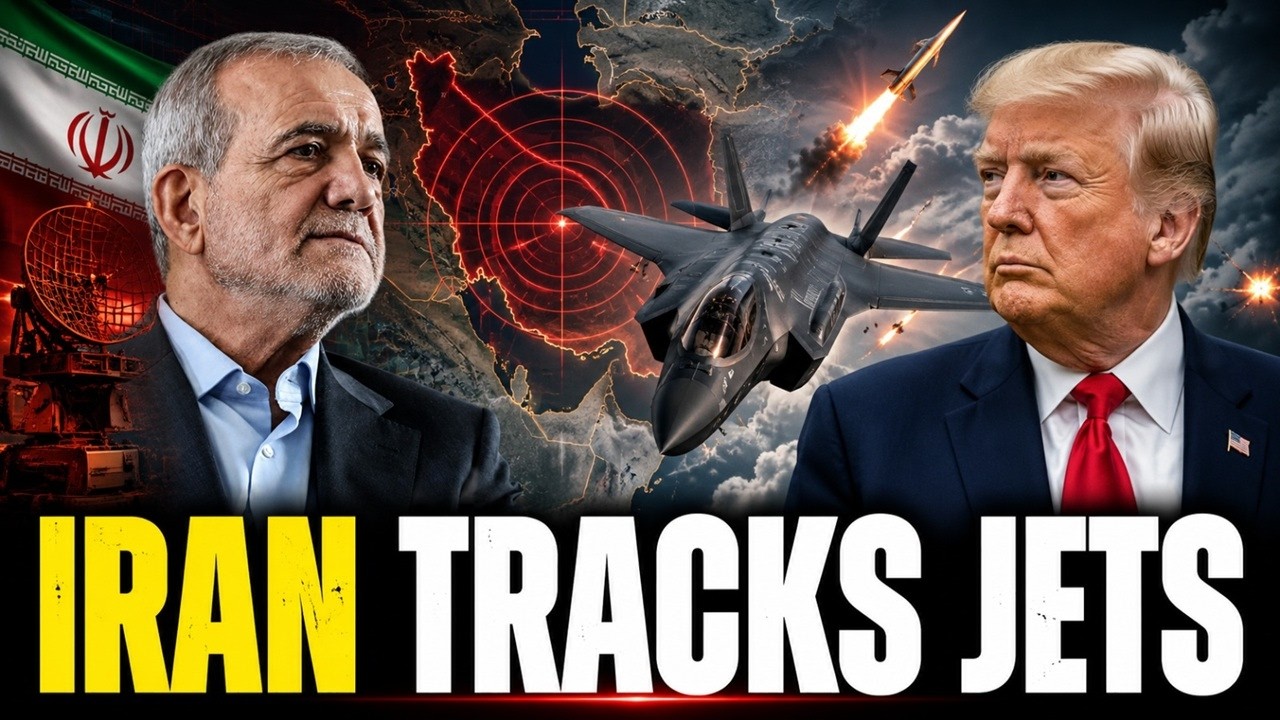
Iran May Now Track U.S Warplanes
How Iran studied American air operations — and what Russia and China may have helped them learn.Something changed during the US-Iran war.
When the United States launched Operation Epic Fury in late February 2026, Washington expected air dominance. American officials spoke confidently about controlling Iranian skies. Defense Secretary Pete Hegseth called the strikes a success. President Trump said Iran’s military had been decimated.
But inside the Pentagon, a very different picture was emerging.
According to reports from The New York Times and Middle East Eye, US officials were privately alarmed. Iran was not just absorbing American strikes — it was learning from them. Iranian commanders were mapping US flight patterns. Tracking aircraft movements. Studying timing and routes. And, according to those reports, Russia may have helped them do it.
If those assessments are accurate, the next time the US strikes Iran, American pilots could face significantly higher risks than before.
Here is what the intelligence reports say — and why it matters.
Iran Studied How American Warplanes Operate
This is not speculation. US officials reportedly told The New York Times that Iran became increasingly successful at anticipating American air operations as the war continued.
What Iran was tracking included flight routes, attack timing, aircraft movement patterns, and the behavior of American pilots over Iranian airspace. Every strike gave Iranian commanders new data. Every sortie was another lesson.
Internal assessments reportedly argued that Iranian military adaptation had moved beyond simple battlefield survivability — repeated operational exposure enabled Tehran to analyze US flight behavior, integrate external intelligence support, and refine engagement cycles against advanced American tactical aviation platforms.” — Defence Security Asia, May 2026
In simple terms: Iran was paying attention. And the more the US flew, the better Iran got at predicting where those aircraft would appear next.
That is the core of the problem. Air superiority is not just about having better planes. It is about surprise, unpredictability, and the enemy not knowing where you will be. If Iran has cracked even part of that code, the equation changes.
Iran Shot Down a US F-15E Strike Eagle
The clearest sign that something had shifted came just days before a fragile ceasefire took hold.
Iran shot down a US F-15E Strike Eagle.
The incident, reported by Middle East Eye and other outlets, forced a major American rescue operation to recover the downed pilots. US officials reportedly viewed the shoot-down as direct evidence that American flight patterns had become more predictable to Iranian air defense systems.
The implications of that are enormous. The F-15E is one of the most capable fighter jets in the world. It has dominated every air campaign it has ever entered. Losing one — especially to a country under sustained US bombardment — is a serious signal.
And it was not the only close call.
https://indopacificreport.com/if-cuba-is-attacked-will-it-fight-back/
In March 2026, an F-35 stealth fighter was reportedly damaged by Iranian fire. Iran’s IRGC claimed the hit, and while US officials neither confirmed nor denied it initially, the report received widespread attention. The US has also acknowledged losing at least 16 MQ-9 Reaper drones over Iran — one of the highest drone attrition rates in recent American military history.
“Iran was getting closer to successfully shooting down US warplanes as the war progressed.” — Middle East Eye, May 2026
Russia and China: The Hidden Factor Behind Iran’s Defenses
Here is where the story gets more complicated.
Iran did not develop these capabilities alone. According to The New York Times, Russia may have actively helped Iran map US flight patterns — providing satellite imagery, US naval position data, and broader military intelligence to Tehran. Russia and Iran have a long-standing security relationship that deepened significantly after Russia’s invasion of Ukraine in 2022.
China’s role is equally significant — and perhaps more alarming.

According to a Defence Security Asia investigation published in April 2026, Chinese geospatial company MizarVision published AI-enhanced satellite imagery identifying Patriot missile batteries, THAAD systems, aircraft shelters, fuel depots, and command centers at US bases in the region. A Defense Intelligence Agency official reportedly described the activity as a Chinese company “maliciously providing intelligence on an open-source platform” — freely available to anyone, including Iranian military planners.
Iran also acquired a Chinese-built high-resolution Earth observation satellite in late 2024, purchased for approximately $36.6 million. This gave Iranian commanders unprecedented visibility into US base layouts, defensive positions, and operational patterns — months before the war even started.
Iran’s air defense network itself is a hybrid of Iranian-made systems, Russian-supplied platforms, and Chinese missile systems. After earlier exchanges with Israel and the US in 2025, China reportedly provided additional air defense batteries to Iran. That means Iran entered the 2026 conflict with a more layered and more capable defensive architecture than many analysts had expected.
Iran’s Missile Stockpile Was Not Decimated
President Trump and his advisors publicly declared Iran’s military badly damaged. The reality, according to leaked intelligence assessments, tells a different story.
The New York Times reported that Iran still retains approximately 70 percent of its mobile missile launchers and roughly 70 percent of its missile stockpile compared to pre-war levels.
Many of Iran’s most important missile systems were buried deep underground — inside hardened tunnels and cavern systems designed specifically to survive air attacks. The US did target several of these underground sites. But reports say Iran used the ceasefire period to clear rubble and begin restoring facilities, with many weapons systems reportedly still intact.
That means Iran did not just survive the strikes. It adapted. And its ability to strike back — against US bases, Gulf allies, or commercial shipping — may remain largely intact.
The Atlantic Council’s tracker of US military assets in the Iran war, updated through mid-May 2026, noted that Operation Epic Fury has stressed American military capabilities in ways that will have measurable effects on US readiness in other theaters — including its ability to deter China in the Indo-Pacific.
What This Means for Any Future Conflict
None of this means Iran defeated the United States. The US Air Force remains far more powerful. American pilots are better trained. American aircraft are more advanced. That is not in question.
But the margin of safety has narrowed.
Iran now has combat data on American air operations. Its commanders have studied real engagements, not simulations. Its air defense systems have been tested — and have scored real results. And it has external support from two major powers with deep interest in seeing American military credibility tested.
“Intelligence discussions reportedly warned that adversaries increasingly require only partial tracking success rather than complete battlespace visibility — because even fragmented detection opportunities can create engagement windows against sophisticated aircraft operating repeatedly along expected vectors.” — Defence Security Asia, May 2026
In plain language: Iran does not need to be perfect. It just needs to get lucky more often than it did before.
That raises the cost of future US military action against Iran — and complicates the strategic calculus for any administration considering a return to strikes.
The Bigger Picture: This Is Now an Intelligence War
What we are watching in 2026 is not just a conflict between the United States and Iran. It is a broader competition between great powers — playing out through proxies, intelligence networks, and technology.
Russia shares intelligence with Tehran. China provides satellite coverage and air defense hardware. Iran provides a live testing ground for systems and tactics that China and Russia will study carefully for their own future use against American forces.
As researchers at Small Wars Journal wrote in March 2026, China views the Iran conflict as an opportunity to observe how US missile defense systems, stealth aircraft, and electronic warfare operate in real combat — intelligence that is directly relevant to any future confrontation over Taiwan.
That is the strategic depth behind what looks, on the surface, like a regional war.
Iran fighting the United States is not just about Iran. It is about testing the limits of American military power in a world that is rapidly moving away from unchallenged US dominance.
Final Assessment: The Risks Are Growing
Iran entered the 2026 conflict weaker than the United States in almost every measurable category. It still is. But it has learned. It has adapted. And it has done so with help from two of the world’s most advanced military powers.
The F-15E shoot-down. The F-35 damage report. Sixteen lost drones. A 70 percent missile stockpile still intact. A ceasefire that gave Iran time to recover.
These are not the signs of a decimated military.
They are the signs of a military that studied its enemy, took its hits, and is preparing for the next round.
For the United States, that means any future decision to strike Iran again will carry heavier costs, greater risks to American pilots, and deeper consequences for the regional order that Washington has spent decades building.
The war may be on pause. But the learning never stopped.
Follow IndoPacific Report for More Geopolitical Analysis
Website
YouTube
Facebook
Sources
• Middle East Eye — Iran has mapped out US flight patterns for air defence (May 2026)
• Defence Security Asia — Pentagon Warned Trump: Iran Can Now Track US Fighter Jets (May 2026)
• Defence Security Asia — China’s AI Satellite Maps Helping Iran Target US Bases (April 2026)
• Army Recognition — Iran F-5 Exploits 120-Second Window to Strike US Base (April 2026)
• Atlantic Council — Tracking US Military Assets in the Iran War (May 2026)
• Small Wars Journal — Chinese Eyes, Iranian Missiles: Intelligence Cooperation in the 2026 War
• Al Jazeera — Iran Hits US AWACS, Air Tankers (March 2026)