Japan Building Asian NATO in the Philippines to Deter China
The Day Japan Broke an 80-Year Rule On May 6, 2026, two missiles streaked across the sky over the South China Sea.
They were not fired from a Japanese island.
They were not fired in self-defense.
They were fired from the sand dunes of northern Luzon — Philippine soil.
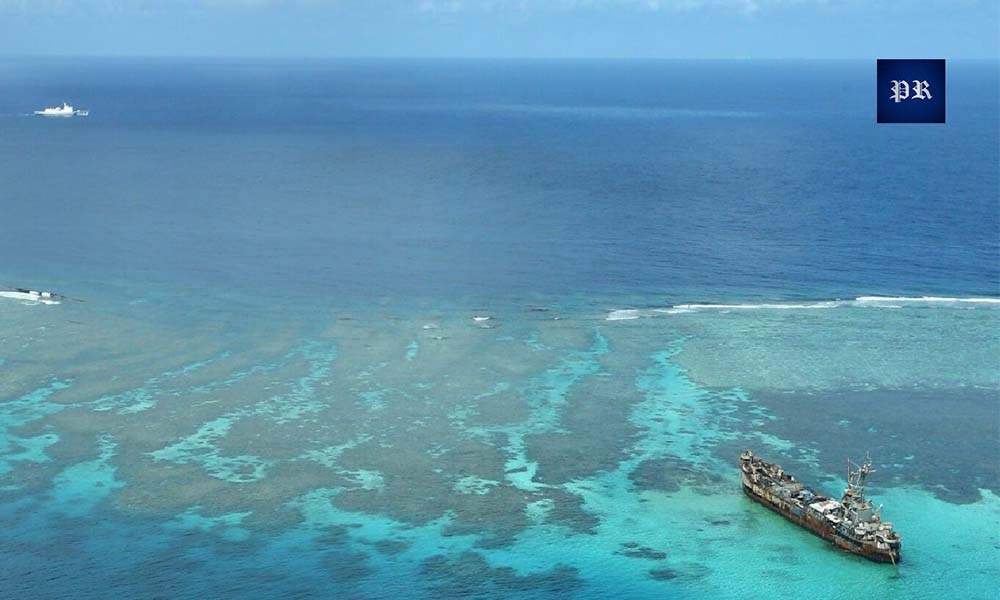
The target was an old warship called the BRP Quezon, sitting 75 kilometers offshore. Within six minutes, it sank.
That ship had a strange history. It was built in the United States during World War II as the USS Vigilance, a minesweeper that once fought against Japan in the Pacific. Eighty years later, it was destroyed by Japanese missiles — fired from the soil of one of Japan’s former wartime victims.
This was no accident of history. It was a message.
For the first time since 1945, Japan fired an offensive missile overseas. And it did it in the Philippines, in front of cameras, in front of Japanese Defense Minister Shinjiro Koizumi, and in front of Philippine Defense Secretary Gilberto Teodoro Jr. President Ferdinand Marcos Jr. watched the strike live from his headquarters in Manila.
Something big is happening in Asia.
Something the world is only beginning to notice.
More Than a Drill
At first glance, this looked like a normal military exercise. It was part of Balikatan 2026, the largest joint drill ever held in the region.
The numbers tell you it was anything but normal:
Around 17,000 troops took part. Seven countries joined. About 10,000 were American. Around 1,400 came from Japan. And for the first time ever, troops from Canada, France, and New Zealand also showed up to fight side by side.
But the real headline was not the size. It was the symbolism.
Before the drills began, Philippine Armed Forces chief General Romeo Brawner Jr. said it plainly:
“Eighty-one years later, this is the first time we will have Japanese combat troops again on Philippine soil.”
Eighty-one years. Think about that.
For more than three generations, Japan stayed out of military operations in Asia. After World War II, Tokyo had a peace constitution. Article 9. No army. No overseas operations. No offensive weapons abroad.
That world is ending. And the Philippines is where the new world begins.
https://indopacificreport.com/how-china-took-over-mischief-reef-can-the-philippines-stop-it/
The Agreement That Started It All
To understand what just happened, you have to go back to July 2024.
That month, Japan and the Philippines signed something called the Reciprocal Access Agreement, or RAA. The name sounds boring. It isn’t.
The RAA is the legal key that unlocks everything. It lets Japanese forces operate inside the Philippines, and Filipino forces operate inside Japan — for joint exercises, disaster relief, and combat training.
The path was fast and deliberate. The Philippine Senate ratified it in December 2024. Japan’s parliament approved it in June 2025. The two sides exchanged diplomatic notes in Manila on August 12, 2025. And it officially entered into force on September 11, 2025.
This is the first such agreement Japan has ever signed with an Asian country.
At the ceremony in Manila, Defense Secretary Teodoro made the goal clear:
“It provides deterrence for those actors who may not see things the way we do.”
He did not say “China.” He did not need to.
How China Took Over Mischief Reef – Can the Philippines Stop It?
Why the Philippines? Look at the Map.
Tokyo could have built closer ties with Australia. It could have leaned on South Korea. It could have worked through Taiwan indirectly.
Instead, Japan picked the Philippines as the center of its new defense network. Why?
Because of geography.
The Philippines sits at the meeting point of three of the most contested waters in the world: the South China Sea, the Taiwan Strait, and the Luzon Strait.
The Luzon Strait matters more than most people realize. It is the narrow gap of water between northern Philippines and Taiwan. Almost every Chinese warship moving from the South China Sea to the wider Pacific has to pass through it.
If you control the Luzon Strait, you control China’s naval access to the Pacific Ocean.
That is why Japan fired its Type 88 missiles where it did. The launch site, Ilocos Norte, sits about 400 kilometers south of Taiwan, looking directly into the strait.
For Japan, this is not optional. Tokyo depends on shipping lanes for oil, gas, and food. If those lanes are cut, Japan starves. So Japan needs partners along those routes. And the Philippines is the most important partner of all.
The Weapons Are Coming
The day before the missile strike, on May 5, 2026, something happened in Manila that may matter even more.
Koizumi and Teodoro met and announced something historic. Japan would begin transferring real military hardware to the Philippines.
Not training tools. Not coast guard boats. Warships.
On the table: the Abukuma-class destroyer escorts (six exist in Japan’s fleet, all potentially up for transfer by 2027), TC-90 patrol aircraft, and air surveillance radar systems.
Then Teodoro stunned reporters by saying:
“The transfer is a giveaway.”giveaway. As in: free.
This is huge. For decades, Japanese law banned the export of lethal military equipment. Then, on April 21, 2026, Tokyo rewrote those rules. Now Japan can ship warships to its partners.
If the destroyer deal goes through, it may become Japan’s first-ever export of lethal military hardware under the new policy. And the Philippines is the first customer.
This is part of a bigger pattern. Japan has already supplied 13 patrol vessels to the Philippine Coast Guard through soft loans, plus radar systems and earlier TC-90 aircraft. Manila was even the very first recipient of Japan’s “Official Security Assistance” — a new aid program built for friendly Indo-Pacific nations.
So this is not a one-time deal. This is an architecture being built piece by piece.

The Quietest Signal of All
Most people focus on the missiles and the warships. But the biggest signal is not loud. It is quiet.
It is the soldiers in suits — what diplomats call “military attachés.”
Today, the Japanese embassy in Manila hosts military representatives from all three branches of Japan’s Self-Defense Forces: ground, navy, and air.
That may sound like paperwork. It is not.
Military attachés are the daily glue of military relationships. They share intelligence. They plan drills. They build trust between forces. When all three services sit permanently in the same embassy, it usually means one thing — the relationship is no longer occasional. It is institutional.
Then came another layer. In January 2026, Japan and the Philippines signed an ACSA — an Acquisition and Cross-Servicing Agreement. This lets them share fuel, food, and ammunition during training and joint operations. Tokyo also pledged about 6 million dollars in security funding to build storage facilities and boathouses for Japanese-donated patrol craft.
So now stack the pieces together:
Legal access (RAA). Equipment transfers (Abukuma destroyers, TC-90 aircraft, radars). Logistics sharing (ACSA). Permanent military attachés. Live-fire exercises on Philippine soil.
That is not a friendship. That is an architecture.
China Is Watching
Beijing is not happy. After Japan fired its Type 88 missiles, Chinese Foreign Ministry spokesman Lin Jian accused Tokyo of pushing “accelerated remilitarisation” and reached back to wartime history with the phrase “neo-militarism.”
Earlier, his colleague Guo Jiakun warned all three countries:
“Blindly binding themselves together in the name of security will only be akin to playing with fire — ultimately backfiring upon themselves.”
Then China backed up its words. As the drills wrapped, Beijing sent armed anti-ship bombers over Scarborough Shoal — a contested reef west of the Philippines.
The message was clear. China sees the same architecture forming that Tokyo and Manila do. And it doesn’t see balance. It sees encirclement.
There is another layer here. Because of World War II, any sign of Japanese military activity abroad carries deep emotional weight in Asia. China can frame Japan’s return not as defense, but as “remilitarization.” That is exactly the word Lin Jian used. It is a powerful narrative — and Beijing knows how to use it.

What the Philippines Gains, What It Risks
For Manila, the benefits are obvious. Stronger deterrence against China. Better radar coverage and maritime awareness. Free destroyers. Modern surveillance aircraft. And the backing of seven of the world’s most capable militaries.
But there is a tradeoff.
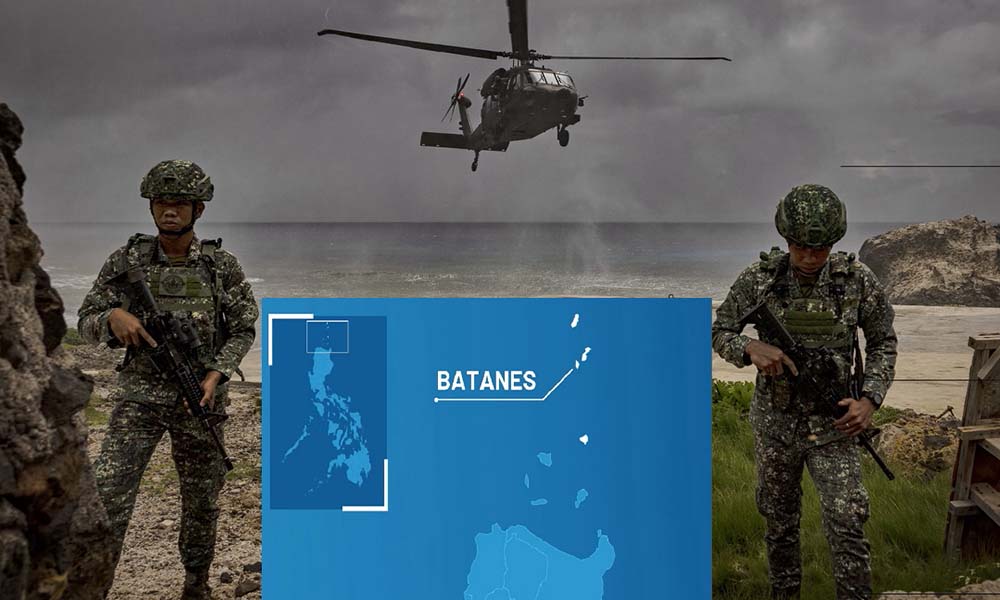
The deeper the Philippines locks into this network, the more it becomes a frontline state. During Balikatan 2026, U.S. NMESIS anti-ship launchers were deployed to Itbayat Island in Batanes — just 100 miles from Taiwan. If a war ever breaks out across the Taiwan Strait, the Philippines will not be a spectator. It will be a target.
Some Filipinos welcome this. They see Chinese pressure at Scarborough Shoal and want real protection. Others worry about sovereignty. Others fear getting trapped between Washington, Tokyo, and Beijing.
These debates are real. They are not going away. They are growing louder.
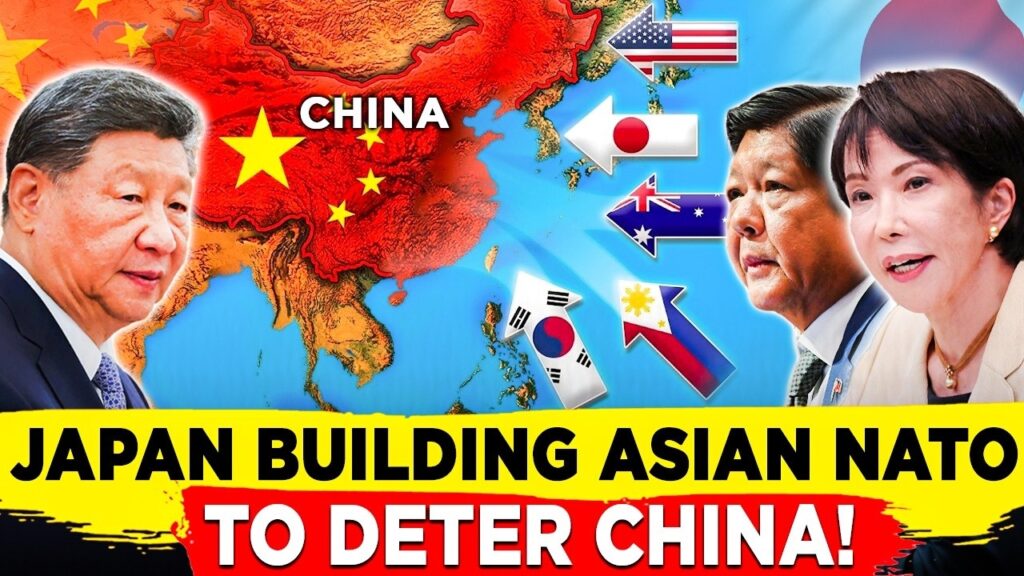
Is This Really an “Asian NATO”?
Let’s be honest.
This is not NATO in the formal sense. There is no Article 5. No collective defense treaty. No alliance headquarters. No flag.
But the comparison is not useless. Because what matters is the direction.
Look at what is stacking up: shared exercises, shared access agreements, shared intelligence, shared logistics, shared missile networks across allied territory, and shared command planning.
That is how alliances start. Not with one big signing ceremony. Bit by bit. Quietly. Through layered agreements that one day become impossible to undo.
And in this story, Japan is no longer sitting on the sidelines. Tokyo is helping build the framework.

Closing — The New Map of Asia
So when Japanese missiles light up the sky over the South China Sea…
When Japan starts giving away destroyers to the Philippines...
When Japanese military officers become permanent fixtures inside the Manila embassy…
And when all of this lines up with American missiles, French frigates, Canadian warships, and Australian troops operating in the same waters…
You are no longer watching ordinary defense cooperation.
You are watching the early shape of an Indo-Pacific security bloc.
Maybe not an “Asian NATO” by name. At least not yet.
But the foundations are being poured — slab by slab, agreement by agreement, missile by missile.
If this trend continues, the Philippines may become one of the most strategically important military hubs in Asia. Not because of one treaty. Not because of one exercise. But because so many layers of military integration are quietly converging on its soil at the same time.
And that may quietly reshape the balance of power across the Indo-Pacific for decades to come.