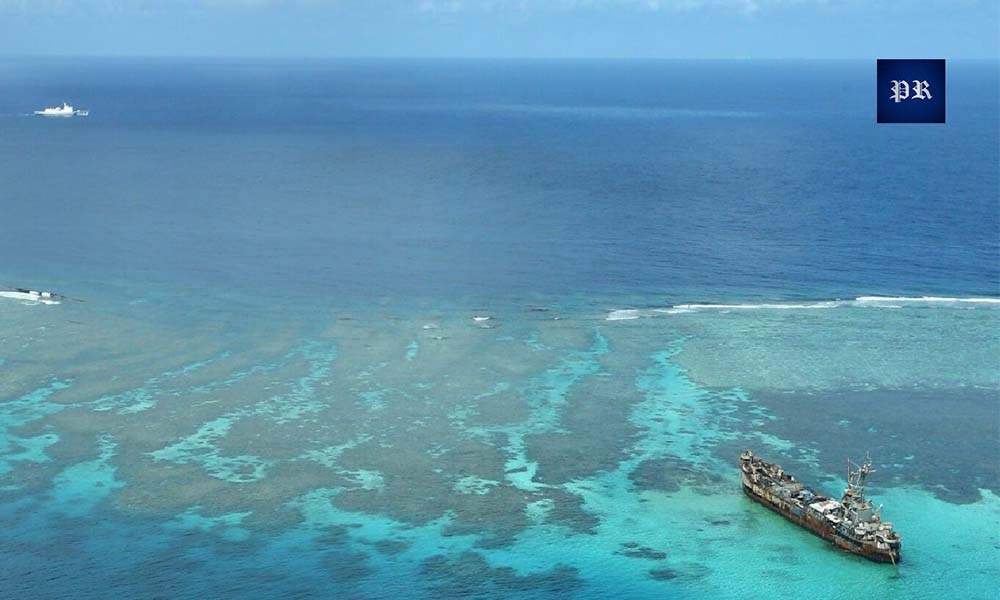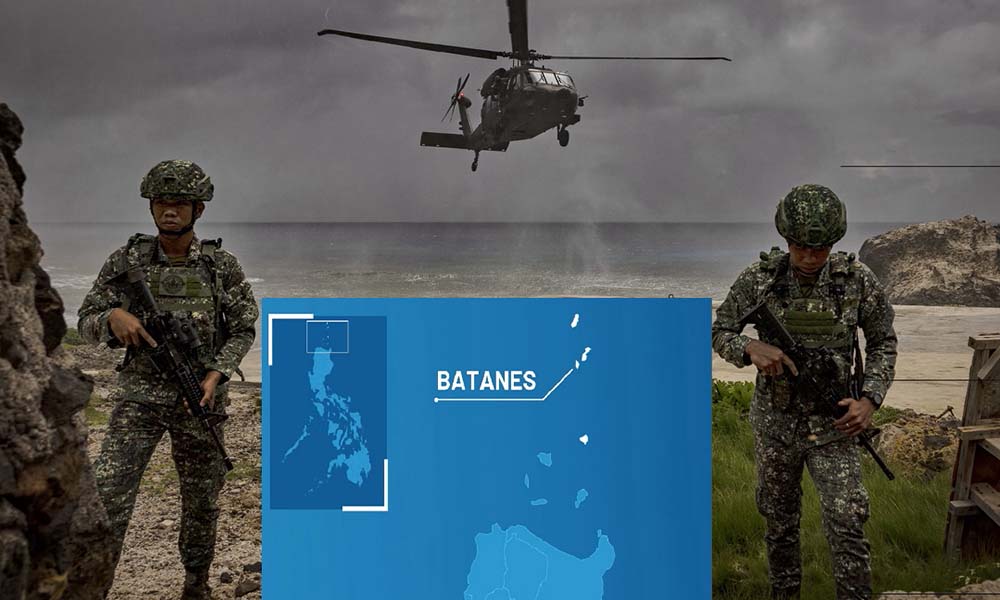
U.S. Transfers Marine Protector Patrol Boats to Philippines as China Escalates in South China Sea
China Is Poisoning the South China Sea. America Just Responded With These.
The U.S. transfer of Marine Protector-class patrol boats to the Philippine Coast Guard signals a deepening strategic commitment — and a direct counter to Beijing's grey-zone campaign.
By Indo-Pacific Report · April 20, 2026 · South China Sea / Manila / Washington
The U.S. transferred Marine Protector-class patrol boats to the Philippines as China deploys cyanide and barriers near Second Thomas Shoal. Here is what it means strategically. In April 2026, the Philippine Coast Guard received two U.S. Marine Protector-class patrol cutters — 87-foot vessels transferred under the Excess Defense Articles program. The transfer followed a February 16, 2026 contract signing between Philippine Coast Guard Commandant Admiral Ronnie Gavan and John Noh, the U.S. Defense Department’s Assistant Secretary for Indo-Pacific Security Affairs. It was the culmination of a process that began with Philippine President Ferdinand Marcos Jr.’s state visit to Washington in May 2023.
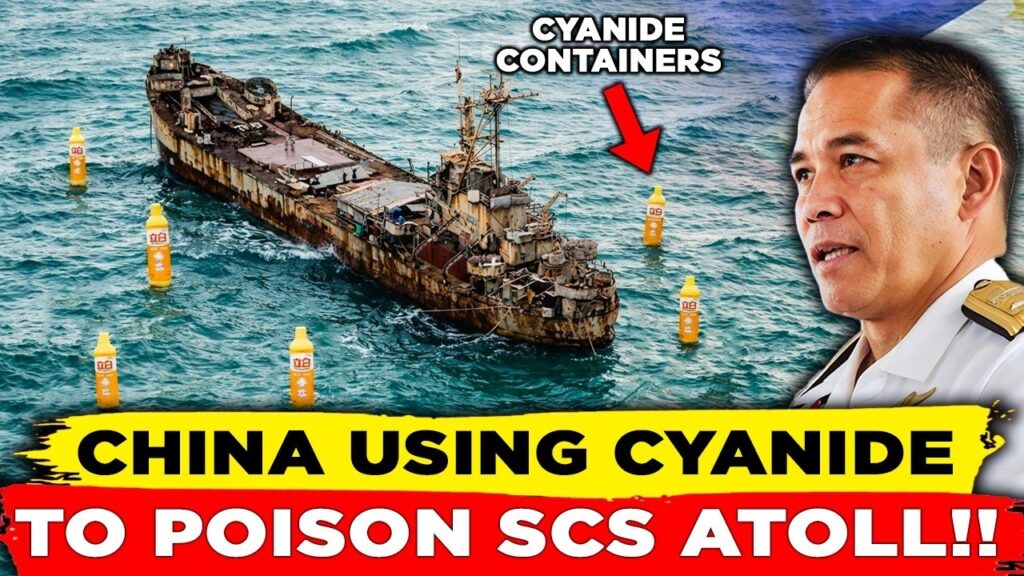
The transfer did not occur in a vacuum. In the weeks prior, Philippine naval personnel reported finding cyanide on Chinese vessels operating near Second Thomas Shoal — laboratory-confirmed evidence of ecosystem destruction in contested waters. Chinese Air Force aircraft intercepted Philippine Coast Guard surveillance planes near Scarborough Shoal, a reef sitting inside the Philippines’ own exclusive economic zone. Chinese maritime militia vessels swarmed Filipino fishing boats. Floating barriers blocked Filipino fishermen from their own traditional fishing grounds.
Two Marine Protector-class cutters and three Beechcraft King Air turboprop aircraft for maritime domain awareness are now in Philippine service. On the surface, this is a modest hardware transfer. Strategically, it is something else entirely.
The Grey-Zone Campaign — And What It Takes to Answer It
Beijing’s strategy in the South China Sea has never required a single dramatic act. It operates through incremental normalization — slow, sustained pressure designed to shift the facts on the water without triggering the kind of response that a missile would demand. Floating barriers. Maritime militia. Water cannons. And now, according to Philippine naval reports, cyanide — a chemical that destroys coral reef ecosystems and poisons the fishing grounds that Filipino coastal communities depend on for their livelihoods.
This is grey-zone warfare in its most deliberate form. The goal is not conquest through battle but suffocation through persistence. Beijing advances. Manila protests. The world moves on. As Graham Allison has observed in his work on structural rivalry, the danger in such competition is not that either side chooses war — it is that neither side recognizes where the tripwire actually lies until it has already been crossed.
The Marine Protector addresses precisely this dynamic. It is not a warship. It cannot challenge a Chinese destroyer. What it can do is what grey-zone competition ultimately requires: show up. The vessel that physically occupies contested space sets the terms. Presence is the argument. And in the South China Sea, the ability to sustain that presence — at the shoal level, in real time — is the operational capability most conspicuously absent from the Philippine Coast Guard’s order of battle.
U.S. Military Presence in East Asia Pillar of Indo-Pacific Stability
What America Transferred — And Why It Matters
The Marine Protector-class cutter is an 87-foot coastal patrol vessel built by Bollinger Shipyards in Louisiana on a hull design by the Dutch firm Damen Group. At 102 tons displacement, crewed by ten personnel, capable of 25 knots and a range of 900 nautical miles, it is engineered for exactly the kind of coastal and near-offshore operations the South China Sea demands. It carries .50 caliber Browning M2 heavy machine guns — sufficient for coast guard confrontations, not intended for fleet engagements.
The transfer package also includes three Beechcraft King Air turboprop aircraft designated for maritime domain awareness — the ability to watch, track, and document Chinese activity from altitude. Documentation has become a strategic instrument in this conflict. Without evidence, grey-zone incidents are deniable. With it, they are diplomatically actionable and internationally visible.
The mechanism was the Excess Defense Articles program. American surplus becomes Manila’s operational capacity. The cost to Washington is marginal. The strategic return — measured in sustained Philippine presence at contested maritime features — is disproportionately large. As Robert Kaplan has argued, geography is the ultimate determinant of what is possible in geopolitics. The Philippines, with 7,641 islands sprawled across the maritime approaches to the Pacific, makes presence-at-sea not merely a military priority but an existential one.
The roots of this transfer trace to May 2023, when President Marcos secured a Washington commitment to transfer military assets including the Marine Protectors, two Island-class patrol boats, and three C-130H Hercules aircraft. The contract was finalized on February 16, 2026. Philippine sailors completed crew familiarization and training at a U.S. Coast Guard facility before the vessels were formally transferred.
The Coast Guard Distinction — A Deliberate Strategic Choice
There is a deliberate architecture behind deploying coast guard assets rather than naval ones. Coast guard operations occupy a different legal and diplomatic register than military engagements. When the Philippines responds to Chinese coast guard harassment with its own coast guard vessel, it removes Beijing’s ability to characterize the encounter as a military confrontation — while maintaining physical presence and legal credibility.
Beijing has exploited this grey zone for years, using its own coast guard as the primary instrument of intimidation precisely because it blurs the line between law enforcement and coercion. Washington is now ensuring Manila can respond in the same legal register — coherent, credible, and defensible before international bodies. The message to Beijing is carefully calibrated: this is not military escalation. It is a law enforcement response to what China itself frames as law enforcement operations.
That framing carries weight in international law, in ASEAN diplomacy, and in the broader court of global opinion where the legitimacy of both sides’ actions is continuously assessed. Elbridge Colby’s deterrence framework is instructive here: the goal is not to defeat China in a confrontation but to raise the cost of each incremental advance until the calculus of continued pressure becomes unfavorable.
The Archipelago Arms Up — A Networked Alliance Takes Shape
The Marine Protectors are one node in a rapidly expanding strategic network. The Philippines is no longer simply a bilateral U.S. ally. It is becoming a hub — a node in a distributed alliance architecture that is being assembled with unusual speed across multiple capitals simultaneously.
In May 2025, Manila signed a $438 million contract with French shipbuilder OCEA for 40 high-speed multi-role patrol vessels. Twenty will be built locally in the Philippines. The first batch is expected before the end of 2026. On March 26, 2026, the Philippines signed a Reciprocal Access Agreement with France — allowing French forces to operate from Philippine territory. Japan signed a similar agreement in 2024. The United States has maintained such access under the Visiting Forces Agreement and Enhanced Defense Cooperation Agreement.
From April 9 to 12, 2026, the United States, Australia, and the Philippines conducted their second joint maritime exercises of the year in the South China Sea — integrating Philippine FA-50 fighter jets, Australian P-8A Poseidon maritime patrol aircraft, and the USS Ashland. On April 20, Balikatan 2026 begins — the annual US-Philippine war games — now with Japan as a full participant for the first time, elevated from observer status.
https://indopacificreport.com/u-s-military-presence-in-east-asia-pillar-of-indo-pacific-stability/
The emerging architecture encompasses Japan in the north, Australia in the south, France through its extensive Indo-Pacific territories, and the United States as the structural anchor. This is the distributed deterrence model that John Mearsheimer’s offensive realist framework predicts great powers will pursue: building a network of capable frontline partners who can impose costs on expansion at the local level, reducing the risk of a direct great-power confrontation while contesting Chinese hegemony at the periphery.
Beijing’s Shrinking Diplomatic Window
China has long relied on a South China Sea Code of Conduct as its preferred diplomatic instrument — a framework designed to manage regional tensions on Beijing’s terms, effectively sidelining the 2016 Permanent Court of Arbitration ruling that invalidated China’s nine-dash line claims. That strategy is facing structural pressure in 2026.
The Philippines holds the ASEAN chairmanship this year. Chinese analyst Wu Shicun, founding president of the National Institute for South China Sea Studies, has acknowledged that a Code of Conduct is not achievable while Manila chairs the bloc. The Philippines will bring the 2016 arbitration ruling back to the regional table. China knows it. The window for managing this dispute on Beijing’s preferred diplomatic terms is narrowing in ways that no hardware transfer alone could produce.
This is the broader context in which the Marine Protector transfer must be read. Washington is not only providing equipment. It is sustaining a partner whose political resolve — hardened under Marcos after the accommodation of the Duterte era — has already shifted the terms of engagement. Hardware plus alliance depth plus diplomatic positioning represents a more complete strategic response than any single element alone suggests.
The Strategic Conclusion — Presence Is Not a Guarantee. Absence Is a Surrender.
The Marine Protectors now sailing under the Philippine flag are 87 feet long. Their strategic significance is measured in something else entirely — in the pattern they represent and the commitment they signal.
The Foundation for Defense of Democracies published analysis on April 16, 2026 arguing that the United States must not only provide equipment but increase the tempo of combined patrols, harden airfields in Western Palawan, and sustain a visible multinational presence that challenges Beijing’s slow normalization of control over contested features. The equipment is necessary. It is not sufficient.
The boats have arrived. The alliance architecture is deepening with a speed that would have seemed improbable five years ago. Japan is now a full partner in Philippine war games. France has formalized military access. Australia is conducting joint patrols. The United States is providing coast guard capacity in addition to naval hardware. The question that remains is not whether the hardware is adequate. It is whether the political will to use that presence — consistently, visibly, and without flinching — exists across Washington, Manila, Tokyo, Canberra, and Paris simultaneously. Beijing has spent years testing the coalition’s resolve, betting that the friction of sustained engagement will erode commitment before it consolidates.
In the South China Sea, presence is not a guarantee of anything. But absence is a strategic surrender — and Beijing has always understood that better than its competitors. The Marine Protectors are not the answer. They are the beginning of one.
Indo-Pacific Report · Analytical Framework: Offensive Realism / Alliance Management / Maritime Grey-Zone Competition · April 2026