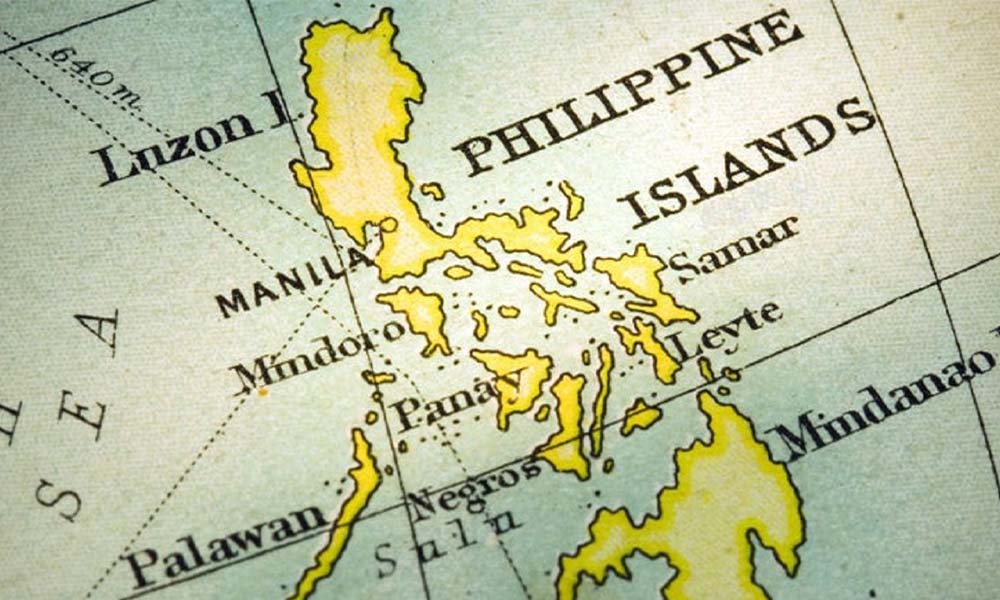
INDOPACIFIC REPORT | Geo-Strategy | Analysis
Published: April 2026 | By IndoPacific Report Editorial
China Is Watching the Philippines Fight Two Wars at Once — and It’s Taking Notes
An energy crisis and a territorial crisis collided in March 2026. Beijing learned five things about Philippine vulnerability — and none of them are reassuring.
• • •
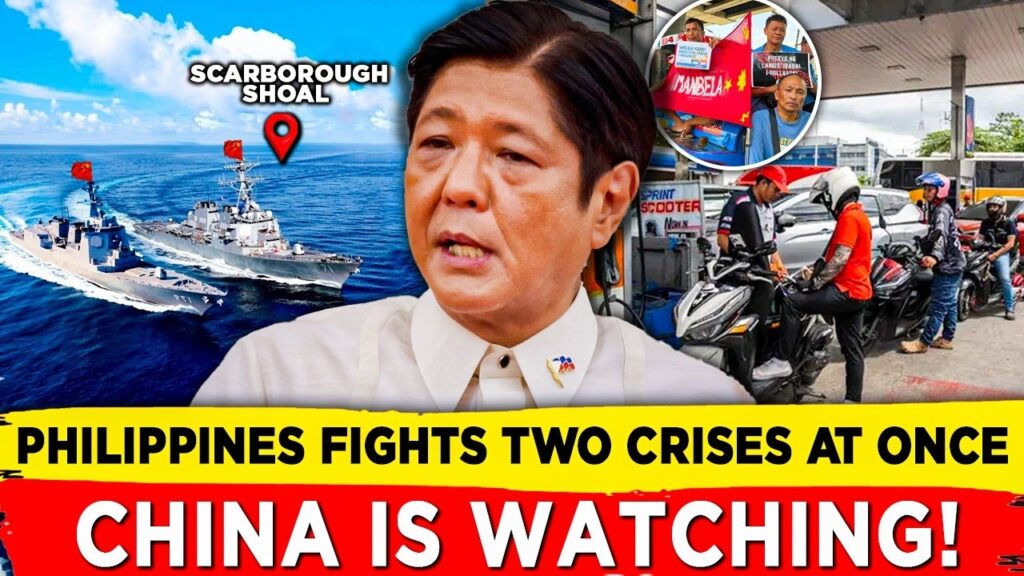
On March 24, 2026, President Ferdinand Marcos Jr. signed Executive Order 110, declaring a national energy emergency. The Philippines became the first country on Earth to declare a formal emergency over the Iran war’s energy fallout. Diesel was at ₱104 per liter. Four hundred and twenty-five gas stations had already closed. The government had one statement for the Filipino people: we have oil until June 30. Not a day beyond that.
That same week, China’s navy, air force, and coast guard ran coordinated patrols around Scarborough Shoal. The day after Philippine and Chinese diplomats shook hands in Quanzhou and called their meeting “productive.”
Two emergencies. One week. One country. And someone in Beijing was watching both of them very carefully.
What ‘Two Wars at Once’ Actually Means
The Philippines is not at war in the traditional sense. No artillery has been fired, no invasion has begun. But it is fighting two wars simultaneously — and the combination is more dangerous than either one alone.https://www.youtube.com/watch?v=0Pj9LyI0py8
The first is an energy war. The Strait of Hormuz carries twenty percent of the world’s daily oil supply. When the US and Israel launched Operation Epic Fury against Iran on February 28, and Tehran closed the strait, the Philippines felt the blow within days. Ninety-eight percent of Philippine oil comes from the Middle East. By mid-March, crude had hit $115 per barrel — up fifty-nine percent from $72 before the war began. The Philippine peso dropped to 60.1 to the dollar, a record low.
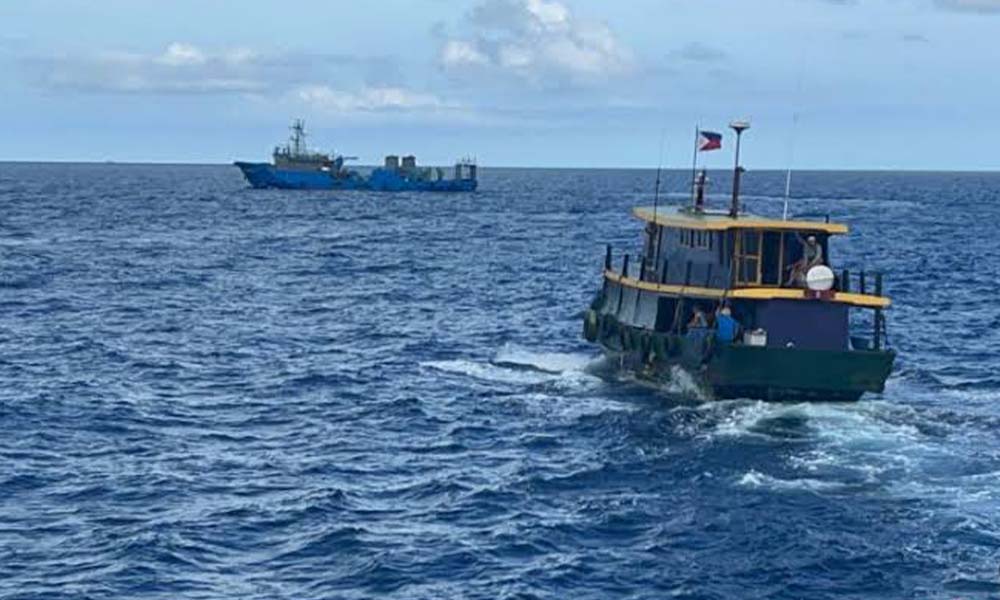
The second is a territorial war. China’s gray-zone campaign in the West Philippine Sea did not pause for any of this. Throughout March 2026, Chinese vessels were at Second Thomas Shoal, Scarborough Shoal, and Bajo de Masinloc simultaneously. On March 7, a Chinese corvette directed fire-control radar at the Philippine frigate BRP Miguel Malvar near Sabina Shoal — one step below pulling the trigger. On March 17, Chinese coast guard vessels pushed Filipino fishermen away from Bajo de Masinloc while a Chinese aircraft challenged a Philippine patrol plane in the same area. On March 26, a Chinese warship and a Philippine warship nearly collided near Thitu Island.
China Warns U.S. Over Planned Ammunition Facility in Philippines
Two wars at the same time is dangerous not because it doubles the pressure. It is dangerous because each war weakens the ability to fight the other.
History’s Lesson: When Nations Fight on Two Fronts
This is not new in geopolitics. In 1944, Germany had the world’s most technically advanced military. Field Marshal Erwin Rommel warned Hitler: “We cannot sustain a two-front war with one army.” Germany was not defeated because it was weak in one place. It was defeated because it was spread across two theaters.
More relevant to the Philippines: in January 1974, China seized the Paracel Islands from South Vietnam by force. The battle lasted one day. The timing was not a coincidence. The United States had just signed the Paris Peace Accords and was in full withdrawal. Saigon was fighting a land war it was losing. Beijing moved on the islands precisely when its adversary was distracted. China has held the Paracels ever since. For our analysis of what China is now building on those same islands, see China’s Secret New Island: Antelope Reef Exposed.
And in October 1956, the Soviet Union crushed the Hungarian Revolution while Britain, France, and Israel were consumed by the Suez Crisis. The Soviets rolled seventeen divisions into Budapest in less than two weeks. The West was looking elsewhere.https://www.youtube.com/watch?v=OMUbZ4O1wdI

The pattern is consistent. When your adversary is fighting two fires, you move on the third front. China understands this.
Five Things Beijing Just Learned About the Philippines
1. Energy dependency is a lever. China now knows with certainty that when Manila’s oil supply is threatened, the Philippines will open South China Sea negotiations it previously refused. Marcos raised joint oil exploration publicly, under economic duress, on the same day he signed the energy emergency order. Beijing filed this. The next time China wants Manila at the table on its terms, energy will be the pressure point. For the full story on those oil talks, read our report: Is Marcos Selling the West Philippine Sea to China for Oil?
2. The US alliance has a range limit. Defense Secretary Gilberto Teodoro publicly declined the US request to join the Hormuz coalition — not out of principle, but because the Philippines has no navy capable of operating four thousand miles from its shores. China noted this. The alliance works within the first island chain. Beyond it, Manila cannot project force or support its treaty partner.
3. The economy breaks fast. It took forty-five days for the Philippines to go from a functioning economy to a national energy emergency. China did not cause this. But China now knows the blueprint. A sustained gray-zone campaign — blocking fishing routes, slowing resupply missions, restricting shipping lanes — does not need to be a military war to produce the same economic damage.
4. The two-front trap works. While Manila was managing fuel subsidies, emergency funds, transport strikes, and airline suspensions, China was running fire-control radar locks, near-ship collisions, and Scarborough patrols. The Philippine government handled two crises simultaneously with the same limited political attention, the same stretched military, and the same exhausted public. China tested this combination in March 2026. It held.
5. Modernization is real but not fast enough. The Philippines has capabilities it did not have five years ago. BrahMos supersonic missiles along the western coast. Two modern frigates. FA-50 jets. An expanding alliance with the US, Japan, Australia, and France. But the modernization plan runs fifteen years. China’s annual defense budget increase alone exceeds what the Philippines plans to spend on defense total over the next decade. The window to close the gap is narrowing. For our coverage of how the US PERA Act aims to close these gaps, see $2.5 Billion: America’s Biggest Bet on the Philippines Since the Cold War.https://indopacificreport.com/china-warns-u-s-over-planned-ammunition-facility-in-philippines/
How the Two Wars Feed Each Other
Here is the part most analysis misses. These two wars are not running in parallel. They are feeding each other in a loop.
The energy war weakens Manila’s economic position. Manila, desperate for alternatives, opens talks on South China Sea joint exploration. China offers supply in exchange for territorial concessions. Manila, under pressure, considers terms. China uses those terms as precedent in future negotiations. The territorial war advances. A weaker Philippines becomes more dependent on Chinese energy. The loop tightens.
This is not speculation. The conversation has already started. Marcos raised joint exploration with Bloomberg on March 24. The Philippines and China held their first substantive oil and gas talks at the Quanzhou meeting on March 27–28. The DFA confirmed “initial exchanges on potential oil and gas cooperation.” The loop is already turning.
The US Energy Information Administration estimates approximately 125 billion barrels of oil beneath the South China Sea. Joint exploration with China under Chinese-drafted terms means Chinese operational presence inside Philippine waters — potentially in perpetuity. Today’s emergency supply becomes tomorrow’s structural leverage.
China’s Actual Endgame
China does not want to conquer the Philippines militarily. That would be expensive, internationally costly, and strategically unnecessary. What China wants is simpler and harder to fight: to make the Philippines strategically irrelevant in its own maritime zone.
China Challenged the Wrong Philippine Warship — Tensions Rise Near Sabina Shoal
Unable to control its own fishing grounds. Unable to develop its own energy without Chinese permission. Unable to support US military operations from its territory without calculating the cost. This is what analysts call managed dominance. Not occupation. Control without conquest.
The Sri Lanka comparison is instructive. In 2017, Colombo could not repay loans taken from China to build Hambantota Port. The solution: a ninety-nine-year lease. China gained strategic naval access to a critical Indian Ocean chokepoint — without conflict, through commerce. Sri Lanka did not lose a naval battle. It lost at a negotiating table, under financial pressure. If the Philippines accepts Chinese terms for South China Sea oil development while desperate for energy, it risks a version of that outcome in its own waters.
What the Philippines Must Dohttps://www.youtube.com/watch?v=OMUbZ4O1wdI
Build the strategic petroleum reserve. The Philippines is the only major Southeast Asian economy without one. Vietnam, Indonesia, Thailand, and India all maintain sixty to ninety days of reserves. The current crisis provides the political cover to fund and build reserves at Subic Bay, Batangas, or Mindanao. This is not optional infrastructure. It is national defense.
Never negotiate from an empty stomach. The Quanzhou talks happened while the Philippines was in an active energy emergency. Negotiating territorial questions from that position is dangerous. History is consistent: nations that discuss sovereignty under economic duress get bad deals. Manila must stabilize its energy situation before resuming substantive talks with Beijing.
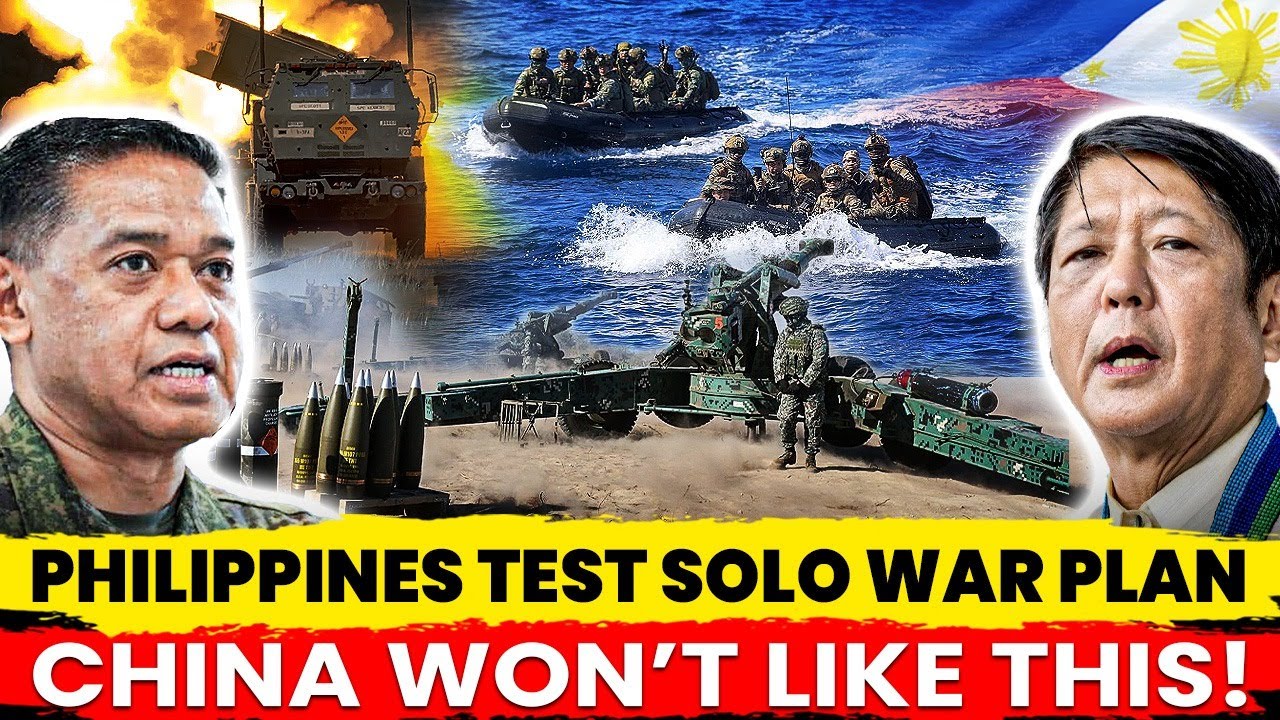
Make Balikatan 2026 count. The largest iteration in history starts April 20. Japanese combat troops will participate for the first time since 1945. The US, Australia, and France are all present. Every time China watches the Philippines train alongside four allied nations, its calculation shifts. For our coverage of this historic exercise, follow our latest updates on indopacificreport.com.
Accelerate modernization now. The submarine acquisition conversation cannot wait. BrahMos expansion should be accelerated. Air defense radar coverage needs to extend before the next incident at Scarborough, not after it. The Philippines does not need to match China’s navy. It needs to make the cost of aggression high enough that Beijing prefers the diplomatic route.
The Note the Philippines Must Write for Itself
March 2026 showed the world what China already knew: the Philippines can be pressured from two directions simultaneously. Its economy breaks under forty-five days of disruption. Energy desperation opens territorial conversations that sovereignty never would. And modernization, while real, is not yet fast enough to change the calculation.
But the nations that survive these moments are not the ones that waited for the storm to pass before building the shelter. They are the ones that built it while the sky was still clear. Ukraine built its resistance before the tanks crossed the border. Taiwan is building its fortress now. Japan is rearming now.
China’s notebook is not closed. The Philippines still has time to change what gets written in it. But the window will not stay open forever.https://www.youtube.com/watch?v=0Pj9LyI0py8
• • •
Related Coverage from IndoPacific Report:
• Is Marcos Selling the West Philippine Sea to China for Oil?
• China’s Secret New Island: Antelope Reef Exposed
• $2.5 Billion: America’s Biggest Bet on the Philippines Since the Cold War
• Japan’s First Military Deployment to Balikatan Terrifies China
• Can the Philippines Hold the First Island Chain?https://www.youtube.com/watch?v=OMUbZ4O1wdI
🎬 Watch the full video analysis: China Is Watching the Philippines Fight Two Wars at Once — A 22-minute strategic deep dive with historical parallels, military data, and actionable recommendations. Subscribe to IndoPacific Report on YouTube for weekly Indo-Pacific coverage.
Sources
Philippine energy crisis: Department of Energy; Philstar.com; Al Jazeera; CNN Philippines. Fuel prices and station closures as of March 27, 2026.
Strait of Hormuz crisis timeline: Crisis Group; CBS News live updates; Wikipedia.
Philippines-China Quanzhou talks: Bloomberg, March 27–28, 2026; Philstar, March 30, 2026; Stars and Stripes, March 30, 2026; DFA official statement.
Military capability figures: IISS Military Balance 2025; Philippine DND official statements; USNI News.
South China Sea oil reserves: US Energy Information Administration (125 billion barrels estimate).
Balikatan 2026: The Diplomat, March 27, 2026; Japan Times, March 29, 2026; Washington Times, March 29, 2026; Manila Times, March 24, 2026.
Sri Lanka Hambantota Port: Council on Foreign Relations; Reuters.
Historical parallels: Germany two-front war (1944); China’s seizure of Paracel Islands (1974); Soviet intervention in Hungary (1956).
• • •
About IndoPacific Report
IndoPacific Report is an independent strategic intelligence platform covering defense, diplomacy, and great-power competition across the Indo-Pacific. We deliver original analysis on the South China Sea, Philippine defense modernization, ASEAN security, and the evolving US-China rivalry.https://youtu.be/SwPodpNDdyw?si=oemjQCD4xdNt9d3w
Follow us: YouTube | Facebook | Website
© 2026 IndoPacific Report. All rights reserved.
Reproduction permitted with attribution and link to indopacificreport.com