U.S. Military Presence in East Asia Pillar of Indo-Pacific Stability
If the U.S. Leaves East Asia: The Chain Reaction Toward Chinese Primacy
For centuries, the sharpest geopolitical thinkers have warned that power—not hope, not promises—decides the fate of nations. From the ancient historian Thucydides, who wrote about the rise of Athens and the fear it created in Sparta, to modern strategists like Hans Morgenthau and John Mearsheimer, the message has stayed the same: international politics is not guided by goodwill, but by survival. Morgenthau famously argued that politics follows objective laws rooted in human nature, and that nations act in pursuit of power because survival leaves them no other choice. Later realist thinkers pushed this warning even further, arguing that the greatest danger in world politics is the rise of new powers and the weakening of old ones. When strength fades in one place, pressure grows in another. History has shown this pattern again and again—from Europe before the world wars to the Cold War balance between the United States and the Soviet Union.
That old realist warning now returns in a modern form, centered on East Asia. For decades, American forward forces—bases, ships, missile defenses, and alliances—have acted as a visible shield across the Western Pacific. Their presence did not eliminate rivalry, but it managed it. It kept pressure contained and prevented sudden shifts in power. But today, after heavy criticism of American security commitments in other regions and growing debates about overstretch, a dangerous question is quietly emerging: what happens if the United States pulls back from East Asia? Not just symbolically, but physically—reducing missile defenses, withdrawing naval assets, and stepping away from the frontline positions that have defined the region’s balance for generations. In realist terms, the answer is rarely peace. The answer is usually pressure, competition, and a rapid search for new dominance.
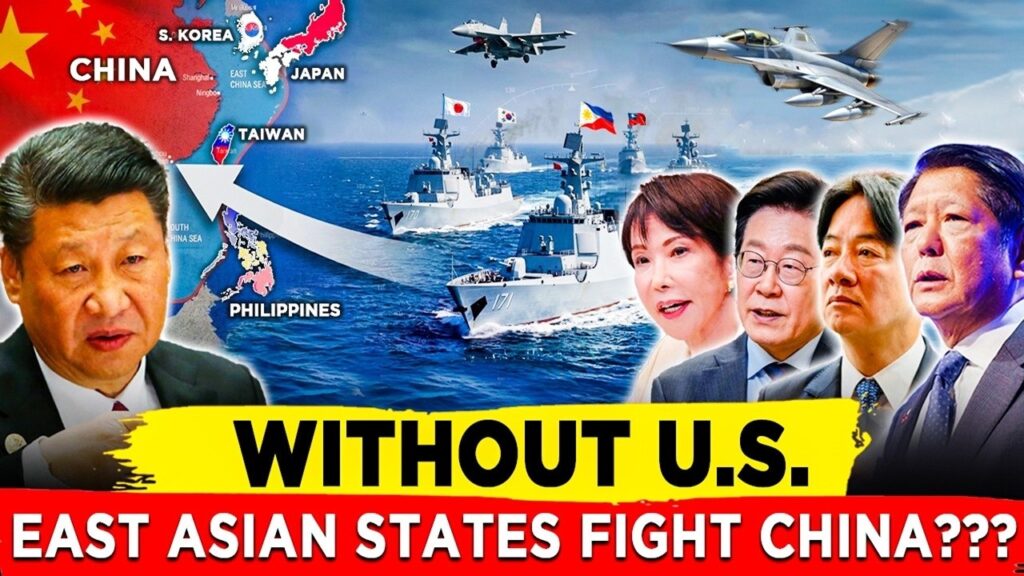
Can Philippines, Taiwan, Japan and South Korea Join Forces Against China?
Phase One Shock — The Philippines Without U.S. Backing
Primary Realist Question: What happens when a frontline state loses its patron?
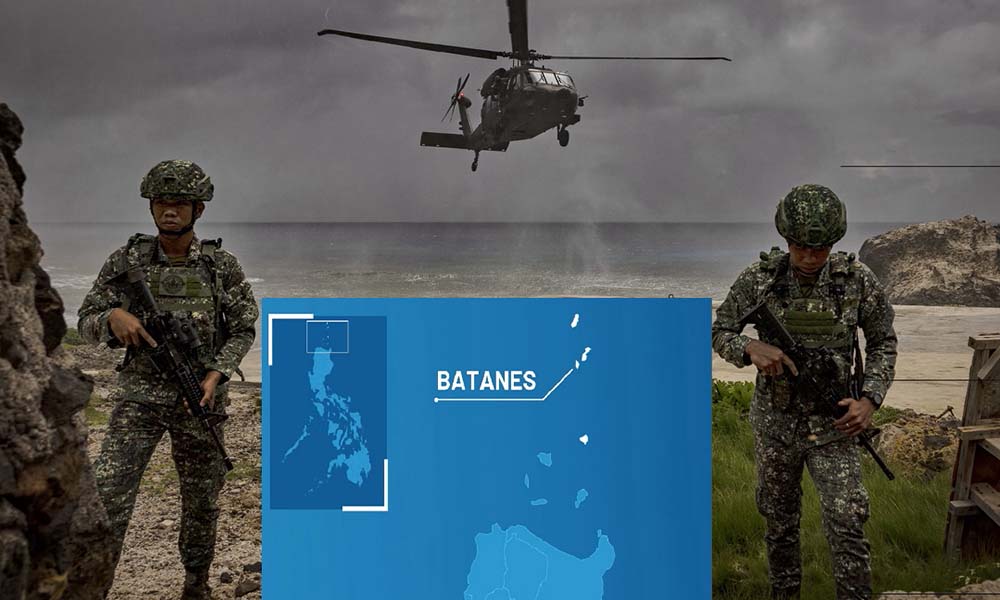
Cold War strategists once warned about the Domino Theory—the belief that when one frontline position weakens, pressure spreads step by step across a region. That warning was not only about ideology; it was about power gaps. Strategic thinkers like George Kennan argued that containment only works when strong positions are held firmly. Once one weakens, rivals test the line. In East Asia today, the Philippines sits on that frontline edge. It guards the western entrance of the Pacific and stands directly inside the contested waters of the South China Sea, known locally as the West Philippine Sea. If American backing fades, this is likely where pressure appears first—not later, not elsewhere, but immediately at sea.https://www.youtube.com/watch?v=eVEsMNWDS2s
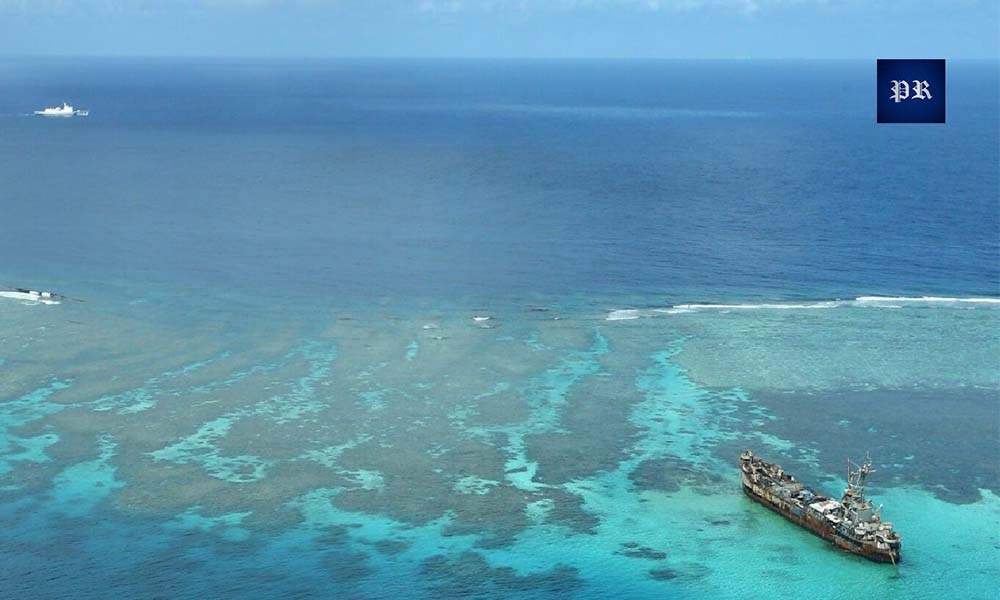
Even today, with U.S. support still present, pressure in these waters is constant. Philippine patrol ships regularly report the presence of large numbers of Chinese vessels near disputed features like Second Thomas Shoal and Thitu Island. In 2025 alone, Philippine forces tracked dozens of Chinese coast guard and naval ships operating near contested areas, with spikes reaching nearly 50 vessels in a single month—far above normal patrol levels. At the same time, China’s maritime militia—armed fishing fleets that operate like auxiliary naval forces—averaged around 241 vessels per day across disputed reefs in 2025, the highest level ever recorded. These numbers matter because presence itself becomes power. When ships stay in the same waters day after day, they slowly turn contested space into controlled space.
Without American backing, the balance becomes sharply uneven. The Philippine Navy operates only a handful of modern surface warships, while China maintains one of the world’s largest naval forces and a vast network of artificial island bases across the Spratly chain. That imbalance does not automatically lead to war—but it increases coercion. We already see examples of this pressure. In recent confrontations, Chinese vessels have blocked resupply missions to Philippine outposts, rammed smaller boats, and used aggressive maneuvering to force withdrawals. These actions fall into what strategists call gray-zone warfare—conflict below the level of open war but strong enough to wear down resistance.
The stakes are not only military. They are economic and deeply practical. The waters of the West Philippine Sea hold fishing grounds that support thousands of coastal families, along with energy deposits believed to make up a major share of the Philippines’ offshore hydrocarbons. If access becomes restricted—first occasionally, then permanently—the pressure moves from the navy to the economy. Fishing boats stay ashore. Energy projects stall. Investors hesitate. Step by step, control shifts without a formal battle. This pattern reflects a classic realist warning often echoed by strategists from Alfred Thayer Mahan to modern naval planners: control of the sea does not require conquest of land—it requires constant presence.https://indopacificreport.com/can-philippines-taiwan-japan-and-south-korea-join-forces-against-china/
In this sense, the Philippines becomes the first domino—not because it is weak, but because it sits closest to pressure. If American forces withdraw and that visible shield disappears, the immediate result is unlikely to be peace. It is more likely to be a steady tightening of control across disputed waters, starting with patrol zones, moving into resource areas, and eventually shaping political choices in Manila itself. And once the first frontline begins to bend, the next phases of the regional chain reaction become far more likely.
Phase Two Shock — Japan Without U.S. Forces
Strategic Premise: Remove U.S. forces from Japan → remove the backbone of Pacific naval dominance
Japan’s fear in this scenario would not be new—it would be old fear returning. Japanese strategic thinkers like Kanji Ishiwara long argued that Japan’s survival depends on sea control and strong security partners because it is an island nation with very few natural resources of its own. After World War II, Japan made one clear decision: never stand alone again. That is why U.S. bases, naval forces, and the nuclear umbrella became central to Japan’s safety. But if U.S. forces begin to leave East Asia, Japan would feel exposed almost immediately. Chinese naval patrols already operate near the Senkaku Islands, and tensions in the East China Sea are rising every year. Japanese leaders today openly describe their security situation as the most dangerous since World War II, which shows that anxiety is already building even before any real withdrawal happens.
Japan has already started preparing for a harder future. In fiscal year 2026, Japan approved a record defense budget of about $58 billion, the largest in its modern history. The country is investing in long-range strike missiles, stronger air defenses, and new naval capabilities. Tokyo is also moving toward defense spending close to 2% of GDP, a level once considered politically difficult but now widely accepted because of China’s rapid military growth. If U.S. forces withdraw, this buildup would accelerate quickly. Japan would face pressure in the East China Sea, especially around disputed islands, and would lose the confidence that comes from the American nuclear umbrella. That loss alone would trigger serious national debate about whether Japan must build its own nuclear deterrent—a step that would change the entire balance of power in Asia.
Japan’s First Military Deployment to Balikatan Terrifies China
Strategic leaders like Yasuhiro Nakasone warned decades ago that alliances are not charity—they are survival tools. If that alliance weakens, fear replaces confidence. And when fear spreads in a powerful country like Japan, rearmament follows. The result would not be calm or stability. It would be an arms race, driven not by ambition alone, but by fear of isolation. And once Japan begins to rearm at full speed, the pressure would not stay limited to Japan—it would spread outward to the rest of the region.
Phase Three Shock — South Korea Under Direct Threat
This is where deterrence collapses fastest
South Korea has always lived under pressure, but its safety has depended on one central belief—that the United States stands behind it. South Korean strategic thinkers like Moon Chung-in, a well-known security adviser and scholar, have long warned that deterrence on the Korean Peninsula works only when the U.S. presence is visible and credible. Without that presence, fear rises very fast. South Korea sits directly below North Korea, a state that has built its strategy around pressure, surprise, and escalation. North Korea today is estimated to possess around 70 to 90 nuclear warheads, along with long-range missiles capable of reaching targets across East Asia and beyond. Over the past few years, North Korea has repeatedly fired missiles into the sea near Japan and the Pacific, showing both capability and intent. These launches are not random acts—they are signals. Signals meant to remind South Korea that pressure can be applied at any time.https://www.youtube.com/watch?v=eVEsMNWDS2s
If U.S. forces withdraw from South Korea, the psychological shock would be immediate. Deterrence would weaken not slowly, but almost overnight. North Korea would likely test that weakness with more missile launches, military drills near the border, and aggressive rhetoric. This follows a pattern that North Korean leader Kim Jong-un has used for years—create fear, push limits, and watch how others respond. At the same time, China benefits indirectly from this situation. A weaker U.S.–South Korea alliance means more pressure on Seoul and more room for China to expand its influence across Northeast Asia. South Korea would then face pressure from two sides—North Korea directly at its border, and China as a powerful regional force shaping the wider balance.
China Warns Philippine Aircraft Over Scarborough Shoal – Tensions Rise!
Faced with this double pressure, South Korea would have few comfortable choices. One likely response would be a sharp increase in military spending. South Korea already spends tens of billions of dollars each year on defense, but without the U.S. security umbrella, spending could rise dramatically—possibly crossing $100 billion annually in the long term. More importantly, the national debate over nuclear weapons would intensify. This debate has already appeared in public discussions in recent years, but a full U.S. withdrawal would push it to the center of national policy. And once South Korea begins to seriously consider nuclear weapons, the regional balance changes again—faster, sharper, and more dangerous than before.https://www.youtube.com/watch?v=eVEsMNWDS2s
The Central Pivot — Taiwan as the Decisive Domino
This is the true strategic hinge. Not symbolic. Not political. Geographic.
If earlier phases create pressure, Taiwan becomes the point where the whole balance can break. Many naval thinkers, especially Alfred Thayer Mahan, argued that islands sitting along major sea lanes control the future of great powers. Taiwan fits that logic perfectly. It sits in the First Island Chain, between Japan and the Philippines. Break Taiwan, and the chain breaks with it. That is why events around Taiwan in 2026 are being watched so closely. Since early this year, China has stepped up pressure in ways that look less like training and more like rehearsal. In March 2026, Chinese forces resumed large-scale activity around Taiwan after a short pause, sending 26 military aircraft and 7 naval vessels near the island in a single surge, forcing Taiwan to scramble fighters and activate defenses. At the same time, analysts reported that China has placed more than 200 converted fighter jets turned into attack drones at air bases facing Taiwan, designed to overwhelm air defenses in the early hours of a conflict.
China Challenged the Wrong Philippine Warship — Tensions Rise Near Sabina Shoal
The pattern behind these moves is becoming clearer year by year. Chinese military exercises since 2024 and 2025 have practiced blockades, missile strikes, and control of sea routes, all aimed at isolating Taiwan from outside help. By early 2026, Taiwan itself began preparing for this threat by expanding air-defense systems and strengthening its response planning, expecting that future pressure may come not as a sudden invasion but as a tightening blockade. At the same time, regional anxiety has grown because ongoing global conflicts are pulling U.S. attention away, raising fears that China could use this distraction to increase pressure around Taiwan.
If Taiwan falls—or even becomes isolated—the strategic map changes overnight. Taiwan produces roughly 60% of the world’s semiconductors and about 90% of advanced chips, which power everything from phones to fighter jets. That makes Taiwan not just a military position, but an economic lifeline. If China controls Taiwan, it gains direct access into the wider Pacific and pushes its naval reach closer to places like Guam. Distance matters here. Taiwan sits roughly 2,700 kilometers from Guam, meaning control of this island gives China deeper reach than ever before. In simple terms, this is the turning point. Without Taiwan, China stops being just a regional power along its coast. It becomes a true ocean power—one that can move freely beyond the island barrier that has contained it for decades.https://www.youtube.com/watch?v=cDjccA24I-w
The Endgame — Maritime Control, ASEAN Fracture, and the Nuclear Shadow
If Taiwan becomes the hinge, the South China Sea becomes the prize. This is not just a military space—it is the economic highway of Asia. Around $5.3 trillion worth of trade moves through the South China Sea every year, and nearly one-third of global maritime energy shipments pass through these waters. That is why naval thinkers from Alfred Thayer Mahan to modern Asian strategists have repeated the same warning: the power that controls the sea controls the flow of wealth. China has already spent years building artificial islands, runways, radar stations, and missile sites across the Spratly and Paracel chains. In recent years, Chinese coast guard and maritime militia vessels have stayed almost permanently around contested reefs, creating what analysts call “constant presence pressure.” If the United States withdraws from forward positions, China would not need a dramatic invasion to dominate these waters. It could slowly impose maritime rules, restrict movement, and shape who fishes, drills, or sails. That is how economic control begins—not with bombs, but with rules enforced by ships.
Once control at sea tightens, the next crack appears in politics—especially across Southeast Asia. Without strong U.S. balancing power, regional countries would not openly resist. They would hedge. This pattern has been discussed for decades by leaders like Lee Kuan Yew, who warned that smaller Asian states survive by balancing major powers, not by confronting them alone. If the American shield weakens, countries like the Philippines may face pressure to accommodate demands at sea. Vietnam, which has resisted Chinese expansion in the past, could find itself increasingly isolated. Malaysia and others may drift quietly toward economic alignment with Beijing, not out of loyalty, but out of necessity. ASEAN as a group would struggle to maintain unity, because unity requires confidence—and confidence depends on outside balance. Without that balance, diplomacy weakens and neutrality begins to collapse under pressure.https://www.youtube.com/watch?v=1OMFP2oHJCE
China Warns U.S. Over Planned Ammunition Facility in Philippines
Beyond diplomacy lies the most dangerous long-term effect—the nuclear domino risk. For decades, the American nuclear umbrella allowed countries like Japan and South Korea to remain non-nuclear states. But once that umbrella weakens or disappears, fear spreads quickly. Japan has the technology and materials needed to build nuclear weapons if it chooses. South Korea has already seen growing public debate about nuclear deterrence, especially after repeated North Korean missile launches into surrounding waters. Taiwan, sitting directly under threat, would face similar pressure. This creates what strategists call a multi-nuclear Asia, a region where several states hold nuclear weapons at once. At first glance, this may sound like stronger deterrence, but in reality it creates instability. More nuclear actors mean more chances for miscalculation, more pressure during crises, and more risk that a local clash turns into something far larger.https://www.youtube.com/watch?v=1OMFP2oHJCE
All of these pressures—maritime, political, nuclear—lead toward one final outcome: regional primacy shaped not by sudden conquest, but by steady dominance. If U.S. forces withdraw across East Asia, China does not need to fight every battle. It needs only to remain present, stronger, and more persistent than its neighbors. Over time, naval patrols become routine. Economic rules begin to favor Chinese interests. Smaller states adjust their policies to avoid confrontation. This is the classic realist pattern described by thinkers from Hans Morgenthau to John Mearsheimer—power respected, weakness tested. The system does not collapse in one dramatic moment. It shifts slowly, step by step, until the balance clearly favors one dominant power.https://www.youtube.com/watch?v=1OMFP2oHJCE
Japan’s First Military Deployment to Balikatan Terrifies China
That is why forward presence has never been charity. It has always been strategy. It signals commitment, capability, and credibility all at once. Remove that presence, and the regional system resets—not toward peace, but toward competition under imbalance. And in the end, the question is not whether China rises—China is already rising. The real question is how fast the balance begins to collapse once the visible shield disappearshttps://youtu.be/JXNSaCtnuSI?si=on4xzEounl4_TCER