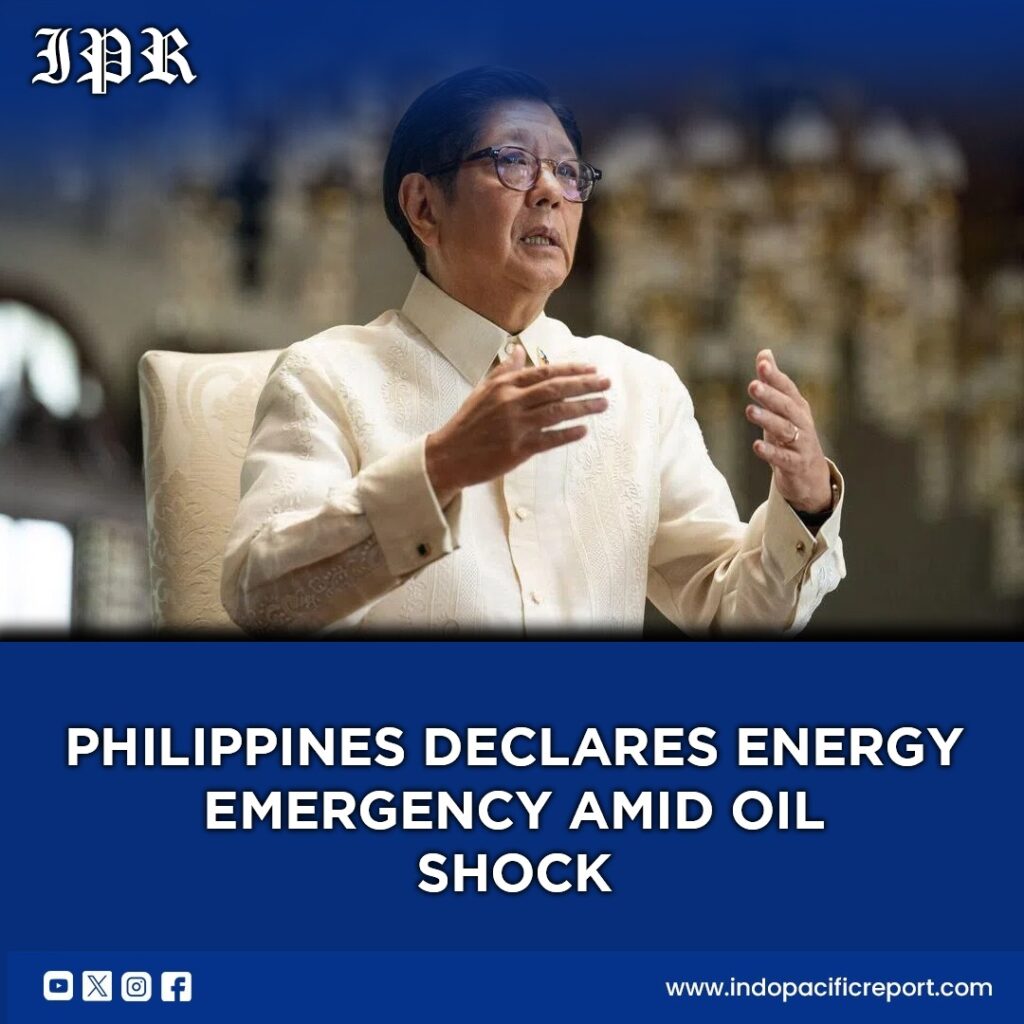
The Philippines’ declaration of a national energy emergency reflects the acute vulnerability of Southeast Asian economies to global energy disruptions. President Ferdinand Marcos Jr.’s executive order allows the government to secure fuel supplies, make advance payments to suppliers, and implement coordinated interventions across critical sectors such as transport, healthcare, and agriculture. This move is a direct response to Middle East tensions and volatility in oil markets, signaling that Manila views energy security as a national priority with strategic and economic dimensions.
From a geopolitical perspective, the emergency highlights Southeast Asia’s exposure to external shocks. The ongoing US-Israeli offensive in Iran has disrupted the Strait of Hormuz, a key global energy chokepoint, driving oil price spikes and supply uncertainty. For resource-dependent economies like the Philippines, this not only threatens domestic energy availability but also risks inflationary pressures and economic slowdown. The government’s executive order is thus a short-term crisis management tool and a signal to international partners and investors that Manila is taking energy security seriously.
The crisis also underscores shifts in regional energy strategy. With global oil markets destabilized, investors are increasingly turning to Chinese renewable energy firms, including solar, wind, electric vehicle, and battery manufacturers. China’s dominance in these sectors, combined with state support, positions it to benefit from rising global demand for alternatives to fossil fuels. Southeast Asian states may see this as an opportunity to diversify energy imports and accelerate domestic renewables programs to reduce exposure to oil shocks.
Alliance dynamics are also relevant. Manila’s emergency declaration coincides with growing questions about the reliability of traditional partners such as the United States, particularly in the context of sudden geopolitical crises. This has broader implications for Indo-Pacific energy policy: nations may prioritize energy autonomy, regional cooperation, and diversified supply chains, including partnerships with renewable energy leaders like China. The crisis could accelerate regional investments in offshore wind, solar, and electric vehicle infrastructure, reshaping energy dependencies and strategic alignments.
From an economic and strategic lens, the Philippines’ proactive steps—centralized oversight, procurement flexibility, and supply coordination—are consistent with best practices in crisis management. However, this is a temporary measure. The long-term challenge is transforming energy infrastructure to withstand shocks, incorporating strategic reserves, diversified suppliers, and renewable technologies. Failure to do so could perpetuate vulnerability in a region where maritime chokepoints and external conflicts increasingly dictate energy stability.
Forward-looking: The Philippines’ emergency declaration may serve as a catalyst for broader regional energy security initiatives. Governments in Southeast Asia and beyond may be prompted to accelerate investments in renewables, energy grids, and strategic reserves. For Manila, the challenge is balancing immediate crisis response with longer-term structural reforms to ensure resilience, affordability, and strategic autonomy in energy.
Should the Philippines rely more on global energy markets and strategic alliances, or aggressively pursue domestic renewables and regional energy independence to reduce vulnerability?