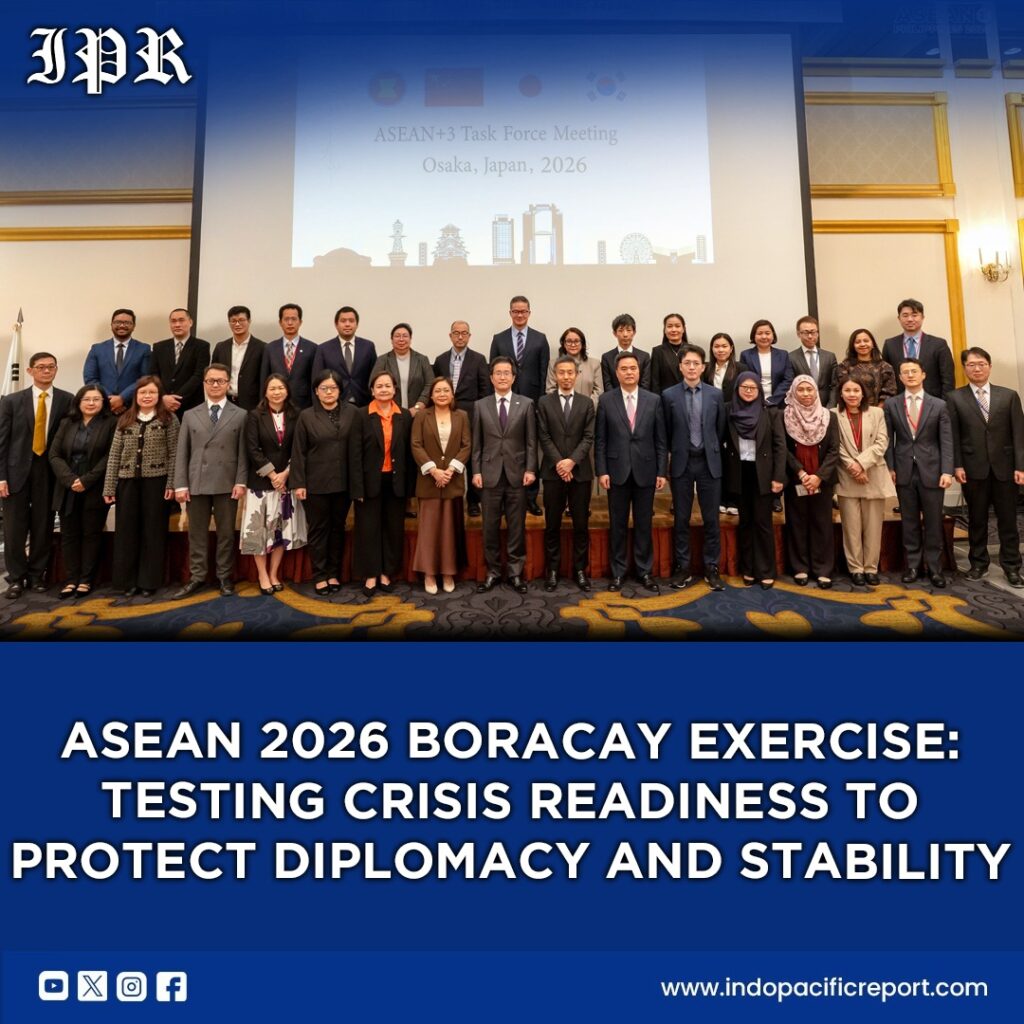
The ASEAN 2026 Site Task Group in Boracay recently conducted a tabletop exercise to enhance security measures ahead of upcoming meetings. The exercise simulated two high-risk scenarios—a bomb threat and a vehicular accident—allowing agencies to test response protocols, coordination mechanisms, and operational readiness. According to Capt. Aubrey Ayon of the Aklan Police Provincial Office, the goal was to identify gaps, align inter-agency teams, and ensure rapid, effective responses to potential emergencies during ASEAN-related gatherings.
From a great-power competition lens, these exercises underscore ASEAN member states’ recognition of their vulnerability to non-traditional security threats, which can intersect with broader geopolitical tensions. High-profile international events attract global attention and, potentially, asymmetric threats, including terrorism, sabotage, or cyber-attacks. By improving preparedness, ASEAN indirectly protects its diplomatic credibility and limits opportunities for external actors to exploit security weaknesses for strategic leverage.
Within the regional security architecture, the tabletop exercise highlights ASEAN’s evolving approach to coordinated crisis management. Unlike conventional military drills, scenario-based exercises focus on intelligence sharing, multi-agency coordination, and rapid decision-making under uncertainty. This approach strengthens the institutional capacity of both host nations and participating states, reinforcing ASEAN’s collective resilience in managing both natural and human-induced emergencies.
Alliance dynamics are also affected. Participating ASEAN members, along with observers and supporting partners, benefit from shared learning on protocols and rapid response strategies. Exercises like this provide an opportunity to synchronize regional norms, establish communication channels, and enhance interoperability. While primarily civilian-led, the exercise signals to external powers that ASEAN nations are capable of self-organized crisis management, reducing the risk of outside coercion or intervention during high-profile events.
From a maritime and economic strategy perspective, Boracay’s status as a high-traffic tourist hub elevates the stakes. Effective security planning protects critical infrastructure, tourism revenue, and maritime access points. The exercise demonstrates that disaster and security preparedness is integrated with economic priorities, which is vital for island states and coastal communities across Southeast Asia. A robust emergency response capacity ensures continuity of commerce and public services, even in crisis scenarios.
In terms of the Indo-Pacific balance of power, scenario-based tabletop exercises contribute to strategic stability by reinforcing institutional resilience. ASEAN’s ability to respond to emergencies without immediate external intervention enhances its autonomy and credibility in regional affairs. By demonstrating preparedness and coordination, the member states reduce vulnerabilities that could otherwise be exploited in the context of great-power competition, whether in the South China Sea, East Asia, or in high-profile multilateral engagements.
Looking forward, the Boracay exercise exemplifies how ASEAN is investing in non-traditional security preparedness as a key component of geopolitical strategy. Intelligence-driven planning, inter-agency coordination, and crisis simulations strengthen resilience against a wide spectrum of threats, from terrorism to maritime incidents. For policymakers and regional security planners, this approach illustrates that internal preparedness, even in small island settings, can have meaningful implications for strategic autonomy, alliance credibility, and the broader Indo-Pacific balance of power.
Can ASEAN’s tabletop exercises and civilian-led crisis planning keep pace with evolving non-traditional security threats in the Indo-Pacific?