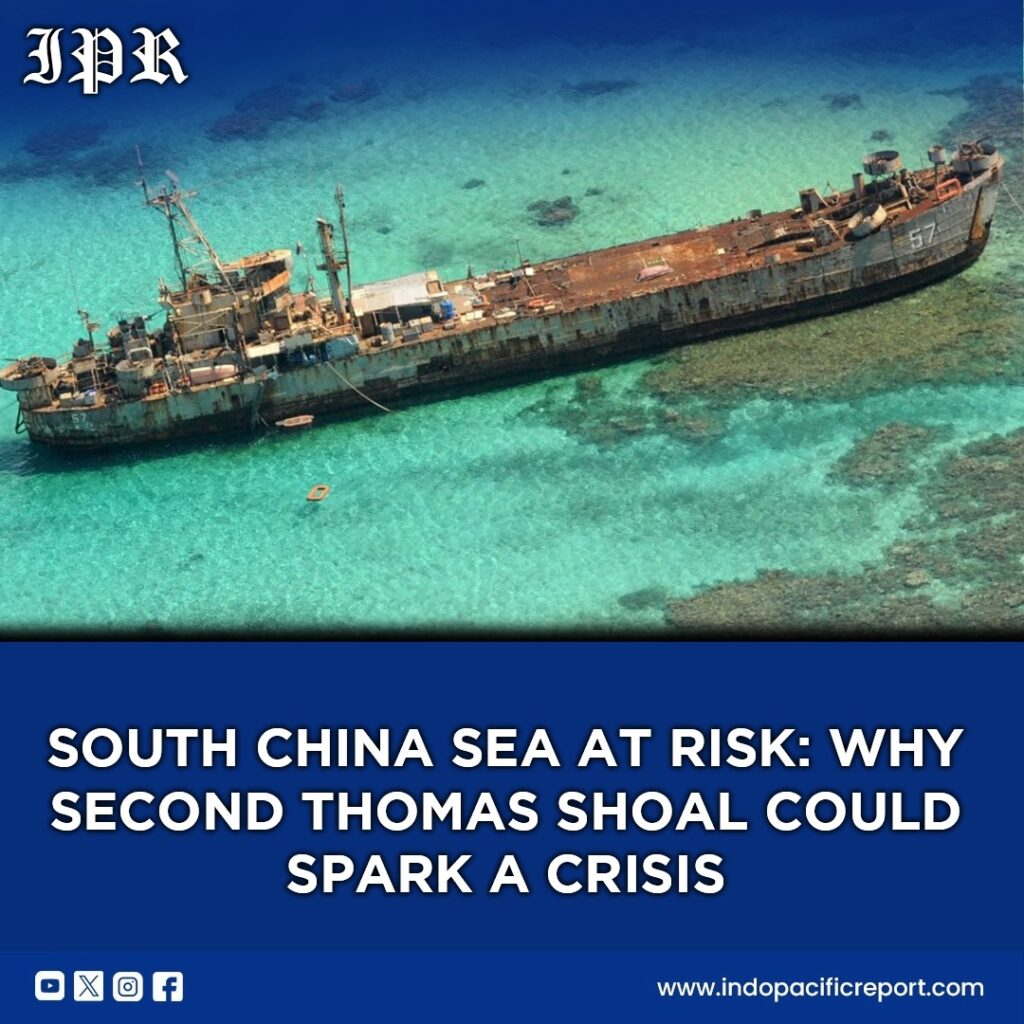
The provisional arrangement between China and the Philippines over Second Thomas Shoal is a case study in risk management amid unresolved sovereignty disputes. Since 1999, when the Philippines grounded the BRP Sierra Madre on the shoal, the feature has become a symbol of Manila’s presence and Beijing’s claims in the Spratly Islands. The June 2024 confrontation showed how quickly minor incidents can escalate, drawing in the United States and threatening regional stability. In July 2024, both sides agreed to a temporary arrangement for rotation and resupply missions. Since then, the Philippines has conducted 13 missions without major incidents—a modest but important success in crisis control.
From the perspective of great-power competition, this arrangement illustrates how the U.S. and China interact indirectly. Washington supports Manila’s ability to maintain a presence without escalating tensions. Beijing tolerates resupply missions while reserving its ultimate claim to sovereignty. This tacit compromise shows that even when legal and political positions clash, practical measures can prevent direct confrontation. Both sides are essentially freezing the status quo, but with different end goals: China seeks eventual removal of the vessel, while the Philippines seeks long-term occupation.
The arrangement also reveals gaps in regional security architecture. ASEAN and multilateral institutions have little influence here. Manila and Beijing rely on bilateral arrangements to manage risk. This shows that informal mechanisms often fill the gaps where formal institutions cannot. Yet these mechanisms are inherently fragile: any misstep—such as bringing construction materials to reinforce the BRP Sierra Madre or China tightening control—could reignite tensions.
Alliance dynamics further complicate the picture. The U.S.-Philippines alliance provides Manila with protection and deterrence against coercion. Washington’s position allows China to accept the temporary arrangement while avoiding direct conflict. At the same time, the arrangement constrains Manila’s actions, highlighting a key reality of alliances: they provide security but limit flexibility. Both the Philippines and the U.S. must balance deterrence with caution.
From a maritime strategy standpoint, the shoal is a tangible asset and a symbolic foothold. The BRP Sierra Madre is deteriorating, and Manila wants to reinforce it, while Beijing limits supplies to basic necessities. The dispute captures the tension between physical occupation, military signaling, and maritime control. Economically, controlling or maintaining access to the area ensures influence over nearby sea lanes and potential resources—another layer of strategic calculation.
The bigger picture for the Indo-Pacific is clear. Provisional arrangements can manage localized disputes, but they do not resolve the underlying conflict. The balance is fragile and depends on disciplined behavior from both sides. Second Thomas Shoal shows how informal agreements, tacit understandings, and alliance dynamics intersect in the region. For policymakers, it’s a reminder that regional stability often rests on careful management of friction, not legal or political solutions.
Can temporary arrangements like Second Thomas Shoal actually prevent a crisis, or do they just delay the inevitable clash over sovereignty?