The Department of Agriculture has assured that the country’s food supply will remain sufficient until July, even with uncertainty created by the conflict in the Middle East. Stocks of key staples—rice, corn, sugar, vegetables, and livestock—are stable. The timing is also favorable. The country is currently at the peak harvest season for rice and onions, while vegetable production is supported by ongoing dry-season planting. On the surface, this is a domestic update. But in geopolitical terms, it reflects a deeper reality: food security is now directly linked to global instability and strategic risk.
From the perspective of great-power competition, food security has become part of national resilience in a fragmented global order. Wars and tensions in regions like the Middle East can disrupt energy prices, shipping routes, and fertilizer supply chains. These disruptions quickly translate into inflation and pressure on domestic food systems across Asia. Countries with stable agricultural output are therefore less exposed to external shocks. This gives them more internal stability during global crises. In modern geopolitics, this stability is a form of strategic strength, even if it is not military in nature.
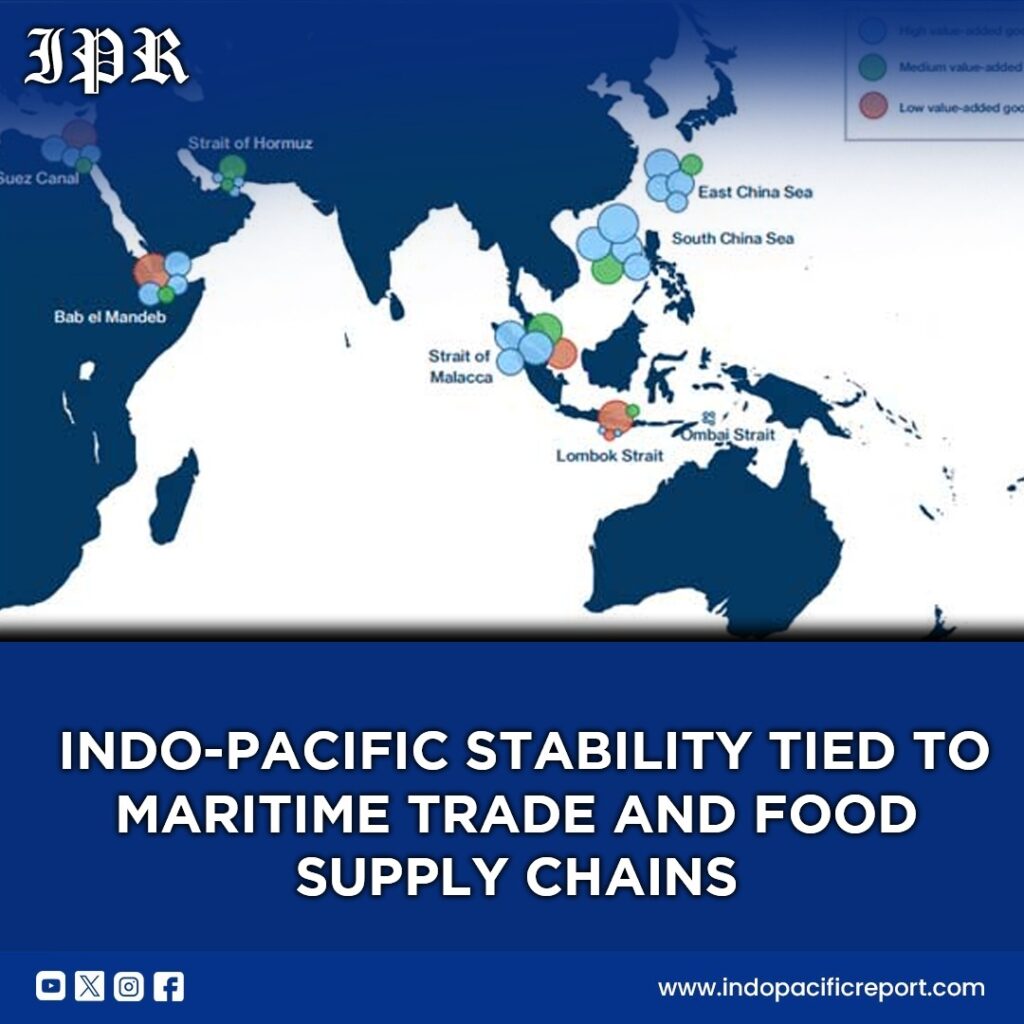
In the regional security architecture of the Indo-Pacific, food security is increasingly connected to broader economic and maritime systems. Even when domestic production is strong, countries remain tied to global supply chains for fertilizers, fuel, and imported food products. The Indo-Pacific is heavily dependent on sea lanes for these flows. This means that instability in distant regions can still affect food prices and availability through shipping costs and logistics disruptions. The Middle East conflict is a reminder that the Indo-Pacific cannot separate economic security from global geopolitics.
Alliance dynamics also play a quiet but important role. Indo-Pacific countries are increasingly diversifying their trade and supply chain partners to reduce vulnerability. While alliances are often discussed in military terms, they also support economic resilience. Cooperation in agriculture trade, fertilizer supply, and logistics helps reduce dependence on single sources. This strengthens stability during crises. In this way, alliances are not only security arrangements but also economic safety nets that help prevent food shocks from turning into political instability.
From a maritime and economic strategy point of view, food security is closely tied to global shipping routes. The Indo-Pacific depends on uninterrupted maritime trade for both imports and exports of agricultural goods. Even strong domestic harvests cannot fully protect countries from global price fluctuations caused by shipping delays or rising fuel costs. The current stability until July is supported by local harvest cycles, but the broader system remains exposed to external shocks. This creates a structural dependency: food stability at home still relies on stability at sea.
At the level of Indo-Pacific balance of power, food security plays an indirect but important stabilizing role. When food supplies are stable, governments are less likely to face domestic pressure from inflation or shortages. This allows them to focus more on external strategic challenges rather than internal crisis management. However, if global disruptions intensify, food systems can quickly become a source of political stress. This makes agricultural resilience part of national security, even if it is not treated as such in traditional defense planning.
In the long run, the key issue is not short-term stability until July, but whether Indo-Pacific countries can build lasting resilience against repeated global shocks. Climate risks, regional conflicts, and supply chain disruptions are becoming more frequent. Countries that strengthen domestic production while securing diversified global supply routes will be better protected. Food security is no longer just about harvest cycles. It is now part of geopolitical stability in a connected and uncertain world.
Final Audience Question
If food security is now linked to global conflicts and supply chains, should it be treated as a national security priority equal to defense?