Asian defence stocks are entering an early-stage upcycle, driven by rising defence spending and growing geopolitical tension across the Indo-Pacific. According to OCBC, this is not a short-term market trend. It reflects a structural shift in regional security thinking, where states are increasing military budgets and building more self-reliant defence industries.
At the level of great-power competition, this trend is directly linked to the ongoing U.S.–China strategic rivalry. The United States is encouraging allies to take greater responsibility for their own defence. At the same time, China is continuing its military modernization at scale. This dual pressure is pushing Asian governments to increase defence spending. As a result, military budgets in the region are rising across the board. China has lifted its 2026 defence budget by around 7%, South Korea increased spending by 7.5%, and Japan is targeting a record defence budget of about 9 trillion yen.
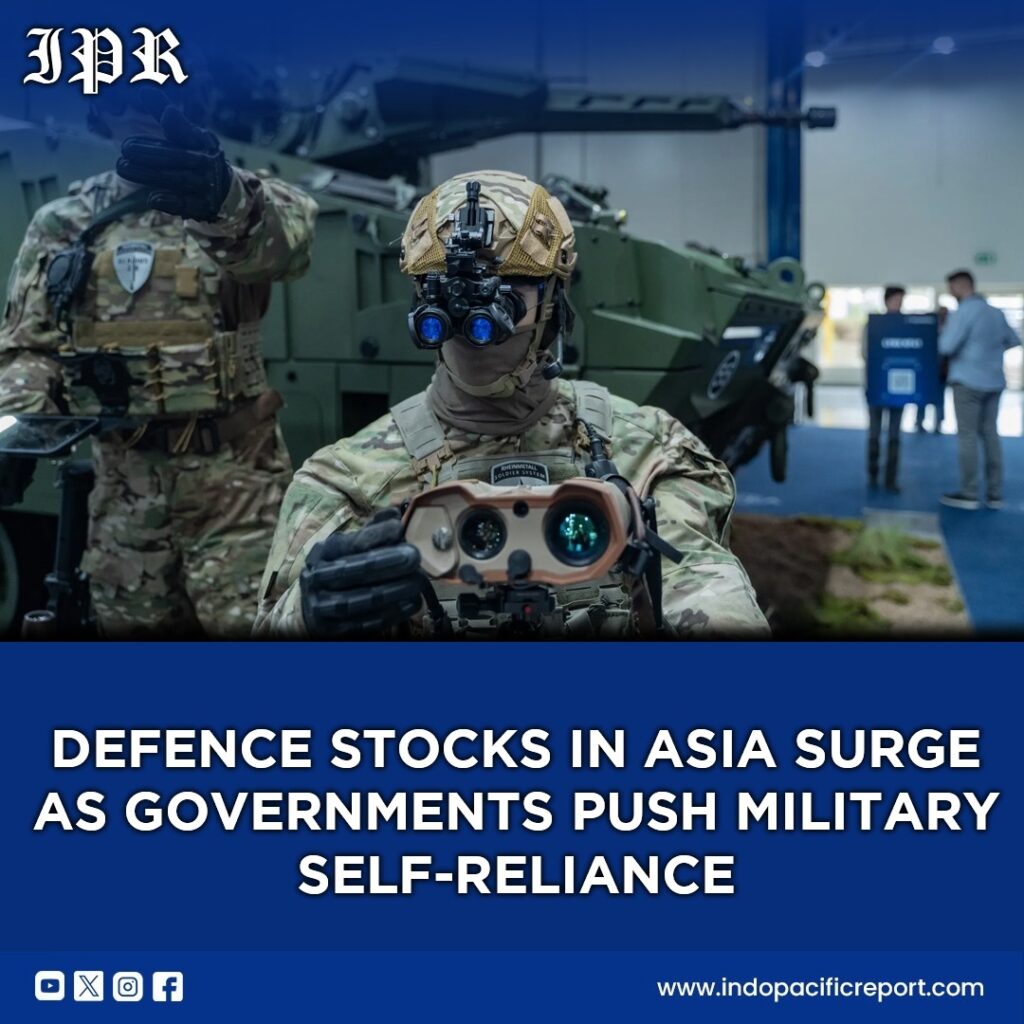
From a regional security architecture perspective, Asia is slowly shifting from import-heavy defence systems toward local production and supply chain localisation. Countries like South Korea and Japan are now not just buyers of weapons, but also producers of advanced military platforms. This includes fighters, missiles, drones, and electronic warfare systems. The shift is important because it reduces dependence on foreign suppliers and increases strategic autonomy in a crisis scenario.
In terms of alliance dynamics, the U.S. still remains the core security provider in the Indo-Pacific. However, its role is changing. Washington is increasingly pushing allies to “share the burden” of defence. This is leading to stronger domestic defence industries in allied countries, especially in South Korea and Japan. OCBC notes that this policy environment is a key reason why Asian defence stocks are expected to continue rising. In simple terms, alliances are becoming more distributed—not just militarily, but also industrially.
From a market and economic strategy point of view, Asian defence stocks have still lagged behind U.S. and European defence equities over the past five years. The Bloomberg Asia Pacific Aerospace & Defence Index is up about 48% over five years, compared to much higher gains in the U.S. and Europe. OCBC argues that this gap suggests room for further growth. The key driver is not only higher defence budgets but also a long-term shift toward domestic procurement and regional supply chains.
Another important factor is the changing nature of warfare. Defence spending is no longer focused only on traditional platforms like tanks and fighter jets. It is increasingly moving toward drones, cyber systems, space capabilities, sensors, and advanced materials. This reflects a shift toward network-centric warfare, where information, connectivity, and automation matter as much as physical platforms.
In the broader Indo-Pacific balance of power, this trend is gradually changing the region’s strategic structure. Asia is becoming both a consumer and a producer of advanced military technology. This increases overall military capability across the region, but it also raises the intensity of strategic competition. More countries now have the industrial base to build advanced systems, which makes the security environment more competitive and less predictable.
Overall, the rise in Asian defence stocks reflects a deeper geopolitical reality: Asia is preparing for long-term strategic competition, not temporary tension. Defence spending, industrial policy, and capital markets are now moving in the same direction.
If Asian countries are building stronger defence industries while tensions are rising, does this make the region safer—or does it increase the risk of future conflict?