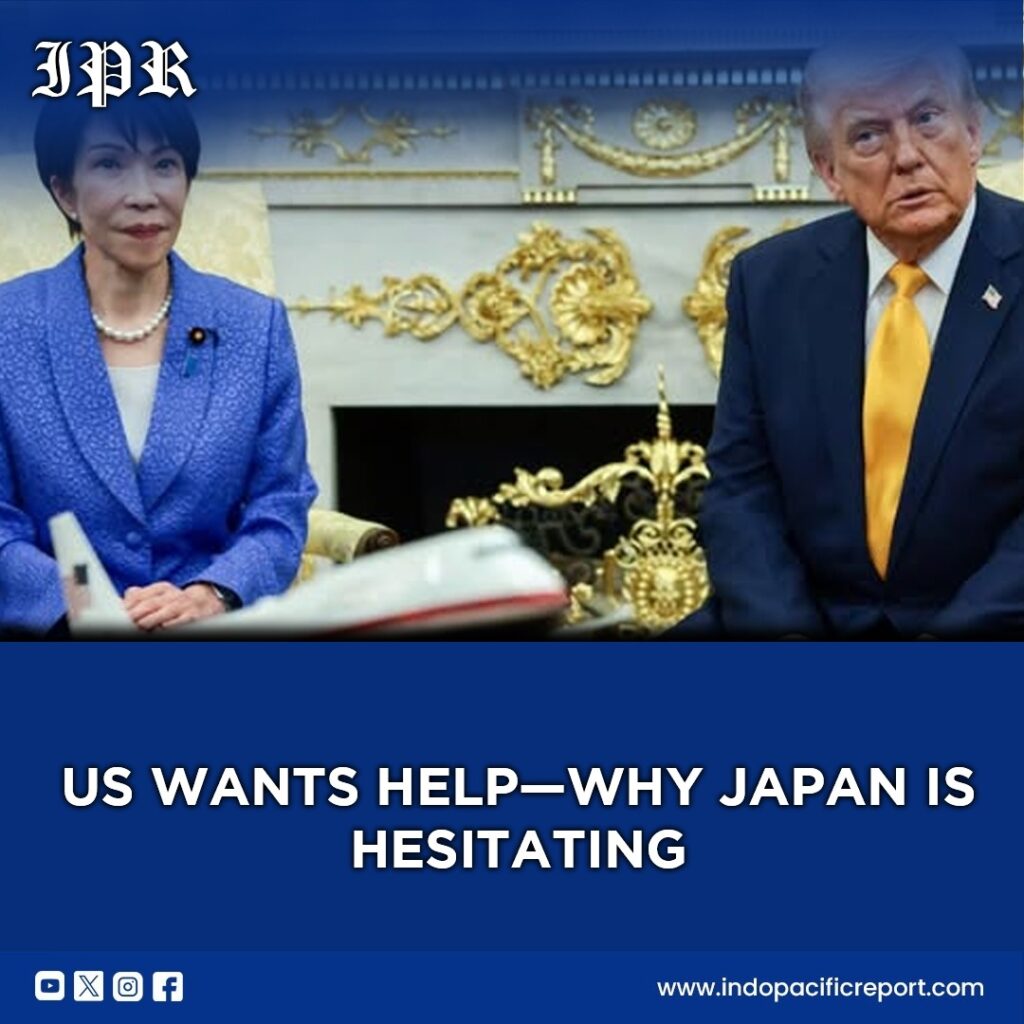
The meeting between Donald Trump and Sanae Takaichi was supposed to focus on trade and strengthening the alliance. But the growing tensions around the Strait of Hormuz changed the tone. This narrow sea route is one of the world’s most important oil chokepoints. For Japan, it is critical—almost all of its oil passes through it.
Trump’s message was clear: allies like Japan should do more to protect global sea lanes. In simple terms, the US wants burden-sharing. It wants its partners to help secure key maritime routes, especially in times of crisis. But his mixed signals—first asking for help, then saying the US does not need it—also show uncertainty in US strategy. This creates confusion for allies who depend on clear direction.
From a great-power competition view, this moment shows how global conflicts are now connected. A crisis in the Middle East directly affects Indo-Pacific countries like Japan. Energy security links these regions together. The US is trying to adjust to this reality by pushing allies to take on larger security roles, not just in their own region but globally. This is part of a long-term shift in US strategy—less direct involvement, more shared responsibility.
Japan’s response shows the limits of this idea. Tokyo depends heavily on the Strait of Hormuz, but it cannot easily send military forces there. Its pacifist constitution restricts the use of force. Public opinion is also strongly against joining overseas conflicts. This creates a strategic dilemma. Japan wants to support the US alliance, but it must avoid domestic backlash and legal challenges. So it uses careful language—offering “appropriate efforts” without clear military commitment. This is a classic example of strategic ambiguity.
This situation also highlights a weakness in the Indo-Pacific security system. US alliances are strong, but they are not uniform. Each country has different limits and priorities. Unlike NATO, there is no single clear rule for how allies must respond in a crisis. This makes coordination harder. It also creates gaps in deterrence. If expectations are not matched by action, it can weaken credibility over time.
At the same time, the economic side is just as important as the military one. The Strait of Hormuz is a key energy artery for the global economy. Any disruption would increase oil prices and hurt major economies, especially Japan. That is why Takaichi is also focused on energy cooperation, trade, and supply chains. Security and economics are now deeply linked. Protecting sea lanes is not just about military power—it is about economic survival.
There is also a wider Indo-Pacific impact. If the US can get allies like Japan to take on more global roles, it can focus more on balancing China in East Asia. But if allies hesitate, the US may remain overstretched. China is watching this closely. Beijing also depends on Middle Eastern energy but prefers to avoid direct military involvement. This creates an interesting contrast—China benefits from stability without carrying the same security burden.
Looking ahead, this moment shows a bigger shift in global strategy. The US wants a system where allies do more. But not all allies are ready for that change. Japan’s cautious approach shows that this transition will be slow. The risk is a gap between US expectations and allied capabilities. That gap could weaken deterrence and create instability, especially in times of crisis.
In the end, this is not just about the Strait of Hormuz. It is about the future of alliances. Can they adapt to a more connected and uncertain world? Or will limits and hesitation reduce their effectiveness?
Should countries like Japan send forces abroad to protect global trade routes, or focus only on their own region?