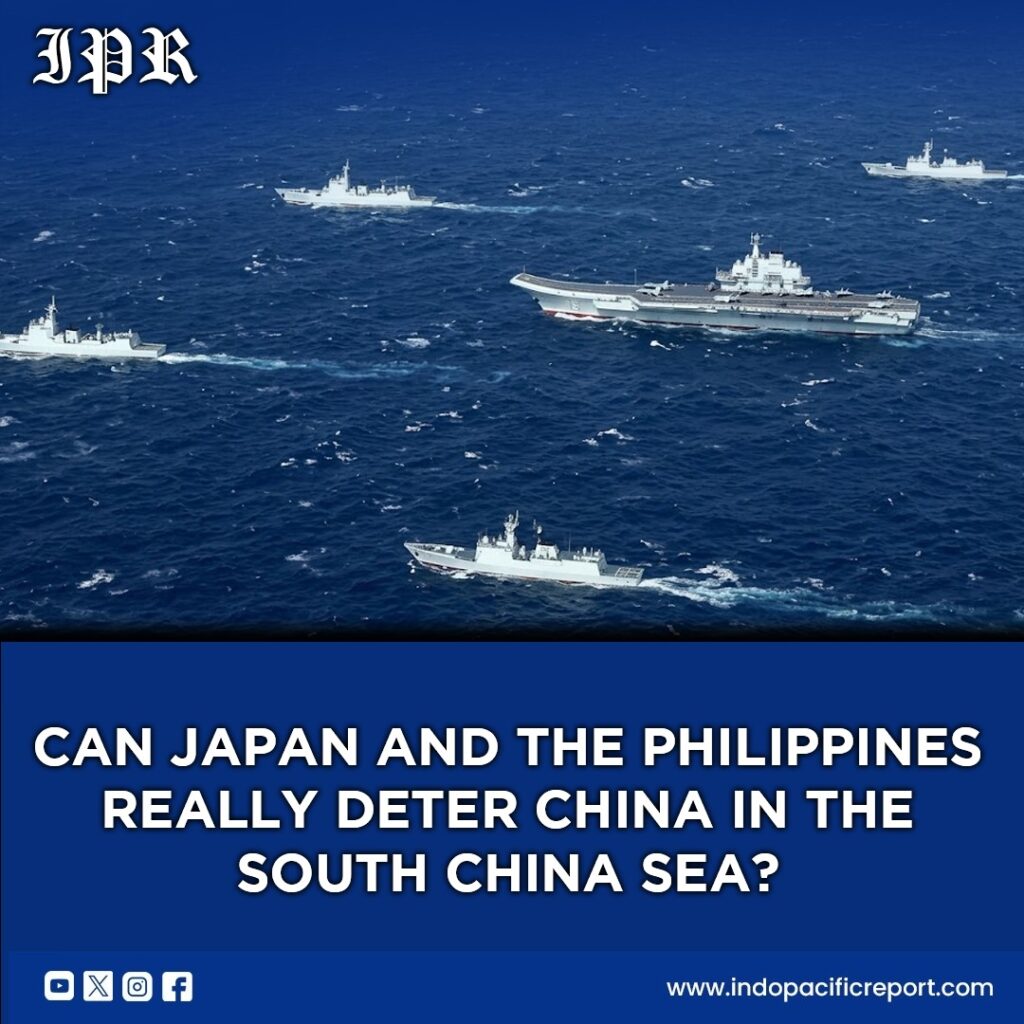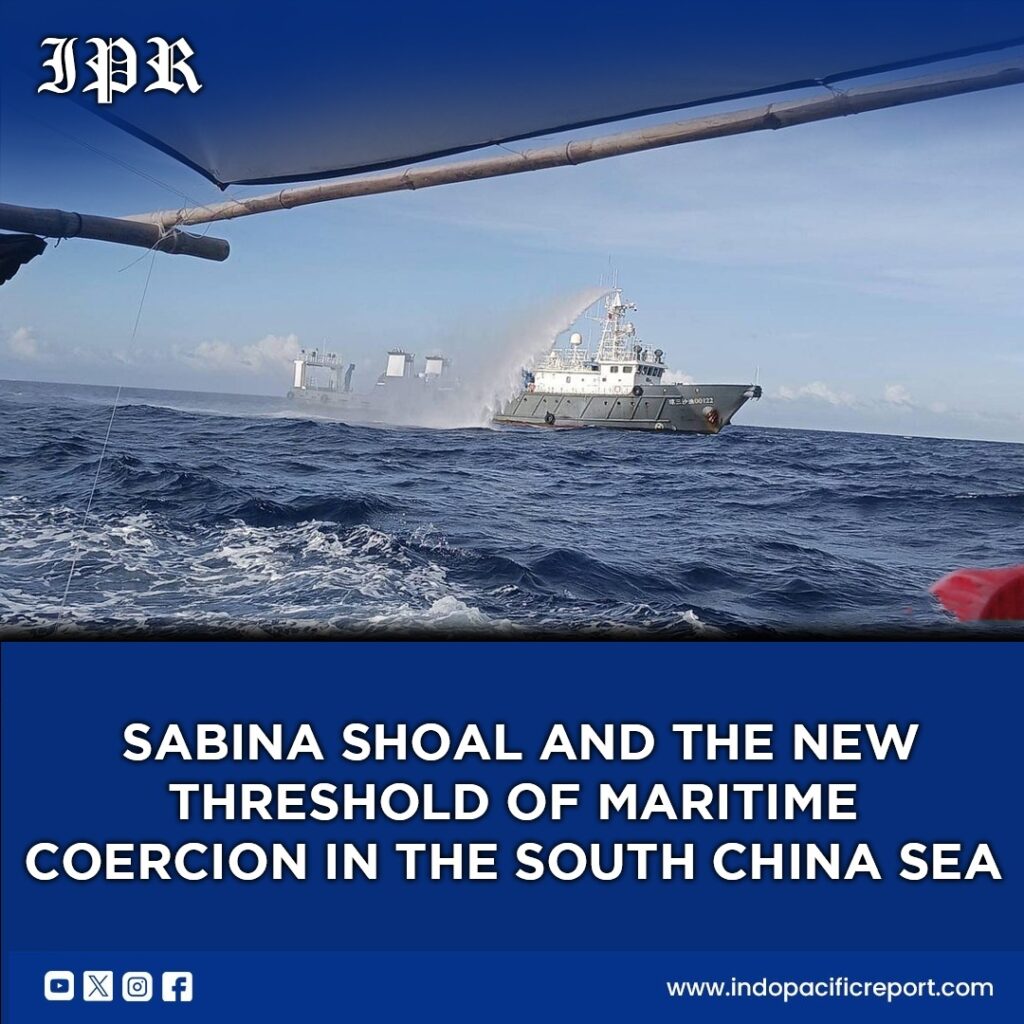
The recent incident at Sabina Shoal, where a PLA Navy corvette reportedly locked its fire control radar onto a Philippine Navy frigate, marks a serious escalation in the South China Sea. This is not routine signaling. Fire control radar is used for targeting before a strike. In military terms, it is a direct warning: “we are ready to engage.” This moves the situation beyond gray-zone tactics into a more dangerous space of controlled military intimidation. It shows that encounters at sea are becoming sharper, more deliberate, and more risky.
From a great-power competition perspective, this reflects a broader Chinese strategy. Beijing is gradually increasing pressure in disputed waters while testing how far it can go without triggering a military response. These actions are not random. They are calculated probes. Each incident helps China understand the limits of Philippine resistance and, more importantly, the reaction of the United States. The imbalance of power is clear. China has scale and presence. The Philippines relies more on partnerships. This makes each confrontation a test of both capability and political will.
The incident also highlights the weakness of the current regional security system. ASEAN mechanisms have not been able to control or slow down these tensions. Agreements like a future Code of Conduct remain uncertain and lack enforcement power. As a result, real security is shifting away from multilateral diplomacy toward hard power and external balancing. The South China Sea is no longer just a legal dispute—it is becoming a strategic contest over who sets the rules.
Alliance dynamics now become critical. The Philippines has strengthened its defense ties with the United States, expanding military access and joint operations. But incidents like this create difficult questions. Does a radar lock count as an armed threat under alliance commitments? Or does it stay in the gray zone where responses are unclear? This ambiguity is where deterrence can weaken. If the U.S. reacts too strongly, it risks escalation with China. If it reacts too weakly, it risks losing credibility. For Manila, the challenge is to use the alliance for deterrence without becoming fully dependent on it.
From a maritime strategy lens, Sabina Shoal is not just a small feature—it is part of a larger contest for sea control. The South China Sea carries a major share of global trade and is rich in resources. China’s approach combines coast guard ships, maritime militia, and naval forces to maintain constant presence. This is often called “layered maritime coercion.” The use of fire control radar shows a shift—military tools are now being used more openly within this strategy. This blurs the line between peacetime pressure and military confrontation.
For the wider Indo-Pacific, the impact is long-term. These incidents push the region toward greater militarization. Countries like Japan, Australia, and India are watching closely. Smaller Southeast Asian states are also recalculating their positions. Over time, repeated confrontations shape perceptions—who is strong, who is reliable, and who is willing to act. These perceptions influence defense policies, alliances, and regional alignment. The balance of power is not shifting overnight, but it is slowly being reshaped through these repeated encounters.
Looking ahead, the main risk is not a sudden war but a steady rise in dangerous incidents. Each new step raises the chance of miscalculation. A radar lock today could become a warning shot tomorrow. Managing this competition will require both strong deterrence and clear communication channels. Without both, the situation could become unstable very quickly. The South China Sea will remain a key battleground for influence in the Indo-Pacific.At what point should gray-zone pressure—like a radar lock—be treated as an act of aggression that demands a real military response?