Japan’s deployment of the upgraded Type-12 Surface-to-Ship Missile represents a seminal shift in the country’s postwar security posture. With a striking range of up to 1,000 kilometers, the missile now places key Chinese coastal regions and select North Korean military facilities within reach. This marks a clear transition from Japan’s historic role as a regional defensive shield to an actor capable of projecting offensive power independently, altering the strategic calculus across the East China Sea and broader Indo-Pacific.
From a great-power competition perspective, the Type-12 deployment signals Japan’s intent to hedge against Chinese and North Korean regional assertiveness. By extending its strike envelope, Tokyo gains leverage in deterrence by denial, compelling potential adversaries to consider the costs of escalation beyond conventional naval or air operations. While the United States retains the primary role of the “offensive spear” in the US-Japan alliance, Japan’s new capabilities blur that division, offering Washington a more flexible, multi-layered deterrence posture that strengthens alliance resilience amid rising Sino-American tensions.
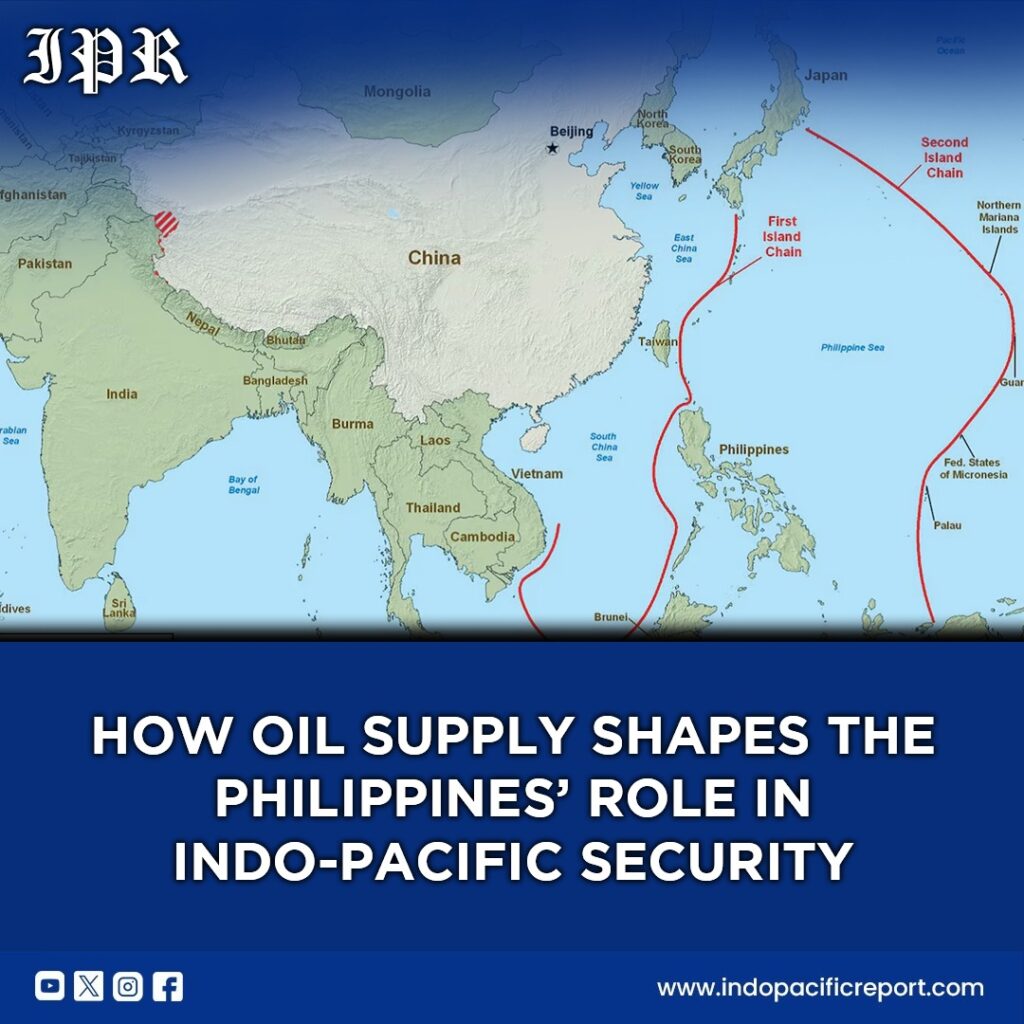
In terms of regional security architecture, the deployment underscores Japan’s willingness to embrace an “active defense” doctrine, previously constrained by constitutional limits. The enhanced Type-12 missile integrates stealth features and low-altitude flight profiles, complicating adversary interception and surveillance. Such capabilities augment not only Japan’s coastal defense but also the first island chain strategy, creating overlapping zones of influence alongside US forces in the East China Sea and western Pacific. This shift could catalyze recalibrations among regional actors, particularly South Korea, Taiwan, and ASEAN states, who may see an expanded Japanese role as a stabilizing deterrent or as a factor requiring their own military adjustments.
Alliance dynamics are profoundly affected. The Type-12 extends Japan’s operational autonomy, reducing dependency on US strike assets in scenarios involving Chinese gray-zone aggression or North Korean provocations. It also strengthens joint operational planning, as Washington can now integrate Japanese long-range strike into contingency scenarios without overextending US forces. At the same time, Tokyo’s enhanced offensive reach will likely necessitate more nuanced coordination with regional partners, including Taiwan and the Philippines, as long-range strike capabilities interact with maritime security operations in contested waters.
From a maritime and economic strategy lens, the missile deployment sends a dual signal. Militarily, it deters potential Chinese coercion over critical sea lines of communication, including the Taiwan Strait and adjacent East China Sea shipping lanes. Economically, it underscores Japan’s readiness to defend the open maritime routes upon which regional trade—and Tokyo’s industrial lifelines—depend. In this sense, the Type-12 functions not merely as a weapon system but as a geopolitical tool for ensuring economic security through military capability.
Looking at Indo-Pacific balance of power, the Type-12 transforms regional deterrence calculations. By placing Chinese coastal areas within strike range, Japan introduces a credible second-tier deterrent independent of US nuclear or conventional capabilities. For Beijing, this expands the defensive envelope it must consider in East China Sea contingencies, adding strategic friction in any scenario involving Taiwan or disputed islands such as the Senkaku/Diaoyu chain. For smaller regional actors, the deployment reinforces a layered deterrence environment where US alliances and Japanese capabilities collectively constrain unilateral coercion.
Forward-looking assessment: Japan’s Type-12 deployment is a milestone in its strategic evolution. It signals that Tokyo is prepared to shift from purely reactive defense toward proactive deterrence calibrated to emerging Chinese and North Korean threats. While this strengthens the US-Japan alliance and contributes to regional stability, it may also accelerate an arms dynamic in East Asia, prompting China to invest further in anti-access/area denial (A2/AD) capabilities. The move underscores the broader trend: Indo-Pacific security now depends on multilateral coordination, credible conventional deterrence, and regional actors willing to blend defensive and offensive capabilities to preserve strategic equilibrium.